
Reviewed · JACK THE RIPPER TOURS
Jack the Ripper: Night Murder Mystery Walking Tour in London
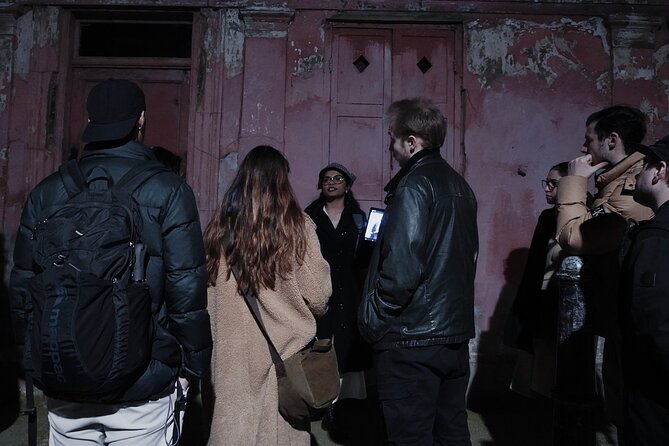
The most compelling part of this Jack the Ripper walking tour is its setting. You move through Whitechapel after dark, from narrow passages to old streets and pub fronts tied to the case. The story unfolds at the places where events happened, not in a museum or lecture room.
I like two things right away: the route gives real attention to the women who were killed, and the guides add wider context about Victorian poverty, housing, and London life. I also like the chronological structure, which helps you follow the case without getting lost in a jumble of names and theories.
The main drawback is simple: this is a long outdoor walk with few chances to sit. Cold rain can make the evening harder, and one person found the guide difficult to hear at times. Good shoes, warm layers, and a place near the guide will improve your experience.
In This Review
- Key points to know before you book
- Why Whitechapel makes the story work
- Princelet Street and the lives behind the headlines
- Puma Court, where the streets feel close
- The Ten Bells Pub and a famous connection
- Gunthorpe Street and the Martha Tabram question
- Goulston Street, the apron, and the disputed message
- St Botolph without Aldgate and the social cost
- How the route ends at Mitre Square
- The guides make the biggest difference
- Price, pace, and what you get for $22.93
- What to bring and how to prepare
- Who should book this Whitechapel night walk
- Should you book it?
- FAQ
- How long does the Jack the Ripper walking tour last?
- How much does the tour cost?
- Where does the tour begin?
- Where does the tour end?
- How many stops are included?
- Is the tour offered in English?
- How large is the group?
- Can I cancel for a full refund?
Key points to know before you book
- Whitechapel after dark: The nighttime setting adds atmosphere as you walk the same narrow streets linked to the case.
- A 2.5-hour route: You visit seven locations, with about 17 minutes at each stop, plus the walking between them.
- Victims receive real attention: The tour looks at the lives and circumstances of women such as Annie Chapman, Martha Tabram, and Catherine Eddowes.
- Guides shape the experience: Guides including Tyson, Kory, Korey, Dougal, Hadi, Lisa, Anahita, and Korhan Yasin have been praised for storytelling and case knowledge.
- Small enough to follow: The group limit is 25 people, though you still need to stay close on busy streets.
- Good value for a themed evening: At $22.93 per person, the tour costs less than many major London attractions and fills most of an evening.
Why Whitechapel makes the story work
Jack the Ripper is often treated as a puzzle about an unknown killer. This tour gives you the puzzle, but it also places it in the hard conditions of late 19th-century Whitechapel.
Brick Lane is the first major stop. Today, it is known for food, art, markets, and street life. On this walk, you look past its present-day character and consider the overcrowding, poverty, and insecurity that shaped the district in the Victorian period.
That context matters. The murders did not happen in an empty Gothic setting. They happened in a poor part of London where many people lived close together, women had few safe choices, and police work was limited by the period’s technology and social attitudes.
I like beginning here because it gives you a frame for the rest of the evening. You are not just collecting grisly details. You are learning why the area was difficult to police and why vulnerable women could disappear into its streets.
The first portion of the tour also gives you time to settle into the walking pace. At each location, the guide presents a portion of the story, then moves the group onward. This structure keeps the evening active and helps prevent the case from becoming a list of dates.
More Ripper walks in the East End:
- London: The Original Jack the Ripper Walking Tour
★ 4.7 · 7,833 reviews - London Jack the Ripper Guided Tour with Ripper-Vision
★ 4.5 · 4,840 reviews - London: Jack the Ripper Small Group Tour
★ 4.7 · 3,159 reviews
Princelet Street and the lives behind the headlines
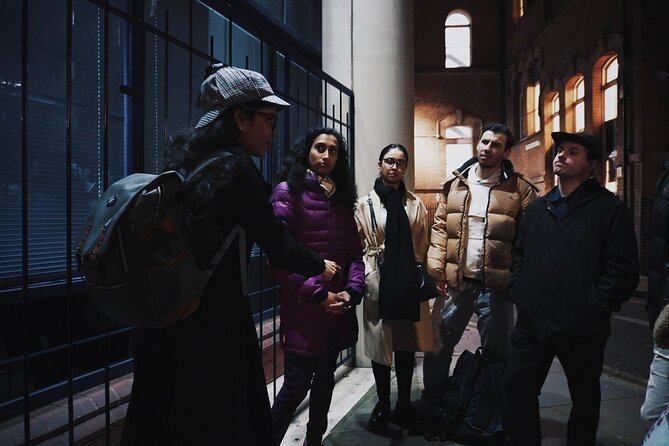
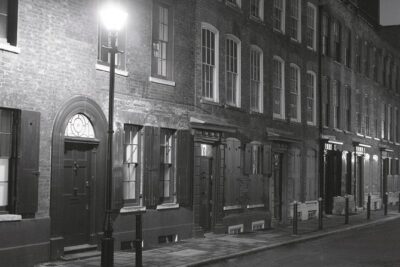
Princelet Street is narrow and quiet, with an atmosphere very different from the louder parts of modern East London. Here, the focus turns toward the people affected by the killings, including Annie Chapman and women living under severe financial and social pressure.
This is one of the more valuable parts of the tour for me. Jack the Ripper has become a famous name, but the women involved are often reduced to brief entries in a crime timeline. A stronger guide brings back some sense of their ordinary lives, work, hardship, and final days.
The best guides appear to handle this material with care. Hadi, in particular, was praised for presenting the subject without making the violence feel like entertainment. That tone matters. A nighttime crime tour can easily become tasteless, but the information provided here supports a more human reading of the case.
You should still know what you are signing up for. The subject involves murder and vulnerable women, and some descriptions are disturbing. If you prefer light sightseeing or family-friendly storytelling, this is probably not the right evening activity.
Puma Court, where the streets feel close
Puma Court has changed very little since the 19th century, according to the tour details. That makes it one of the strongest visual stops. The court is narrow, and its enclosed shape helps you picture how quickly a person could vanish from view.
I find old streets most useful when they help explain an event rather than simply provide a photo opportunity. Puma Court does that. The guide can discuss the layout, the lack of open sightlines, and the way tight passages affected movement and safety.
The setting also makes the tour interactive. You are encouraged to consider how the crime scenes fit together and to weigh possible clues. This is not a formal role-playing game with costumes or assigned characters, but it does ask you to think through the mystery as you walk.
Keep your expectations in check. Modern London has changed, and the streets cannot recreate 1888. Cars, lights, shops, and other tour groups are still part of the scene. Even so, the older lanes provide a useful sense of scale and distance.
The Ten Bells Pub and a famous connection
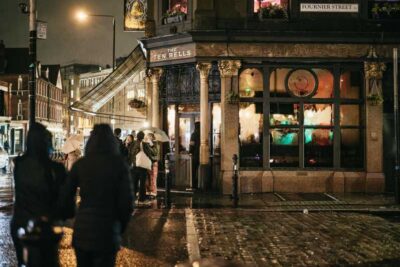
The Ten Bells is one of the best-known names on the route. Many of the victims are believed to have visited the pub before their deaths, and the building remains closely tied to the Ripper story.
The group stops outside rather than treating the pub as a guaranteed indoor break. That point is worth noting. You should not count on sitting down for a drink during the guided portion, since the route includes the pub frontage as a historical site.
The Ten Bells works well in the middle or later part of the walk because it connects the case to an ordinary place of refuge and social contact. A pub was not simply a backdrop. For people living with unstable housing and uncertain work, such places could be part of daily survival.
The tour uses the stop to discuss the final hours of victims and the reasons the pub became linked to the murders. I appreciate the chance to look at how a real building can gather layers of myth over time. The place is historical, but the stories attached to it are not all equally certain.
That distinction is important throughout the evening. You will hear established facts, disputed clues, and theories about the killer’s identity. A good guide makes clear where the evidence ends and speculation begins.
More mystery and escape games:
- Moriarty’s Game: The Professor’s Invitation by HiddenCity
★ 5.0 · 445 reviews - The Hunt for the Cheshire Cat by HiddenCity
★ 5.0 · 225 reviews - Interactive Jack the Ripper Night Walk: London’s Murder Mystery
★ 5.0 · 171 reviews - The Enchanted Mirror by HiddenCity
★ 5.0 · 156 reviews
Gunthorpe Street and the Martha Tabram question
Gunthorpe Street is presented as the site where Martha Tabram was brutally murdered. Some experts consider her a possible early Ripper victim, while others do not include her in the accepted list.
This stop shows why the case remains so debated. The question is not only who Jack the Ripper killed, but also which murders belong to the same pattern. The guide lays out the clues and competing ideas, then lets you judge how convincing they seem.
I like this part because it moves beyond the standard five-victim story often used in popular accounts. Martha Tabram’s case adds uncertainty and shows how investigators and later writers have built theories from incomplete evidence.
The location itself is another narrow passage, so it adds to the visual rhythm of the route. You move from broader streets into tighter spaces, and the atmosphere changes as the evening grows darker. Stay close to the group here, since the walkway may not offer much room for everyone to spread out.
Goulston Street, the apron, and the disputed message
Goulston Street is tied to one of the case’s most famous clues: a bloody piece of apron belonging to Catherine Eddowes. A chalk message found nearby created another layer of mystery and controversy.
This is where the tour becomes part crime investigation and part history lesson. You examine what was found, what it might have meant, and why the message led to so many theories. The evidence is intriguing precisely because it does not produce a clean answer.
The stop also helps explain the limits of policing at the time. A clue could be found, copied, interpreted, or lost without the clear forensic systems you might expect today. The result is a case full of fragments rather than proof.
If you enjoy true crime, this may be one of your favorite stops. If you prefer firm conclusions, it may frustrate you. The tour cannot solve a mystery that has never been conclusively solved, but it can show you why certain theories continue to circulate.
Guides such as Tyson, Kory, and Korey have been praised for adding detail beyond the basic murder accounts. Kory was also noted for discussing a personal theory about the killer after presenting the historical material. That kind of extra conversation can be useful, provided you treat it as theory rather than fact.
St Botolph without Aldgate and the social cost
At St Botolph without Aldgate, the subject widens again. The church was known as a place where vulnerable women could seek refuge, and the tour uses the stop to consider how Victorian society failed those women.
This pause gives the route moral weight. You are no longer looking only for clues about a mysterious criminal. You are thinking about homelessness, poverty, limited work, and the lack of protection available to women living on the edge of society.
That emphasis is one of the tour’s strongest features. The Ripper’s name dominates the story, but the women should not become supporting characters in a tale about him. The best presentation keeps returning to their lives and to the conditions that made them vulnerable.
There may not be many opportunities to sit during the walk, so treat this as a standing pause rather than a rest stop. The church provides a natural place for reflection, but the tour remains outdoors and active.
How the route ends at Mitre Square
The walk continues through the Whitechapel and Aldgate area before ending at Mitre Square. The endpoint is listed as Mitre Square, London EC3A 5DE.
The final location gives the evening a clear finish rather than sending you back to the starting point. That matters for planning. You will need to arrange your own onward travel from the endpoint, and you should not assume the tour returns to St Marys Whitechapel Church Memorial.
The supplied tour details describe the endpoint as connected with the final victim, but the route information identifies Mitre Square specifically. For your own planning, use Mitre Square as the confirmed end point.
Some guides stay to discuss theories and answer questions after the formal walk. That is especially useful here because the case includes disputed victims, uncertain evidence, and many competing suspects. If you have a favorite theory, save it for the end.
The guides make the biggest difference
The tour is built around the guide, and the names praised most often include Tyson, Kory, Korey, Dougal, Doogle, Hadi, and Korhan Yasin. Their strengths vary, but the recurring pattern is clear: strong storytelling, careful pacing, and detailed knowledge of both the murders and London’s past.
Kory and Korey were singled out for knowing names, dates, buildings, and period news reports. One guide even used old neighborhood photographs to show how the area looked when the murders occurred. That kind of visual aid can help you compare the present streets with the city of the case.
Tyson was praised for keeping spirits up during heavy rain and for adding humor without losing the thread of the story. Doogle and Dougal were noted for guiding groups through crowded areas and helping people see the locations despite other groups nearby.
Hadi received special praise for meeting each person at the start, keeping a calm tone, and handling the violence with respect. These details may sound small, but they affect the whole evening. You are walking at night through a subject that can feel grim, so a guide who watches the group and speaks clearly is essential.
One practical caution is audibility. At least one person had trouble hearing when the guide looked away while speaking. I would stay near the front, especially at busy intersections or when the group gathers around a narrow location.
Price, pace, and what you get for $22.93
At $22.93 per person, this is a fairly modest London activity. You get about two hours and 30 minutes of guided storytelling, seven stops, and a route through parts of Whitechapel you might not choose to explore independently at night.
The value comes from the guide rather than paid admissions. Every listed stop is free to enter, but the route, timing, local knowledge, and interpretation are what you are paying for. If you tried to find the locations alone, you could walk the streets for less, but you would lose the organized chronology and the explanations connecting one clue to the next.
The tour can also fill a whole evening without taking up a full dinner schedule. Group discounts may be available, and the maximum group size is 25 people. That is not a private walk, but it is small enough to feel more manageable than a huge city tour.
The booking pattern suggests that the experience is often reserved well ahead of time, with an average booking lead of 33 days. If your dates are fixed, I would reserve early rather than assume you can decide on the day.
What to bring and how to prepare
Wear shoes suitable for two and a half hours of city walking. The route includes narrow streets and several standing stops, with little chance to sit before the end.
Dress for London’s night weather. One group completed the walk during torrential rain, and another described a chilly evening. The tour can still work in poor conditions, but warm layers and rain protection will make the story easier to enjoy.
Keep your phone charged. The ticket is mobile, and the route ends away from the starting point. A phone is useful for showing the booking confirmation and arranging your next step after Mitre Square.
The tour is offered in English. Service animals are allowed, and most people can participate, though the walking format may not suit everyone. If you have concerns about stamina or mobility, check your own needs against the outdoor route before booking.
Free cancellation is available if you cancel at least 24 hours before the start time. Cancellations made within 24 hours are not refunded, and changes inside that period are not accepted.
Who should book this Whitechapel night walk
I would choose this tour if you enjoy dark history, old city streets, true crime, or guided walks with a strong story. It also suits repeat visitors who want to see a part of London beyond the usual central sights.
History fans should appreciate the Victorian social context. Mystery fans will enjoy the clues, disputed evidence, and competing theories. Photographers may like the older lanes and pub exterior, though the darkness and weather can make pictures tricky.
I would be more cautious if you dislike graphic subjects, long walks, or group tours. The evening is not a pub crawl, and the Ten Bells stop does not promise a seated break. You also need to accept that the case remains unresolved.
Should you book it?
Book this Jack the Ripper tour if you want an atmospheric, fact-focused walk that treats the victims as people and not just names in a famous mystery. The $22.93 price is fair for the time, route, and guide-led storytelling, and the 25-person limit keeps the group within reason.
I would book early for a fixed London itinerary, dress for rain and cold, and arrive ready to walk. Choose a spot near the guide so you can hear every detail. If you want a respectful look at Whitechapel, with room for theories but no promise of a final answer, this is a strong nighttime choice.
FAQ
How long does the Jack the Ripper walking tour last?
The tour lasts approximately 2 hours and 30 minutes.
How much does the tour cost?
The listed price is $22.93 per person.
Where does the tour begin?
The meeting point is St Marys Whitechapel Church Memorial, on Unnamed Road, London E1 1FE, United Kingdom.
Where does the tour end?
The tour ends at Mitre Square, London EC3A 5DE.
How many stops are included?
The route includes seven listed stops: Brick Lane, Princelet Street, Puma Court, The Ten Bells, Gunthorpe Street, Goulston Street, and St Botolph without Aldgate.
Is the tour offered in English?
Yes. The tour is offered in English.
How large is the group?
The activity has a maximum of 25 participants.
Can I cancel for a full refund?
Yes. You can receive a full refund if you cancel at least 24 hours before the experience start time. Cancellations within 24 hours are not refunded.
More Evening Experiences in London
- London: London by Night Sightseeing Open-Top Bus Tour
★ 4.5 · 5,516 reviews - London: River Thames Evening Cruise with Bubbly and Canapés
★ 4.4 · 2,493 reviews - London by Night Bus Tour with Christmas Lights and Live Guide
★ 4.5 · 2,040 reviews - London: Jack the Ripper Evening Walking Tour
★ 4.9 · 1,449 reviews
More London walking tours
- Magical London: Harry Potter Guided Walking Tour
★ 4.7 · 22,044 reviews - Tour for Muggles The Ultimate Harry Potter Walking Tour in London
★ 5.0 · 4,684 reviews - London Jack The Ripper Guided Walking Tour
★ 5.0 · 3,131 reviews - London: Harry Potter Movies Walking Tour (Kids Go Free)
★ 4.7 · 3,071 reviews
Latest arrivals on the London list
- Heathrow Airport to London Arrival Transfer★ 4.5 · 50 reviews
- London Beatles Tour★ 5.0 · 50 reviews
- One Way Taxi Transfer from London to Gatwick Airport★ 5.0 · 51 reviews
- London: Hidden Baker Street Tube Station Tour★ 4.7 · 51 reviews
- City & Secrets: Explore London’s Hidden Gems★ 5.0 · 51 reviews
- London Christmas Lights Open-Top Bus Tour. 2025 Early Bird★ 3.6 · 51 reviews
- 4 hour London Private Tour, with your own Black Cab Tour Guide★ 5.0 · 51 reviews
- The Beatles Magical History Black Taxi Tour London★ 5.0 · 51 reviews
Jack the Ripper Tours, compared.
London Jack the Ripper Guided Tour with Ripper-Vision
Read our review →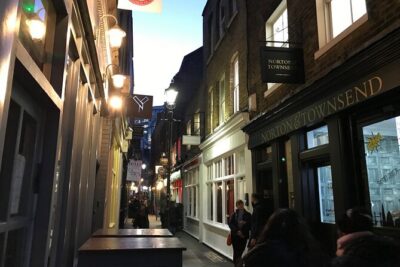
German Language : Original Jack the Ripper Tour
Read our review →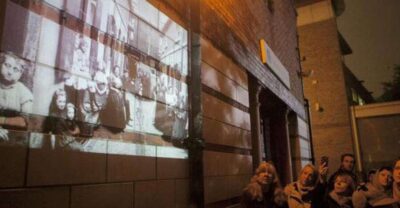
Jack the Ripper Walking Tour – Ripper Vision Tours
Read our review →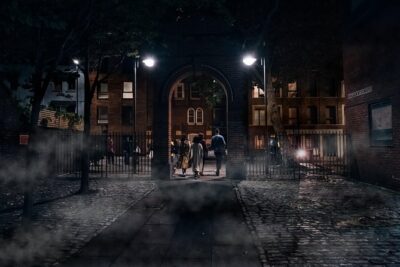
Ultimate Jack the Ripper : Guided Tour of London
Read our review →
Browse the lists this tour appears in