

Reviewed · BRITISH MUSEUM TOURS
British Museum Guided Tour
The British Museum can swallow an entire day before you have found the Rosetta Stone. This 2.5-hour guided tour cuts through the scale of the place and takes you to major objects from Egypt, Assyria, Ancient Greece, and other civilizations, including the Elgin Marbles, Sutton Hoo treasures, and Lewis Chessmen.
I like the way a guide turns famous objects into stories instead of leaving you to read a wall of text. I also like the timed entry and separate entrance, which help you get started without spending precious London time finding your way through the museum on your own.
The main drawback is the museum’s sheer size. A two-and-a-half-hour route can show you important highlights, but it cannot cover everything, and you may leave wishing you had heard a quick room-by-room overview before stopping at individual displays.
In This Review
- Key points to know before booking
- Why the British Museum needs a guide
- Meeting your guide on Great Russell Street
- The Rosetta Stone and the start of the story
- Egyptian rooms and the challenge of famous objects
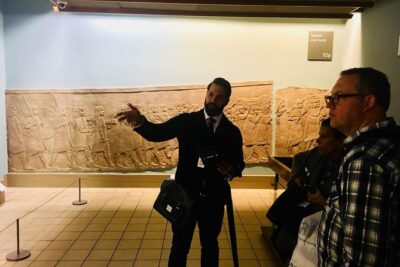
- Assyrian reliefs and the value of close explanation
- The Elgin Marbles and Ancient Greece
- Prehistoric tools and the first human stories
- Sutton Hoo and Anglo-Saxon England
- The Lewis Chessmen and small objects with big stories
- What the guide adds to the experience
- Is $93 a fair price?
- Who should book this British Museum tour?
- Practical details for a smooth visit
- Should you book it?
- FAQ
- How long does the British Museum guided tour last?
- What objects are included on the tour?
- Is museum entry included?
- What language is the tour conducted in?
- Where do I meet the guide?
- Is this a private tour?
- Can I cancel the booking?
Key points to know before booking
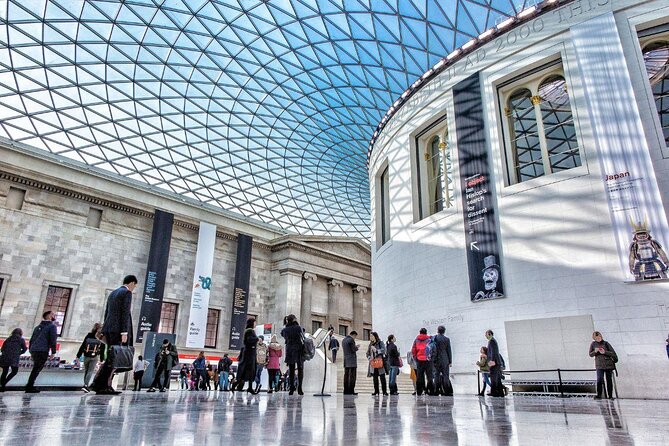
- The Rosetta Stone anchors the visit: You get context for one of the museum’s best-known objects rather than simply a quick photograph.
- The route covers several major civilizations: Expect highlights from Egypt, Assyria, Ancient Greece, prehistoric Europe, and Anglo-Saxon England.
- Guides add the stories behind the objects: Matt and Wesley have led especially well-regarded tours, with anecdotes and clear explanations.
- Timed entry saves time: The experience includes entry through a separate entrance, letting you focus on the collection sooner.
- Private groups are available: A private booking can give you more room to shape the itinerary and ask questions.
- The $93 price pays for direction and context: It makes the most sense if this is your first visit or your museum time is limited.
Why the British Museum needs a guide
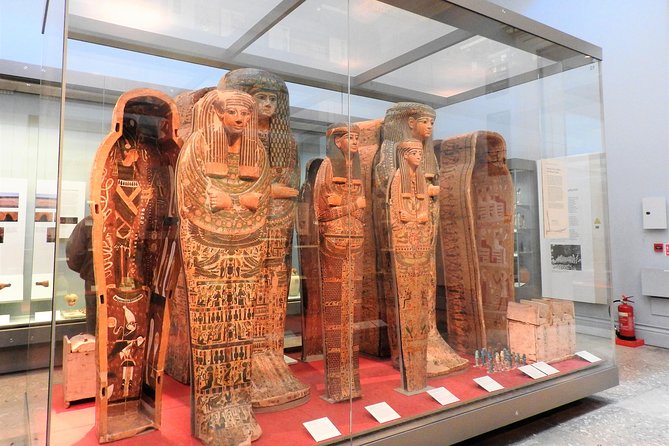
London’s British Museum is free to enter, but free does not mean simple. Its collection includes around 8 million artefacts, with roughly 80,000 objects on display. That is an astonishing amount to take in, and it can make an unplanned visit feel like a march through corridors rather than a meaningful look at the past.
A guide gives your visit a clear shape. Instead of wandering from one room to the next, you move through selected objects and hear why they matter. That difference is important here because many of the most interesting details are not obvious from a few minutes in front of a case.
You can expect the guide to focus on major objects and the civilizations connected to them. The route includes Egypt, Assyria, Ancient Greece, prehistoric tools, Sutton Hoo, and the Lewis Chessmen. The exact order can vary, especially on a private tour, but the aim is to reach the historic highlights without wasting time.
The experience is conducted in English. It is a walking tour, though the amount of distance is limited. Comfortable shoes still make sense because you will be on your feet and moving between galleries for much of the 2.5 hours.
More British Museum visits:
- London: British Museum Guided Tour
★ 4.3 · 1,182 reviews - British Museum London Guided Tour Semi-Private 8ppl Max
★ 5.0 · 984 reviews - London: Tour of the British Museum
★ 4.1 · 678 reviews
Meeting your guide on Great Russell Street
The meeting point is outside the Museum Tavern, next to the red telephone boxes on Great Russell Street, close to the museum entrance. Check the exact meeting instructions for the option you book, since the meeting point may vary.
This is worth handling carefully. A large museum entrance, a busy London street, and several nearby landmarks can create a small amount of confusion at the start. Give yourself enough time to find the Museum Tavern and the red telephone boxes rather than arriving at the last minute.
The tour includes timed entry and access through a separate entrance. That can be a real help during a tight London itinerary. You still need to arrive at the stated meeting time, but you are not left to work out the museum’s entry process alone.
The Rosetta Stone and the start of the story
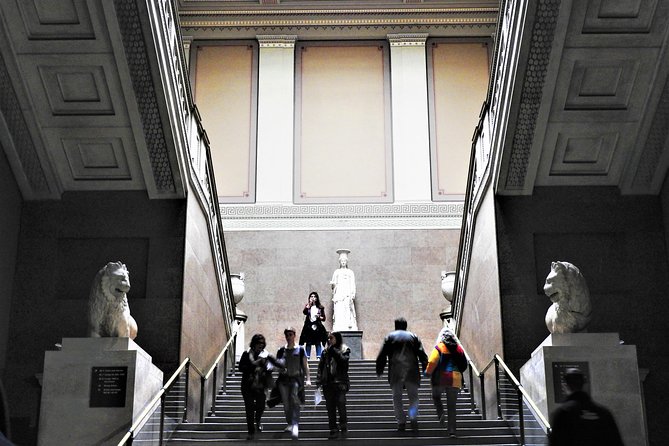
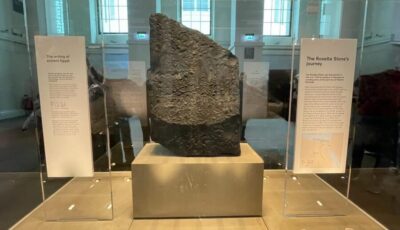
The Rosetta Stone is one of the central stops on this tour. Its importance is not just its fame. The stone carries the same decree in three forms of writing, which helped scholars understand Egyptian hieroglyphs.
A good guide can make this object easier to appreciate. Without context, the stone is a dark slab surrounded by other visitors and cameras. With context, you begin to see why its inscriptions mattered and how one object helped open up the study of ancient Egypt.
The museum contains a large range of Egyptian material, and the tour uses selected pieces rather than attempting every room. That is a sensible approach. You get a focused introduction to the civilization, then move on before the amount of material becomes tiring.
You should expect some of the time to be spent at objects that are less famous than the Rosetta Stone. This is one of the benefits of having a guide. The important point is not only to see the headline object, but to understand how it fits into a larger collection.
Egyptian rooms and the challenge of famous objects
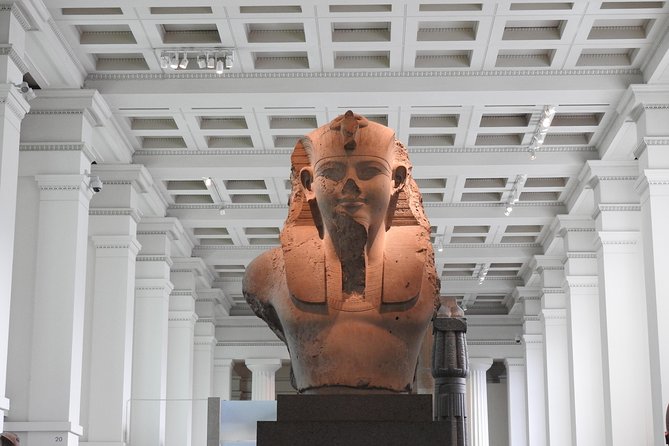
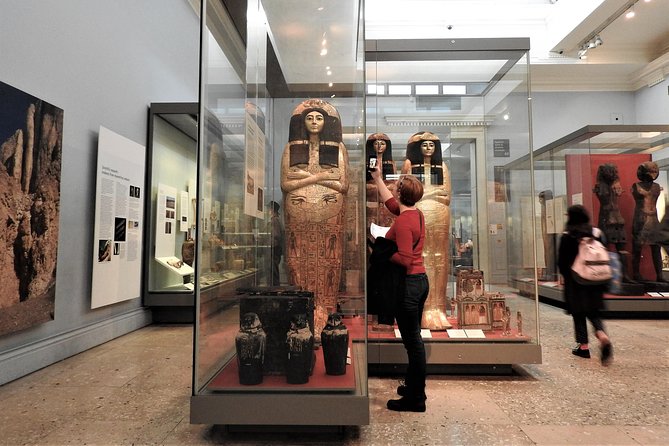
Egyptian displays are among the museum’s most popular areas. They also show why a guided route helps. It is easy to spend too long at the first case and then rush through the rest of the floor.
The guide’s job is to choose a manageable group of objects and explain their purpose, age, and place in Egyptian culture. You will not receive a full course in ancient Egypt in one morning, but you should come away with a useful framework for understanding what you see.
The tour’s emphasis on individual objects works well for first-time visitors. You can ask questions as you go, and the explanations are tailored to the group. If you are especially interested in Egypt, a private option may be worth considering because it gives you more scope to shape the route.
More London museums to visit:
- Tower of London and Crown Jewels Exhibition Ticket
★ 4.5 · 6,677 reviews - London: Chelsea Football Club Stadium and Museum Tour
★ 4.8 · 4,576 reviews - Chelsea FC Stadium Tours and Museum
★ 5.0 · 1,908 reviews - London Transport Museum Entrance Ticket
★ 4.5 · 1,323 reviews
Assyrian reliefs and the value of close explanation
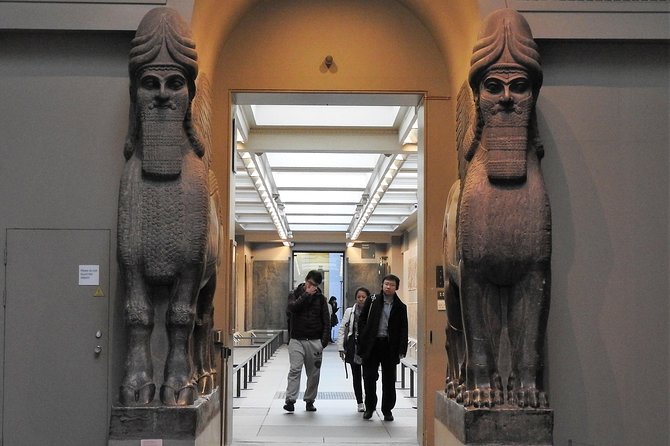
Assyrian material adds a different mood to the visit. The carved reliefs are large, detailed, and easy to underestimate when you first walk into the room. A guide can point out the scenes and details that might otherwise blur together.
This part of the route is useful because it adds variety. You are not looking only at small objects in glass cases. Monumental stone carvings give you a sense of the scale and power behind the collection.
The guide also helps connect the artwork to the civilization that produced it. That context matters at the British Museum, where objects from different periods and regions appear within a short walk of one another. The tour gives those rooms a clearer order.
The Elgin Marbles and Ancient Greece
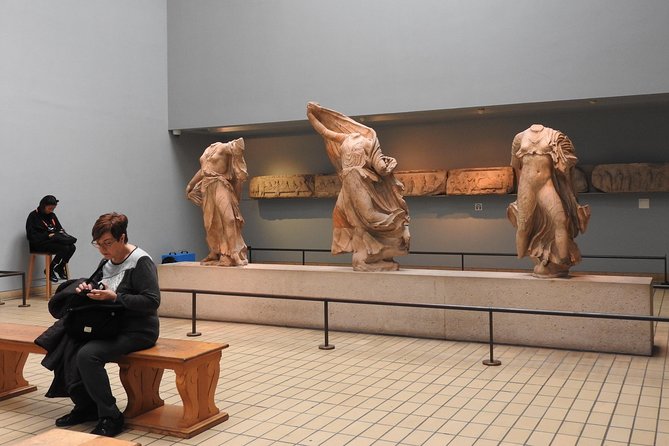
The Elgin Marbles are among the museum’s best-known displays and one of its most debated holdings. They are part of the Parthenon sculptures from Athens, and their presence in London raises questions about ownership, removal, and the modern role of museums.
A visit that simply points at the sculptures misses much of what makes them important. You should expect the guide to explain their artistic value and place in Ancient Greece, while also giving you useful historical background.
This is one of the places where a live guide can be especially helpful. The objects are visually impressive, but the surrounding story is complicated. A thoughtful explanation gives you more to consider than a quick look at the marble figures and architectural details.
The gallery can also be busy. Stay close to your guide and listen for the meeting instructions before the group moves on. The tour is designed to keep you moving through the museum, not to give you unlimited time at each display.
Prehistoric tools and the first human stories
The tour includes prehistoric tools, which may sound less exciting than the Rosetta Stone or Elgin Marbles. In practice, these objects can offer a useful change of pace.
A simple tool raises basic questions about human skill, survival, and adaptation. Its shape may look plain, but its meaning depends on knowing how and why it was made. This is exactly the kind of object that benefits from explanation.
The prehistoric section also broadens the tour. You are not only seeing grand art and royal treasures. You are looking at practical objects made by people whose lives are known through material remains. That helps give the museum’s collection a wider human scale.
Sutton Hoo and Anglo-Saxon England
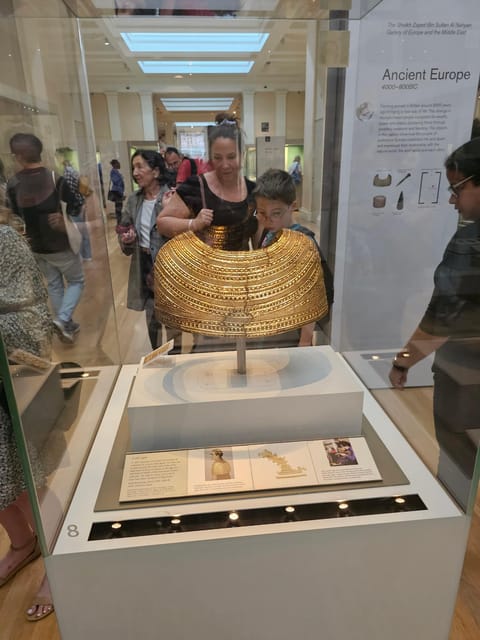
Sutton Hoo is another major stop. The finds come from an Anglo-Saxon ship burial and include objects connected with a wealthy and powerful early English society.
For a London visitor, Sutton Hoo provides a direct link to Britain’s own past. Its objects are not simply beautiful finds in a case. They tell you about status, trade, belief, craftsmanship, and contact between different parts of the world.
This section can be particularly useful if you have little background in early medieval England. The guide helps place the objects in time and explains why the discovery changed understanding of the period.
You should not expect every Sutton Hoo object to receive equal attention during a short tour. The guide has to balance this room with the museum’s other major areas. Still, it is an important inclusion because it prevents the visit from becoming an itinerary made up only of Egypt, Greece, and Rome.
The Lewis Chessmen and small objects with big stories

The Lewis Chessmen are among the more memorable objects included in the route. These small carved figures were made in the medieval period and are instantly recognizable for their expressive faces and compact scale.
They demonstrate why a guided museum visit is not just about the largest or oldest display. The chess pieces invite questions about play, trade, craftsmanship, and medieval life. Their appearance also makes them easy to remember after the tour ends.
A guide can give you the basic story without turning the stop into a long lecture. That balance matters during a 2.5-hour visit. You want enough detail to understand the object, but you also need to keep moving if you hope to reach the other highlights.
What the guide adds to the experience
The strongest part of this tour is the human explanation. Matt is praised for interesting anecdotes and for selecting a strong mix of rooms, including Egypt, Assyria, Ancient Greece, and other civilizations. Wesley is also noted for giving a clear overview and for being personable and patient.
Those qualities matter more than a rehearsed list of dates. The British Museum contains too much information for a guide to repeat everything, so good judgment is essential. You want someone who knows when to explain a famous object, when to point out a small detail, and when to move on.
The tour is also described as tailored. That does not mean you can necessarily request every room in the museum within the allotted time. It means your guide can respond to your interests and questions, particularly if you book a private group.
One useful improvement would be a brief overview of what each room contains before the guide focuses on individual objects. That would help you return later and explore areas not included in the route. If you plan to spend extra time at the museum after the tour, ask your guide for suggestions before leaving.
Is $93 a fair price?
The listed price is $93 per person. Since general museum admission is free, the cost is paying for the guide, the timed entry arrangement, the route planning, and the convenience of moving directly to major objects.
That is a significant price for a museum visit, so the value depends on how you travel. If you have only one visit to London and a limited amount of time, the guidance can prevent hours of unfocused wandering. It is also useful if you prefer history explained aloud rather than read from labels.
If you are happy to spend a full day exploring at your own speed, you may prefer to visit independently and return to the rooms that interest you. The tour does not replace an extended museum visit. It gives you a strong starting point.
The price is easier to justify for a private group or for people visiting the British Museum for the first time. It is less compelling for someone who already knows the collection well or wants to spend a long time studying one narrow subject.
Who should book this British Museum tour?
I would recommend it most strongly to:
- First-time British Museum visitors who want the major sights without guessing where to go.
- Short-stay visitors who have only a morning or afternoon available.
- Families and mixed-interest groups who need a clear route and explanations that keep everyone involved.
- History newcomers who want the objects placed in plain language.
- Private groups that would value a more personal itinerary and extra questions.
Independent museum fans may prefer to skip the tour. If you already have a detailed plan, want long stretches at individual objects, or prefer to read at your own pace, the guided format may feel too brisk.
The experience has a 4.9 rating from 11 reviews, with praise focused on guide quality, clear explanations, patience, anecdotes, and an efficient selection of rooms. One person felt the price was high, which is a fair concern given that museum entry itself is free.
Practical details for a smooth visit
The tour lasts 2.5 hours, though one booking extended beyond three hours. Do not count on that extra time when planning your day. Treat the advertised duration as the safe guide.
Wear comfortable shoes. The walking distance is not great, but the museum is large and the tour involves standing, moving between galleries, and stopping at displays.
The activity is offered in English, with a live guide. Private groups are available, and the itinerary can be adjusted within the limits of the tour length.
You can cancel up to 24 hours before the activity for a full refund. A reserve-now, pay-later option is also available, which can help if your London plans are still changing.
Should you book it?
Book this tour if you want the British Museum’s greatest hits explained by a local guide, especially if this is your first visit or your London schedule is tight. The Rosetta Stone, Elgin Marbles, Sutton Hoo, Lewis Chessmen, prehistoric tools, Egyptian material, and Assyrian reliefs give you a broad sample of the collection in a short time.
Skip it if you want to explore every room slowly or if paying $93 for guidance feels hard to justify when admission is free. For most first-time visitors, though, the price buys something useful: a clear route, historical context, and a better chance of leaving with a sense of what you actually saw.
FAQ
How long does the British Museum guided tour last?
The advertised duration is 2.5 hours. One booking lasted more than three hours, but you should plan your day around the stated 2.5-hour duration.
What objects are included on the tour?
The highlights include the Rosetta Stone, prehistoric tools, the Elgin Marbles, Sutton Hoo, and the Lewis Chessmen. The route also covers major areas connected with Egypt, Assyria, Ancient Greece, and other civilizations.
Is museum entry included?
Yes. The experience includes timed entry to the museum through a separate entrance.
What language is the tour conducted in?
The live tour guide speaks English.
Where do I meet the guide?
The meeting point is outside the Museum Tavern, next to the red telephone boxes on Great Russell Street near the museum entrance. The exact meeting point can vary depending on the option booked.
Is this a private tour?
A private group option is available. Other booking options may use a different group format.
Can I cancel the booking?
You can cancel up to 24 hours in advance for a full refund. A reserve-now, pay-later option is also available.
Latest arrivals on the London list
- Easy Access Tower of London Royal Secrets & Scandals Tour★ 5.0 · 3 reviews
- Stonehenge Special Access Guided Morning Tour from London★ 4.5 · 3 reviews
- Shoreditch & East London Walking Tour with a Local, Custom & Private★ 5.0 · 3 reviews
- Madame Tussauds London Fast Track and Champagne Experience★ 3.5 · 3 reviews
- London Private Brixton Tour with a Local – Culture & Stories★ 4.9 · 3 reviews
- Private Full Day Tour – Fast Track Tower of London and Lunch★ 4.6 · 3 reviews
- Private transfer from London Heathrow Airport to Southampton★ 5.0 · 3 reviews
- London Soho District – Guided Walking Tour 12 guests 2,5h★ 4.8 · 3 reviews
British Museum Tours, compared.

British Museum London Guided Tour Semi-Private 8ppl Max
Read our review →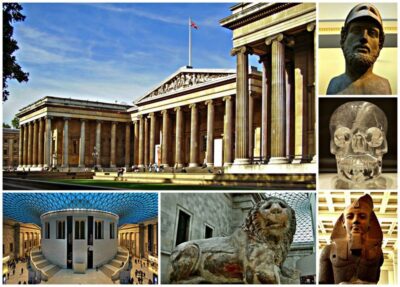
British Museum Audio Tour & Priority Entrance Ticket
Read our review →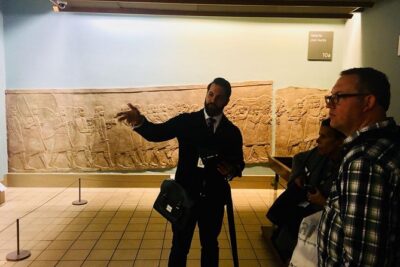
The British Museum London – Exclusive Guided Museum Tour
Read our review →

Browse the lists this tour appears in