
Reviewed · BRITISH MUSEUM TOURS
British Museum Guided Tour with Priority Timeslots(Small Group)
The British Museum can swallow an entire day before you reach half its galleries. This two-hour small-group tour gives you a sensible first look, leading you straight to famous pieces such as the Rosetta Stone, Parthenon sculptures, Egyptian mummies, and the Lewis Chessmen.
I like the maximum group size of 15, which keeps the guide close enough to answer questions. I also like the headsets, a small but important aid when crowds gather around the best-known objects. The drawback is simple: two hours cannot cover a museum with more than 8 million objects, and one group found that extra time spent in Mesopotamia left less room for other periods.
In This Review
- Key points
- Why a two-hour British Museum tour makes sense
- Meeting the collection at Great Russell Street
- Egyptian mummies and the Rosetta Stone
- Parthenon sculptures and the difficult questions
- Assyrian winged bulls and the power of scale
- Moai, Sutton Hoo, and the Lewis Chessmen
- What the small group changes
- Headsets are more useful than they sound
- Is $48.60 good value?
- Who should book this visit?
- My verdict on the British Museum highlights tour
- FAQ
- How long does the British Museum guided tour last?
- What language is the tour offered in?
- What is the price per person?
- Is admission to the British Museum included?
- Is the British Museum itself free to enter?
- What objects will I see?
- How large is the tour group?
- Are headsets included?
- Where does the tour start and end?
- Can I cancel for a full refund?
Key points
- See the headline objects quickly: The route includes the Rosetta Stone, Egyptian statues and mummies, Parthenon sculptures, an Assyrian winged bull, the Easter Island Moai, Sutton Hoo, and the Lewis Chessmen.
- Small group, up to 15 people: This is more manageable than a large coach-style museum visit and leaves room for questions.
- Priority timeslot at the main entrance: Your admission is arranged for a scheduled entry time, which helps make the start more orderly.
- Live commentary through a headset: You can keep listening even when the museum is crowded or the guide is a short distance away.
- Strong guide-led storytelling: Daniel, James, Joey, Tara, Tony, Antonio, and Rebekka are among the guides named in guest feedback, with praise for clear explanations, humor, and good pacing.
- Stay after the tour: The guided portion ends back at the meeting point, but you are free to continue exploring on your own.
Why a two-hour British Museum tour makes sense
The British Museum is free to enter, so at first glance, a $48.60 guided visit may seem like a strange purchase. You are not paying mainly for the building or the objects. You are paying for a plan, a scheduled main entrance timeslot, live explanation, and help making sense of a huge collection.
That matters here. Without a route, you can spend a surprising amount of time finding the rooms you want, then discover that the object you came to see is surrounded by several tour groups. A guide gives you a starting map in your head. After two hours, you can return to the galleries that caught your attention instead of wandering at random.
I would think of this as an introduction rather than a complete museum visit. The tour aims for the famous sights and a broad taste of the collection. It is a good match for a short London stay, a first visit, or anyone who would rather hear a clear story than read every label alone.
The tour is offered in English and lasts about two hours. The group can include no more than 15 people, a useful limit in narrow gallery spaces and crowded rooms. You may be offered a headset, and the feedback makes clear that this equipment is especially useful on busy days.
More British Museum visits:
- London: British Museum Guided Tour
★ 4.3 · 1,182 reviews - British Museum London Guided Tour Semi-Private 8ppl Max
★ 5.0 · 984 reviews - London: Tour of the British Museum
★ 4.1 · 678 reviews
Meeting the collection at Great Russell Street
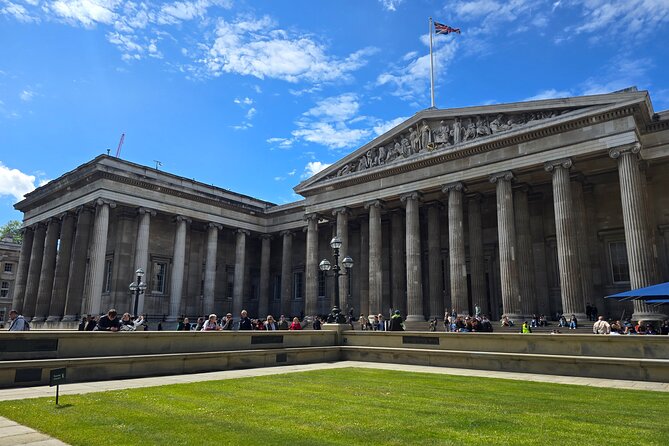
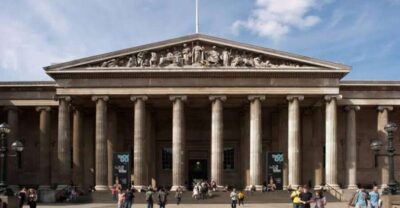
You meet at the British Museum on Great Russell Street, London WC1B 3DG. The activity starts and finishes at the museum meeting point, and the site is near public transportation.
Your admission ticket is included for the main entrance with a priority timeslot. That does not turn the museum into a private, empty building. It does give the tour a planned entry point, which is valuable when your London day is divided between several sights.
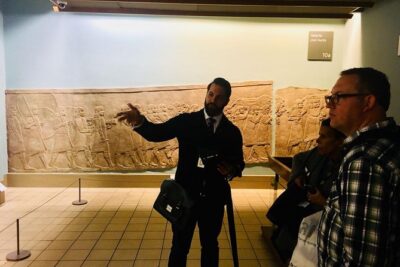
Once inside, expect the guide to set a broad direction before moving from object to object. The best guides described in the feedback, including Daniel, James, Joey, and Rebekka, seem to use the museum as a connected story rather than a checklist of labels. You get dates, purpose, discovery, and the human details that help an object stay in your memory.
The headset is worth using if it is offered. The British Museum can be loud, and people often gather around the Rosetta Stone and other major pieces. You may not need to stand shoulder to shoulder with the guide to hear the explanation, which lets you look at the object instead of watching the guide’s face.
Egyptian mummies and the Rosetta Stone
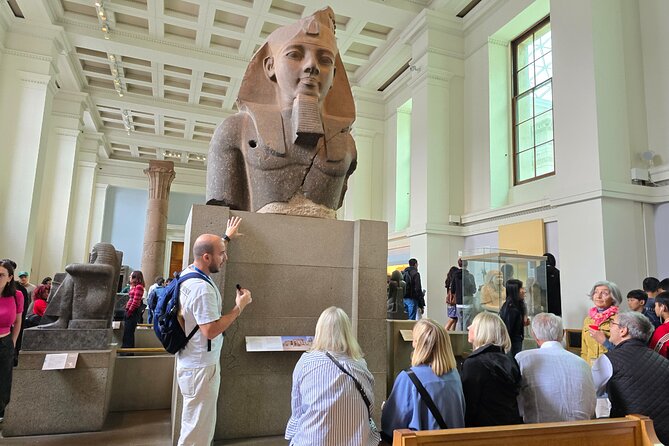
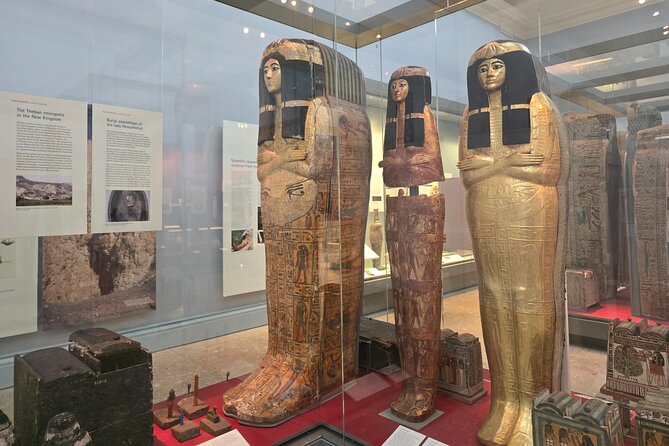
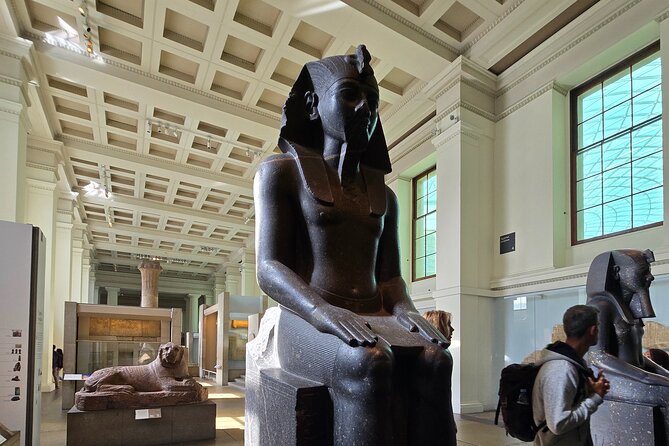
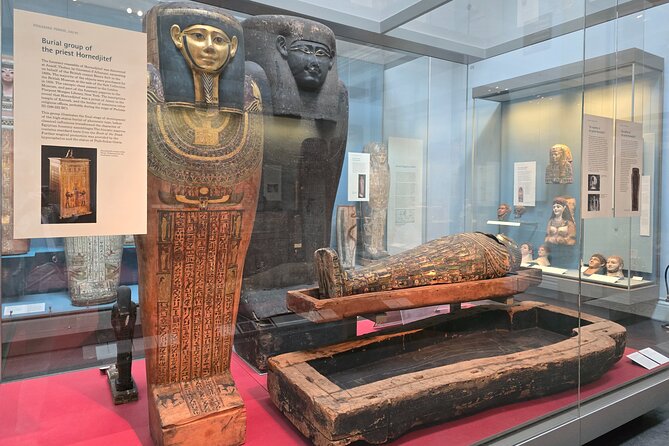
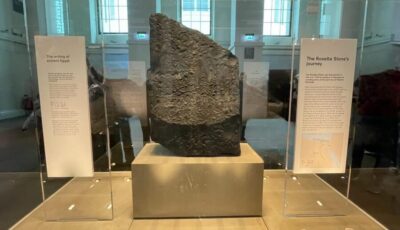
Egypt is one of the safest bets on this route. You can expect to see Egyptian statues and mummies, then spend time with the Rosetta Stone, the object that helped scholars read ancient Egyptian writing through its inscriptions in different scripts.
The value of a guide here is not simply learning the name of the stone. A good explanation shows why this particular piece mattered and how it fits into the wider story of deciphering ancient Egypt. The museum’s labels provide facts, but a live guide can connect those facts, answer a question, and point out details you might otherwise walk past.
The Egyptian material also gives the tour an early sense of scale. You are not looking at one isolated masterpiece. You are seeing how the museum gathers objects from different periods and places, then places them in a wider human story.
You will not have time to study every mummy case or statue. If Egypt is your main reason for booking, tell the guide early if possible. The tour is built around major highlights, but guides such as Daniel and James have been praised for responding to requests while still keeping the overall route moving.
Parthenon sculptures and the difficult questions
The Parthenon sculptures, also known as the Elgin Marbles, are among the most famous objects connected with the museum. They are visually powerful, but they also raise questions about ownership, removal, and the role of museums in holding objects from other countries.
A guide can give you useful context rather than leaving you with a famous name and a quick photograph. The amount of time spent here depends on the group and the guide’s route, so you should not expect a long specialist lecture on every debate. You can expect this stop to be part of the museum’s central highlight circuit.
This is one reason a live guide can add something beyond an audio guide. You can ask for clarification, hear how the sculptures fit into the museum’s collection, and then decide which questions you want to explore later. The guided visit gives you a beginning, not the final word.
Crowds are part of the experience. The most popular galleries may have several groups nearby, and you may need to stand at an angle to see clearly. The headset helps, but it cannot create extra floor space.
More London museums to visit:
- Tower of London and Crown Jewels Exhibition Ticket
★ 4.5 · 6,677 reviews - London: Chelsea Football Club Stadium and Museum Tour
★ 4.8 · 4,576 reviews - Chelsea FC Stadium Tours and Museum
★ 5.0 · 1,908 reviews - London Transport Museum Entrance Ticket
★ 4.5 · 1,323 reviews
Assyrian winged bulls and the power of scale
The Assyrian winged bull is the kind of object that benefits from seeing it in person. Its size and careful detail make it memorable, and a guide can direct your attention to features that are easy to miss when you are simply walking through the room.
This stop also broadens the tour beyond Egypt and Greece. You get a sense of how the museum moves across ancient civilizations, with the guide explaining why the objects mattered in their original settings. The experience is strongest when the guide relates the artwork to power, protection, belief, and daily life.
One piece of practical advice: stay close enough to keep the headset connection and visual contact with the group, especially when the room is crowded. The route is fast-moving by necessity. If you pause for a photograph, you could lose the thread of the explanation.
Moai, Sutton Hoo, and the Lewis Chessmen
The Easter Island Moai Statue adds a striking change of scale and place. After ancient Mediterranean and Middle Eastern objects, you move to an object associated with the Pacific, reinforcing just how wide the British Museum’s collection is.
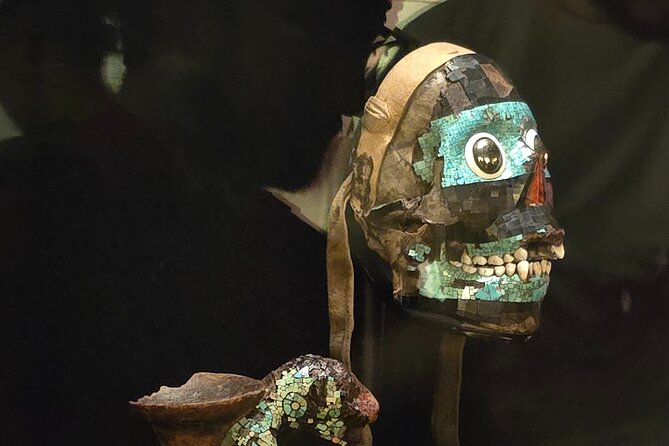
Sutton Hoo and the Lewis Chessmen offer a different kind of appeal. Sutton Hoo connects you with an important ship burial and early medieval Britain, while the Lewis Chessmen are small, famous pieces that reward close looking. These are not filler stops. They show that the museum’s best-known objects are not limited to giant statues and royal treasures.
The guide’s job is to make these transitions feel purposeful. A strong explanation can help you understand why each object earned a place on a highlights route. Several guides were praised for using stories and humor, which is useful when you are absorbing a lot of dates and names in a short time.
The tradeoff is time. If the group becomes especially interested in Mesopotamia, Egypt, or another section, the guide may spend longer there. One family specifically wished for more time with other histories after a longer stop in Mesopotamia. If you want equal attention for every culture, a self-guided visit will give you more control.
What the small group changes
A maximum of 15 people is small enough to feel personal without being a private tour. You can usually hear the guide more easily, ask a question without stopping an entire crowd, and keep track of the group as it moves between rooms.
The group size does not remove the museum’s crowds. It also does not guarantee that you will have every object to yourself. What it does is reduce the friction of moving through a very large public museum.
The guides receive the strongest praise for combining facts with personality. Daniel is repeatedly described as warm, well informed, funny, and easy to follow. James is praised for telling the museum’s story in a way that holds attention. Joey is noted for his preparation and willingness to accommodate requests. Tara, Tony, Antonio, and Rebekka are also named for clear communication and strong museum introductions.
Guide assignments can change, so you should not book on the assumption that one particular person will lead your visit. Still, the repeated pattern is useful: this experience depends heavily on the guide’s ability to pace the route and tell stories. That is common with any museum tour, but especially true when the visit is limited to two hours.
Headsets are more useful than they sound
At a quiet museum, a headset can feel unnecessary. At the British Museum, it makes practical sense. Popular displays draw people from several groups, and the guide may need to stand a short distance away so everyone can see the object.
With the headset, you can look toward the display while listening to the explanation. You are less likely to miss a point because someone nearby is talking, and the guide does not need to raise their voice constantly.
The equipment will not solve every problem. You still need to stay with the group, and background noise may remain. But the headset is one of the details that helps this tour work in a busy public building.
Is $48.60 good value?
The price is $48.60 per person. Because general museum admission is free, the value question is fair. If you are comfortable doing your own research, following a map, and choosing only a few galleries, you can visit without paying for a tour.
I think the fee makes more sense in three situations. First, you have only a short time in London and want a focused route. Second, this is your first visit and the museum feels too large to plan confidently. Third, you prefer live stories and questions to reading labels or using a standard audio guide.
The price is less attractive if you want to linger over one collection. Two hours moves quickly, and the route is designed to sample the highlights. You may finish with a clearer plan, but you will not finish the museum.
The included priority timeslot and guide help justify part of the cost, especially when your sightseeing schedule is tight. The real value, though, is the interpretation. You pay to avoid spending your first hour simply working out where to go.
Who should book this visit?
I would recommend it to first-time visitors, families, couples on a short London break, and museum fans who want an organized opening visit. The tour also suits anyone who finds enormous museums tiring or confusing.
It is a good choice if your list includes the Rosetta Stone, Egyptian material, the Parthenon sculptures, the Assyrian winged bull, the Moai, Sutton Hoo, and the Lewis Chessmen. You can see these major names, then use the remaining time to return to the sections that interest you most.
You may prefer a self-guided visit if you want art from one specific culture, need a very slow pace, or plan to spend several hours examining a small number of objects. The two-hour route is broad and brisk, not a specialist seminar.
The tour is near public transportation, and most people can participate. Confirmation is provided at booking. You can cancel for a full refund up to 24 hours before the start time. Changes or cancellations inside that window are not accepted for a refund. The activity can also be canceled if minimum numbers are not reached or if poor weather affects operation, with another date or a full refund offered in those cases.
My verdict on the British Museum highlights tour
Book this tour if you want a clear first pass through one of London’s most overwhelming museums. The combination of a small group, a planned main entrance timeslot, headset commentary, and a lively English-speaking guide makes the visit easier to follow and more useful than simply wandering in.
Do not book it expecting to see everything. You will see selected highlights, hear the stories behind them, and leave with a plan for further exploration. At $48.60, that is a reasonable trade for a short London itinerary, but a poor fit if you prefer complete freedom and long stops.
FAQ
How long does the British Museum guided tour last?
The tour lasts approximately two hours.
What language is the tour offered in?
The tour is offered in English.
What is the price per person?
The listed price is $48.60 per person.
Is admission to the British Museum included?
Yes. The experience includes an entry ticket for the British Museum main entrance with a priority timeslot.
Is the British Museum itself free to enter?
The museum has free public admission, but this experience charges for the guided service, planned entry arrangement, and included tour access.
What objects will I see?
The route includes Egyptian statues and mummies, the Rosetta Stone, Parthenon sculptures, the Assyrian winged bull, the Easter Island Moai Statue, Sutton Hoo, the Lewis Chessmen, and other major objects.
How large is the tour group?
The tour has a maximum of 15 travelers.
Are headsets included?
A headset option is available so you can hear the guide’s live commentary clearly, including in crowded areas.
Where does the tour start and end?
The meeting point is the British Museum, Great Russell Street, London WC1B 3DG. The activity ends back at the meeting point.
Can I cancel for a full refund?
Yes. You must cancel at least 24 hours before the experience start time for a full refund. Cancellations or changes made less than 24 hours before the start time are not accepted for a refund.
Latest arrivals on the London list
- Heathrow Airport to London Arrival Transfer★ 4.5 · 50 reviews
- London Beatles Tour★ 5.0 · 50 reviews
- One Way Taxi Transfer from London to Gatwick Airport★ 5.0 · 51 reviews
- London: Hidden Baker Street Tube Station Tour★ 4.7 · 51 reviews
- City & Secrets: Explore London’s Hidden Gems★ 5.0 · 51 reviews
- London Christmas Lights Open-Top Bus Tour. 2025 Early Bird★ 3.6 · 51 reviews
- 4 hour London Private Tour, with your own Black Cab Tour Guide★ 5.0 · 51 reviews
- The Beatles Magical History Black Taxi Tour London★ 5.0 · 51 reviews
British Museum Tours, compared.
British Museum London Guided Tour Semi-Private 8ppl Max
Read our review →
British Museum Audio Tour & Priority Entrance Ticket
Read our review →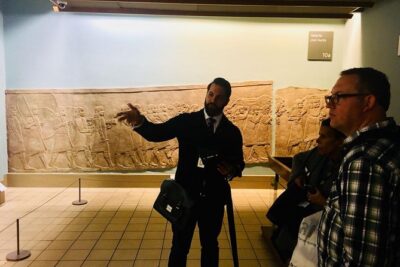
The British Museum London – Exclusive Guided Museum Tour
Read our review →
Browse the lists this tour appears in