
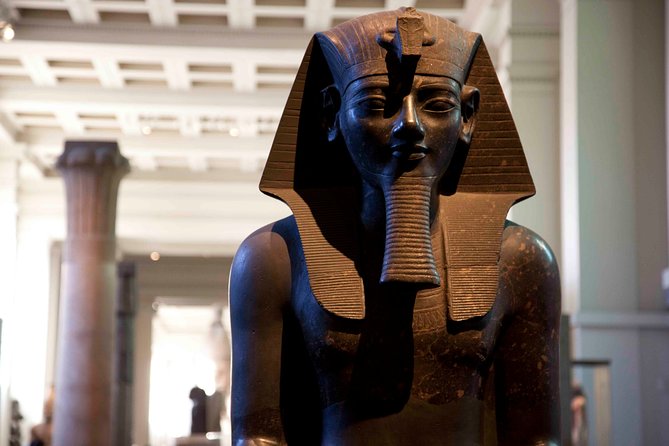
Reviewed · BRITISH MUSEUM TOURS
British Museum Highlights Private Tour in London including the Rosetta Stone
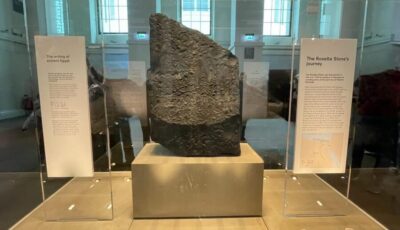
The Rosetta Stone is the star, but the real trick here is learning how to make sense of a museum with more than eight million objects. A private guide leads you through selected rooms instead of leaving you to wander among 70 galleries with no clear plan. You’ll also see the Parthenon Frieze, Egyptian mummies, and Anglo-Saxon finds from Sutton Hoo.
I like the efficient route and the chance to ask questions as you go. I also like that the guide can adjust the emphasis to your interests, whether you care most about ancient Egypt, classical Greece, or British archaeology. The main drawback is price: the museum itself is free, so you are paying for direction, explanation, and time saved. Guide quality can also vary, and the meeting point needs careful attention.
In This Review
- Key points to know before booking
- Why a guide helps inside this enormous museum
- Meeting at Montague Place
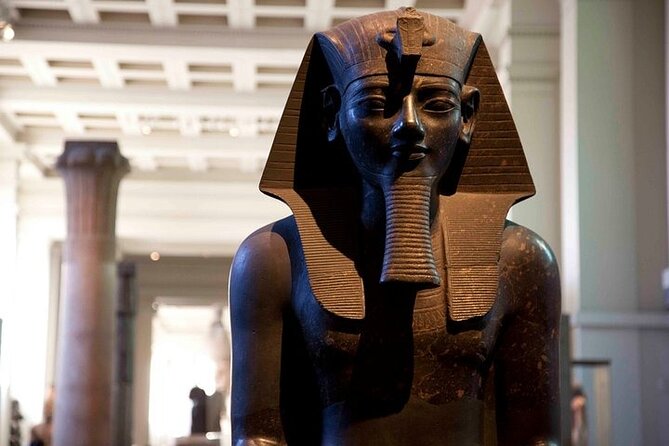
- The Rosetta Stone and the Egyptian Rooms
- Greek sculpture and the Parthenon Frieze
- Sutton Hoo and Britain’s Anglo-Saxon past
- What the guide adds to the experience
- Time, pace, and the 2-hour-30-minute question
- Is $141.56 a fair price?
- Who should book this museum tour?
- Booking details worth keeping in mind
- Should you book it?
- FAQ
- How long does the British Museum private tour last?
- What is the tour price?
- Is British Museum admission included?
- Is the British Museum free to enter?
- Where does the tour meet?
- How do I find the guide?
- Is the tour private?
- What language is the tour offered in?
- Are food and drinks included?
- Can I cancel for a full refund?
Key points to know before booking
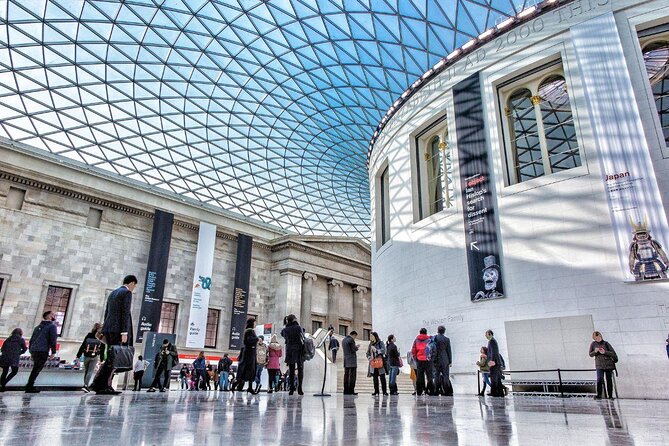
- Rosetta Stone and Parthenon Frieze: See two of the museum’s most famous holdings, along with Egyptian mummies and Sutton Hoo treasures.
- Private attention: Your group has its own English-speaking guide, so you can ask questions and request extra focus on certain rooms.
- Short, focused visit: The tour is built for a half-day or shorter London schedule, not for seeing the whole museum.
- Free museum, paid guidance: Admission is included, but the $141.56 price pays mainly for the guide and a planned route.
- Montague Place meeting point: Meet by the north entrance, near the stone lions, with a guide holding a sign.
- Leave time afterward: The guided route only covers a fraction of the collection, so continue alone if your schedule allows.
Why a guide helps inside this enormous museum
The British Museum can feel less like a museum visit and more like an expedition. Its collection covers about two million years of human history, with nearly one million square feet spread across dozens of galleries. You can easily spend an hour simply trying to work out where to begin.
That scale is the main reason this tour makes sense. Your guide does the basic orientation for you, then takes you to objects that reward explanation. Instead of reading every label and guessing which displays matter most, you get a story that links the objects together.
I especially value this approach if you have only one day in London, or if the museum is one stop among several. A guide cannot show you everything in two hours or so, but can help you understand why a handful of objects matter. That gives you a useful framework for returning to the museum on your own.
The experience is private, so your group is not combined with strangers. That gives you room to interrupt, ask for clarification, or request a little more time in a section that catches your interest. It also means the pace may be more flexible than on a large scheduled group tour.
Do keep your expectations in check. This is a highlights tour, not a full survey of the British Museum. You will see selected rooms and major objects, then leave with a map in your head rather than a complete account of the collection.
More British Museum visits:
- London: British Museum Guided Tour
★ 4.3 · 1,182 reviews - British Museum London Guided Tour Semi-Private 8ppl Max
★ 5.0 · 984 reviews - London: Tour of the British Museum
★ 4.1 · 678 reviews
Meeting at Montague Place
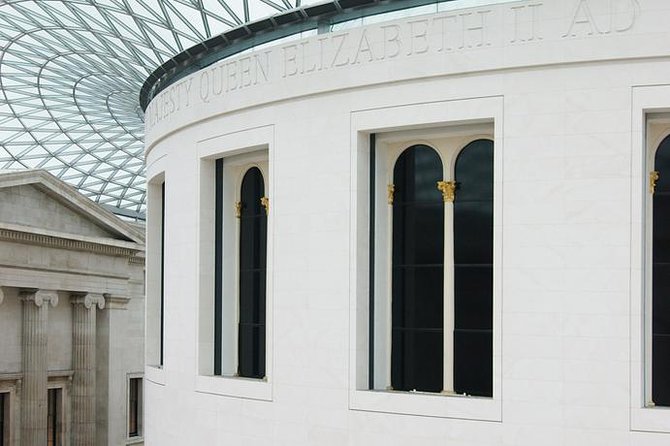
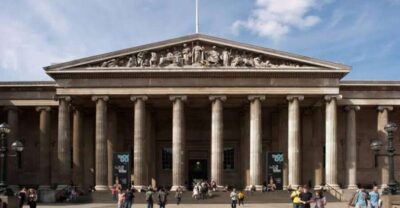
The stated meeting point is Montague Place, by the museum’s north entrance. Look for the stone lions beside the doorway. Your guide is expected to be holding a sign.
This sounds simple, but it is the detail I would take most seriously before setting out. Some people have had trouble locating the guide, including cases where the sign was not visible. One practical step is to arrive early, stand clearly by the north entrance, and keep the tour company’s contact details ready on your phone.
Do not confuse the north entrance with another museum entrance or a nearby hotel reference. The meeting information has caused confusion when surrounding landmarks changed names. Montague Place is the key detail.
The museum is near public transportation, which helps if you are coming from another part of central London. Hotel pickup and drop-off are not included, so you make your own way to the museum and back.
The Rosetta Stone and the Egyptian Rooms
The Rosetta Stone gives the tour an excellent opening point. It is not connected to the language-learning software that shares its name. This is the actual inscribed stone that helped scholars decipher Egyptian hieroglyphs, and seeing it in person makes a familiar schoolbook subject much more tangible.
Your guide can explain why the stone mattered: the same decree appears in different scripts, giving researchers the clues they needed to understand ancient Egyptian writing. The object is important not only because it is famous, but because it opened a door into a civilization whose written record had been difficult for modern scholars to read.
From there, the Egyptian rooms provide some of the tour’s most striking displays. The collection includes mummies and objects tied to burial and the afterlife. The useful part of having a guide here is the context. Egyptian funerary objects can look like a long line of statues, coffins, and cases until someone explains how they fit into beliefs about death, survival, and the next world.
The Egyptian section can also be crowded, and the tour moves at a steady pace. You may not have time to linger over every mummy or read every label. If Egypt is your main interest, tell the guide early. The private format gives you a better chance of shaping the visit around that priority.
Greek sculpture and the Parthenon Frieze
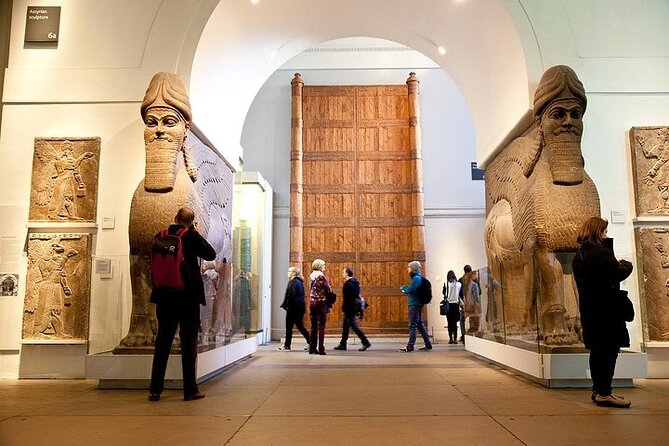
The Parthenon Frieze is another major stop. This enormous sculpted band once decorated the Acropolis in Athens. It is more than three feet high and stretches about 525 feet, so the scale is hard to grasp from a photograph.
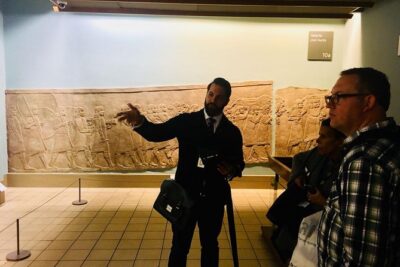
The guide’s explanation helps you read the procession and notice details that are easy to miss when you simply walk past. You can consider how the sculptures once formed part of a larger building, rather than viewing them as isolated pieces in a gallery.
The museum’s Greek collection also includes Athenian marbles and other classical objects. These displays are visually impressive, but the story is not only about artistic achievement. The presence of major pieces from the Parthenon also raises questions about ownership, removal, and the role of the British Museum in displaying objects from around the world.
The tour description promises the major highlights, not a full treatment of those debates. If cultural ownership is important to you, ask your guide about it directly. A private tour is a good setting for questions that may not fit into a standard speech.
More London museums to visit:
- Tower of London and Crown Jewels Exhibition Ticket
★ 4.5 · 6,677 reviews - London: Chelsea Football Club Stadium and Museum Tour
★ 4.8 · 4,576 reviews - Chelsea FC Stadium Tours and Museum
★ 5.0 · 1,908 reviews - London Transport Museum Entrance Ticket
★ 4.5 · 1,323 reviews
Sutton Hoo and Britain’s Anglo-Saxon past
The tour also turns toward the British Isles, with objects connected to Sutton Hoo. This burial site is associated with an Anglo-Saxon ship burial and produced remarkable objects that survived for centuries.
The appeal here is different from the Rosetta Stone or Greek sculpture. Instead of looking at a famous monument from a distant civilization, you are seeing evidence tied to Britain’s own early medieval past. The story of the burial and the survival of the objects gives the displays a strong human element.
Sutton Hoo is also a good reminder that the British Museum is not only about Egypt, Greece, and Rome. The collection reaches into the history of the British Isles, and this section gives the itinerary a more local connection.
You may not spend as long here as you would on the Egyptian rooms. The guide is trying to connect several major areas in a short time. Still, it is worth paying attention, especially if you want the tour to feel like more than a parade of famous foreign artifacts.
What the guide adds to the experience
The best guides make the museum feel orderly and alive. Several guides associated with this experience have been singled out for their energy and clear explanations, including Rob Smith, Trudy, Guy, Norma, and ZoZo. You should not assume you will receive a particular guide, but these names give you a sense of the style the operator has provided on past departures.
Trudy has been praised for bringing the objects to life and for handling crowded school groups. Rob Smith has been described as punctual, friendly, and strong on both the collection and the museum’s architecture. Guy has led visitors through the principal displays with an engaging approach, while Norma has been noted for making a short overview feel focused and worthwhile.
That said, the experience is not automatically perfect. A guide on one departure was hard to understand, appeared to rely heavily on display cards, and reportedly gave incorrect information. There was also a complaint about using a flashlight in a low-light gallery after a museum staff member objected. Those are serious concerns because the guide is the main reason for paying the tour price.
The practical lesson is simple: if something sounds unclear, ask the guide to repeat or explain it. If you notice a museum rule being ignored, expect it to be corrected. Guide quality is the variable you cannot fully control, so the strongest reason to book is the value of a good explanation, not merely the promise of entry.
Time, pace, and the 2-hour-30-minute question
The experience is advertised as approximately 2 hours and 30 minutes. The detailed itinerary assigns 1 hour and 30 minutes to the British Museum stop, so check the timing shown for your selected departure and confirmation. The supplied information does not clearly explain the difference.
Either way, you should plan for a compact visit. You will walk between galleries, stop at major objects, listen to explanations, and continue. This is not a slow afternoon with a bench in every room.
The pace suits you if you want a clear introduction before exploring independently. It may frustrate you if you prefer to study one display for 20 minutes or read every inscription. One past visitor felt that too few exhibits were covered, while another appreciated being shown where to return after the tour.
The best plan is to treat the guided portion as your orientation. Afterward, go back to the areas that caught your attention. Because the museum is free to enter, you can use the paid tour as a first pass and then continue without buying another admission ticket.
The building can be warm and crowded, especially on busy days. You should wear comfortable shoes and expect a fair amount of walking. Strollers are not permitted on the tour, and one account noted that two hours of walking and stairs can be tiring. Most people can participate, but this is not a seated experience.
Is $141.56 a fair price?
At $141.56 per person, this is a substantial purchase for a museum that does not charge general admission. The value depends on how you use your time.
If you have only half a day, the price may be reasonable. You are paying for a planned route through a huge building, an English-speaking professional guide, and the chance to ask questions. Missing the Rosetta Stone, Parthenon Frieze, or Egyptian rooms because you could not find your way would be a poor use of a short London visit.
If you have a full day and enjoy reading labels, wandering, and choosing your own subjects, you may prefer to visit independently. The museum’s free admission gives you the freedom to return later, and you can spend as long as you like in one gallery.
Group discounts are available, which may improve the cost for a larger party. Since the activity is private, the total price may make more sense when shared by several people, though the listed rate is per person. Food, drinks, and transport are not included.
I would think of the fee as a payment for time and interpretation. It is less attractive if you already know the museum well. It is more attractive if the building feels intimidating, your London schedule is tight, or you want a historian-like companion who can connect the objects.
Who should book this museum tour?
I would recommend it to a first-time visitor who wants the British Museum’s major sights without spending a whole day finding them. It also suits families and mixed-interest groups, since a private guide can adjust the explanation and answer different questions.
It is a strong choice for a short London stopover. One person who had only a 24-hour layover missed the tour because of a delayed flight, but the operator offered six months to use one of its tours in another city. That is a helpful gesture, though you should still protect your schedule and arrive early.
History students, museum newcomers, and anyone who likes stories more than labels should get the most from it. The guide can explain why an object matters instead of leaving you to guess from a short caption.
I would hesitate if you want a leisurely, exhaustive museum day. I would also hesitate if the free admission is the main attraction and you are comfortable planning your own route. In that case, the fee may feel too high for a relatively short visit.
Booking details worth keeping in mind
Confirmation is provided at booking, and the activity is offered in English. The tour begins and ends at the stated meeting point, with no hotel pickup or drop-off.
Free cancellation is available until 24 hours before the start time for a full refund. Changes or cancellations inside that 24-hour window are not accepted for a refund, and the cut-off uses London local time.
Because the museum holds far more than any short tour can cover, leave extra time afterward if you can. The guide can point out other major rooms, and you can continue alone once the formal tour ends.
Should you book it?
Book this tour if you want the Rosetta Stone, Parthenon Frieze, Egyptian mummies, and Sutton Hoo placed into a clear story without losing hours to museum navigation. The private format and chance to ask questions are the real advantages.
Skip it if you have plenty of time, prefer independent wandering, or object to paying $141.56 for guidance inside a free museum. The experience is only as strong as the individual guide, and the occasional meeting or presentation problem is worth considering.
For a first visit on a tight schedule, I think the tour earns its keep when you treat it as a focused introduction, then return to your favorite galleries on your own.
FAQ
How long does the British Museum private tour last?
The experience is listed as approximately 2 hours and 30 minutes. The detailed itinerary gives 1 hour and 30 minutes for the British Museum stop, so check the timing on your booking confirmation.
What is the tour price?
The listed price is $141.56 per person. Group discounts are available.
Is British Museum admission included?
Yes. Museum admission is included with the tour, along with all fees and taxes.
Is the British Museum free to enter?
The museum has free general admission, but this activity charges for the private guided experience and includes admission arrangements.
Where does the tour meet?
You meet at Montague Place in London, by the museum’s north entrance. The entrance has stone lions near the doorway.
How do I find the guide?
The guide is supposed to hold a sign at the Montague Place meeting point. Arrive early and keep the tour company’s contact information available in case you have trouble locating the guide.
Is the tour private?
Yes. Only your group participates in the private activity.
What language is the tour offered in?
The tour is offered in English and includes a professional English-speaking guide.
Are food and drinks included?
No. Food and drinks are not included.
Can I cancel for a full refund?
Yes, if you cancel at least 24 hours before the experience’s start time. Cancellations or changes made less than 24 hours beforehand are not accepted for a refund.
Latest arrivals on the London list
- Heathrow Airport to London Arrival Transfer★ 4.5 · 50 reviews
- London Beatles Tour★ 5.0 · 50 reviews
- One Way Taxi Transfer from London to Gatwick Airport★ 5.0 · 51 reviews
- City & Secrets: Explore London’s Hidden Gems★ 5.0 · 51 reviews
- London: Hidden Baker Street Tube Station Tour★ 4.7 · 51 reviews
- London Christmas Lights Open-Top Bus Tour. 2025 Early Bird★ 3.6 · 51 reviews
- 4 hour London Private Tour, with your own Black Cab Tour Guide★ 5.0 · 51 reviews
- The Beatles Magical History Black Taxi Tour London★ 5.0 · 51 reviews
British Museum Tours, compared.
British Museum London Guided Tour Semi-Private 8ppl Max
Read our review →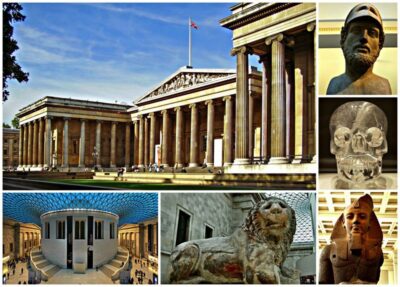
British Museum Audio Tour & Priority Entrance Ticket
Read our review →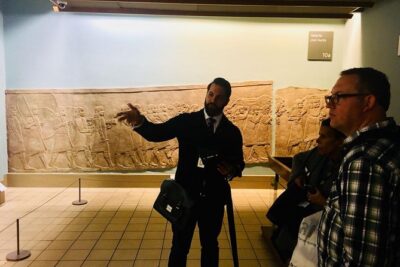
The British Museum London – Exclusive Guided Museum Tour
Read our review →
Browse the lists this tour appears in