
Reviewed · BRITISH MUSEUM TOURS
British Museum London Private Guided Tour – 3 hour
The best thing about this British Museum tour is that it turns a huge, sometimes confusing collection into a clear three-hour story. Robert is often the guide, and he is praised for lively explanations, strong museum knowledge, and a knack for answering questions. I like the early crowd-avoiding strategy and the chance to shape the route around your group. I also like that admission is included, so you are paying for both entry and expert guidance rather than arranging two separate bookings.
The main consideration is the price: $267.36 per group of up to six is fair for a private experience, but it is not the cheapest way into a free museum. Three hours also passes quickly, especially if your group wants Egypt, Greece, Rome, Asia, and British archaeology all at once. You will need to choose your priorities before the tour begins.
In This Review
- Key points at a glance
- Why the British Museum benefits from a private guide
- Meeting at Great Russell Street
- Making the most of the first 30 minutes
- The Rosetta Stone and Egyptian treasures
- The Parthenon Marbles and the Greek and Roman rooms
- Sutton Hoo, the Lewis Chessmen, and British archaeology
- China, Easter Island, and the less obvious displays
- The Enlightenment Room and the Waddesdon Bequest
- Robert’s guiding style and the value of storytelling
- Three hours with children and teenagers
- Is $267.36 a fair price?
- Who should book this British Museum tour?
- Final verdict: book it if the museum feels too big
- FAQ
- Where does the British Museum private tour start?
- Where does the tour end?
- How long is the tour?
- Is admission to the British Museum included?
- How many people can join the private tour?
- Is the tour offered in English?
- Can I choose a morning or afternoon start?
- Which British Museum objects can I see?
- Is the tour suitable for most people?
- What is the cancellation policy?
Key points at a glance
- Start with the Rosetta Stone: A smart morning plan can get you close to one of the museum’s most famous objects before the rooms fill up.
- Private group of up to six: You can ask questions, adjust the pace, and focus on the objects your family or friends care about most.
- Major treasures in one route: The tour can include the Parthenon Marbles, Egyptian, Greek, and Roman collections, Sutton Hoo, Lewis Chessmen, and more.
- A guide who knows the building: Robert is praised for finding efficient routes, explaining the galleries, and pointing out objects easy to miss on your own.
- Morning or afternoon choice: You can fit the visit into a wider London sightseeing plan, though earlier is better for crowds.
- Good for families: Children and teenagers can stay engaged when artifacts come with stories instead of labels alone.
Why the British Museum benefits from a private guide
The British Museum is not a quick stop with a single main hall. Its rooms cover objects from many parts of the world and long stretches of time. A first visit can easily become a march from one famous display to another, with little sense of how the pieces connect.
That is where a private guide earns the fee. Instead of following every corridor, you spend your time on selected objects and hear why they matter. The guide can explain the object itself, its setting, and the questions it raises about power, religion, trade, conquest, and collecting.
I especially like this format for a first visit. You can see the museum’s headline pieces without spending half the morning trying to locate them. You also get help with the less obvious displays, the objects that might look modest until someone explains their purpose or story.
This is not a fixed large-group walk. Only your party takes part, with a maximum of six people. That makes it easier to interrupt with questions, slow down for a child, or move on when a particular gallery does not interest you.
More British Museum visits:
- London: British Museum Guided Tour
★ 4.3 · 1,182 reviews - British Museum London Guided Tour Semi-Private 8ppl Max
★ 5.0 · 984 reviews - London: Tour of the British Museum
★ 4.1 · 678 reviews
Meeting at Great Russell Street
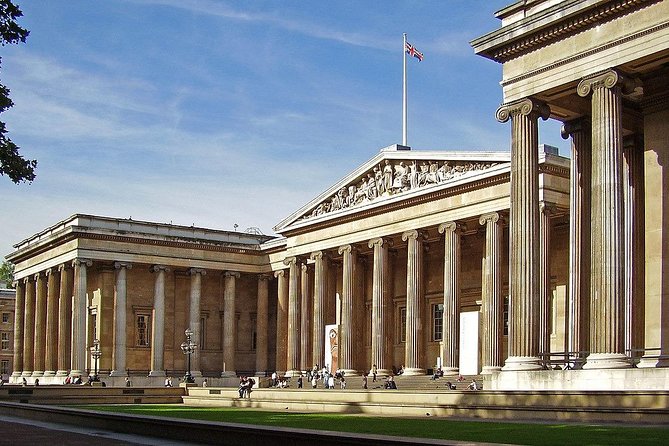
The tour begins at the British Museum, Great Russell Street, London WC1B 3DG. The museum is near public transportation, which makes it a practical stop during a central London day, though the supplied details do not specify a particular station or route.
The meeting point matters because the entrance area can become crowded. Robert is praised for sending clear directions in advance and for helping groups avoid a long security wait. Several accounts describe arriving early, joining the queue, and using a less congested entrance strategy.
You should still allow time to reach Great Russell Street. The tour is scheduled for a set start time, and a late arrival can cut into an already compact three-hour visit. One particularly useful detail is that the guide was understanding when a group ran late, but I would not build your plan around that courtesy.
Your mobile ticket and admission are included. Service animals are allowed, and most people can participate. The activity ends back at the museum meeting point, so you can continue sightseeing in Bloomsbury or make your own way to the next London attraction.
Making the most of the first 30 minutes
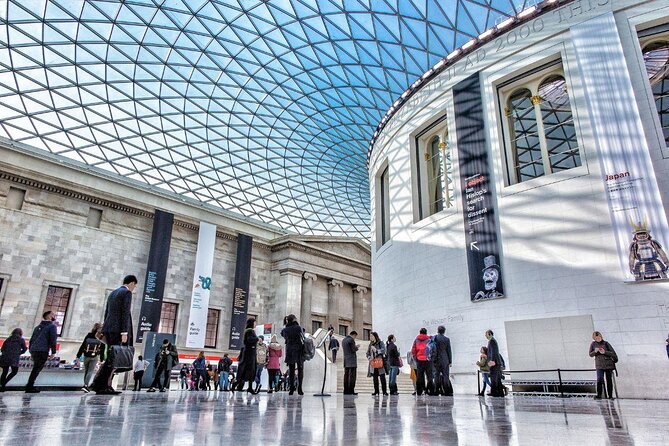
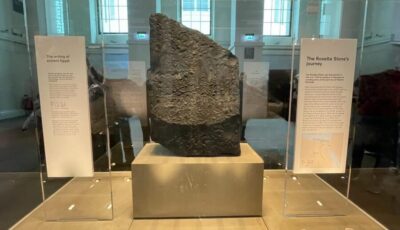
If you choose a morning departure, the guide may take you toward the Rosetta Stone early. This is a practical move, not just a famous-object checklist. The stone draws a steady crowd, and reaching it before the busiest period gives you a better look and more room to hear the explanation.
The Rosetta Stone is valuable as a museum stop because it represents a breakthrough in reading Egyptian hieroglyphs. A guide can turn it from a large dark slab behind glass into a piece of evidence that helped scholars compare the same decree written in different scripts.
From there, the route can shift according to your interests. You might ask for ancient Egypt, Greek sculpture, British archaeology, Chinese art, or a broad survey. The guide’s job is not to show every room. It is to choose enough strong stops to make the collection feel manageable.
The pace appears brisk but not frantic. One family with children aged 9, 11, and 13 found the three hours held their attention, while another group appreciated spending time on roughly twenty featured objects. That gives you a useful expectation: this is a selection of important and interesting pieces, not a room-by-room museum audit.
The Rosetta Stone and Egyptian treasures
Ancient Egypt is one of the safest requests for a first visit because the British Museum has a large collection. You might see mummies, sculpture, carved inscriptions, and objects tied to daily life, burial, and belief, depending on the route and current gallery access.
The value of a guide here is context. Egyptian displays can blur together when you are reading labels quickly. A good explanation helps you distinguish a royal image from a religious object, understand how a text was used, and notice details in the carving.
The Rosetta Stone will likely be the anchor for this part of the visit, but it should not be the only stop. Ask the guide to show you one or two objects that are less famous but especially useful for understanding Egyptian culture. The tour is designed for that kind of personal choice.
There is a tradeoff. The more time you spend with Egypt, the less time remains for the Greek, Roman, Asian, and British rooms. Tell Robert your priorities at the beginning, especially if someone in your group has a strong interest in mummies or ancient writing.
More London museums to visit:
- Tower of London and Crown Jewels Exhibition Ticket
★ 4.5 · 6,677 reviews - London: Chelsea Football Club Stadium and Museum Tour
★ 4.8 · 4,576 reviews - Chelsea FC Stadium Tours and Museum
★ 5.0 · 1,908 reviews - London Transport Museum Entrance Ticket
★ 4.5 · 1,323 reviews
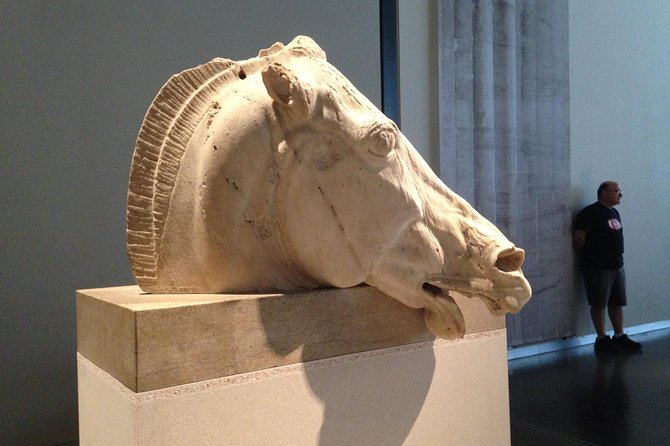
The Parthenon Marbles and the Greek and Roman rooms
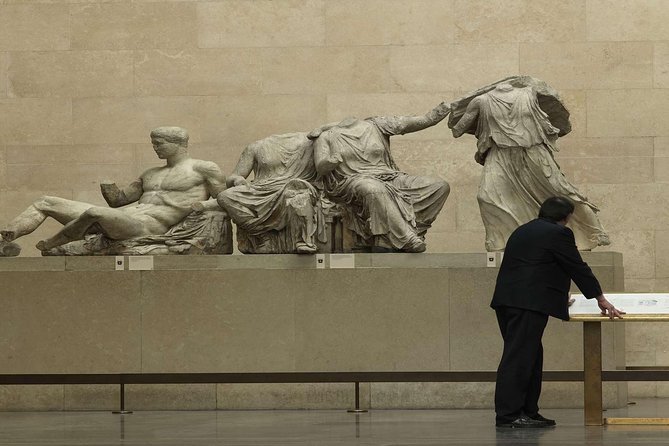
The Parthenon Marbles are another major stop. These sculptures come with artistic, architectural, and political questions, so they benefit from explanation rather than a quick glance and photograph.
A guide can help you read the figures, understand their original connection to the Parthenon, and place the display within the museum’s wider story. The subject also gives you a chance to ask about ownership and the debates surrounding major museum collections, though the exact depth of that discussion depends on your interests and available time.
The Greek and Roman collections offer a useful contrast with Egypt. You can see how different societies represented gods, rulers, bodies, and public life. Rather than trying to cover every statue, the guide can select objects that show changes in style and purpose.
This section may appeal to adults who enjoy art and architecture, but it can be harder for younger children if the discussion becomes too formal. Ask for stories and comparisons. The strongest feedback about Robert centers on storytelling, which is exactly what makes ancient sculpture easier to remember.
Sutton Hoo, the Lewis Chessmen, and British archaeology
The Sutton Hoo Treasure brings the tour closer to Britain. The objects connect to an early medieval burial and offer a glimpse of status, craft, and long-distance exchange. The display works well after the grand imperial collections because it shows that British archaeology has its own dramatic treasures.
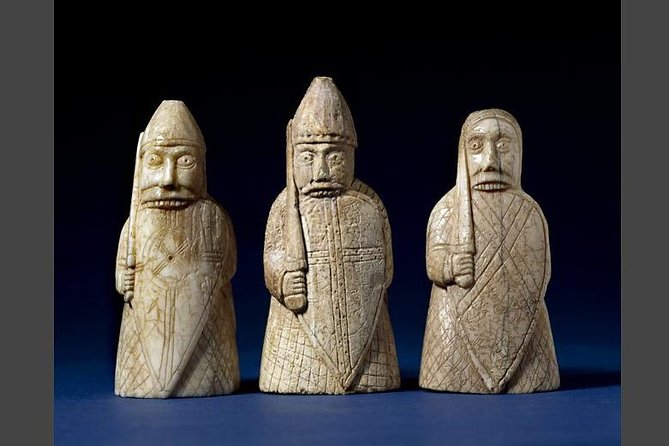
The Lewis Chessmen are smaller and more instantly playful. Their carved faces make them a natural family stop, but they also open a window onto medieval trade, games, and material culture. A guide can point out why these pieces matter beyond their charm.
Prehistoric carving adds another change of scale. You may move from monumental sculpture and royal objects to marks made by people whose lives are known through fragments. The contrast is useful. It reminds you that a museum’s importance is not measured only by size or precious materials.
I like this part of the route for mixed-age groups. Teenagers may enjoy the chess pieces, children can respond to the faces and stories, and adults can connect the objects to archaeology and social history. Still, the exact stops depend on your interests, the guide’s judgment, and what is accessible on the day.
China, Easter Island, and the less obvious displays
The tour can also include Chinese works of art and Hoa Hakananaia, a monumental figure from Easter Island. These objects broaden the visit beyond the museum’s best-known European and Egyptian material.
The Easter Island figure is a particularly strong example of why guidance helps. Its size and unusual form catch your eye, but the meaning, movement, and collecting story require more than a passing look. Chinese works can offer a similar lesson, since a display case may contain objects whose importance is not immediately clear to a first-time visitor.
You should not expect to see every featured collection listed in a single three-hour route. The Rosetta Stone, Parthenon Marbles, Enlightenment Room, Waddesdon Bequest, Sutton Hoo, Lewis Chessmen, Egyptian, Greek, Roman, Chinese, prehistoric, and Easter Island displays are far too broad for equal attention.
Think of the list as a menu. Before you arrive, choose three or four subjects that matter most. Then let the guide fill in the route with a few surprises. That approach gives you focus without making the visit feel rigid.
The Enlightenment Room and the Waddesdon Bequest
The Enlightenment Room offers a different experience from the galleries devoted to one civilization. It can help you understand how European collectors and scholars once organized knowledge, and how the museum itself developed as an institution.
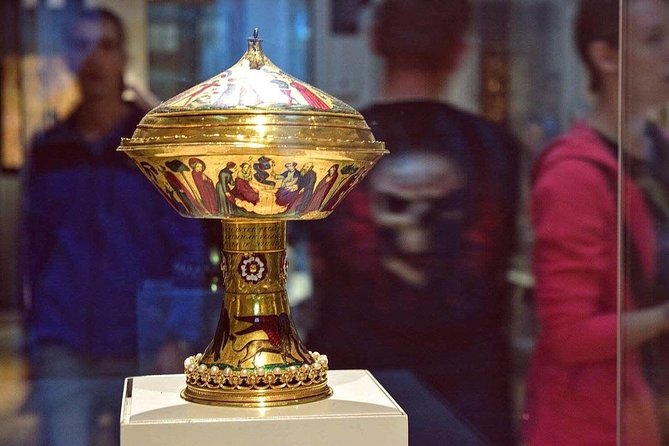
The Waddesdon Bequest adds decorative art and finely made objects to the route. It is a useful choice if you prefer craftsmanship, precious materials, and smaller-scale works to large archaeological displays.
These rooms may be easy to skip when you are chasing headline pieces. That is one reason a private guide can improve the visit. Robert is repeatedly praised for showing objects people might otherwise walk past, then explaining what makes them worth attention.
I would not ask for every famous object simply because it is famous. If your group has already seen major Egyptian and Greek displays at other museums, use the private format to request rooms that feel less familiar. The tour is at its best when the guide adapts rather than delivers the same script to every group.
Robert’s guiding style and the value of storytelling
Robert receives the strongest praise in the supplied feedback. He is described as patient, engaging, enthusiastic, and able to make complicated subjects easy to follow. Several accounts focus on his stories, while others praise his ability to answer follow-up questions and keep a family involved for the full three hours.
One person identifies the guide as Robert Miller and notes his long involvement in the art world and connection with the museum. Another account uses the name Richard, so if the named guide matters to you, confirm it when booking. Most of the detailed comments refer to Robert.
The practical strength is his familiarity with the building. A guide who knows the layout can reduce backtracking, choose a sensible order, and adjust when a room is crowded. That does not guarantee an empty museum, particularly during busy periods, but it can make the crowd less important to your experience.
I also like the pre-tour communication described in the feedback. Clear meeting instructions and an early plan for the Rosetta Stone can save time before the actual interpretation begins. Those small details matter when the clock is limited.
Three hours with children and teenagers
A private museum tour can go badly with children if it becomes a lecture. This one appears better suited to families because the guide can respond to the ages and interests in the room.
Children aged 9, 11, and 13 were reported to stay engaged, and a family with three teenagers made it through the full three hours despite heat and large crowds. That suggests the storytelling approach works better than a long list of dates and names.
You should still prepare your group. Ask each person to choose one subject or object before the tour. A child who wants the Lewis Chessmen, a teenager interested in mummies, and an adult keen on the Parthenon can all have a voice in the plan.
Three hours is a useful limit. It is long enough for a strong first look, but short enough to avoid turning the museum into an endurance test. Take the guide’s suggestions on pacing, and speak up if your group needs a pause or wants to spend longer with a particular object.
Is $267.36 a fair price?
The cost is $267.36 for the whole group, up to six people. That means the value changes sharply with group size. For six people, the effective cost is about $44.56 each. For two people, it is about $133.68 each, before considering the included museum admission.
The British Museum itself does not charge general admission, so you should not think of this as a simple ticket purchase. You are paying for private attention, route planning, museum access arrangements, and three hours of interpretation.
For a first visit, a family, or a group with limited time in London, I consider the price reasonable if you value structure and expert help. The museum is large enough that a self-guided visit can leave you tired and still unsure what you saw.
For repeat visitors on a tight budget, the calculation is different. You can enter on your own, choose a few galleries, and return another day. This tour is most useful when time matters, when several people have different interests, or when you want the major objects explained rather than simply photographed.
The booking pattern also matters. The experience is booked about 71 days in advance on average, so do not wait until the last day of a short London stay if you want a particular morning or afternoon. Free cancellation is available up to 24 hours before the start time. Changes or cancellations inside that window are not refunded.
Who should book this British Museum tour?
I would recommend it most strongly to first-time visitors, families, small groups, and anyone who feels overwhelmed by very large museums. It also suits people who want to see famous pieces while learning how to look at art and artifacts, not just collect a checklist of photographs.
It is a good fit for repeat visitors too, provided you request a different focus. You can ask for less familiar rooms, specific cultures, or objects you missed before.
I would hesitate if you prefer wandering alone, dislike fixed appointments, or want to spend an entire day in one collection. Three hours is a guided introduction, not a complete study of the British Museum.
Final verdict: book it if the museum feels too big
Book this private tour if you want a smart first route through the British Museum, personal attention, and stories that make the objects easier to remember. Robert’s strong reputation for communication, pacing, and storytelling adds real value, especially for families and visitors with only one museum visit available.
Skip it if your main goal is the lowest possible cost or a slow, solitary afternoon. If you do book, choose the earlier time when possible, arrive prepared for security, and tell the guide your top three interests. That is how you turn three hours into a focused introduction rather than a hurried walk through a very large building.
FAQ
Where does the British Museum private tour start?
It starts at the British Museum, Great Russell Street, London WC1B 3DG, UK.
Where does the tour end?
The activity ends back at the meeting point at the British Museum.
How long is the tour?
The visit lasts approximately three hours.
Is admission to the British Museum included?
Yes. Admission tickets are included in the experience.
How many people can join the private tour?
The private activity is for your group only, with up to six people.
Is the tour offered in English?
Yes. The experience is offered in English.
Can I choose a morning or afternoon start?
Yes. You can choose between a morning and an afternoon tour.
Which British Museum objects can I see?
Possible highlights include the Rosetta Stone, Parthenon Marbles, Enlightenment Room, Waddesdon Bequest, Egyptian, Greek and Roman treasures, Sutton Hoo Treasure, Lewis Chessmen, Chinese works of art, prehistoric carving, and Hoa Hakananaia from Easter Island.
Is the tour suitable for most people?
Most people can participate, and service animals are allowed. The activity is near public transportation.
What is the cancellation policy?
You can cancel at least 24 hours before the local start time for a full refund. Cancellations or changes made less than 24 hours before the start time are not accepted for a refund.
More 3-Hour Experiences in London
- Westminster 3 Hour Walking Tour and Visit of Churchill War Rooms
★ 5.0 · 967 reviews - Highlights of Royal London Bike Tour (3 Hours)
★ 4.8 · 140 reviews - London: 3-Hour Secret Indian Food Tour
★ 4.8 · 91 reviews - London: 3-Hour Sunset Bike Tour
★ 4.7 · 77 reviews
Latest arrivals on the London list
- Easy Access Tower of London Royal Secrets & Scandals Tour★ 5.0 · 3 reviews
- Stonehenge Special Access Guided Morning Tour from London★ 4.5 · 3 reviews
- Shoreditch & East London Walking Tour with a Local, Custom & Private★ 5.0 · 3 reviews
- Madame Tussauds London Fast Track and Champagne Experience★ 3.5 · 3 reviews
- Private Full Day Tour – Fast Track Tower of London and Lunch★ 4.6 · 3 reviews
- Private transfer from London Heathrow Airport to Southampton★ 5.0 · 3 reviews
- London Private Brixton Tour with a Local – Culture & Stories★ 4.9 · 3 reviews
- London Soho District – Guided Walking Tour 12 guests 2,5h★ 4.8 · 3 reviews
British Museum Tours, compared.
British Museum London Guided Tour Semi-Private 8ppl Max
Read our review →
British Museum Audio Tour & Priority Entrance Ticket
Read our review →
The British Museum London – Exclusive Guided Museum Tour
Read our review →
Browse the lists this tour appears in