
Reviewed · BRITISH MUSEUM TOURS
British Museum Private Tour: Ancient Daemons and Timeless Beauty
The real strength of this British Museum tour is its clear theme: ancient daemons, beauty, power, and the strange ways people have explained life and death. Instead of wandering through millions of objects hoping to find the famous ones, you move from the Rosetta Stone to Egyptian mummies, Sutton Hoo, the Lewis chessmen, and Shiva Nataraja with a story tying the pieces together.
I like the private format, since your guide can adjust the route to suit your group. I also like the way guides such as Richard and Yuliya Ousarenko bring a friendly, flexible style to the visit. One possible drawback is that the advertised group size is not completely consistent: the price is listed for up to eight people, while the tour highlights say up to six, so confirm the limit before booking.
In This Review
- Key points at a glance
- Why a private guide helps at the British Museum
- Starting beneath Norman Foster’s glass roof
- The Rosetta Stone and the power of language
- The Parthenon Marbles and the shadow of empire
- Egyptian mummies and the dance of life and death
- Sutton Hoo and the final voyage of a warrior
- The Lewis chessmen, strategy, and human character
- Shiva Nataraja and the cosmic cycle
- Ancient sculpture and changing ideas of beauty
- The value of a private group of up to eight
- The guiding style: Richard and Yuliya Ousarenko
- Who will get the most from this visit
- Booking, cancellation, and practical details
- Should you book the British Museum private tour?
- FAQ
- How much does the private British Museum tour cost?
- How long does the experience last?
- Which museum objects are included?
- Is British Museum admission included?
- Where does the tour begin and end?
- Can I cancel for a full refund?
Key points at a glance
- A focused route through a huge museum: You see major objects without trying to cover all eight million artifacts.
- Private attention: Your group has the guide to itself, with time for questions and changes to the route.
- Big-name treasures: Expect the Rosetta Stone, Parthenon Marbles, Egyptian mummies, Sutton Hoo, Lewis chessmen, and Shiva Nataraja.
- Story-led guiding: An art specialist turns objects into connected tales of language, empire, belief, strategy, and beauty.
- Useful for first visits: The British Museum can feel overwhelming, and this tour gives you a starting point.
- Good flexibility: Richard has extended a tour by 30 minutes at no extra charge, while Yuliya has tailored visits to personal interests.
Why a private guide helps at the British Museum
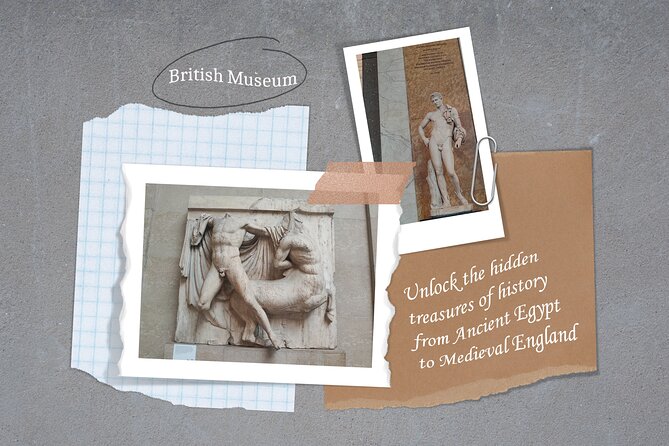
The British Museum is free to enter, but free does not mean easy. Its collection covers more than eight million artifacts, spread through a grand building in central London. On a first visit, you can spend plenty of time walking and still miss the objects that matter most.
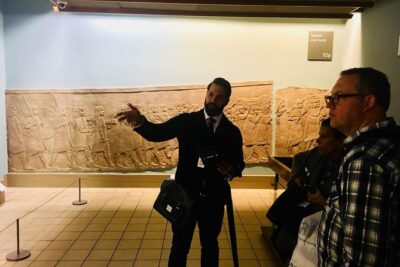
This tour gives you a route and a reason for each stop. You are not simply shown a stone, a statue, or a burial object. You hear why it matters, what it tells us about the people who made it, and how it connects to the next part of the visit.
That structure is especially useful for families and mixed-age groups. Children may care more about the Lewis chessmen or ancient monsters than a long explanation of imperial politics. Adults may want the story behind the Parthenon Marbles or the meaning of Shiva Nataraja. In a private group, the guide can shift the balance.
The visit is offered in English and lasts about two hours, with the wider schedule allowing roughly two to three hours. That is long enough to see important highlights without turning the museum into an endurance test.
More British Museum visits:
- London: British Museum Guided Tour
★ 4.3 · 1,182 reviews - British Museum London Guided Tour Semi-Private 8ppl Max
★ 5.0 · 984 reviews - London: Tour of the British Museum
★ 4.1 · 678 reviews
Starting beneath Norman Foster’s glass roof
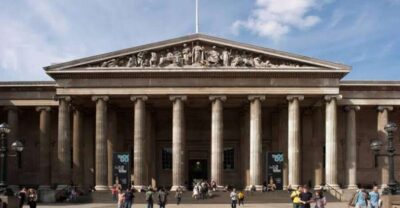
You meet at Montague Place, Montague Place, London. From there, the tour heads into the British Museum, whose Great Court is covered by a striking glass canopy designed by Norman Foster.
The building itself sets the mood. Light filters down through the roof, and galleries open around the central court. It is a good place to get your bearings before the objects begin competing for your attention.
The fast-track entry is useful because it keeps the beginning simple. The museum itself has no admission charge, but a private tour can still save time and uncertainty at the entrance. You are paying for direction, access handling, and the guide’s attention rather than for a standard museum ticket.
Since the meeting point and ending point are the same, you finish where you began. That makes it easier to continue around Bloomsbury or head to nearby transport after the visit.
The Rosetta Stone and the power of language
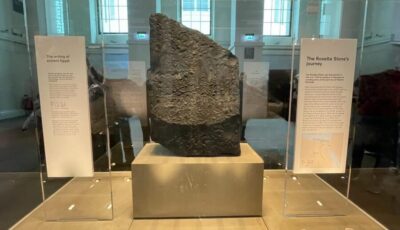
The Rosetta Stone is one of those objects that can be disappointing if you see it without context. It is not the largest or most decorative piece in the museum. Its importance comes from the writing on it and the role it played in helping scholars understand Egyptian hieroglyphs.
A guide can turn this into a story about forgotten languages and the effort required to read the past. You begin to see the stone not just as a slab covered in marks, but as a key to a civilization whose written language had stopped being understood.
This is a good early stop because it gives you a useful idea for the rest of the tour: objects can be powerful for reasons that are not immediately obvious. The guide helps you look past size and surface beauty.
The Parthenon Marbles and the shadow of empire
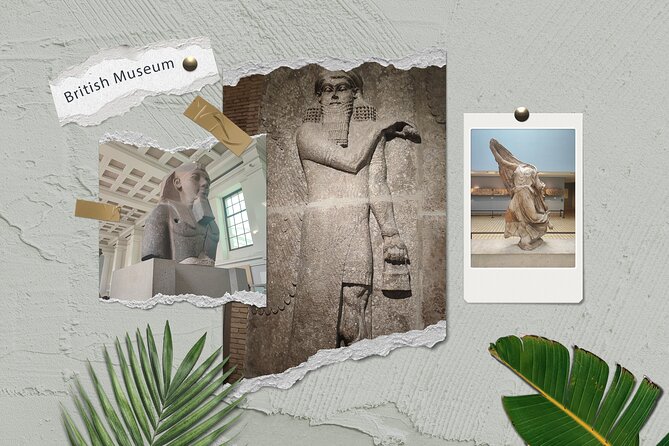
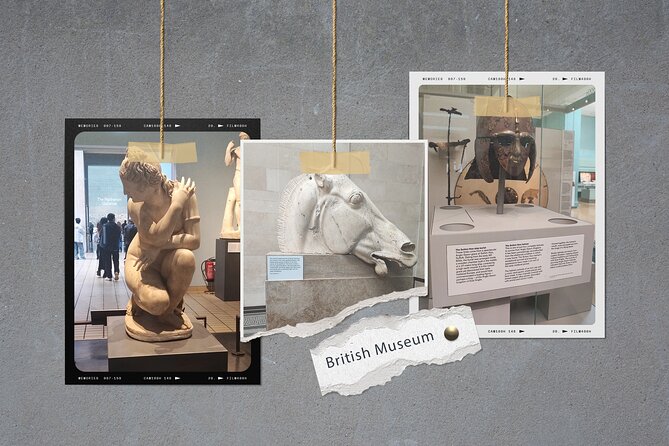
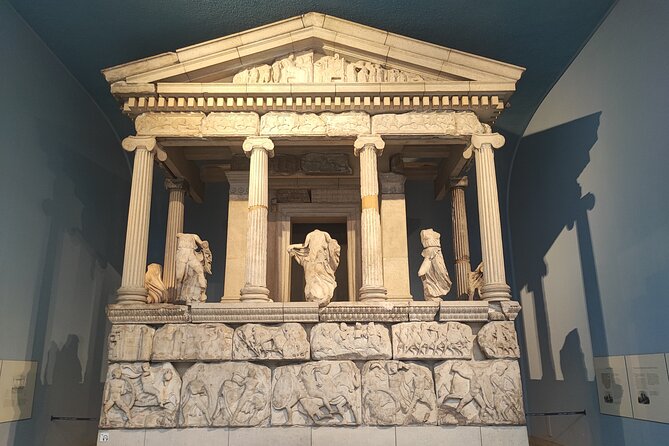
The Parthenon Marbles bring a different subject into the museum: the glory of ancient Athens, the beauty of classical sculpture, and the complicated question of how major collections reached London.
You can expect to look closely at carved figures and architectural pieces connected with the Parthenon. The tour uses them to recall the power of past empires, but the stop also invites questions about ownership, removal, and the role of museums in displaying objects from other places.
That balance matters. A short visit cannot settle every argument around the marbles, but a good guide can help you see both their artistic force and the difficult background behind their presence in London.
I would especially value this stop if you are interested in architecture or sculpture. The scale of the pieces also breaks up the smaller-object displays and gives the tour a strong visual change of pace.
More London museums to visit:
- Tower of London and Crown Jewels Exhibition Ticket
★ 4.5 · 6,677 reviews - London: Chelsea Football Club Stadium and Museum Tour
★ 4.8 · 4,576 reviews - Chelsea FC Stadium Tours and Museum
★ 5.0 · 1,908 reviews - London Transport Museum Entrance Ticket
★ 4.5 · 1,323 reviews
Egyptian mummies and the dance of life and death
The Egyptian galleries offer some of the most memorable moments on the route. Mummies rest in cases, surrounded by objects connected with burial, belief, and the afterlife.
The subject can sound grim, but the displays are not only about death. They show how people prepared for another existence, cared for the body, and pictured the journey beyond the visible world. That makes the galleries a natural fit for a tour built around daemons, creation, destruction, and timeless beauty.
You might find this part more affecting than expected. A guide can explain the beliefs behind the objects without reducing them to spooky curiosities. That is important, particularly for children, who may first notice the physical remains but then become interested in the larger ideas.
The galleries can also help you compare ancient Egypt with other cultures shown later in the visit. Different societies had different images of the divine and the human body, yet many used art to face the same basic questions.
Sutton Hoo and the final voyage of a warrior
The Sutton Hoo material shifts the focus to Anglo-Saxon England. The objects are linked with a ship burial and the last voyage of a high-status warrior, giving the display an atmosphere of ceremony, status, and mystery.
This is one of the stops where the guide’s storytelling matters most. A case of metalwork and burial goods can be hard to read on your own. With explanation, you start to picture the people who arranged the burial and the values they wanted the objects to express.
Sutton Hoo also broadens the tour beyond the Mediterranean and ancient Egypt. It reminds you that the British Museum is not only a showcase for distant civilizations. It also holds major evidence from Britain’s own early past.
If you have seen the subject presented in films or documentaries, the real objects give you a more direct connection. If you know little about it, the guide provides enough background to make the display readable without turning the visit into a lecture.
The Lewis chessmen, strategy, and human character
The Lewis chessmen are among the most approachable objects in the museum. Their small carved figures have distinct expressions and personalities, so you can connect with them quickly even if you know little about medieval art.
The tour uses them to tell stories of strategy and wit. That makes the stop lively, especially for families. You see a game, but you also see how people represented power, rank, conflict, and humor in miniature.
This is the kind of object that benefits from a guide’s questions. Why do some figures look worried or stern? What do the pieces reveal about the society that made them? How does a board game become an archaeological treasure?
The Lewis chessmen provide a welcome lighter moment after the mummies and the more serious questions raised by the Parthenon Marbles. They also show why a themed route works well: the tour can move from death and empire to play and human behavior without feeling random.
Shiva Nataraja and the cosmic cycle
Shiva Nataraja presents a different image of creation and destruction. The dancing figure is not simply a beautiful sculpture. The pose, objects, and surrounding symbols carry meaning connected with the cosmic cycle.
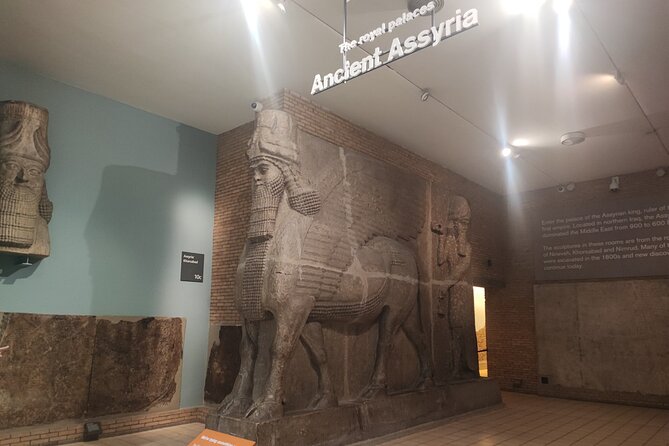
This stop gives the tour a wider view of belief and art. You move beyond the familiar names of Egypt, Greece, and Anglo-Saxon England and encounter a powerful image from the Indian tradition.
A guide can help you notice details that might otherwise pass quickly. The figure’s movement, balance, and symbols make the sculpture easy to admire, but the ideas behind it give the beauty weight.
For me, this is an important part of the route because it prevents the tour from becoming a parade of European and Mediterranean highlights. It places different traditions in conversation, showing how artists across time have used the body to express forces larger than ordinary life.
Ancient sculpture and changing ideas of beauty
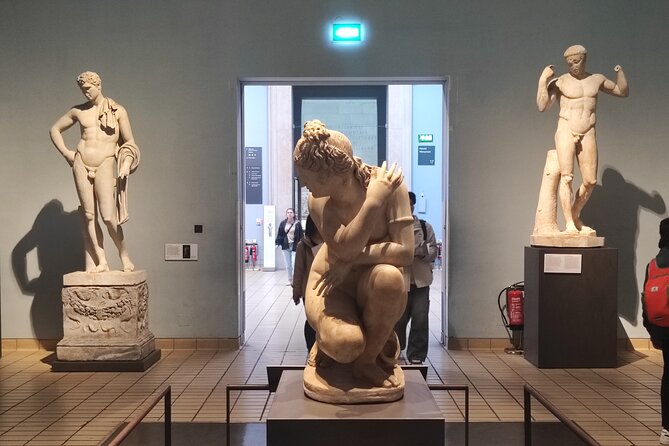
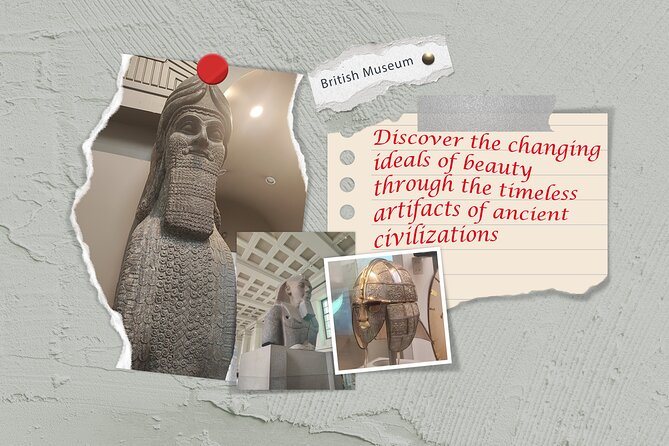
The tour also explores how beauty standards have changed. Ancient sculptures may seem familiar because later artists and museums often present classical forms as an ideal. But standards of proportion, pose, age, gender, and the human body have never been fixed.
This part is useful if you enjoy art but do not have a technical background. You can look at sculpture as an object of beauty while also asking who decided what beauty should mean.
The guide’s job here is not to give you a list of dates. It is to help you compare works and notice differences. One culture may favor calm balance, another movement, another symbolic detail. The point is not to choose one as best, but to see how art reflects its makers.
Because the route brings together several civilizations, these comparisons happen naturally. You are not confined to one period or one style for the entire visit.
The value of a private group of up to eight
The listed price is $203.65 per group, not per person. That can be strong value if you fill the group, especially since the fee covers a private guide and the group can share the experience rather than joining strangers.
For two people, the per-person cost is much higher. For a family or group of friends, the price becomes easier to justify, particularly if you would otherwise spend hours trying to plan a route through the museum.
The private format also changes the pace. You can ask a basic question without feeling self-conscious, pause at an object that catches your attention, or request more time in a particular gallery. One visit with Richard was extended by an extra 30 minutes at no added cost, but you should treat that as a generous example rather than a guaranteed part of the tour.
The group-size information needs checking before you pay. The price says up to eight people, while the highlights describe a group of up to six. That may be a simple difference between the general booking details and the tour description, but it is worth confirming if you are traveling with seven or eight people.
The guiding style: Richard and Yuliya Ousarenko
The strongest feature of this experience is the guide. Richard is described as flexible, willing to tailor the visit, and ready to answer many questions. That is exactly what you need in a museum this large.
Yuliya Ousarenko has also led the tour, with a style that combines detailed explanations, kindness, and a steady pace. She has adjusted the route to personal interests and helped a late-arriving group settle in without fuss.
Those details matter because museum guiding can become stiff or rushed. Here, the available evidence points to a warm, personal approach. You should still understand that a private tour depends on the guide assigned to your booking, so you may not receive Richard or Yuliya specifically unless you request one and the provider can accommodate it.
The activity is operated by MyLondonGuide. The setting is professional but friendly, which suits a tour that aims to make difficult subjects easy to follow.
Who will get the most from this visit
I would choose this tour for a first visit to the British Museum, especially if you have only one morning or afternoon in London. It is also a smart choice for families, since the route includes games, mummies, warriors, gods, and visual stories that can hold attention better than a room-by-room walk.
Art lovers will appreciate the chance to compare sculpture across cultures. People who dislike museums because they feel confusing may also benefit from the clear theme and direct explanations.
You may not need it if you already know the British Museum well and prefer to set your own route. Independent visitors can enter for free and spend as long as they like. The private tour is about making the visit more focused and personal, not about gaining access to a museum that would otherwise be closed.
Food and drinks are not included, so plan those separately. The tour lasts about two hours, with the broader timing listed as two to three hours, so it fits neatly beside another London activity.
Booking, cancellation, and practical details
You receive confirmation at the time of booking. The museum is near public transport, and the activity ends back at the Montague Place meeting point.
Most people can take part, according to the supplied information. No special access limits are stated, so if your group has a particular mobility or other need, ask before booking rather than assuming.
Free cancellation is available up to 24 hours before the local start time. Cancel earlier than that for a full refund. Changes or cancellations inside the 24-hour window are not accepted for a refund.
Should you book the British Museum private tour?
Book it if you want the museum’s famous objects placed into a clear story, and especially if you are visiting with family or a group of friends. The private setting, flexible guiding, and carefully chosen highlights make the price reasonable when divided among several people.
I would skip it if your main goal is an unhurried solo visit or if you already have a detailed museum plan. The British Museum is free, and independent exploration costs nothing beyond your time.
For most first-time visitors, though, the guide solves the museum’s biggest problem: too much to see and no obvious place to begin. Confirm the group-size limit, request Richard or Yuliya if you have a preference, and allow about two to three hours for a lively introduction to the collection.
FAQ
How much does the private British Museum tour cost?
The listed price is $203.65 per group. The price information says the group can include up to eight people, while the tour highlights say up to six, so confirm the maximum group size before booking.
How long does the experience last?
The guided portion lasts about two hours. The overall activity is listed as approximately two to three hours.
Which museum objects are included?
The route may include the Rosetta Stone, Parthenon Marbles, Egyptian mummies, Sutton Hoo, the Lewis chessmen, Shiva Nataraja, and ancient sculptures connected with changing ideas of beauty.
Is British Museum admission included?
The museum admission ticket is listed as free. The experience includes guided museum entry and fast-track entry.
Where does the tour begin and end?
The meeting point is Montague Place, London. The activity ends back at the meeting point.
Can I cancel for a full refund?
Yes. You must cancel at least 24 hours before the local start time for a full refund. Cancellations or changes made less than 24 hours before the start are not accepted for a refund.
Latest arrivals on the London list
- Easy Access Tower of London Royal Secrets & Scandals Tour★ 5.0 · 3 reviews
- Stonehenge Special Access Guided Morning Tour from London★ 4.5 · 3 reviews
- Madame Tussauds London Fast Track and Champagne Experience★ 3.5 · 3 reviews
- Shoreditch & East London Walking Tour with a Local, Custom & Private★ 5.0 · 3 reviews
- London Private Brixton Tour with a Local – Culture & Stories★ 4.9 · 3 reviews
- Private Full Day Tour – Fast Track Tower of London and Lunch★ 4.6 · 3 reviews
- Private transfer from London Heathrow Airport to Southampton★ 5.0 · 3 reviews
- London Soho District – Guided Walking Tour 12 guests 2,5h★ 4.8 · 3 reviews
British Museum Tours, compared.
British Museum London Guided Tour Semi-Private 8ppl Max
Read our review →
British Museum Audio Tour & Priority Entrance Ticket
Read our review →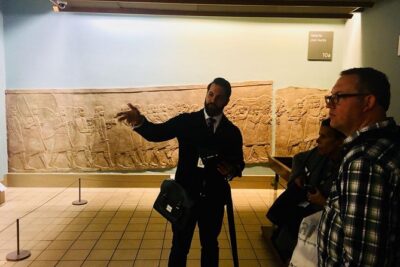
The British Museum London – Exclusive Guided Museum Tour
Read our review →
Browse the lists this tour appears in