
Reviewed · BRITISH MUSEUM TOURS
Crash course in archaeology at the British Museum
The most interesting thing here is the way archaeologist Rossa turns the British Museum into a story about human development. Instead of racing from case to case, you follow a timeline from early hominids and stone tools through farming, towns, writing, empires, and the beginnings of modern Britain. I like the clear chronology, and I like the attention given to the people who found, studied, and sometimes misunderstood these objects. The drawback is simple: five and a half hours is a long time to spend mostly on your feet.
This is a thoughtful choice if you want context more than a checklist of famous objects. You will see major pieces from Egypt, Assyria, Greece, Rome, the Vikings, and the Aztecs, but you will not cover every room. At $83.34, you are paying mainly for Rossa’s teaching and storytelling, not admission, so the tour makes the most sense for anyone who wants the museum explained rather than simply entered.
In This Review
- Key points to know before you book
- Why this British Museum tour feels different
- Starting at Russell Square at 9:45 am
- From early tools to the first villages
- Writing, hieroglyphs, and cuneiform
- Egypt, Assyria, Greece, and Rome
- The Lewis Chessmen and the human side of objects
- Vikings, Aztecs, and the wider museum collection
- From the Anglo-Saxons toward modern Britain
- Five and a half hours: the real trade-off
- Is $83.34 a fair price?
- Who should book this tour?
- Booking, cancellation, and practical details
- Should you book it?
- FAQ
- Where does the tour begin?
- Where does the tour finish?
- What time does the tour start?
- How long does the tour last?
- What language is the tour offered in?
- How much does the tour cost?
- Is museum admission included?
- Is lunch included?
- How many people can join the tour?
- Can I cancel for a full refund?
Key points to know before you book
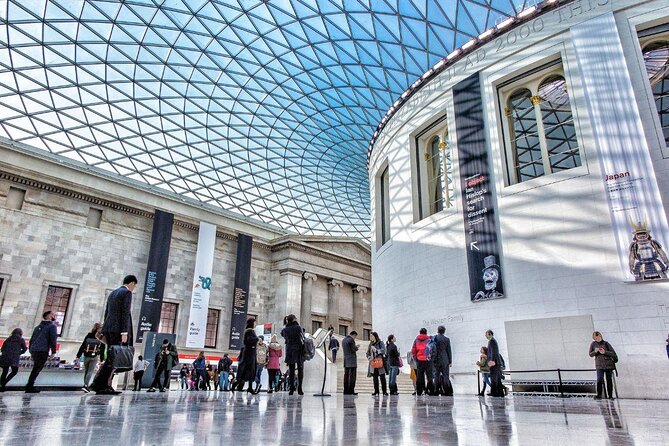
- A chronological route through civilization: The tour moves from early human tools and hunter-gatherers to agriculture, cities, empires, the Saxons, and Anglo-Saxon Britain.
- A guide with an archaeologist’s approach: Rossa explains how objects were found, read, dated, and connected to wider human change.
- Famous objects with useful context: Expect the Rosetta Stone, Lewis Chessmen, Assyrian displays, Egyptian material, the Elgin Marbles, and Jericho-related archaeology.
- More depth than breadth: You study selected objects for some time instead of seeing twenty pieces in a rushed hour.
- A full morning and early afternoon: The tour begins at 9:45 am and lasts about five and a half hours, with breaks for food, refreshments, and rest.
- A small group capped at 25: That is still a fairly large group for a museum, but it allows the guide to keep a single narrative moving.
Why this British Museum tour feels different
The British Museum can be hard to read. Its rooms cover thousands of years and several continents, and the sheer number of objects can leave you wondering what matters most. You can easily spend an hour admiring a case without knowing how it fits into the larger story.
This tour gives you a framework. Rossa links objects across different galleries, showing how human societies changed from mobile hunting groups to settled farming communities, then to towns, states, and empires. That structure is valuable because the museum itself is not arranged as one simple chronological walk.
I like the idea of treating archaeology as a process rather than a pile of old things. You learn about excavation, discovery, translation, and interpretation. An object matters not only because it is beautiful or old, but because it can tell us how people lived, traded, worshipped, governed, played, or recorded information.
The tour also gives attention to archaeologists, relic hunters, and explorers who helped build the museum’s collection. That is an important part of the story. The objects did not simply appear in display cases. They were excavated, purchased, transported, studied, and sometimes taken under circumstances that still raise questions about ownership and empire.
More British Museum visits:
- London: British Museum Guided Tour
★ 4.3 · 1,182 reviews - British Museum London Guided Tour Semi-Private 8ppl Max
★ 5.0 · 984 reviews - London: Tour of the British Museum
★ 4.1 · 678 reviews
Starting at Russell Square at 9:45 am
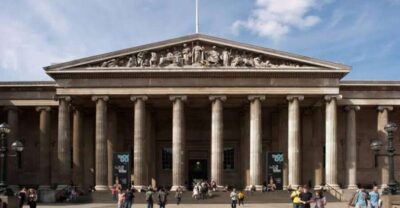
The meeting point is on Bernard Street near Russell Square. You finish at the British Museum on Great Russell Street, so the tour begins with a short transition toward the museum rather than meeting inside the galleries.
Plan to arrive early. The start time is 9:45 am, and an organized museum visit works best when you are not trying to find the group at the last moment. The meeting point is near public transportation, which helps if you are staying elsewhere in London.
The group can include up to 25 people. That is not an intimate private tour, but it is small enough for a single guide to lead everyone through a connected program. You should expect to stay close to Rossa, particularly in crowded galleries or around famous objects.
Entry procedures may take some time. One account describes queuing at the start, with the group using an entrance that was less slow than the main one. Since conditions can change, allow patience at the beginning. If a queue delays the start, the guide may adjust the timing later.
From early tools to the first villages
The opening section sets up the tour’s main question: how did humans move from small mobile groups to settled communities and organized societies?
You begin with early hominids, stone tools, and the practical choices that shaped survival. From there, the story moves through hunter-gatherer life, the development of agriculture, and the first villages. The point is not simply to memorize dates. You are asked to think about how food production changed daily life, population size, work, property, and social organization.
Jericho is one of the important stops in this part of the route. The site helps explain the movement from temporary settlement toward permanent community. It is a useful example because archaeology can reveal more than written records do. Buildings, tools, burials, and everyday objects can show how people lived long before anyone left a written account.
This early section may be especially rewarding if you have never studied archaeology. It gives you basic tools for understanding what follows. Writing, cities, kings, armies, and monumental art make more sense after you have considered the earlier problems of food, shelter, tools, and settlement.
Writing, hieroglyphs, and cuneiform
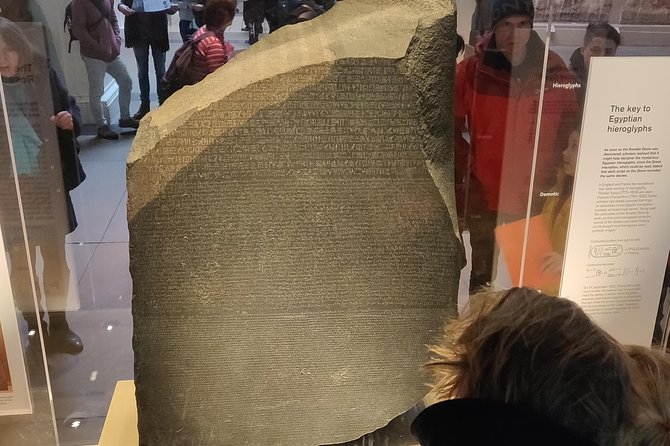
One of the strongest parts of the program is the explanation of ancient writing. Egyptian hieroglyphs and Mesopotamian cuneiform are not presented as mysterious symbols floating free of context. You learn how scholars worked out what these signs meant and why decipherment changed the study of the ancient world.
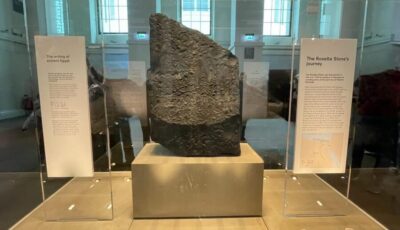
The Rosetta Stone is the obvious star. Its importance comes from the same message being written in different scripts, giving scholars the comparison they needed to read Egyptian hieroglyphs. The object is famous, but the tour helps explain the actual problem it solved.
Cuneiform offers a different lesson. It began as a system pressed into clay and was used across Mesopotamia for administration, trade, law, and other records. The British Museum’s Mesopotamian displays are particularly useful for showing how writing developed alongside cities and complex government.
You will likely spend more time listening than photographing. That is a strength if you want to understand how the evidence works. It can feel slow if your goal is to collect quick pictures of the museum’s most famous pieces.
More London museums to visit:
- Tower of London and Crown Jewels Exhibition Ticket
★ 4.5 · 6,677 reviews - London: Chelsea Football Club Stadium and Museum Tour
★ 4.8 · 4,576 reviews - Chelsea FC Stadium Tours and Museum
★ 5.0 · 1,908 reviews - London Transport Museum Entrance Ticket
★ 4.5 · 1,323 reviews
Egypt, Assyria, Greece, and Rome
The ancient Mediterranean and Near Eastern rooms provide much of the tour’s visual weight. You can expect material from ancient Egypt, Assyria, Greece, and Rome, with the guide using selected objects to explain both civilization and archaeological discovery.
Egypt includes royal imagery, writing, religion, and the work of reading the past through objects. References to Ramesses II and the study of hieroglyphs give the Egyptian section a firm anchor. The value here is not just seeing a monumental statue or carved inscription. You are shown how those objects fit into systems of power, belief, and record keeping.
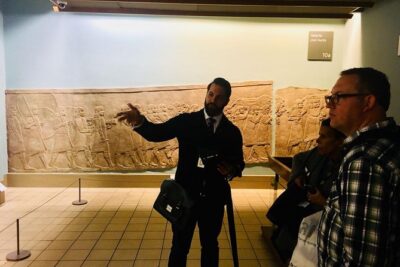
The Assyrian rooms offer a look at empire, warfare, royal display, and the way rulers used art to shape their public image. The museum is especially strong in this area, and the material can be difficult to absorb without guidance. A good explanation helps you notice details that might otherwise blend into a long wall of relief sculpture.
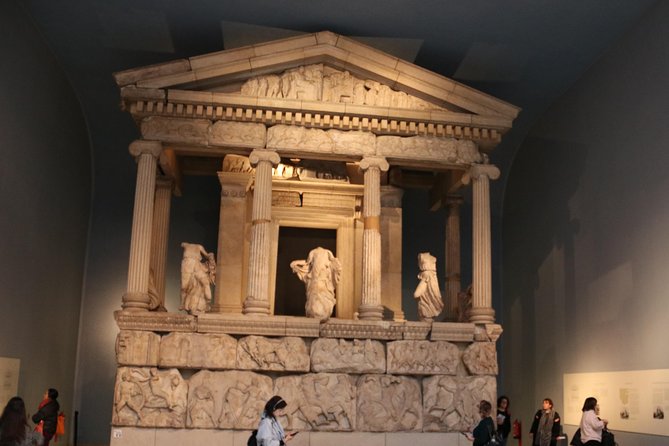
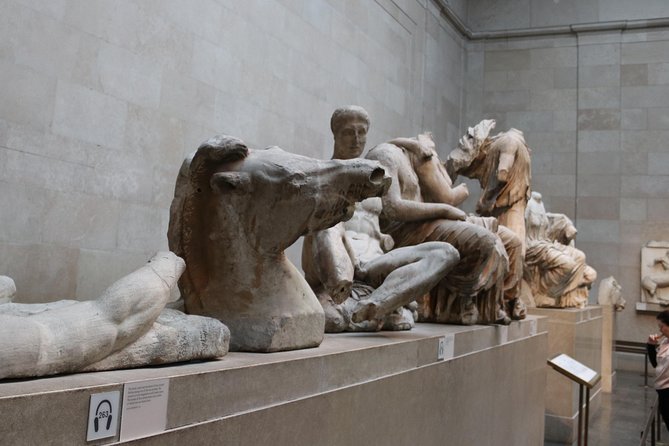
Greek objects bring questions about art, architecture, mythology, and cultural exchange. The Elgin Marbles, or Parthenon sculptures, also open a discussion about collecting and contested ownership. This is one place where the tour’s attention to archaeology and museum practice matters as much as the objects themselves.
Roman material extends the story of empire, technology, government, and daily life. You are not simply moving from one famous civilization to another. The guide uses these societies to show how ideas, materials, scripts, and political systems traveled and changed.
The Lewis Chessmen and the human side of objects
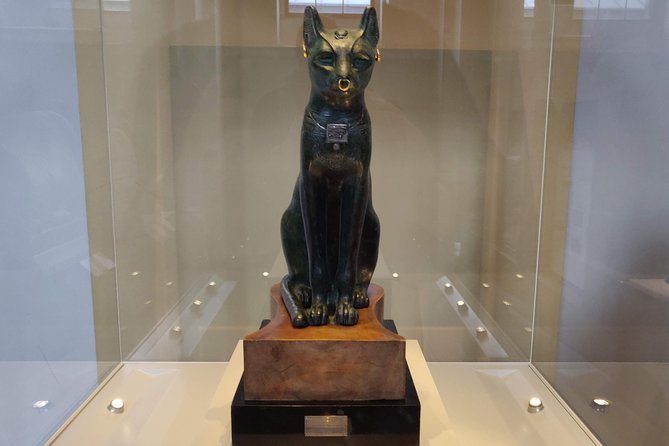
The Lewis Chessmen are a welcome change of pace. After monumental sculpture, royal inscriptions, and imperial reliefs, these small carved figures bring the story down to a human scale.
They show that archaeology is not only about kings and temples. People also made objects for play, leisure, teaching, and social life. A chess piece can tell you about craft, trade, status, imagination, and the spread of games.
This is the sort of item you might pass quickly on your own. On a guided route, it becomes part of the larger story of how artifacts reveal ordinary habits as well as grand events. The same is true of the mention of playing an ancient Egyptian dice game, the game of Ur, during the program. That detail helps turn an abstract lesson about the past into something you can picture people actually doing.
Vikings, Aztecs, and the wider museum collection
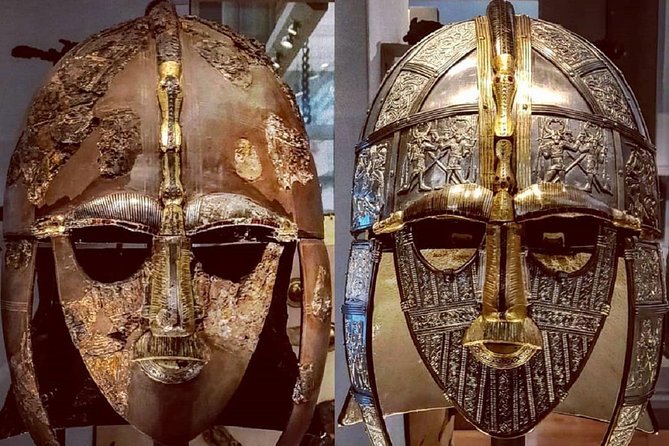
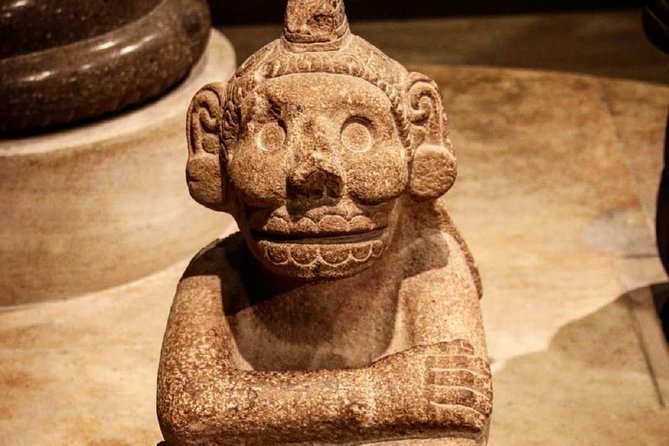
The tour also reaches beyond the best-known Egyptian, Greek, and Roman rooms. Viking and Aztec material helps broaden the picture of civilization and prevents the day from becoming a narrow survey of the ancient Mediterranean.
These sections show why the British Museum works best when you have a guide with a clear plan. Its collection covers such a wide span that you need someone to decide which objects support the main argument. You may not see every Viking or Aztec display, but the selected material adds variety and reminds you that complex societies developed in many parts of the world.
The chronological method also helps connect distant places without pretending they were all part of one single story. You are looking at different responses to common human needs: food, authority, belief, communication, trade, defense, and entertainment.
From the Anglo-Saxons toward modern Britain
The route continues into the Saxon and Anglo-Saxon periods, then toward Victorian London and Paris and the start of modern Britain. That gives the tour a wider reach than the phrase crash course in archaeology might suggest.
You should not expect a complete account of British history. Five and a half hours cannot provide that, and the main focus remains the development of civilization through archaeological evidence. Still, ending closer to home helps connect ancient objects to the modern world and to the collecting institutions that interpret them today.
This later portion may appeal to you if you want a bridge between ancient history and Britain’s more recent past. It also reinforces the idea that archaeology is not limited to distant deserts or buried cities. The method can be applied to streets, buildings, objects, and records from much more recent periods.
Five and a half hours: the real trade-off
The length is both the tour’s main strength and its clearest warning. At about five hours and thirty minutes, this is closer to a museum class than a quick orientation.
The upside is clear. You have time to follow a sustained argument, pause at important objects, and hear the story behind discoveries and translations. The program does not try to squeeze the entire museum into a few rushed stops.
The downside is physical. Much of the time is spent standing while the guide speaks. If your feet, knees, or back tire easily, take the museum’s small folding stool when you enter. Several people found it useful, and it can make the difference between staying for the full program and leaving early.
Breaks are built into the day. There is a lunch break of about 40 minutes, plus a shorter later pause for refreshments or a rest. Lunch is not included, so bring food if you want to keep costs down. Museum food can be limited and expensive.
You should also wear comfortable shoes and avoid scheduling another demanding activity immediately afterward. The tour ends in the early afternoon, leaving time for other plans, but you may want a quieter afternoon after so much information and standing.
Is $83.34 a fair price?
The cost is $83.34 per person. With a five-and-a-half-hour program, that works out to roughly $15 per hour for the guided portion. The museum admission is listed as free, so the price is paying for the archaeologist’s time, planning, interpretation, and leadership.
That is fair value for the right audience. A self-guided visit costs less, but it also leaves you to make sense of an enormous collection on your own. If Rossa’s narrative helps you understand objects you would otherwise overlook, the added cost can be worthwhile.
I would not book this simply to see the famous pieces quickly. You can spend less time and visit the Rosetta Stone, Egyptian galleries, Greek sculpture, and other headline displays by yourself. This tour earns its price through explanation, not access.
The 4.9 rating from 96 reviews and the 98 percent recommendation figure suggest a very strong record. Still, the praise has a consistent theme: the tour is best for people who want history and archaeology explained in detail. It is less suitable for anyone who wants to cover as many rooms as possible.
Who should book this tour?
I would recommend it to you if you enjoy learning how evidence is gathered and interpreted. It suits history fans, archaeology students, museum regulars, and first-time visitors who prefer a guided story to wandering without a plan.
It is also a good choice if you have already visited the British Museum. A previous visit gives you a sense of the building, while this program can add meaning and connections that a solo visit missed.
Families with older children might enjoy it if they can handle a long, lecture-style day. The material covers difficult subjects and a large span of time, so it is not designed as a short, hands-on children’s activity.
I would hesitate if you have limited time in London, dislike standing, or mainly want photographs of famous objects. The tour’s strength is its steady explanation, and that requires commitment.
Booking, cancellation, and practical details
The tour is offered in English and uses a mobile ticket. Confirmation is received at booking, and the group is limited to a maximum of 25 people.
Most people can participate, and service animals are allowed. The start is near public transportation, and the finish is at the British Museum on Great Russell Street.
Free cancellation is available up to 24 hours before the start time for a full refund. Changes or cancellations made less than 24 hours before the start are not accepted for a refund. The activity also requires a minimum number of participants, and if that minimum is not met, you are offered another date or experience, or a full refund.
Should you book it?
Book this if you want the British Museum to make sense as a connected story of human civilization. Rossa’s approach gives selected objects room to breathe, from Jericho and early tools to hieroglyphs, cuneiform, the Rosetta Stone, Assyrian reliefs, the Elgin Marbles, the Lewis Chessmen, Vikings, Aztecs, and Anglo-Saxon Britain.
Skip it if your priority is speed or complete museum coverage. You will not see everything, and five hours on your feet is a serious commitment. But if you can bring comfortable shoes, use a folding stool, pack lunch, and give the day your full attention, this offers far more than a standard highlights walk.
FAQ
Where does the tour begin?
It begins at Russell Square, on Bernard Street, London WC1N 1LJ.
Where does the tour finish?
It finishes at the British Museum on Great Russell Street, London WC1B 3DG.
What time does the tour start?
The scheduled start time is 9:45 am.
How long does the tour last?
The tour lasts approximately five hours and thirty minutes.
What language is the tour offered in?
The tour is offered in English.
How much does the tour cost?
The listed price is $83.34 per person.
Is museum admission included?
The itinerary lists the British Museum admission ticket as free. The included part of the tour is the qualified archaeologist guide.
Is lunch included?
No. Lunch is not included. A lunch break of about 40 minutes is built into the day.
How many people can join the tour?
The maximum group size is 25 participants.
Can I cancel for a full refund?
Yes. You can cancel at least 24 hours before the local start time for a full refund. Cancellations or changes made less than 24 hours before the start are not accepted for a refund.
Latest arrivals on the London list
- Heathrow Airport to London Arrival Transfer★ 4.5 · 50 reviews
- London Beatles Tour★ 5.0 · 50 reviews
- One Way Taxi Transfer from London to Gatwick Airport★ 5.0 · 51 reviews
- London: Hidden Baker Street Tube Station Tour★ 4.7 · 51 reviews
- City & Secrets: Explore London’s Hidden Gems★ 5.0 · 51 reviews
- The Beatles Magical History Black Taxi Tour London★ 5.0 · 51 reviews
- London Christmas Lights Open-Top Bus Tour. 2025 Early Bird★ 3.6 · 51 reviews
- 4 hour London Private Tour, with your own Black Cab Tour Guide★ 5.0 · 51 reviews
British Museum Tours, compared.
British Museum London Guided Tour Semi-Private 8ppl Max
Read our review →
British Museum Audio Tour & Priority Entrance Ticket
Read our review →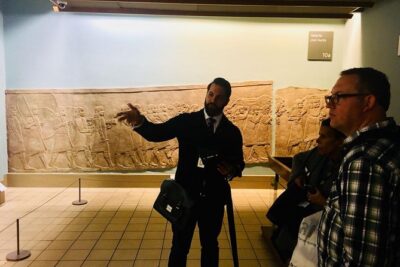
The British Museum London – Exclusive Guided Museum Tour
Read our review →
Browse the lists this tour appears in