
Reviewed · BRITISH MUSEUM TOURS
London: 2-Hour Guided Tour of the British Museum and History
The Rosetta Stone, the Elgin Marbles, and the solemn Moai Hoa Hakananai’a are the stars of this fast-moving British Museum tour. In two hours, a licensed guide leads you through major collections rather than leaving you to wander the museum’s enormous galleries alone.
I like the clear route through world cultures and the chance to see famous objects with a guide who can explain why they matter. I also like the modest $37 price, especially if this is your first visit and you want to get your bearings quickly. The main concern is crowd noise: one poor experience involved a hard-to-understand guide and no headphones, so hearing every word is not guaranteed.
In This Review
- Key points at a glance
- Why two hours can work at the British Museum
- Meeting the guide inside the museum
- Egypt and the Rosetta Stone
- Greece and the Elgin Marbles
- Rome through statues, mosaics, and engineering
- Sutton Hoo and early English life
- Hoa Hakananai’a, the Moai from Easter Island
- A quick tour of the wider world
- Guide quality and the hearing problem
- Who will get the most from this tour
- Making the $37 price work
- Should you book the British Museum tour?
- FAQ
- How long does the British Museum tour last?
- What does the price include?
- Which languages are available?
- Where do I meet the guide?
- How do I receive my entry ticket?
- Is the museum wheelchair accessible?
Key points at a glance
- Rosetta Stone and Egyptian relics: Start with the object that helped scholars read Egyptian hieroglyphics.
- Parthenon sculptures: See the controversial Elgin Marbles and consider the debate over their removal from Greece.
- Roman art and engineering: Look for mosaics, statues, and objects tied to imperial life.
- Sutton Hoo treasures: Connect the museum to early English history through remarkable Anglo-Saxon finds.
- Hoa Hakananai’a Moai: Meet a powerful stone figure from Easter Island and learn about its spiritual meaning.
- Two-hour orientation: The route is useful for a first visit, but too brief for a full museum experience.
Why two hours can work at the British Museum
The British Museum is the kind of place that can swallow half a day before you have found the room you came to see. A two-hour guided tour gives you a practical answer to that problem. You see a selection of major objects, hear their stories, and finish with enough energy to continue on your own.
I see this as an orientation tour, not a complete survey of the museum. The route moves across Egypt, Greece, Rome, Anglo-Saxon England, Easter Island, and other parts of the world. That range gives you a useful map of the collections, but each stop gets only a limited share of the clock.
The tour costs $37 per person and includes admission and the guided visit. That is fair value if you care about context and would otherwise spend time wandering in search of the main sights. If you already know the museum well, or prefer to study a few objects at your own pace, the price may be harder to justify.
The best guides make the short format work. Daniel has led a smooth, informative visit that kept moving through the crowds, while Filomena has been praised for lively stories and unusual details. Your guide is not guaranteed to be either of them, but those examples show what the experience can be like at its best.
More British Museum visits:
- London: British Museum Guided Tour
★ 4.3 · 1,182 reviews - British Museum London Guided Tour Semi-Private 8ppl Max
★ 5.0 · 984 reviews - London: Tour of the British Museum
★ 4.1 · 678 reviews
Meeting the guide inside the museum
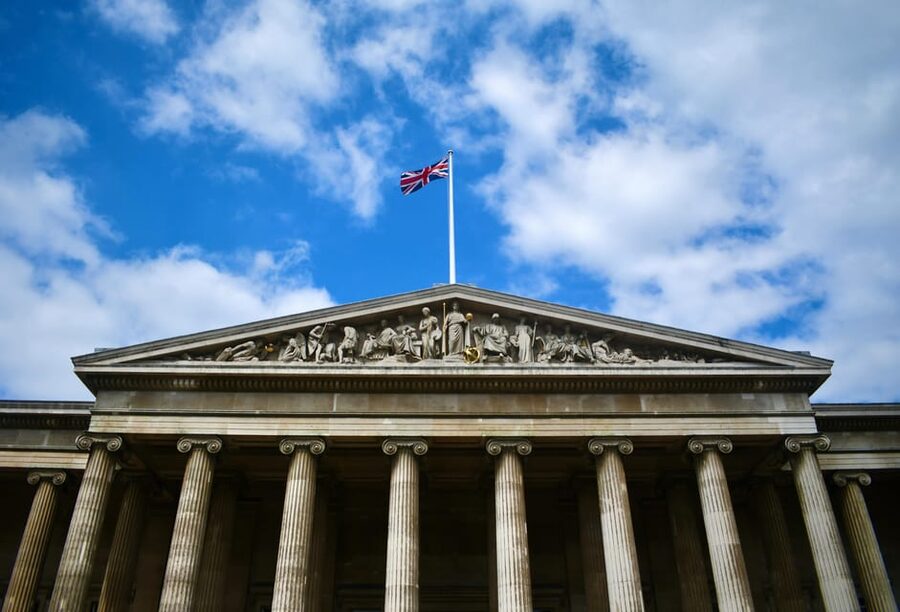
The meeting instructions matter. You meet in front of the British Museum portals, on the stairs near the pillars, after passing the security check. Do not wait outside the gates.
Entry tickets are sent through WhatsApp one to two hours before the tour. If you do not use WhatsApp, you can contact the provider by email and request the tickets there. I would check your phone before setting out and allow time for security, since the meeting point is inside the entrance area.
The museum itself is wheelchair accessible. The information provided does not specify a group size, headset policy, or a fixed gallery order, so those details may vary by departure and guide.
Egypt and the Rosetta Stone
The tour begins with ancient Egypt, a strong choice for a first stop. Egyptian objects can seem mysterious when you see them without context, but the guide can connect writing, royal power, burial customs, and daily life as you move among the displays.
The Rosetta Stone is the essential object here. Its importance comes from the same message being written in three scripts, including Greek and Egyptian forms. That comparison helped scholars work out Egyptian hieroglyphics. You are not simply looking at an old slab of stone. You are looking at a tool that changed the study of ancient Egypt.
Expect this area to be busy. The Rosetta Stone is one of the museum’s best-known objects, and groups often gather around it. A guide who keeps the explanation concise and positions the group well can make a big difference.
There is one point to clarify before booking. A negative experience reported that too much time was spent on a replica rather than the original Rosetta Stone. The supplied tour description presents the Rosetta Stone as a highlight, but it does not promise how long you will spend at the original display or whether a replica will also be discussed. If seeing the original is your main reason for booking, ask the provider about the planned stop.
Greece and the Elgin Marbles
The Greek galleries bring you to the Parthenon sculptures, commonly called the Elgin Marbles. These pieces are visually impressive, but they also carry a difficult modern question: how should museums handle major works removed from their original setting?
A good guide can explain both the art and the dispute without turning the visit into a lecture. You will see carved figures and architectural elements linked to the Parthenon, then consider how those fragments once formed part of a larger building in Athens.
This section is valuable because it changes the way you look at museum objects. You are not only asking how old a sculpture is or how skillfully it was carved. You are also asking who removed it, who has the right to display it, and what is lost when a monument is separated from its home.
The tour description also refers to marble inscriptions and Greek thought. The exact objects and amount of time can vary, but the wider point is clear: ancient Greece shaped ideas about art, public life, and philosophy that still influence the modern West.
More London museums to visit:
- Tower of London and Crown Jewels Exhibition Ticket
★ 4.5 · 6,677 reviews - London: Chelsea Football Club Stadium and Museum Tour
★ 4.8 · 4,576 reviews - Chelsea FC Stadium Tours and Museum
★ 5.0 · 1,908 reviews - London Transport Museum Entrance Ticket
★ 4.5 · 1,323 reviews
Rome through statues, mosaics, and engineering
The Roman section shifts the mood from Greek ideals to imperial scale and practical power. The route may include mosaics and statues of gods and heroes, along with objects that show how Roman engineering and government reached across a huge area.
I like this part of the route because Roman material often feels close to ordinary life. A mosaic can show taste and household wealth. A statue can reveal how emperors or gods were meant to be seen. Engineering objects can point to the systems that helped Rome control territory and move goods.
Two hours does not allow a detailed study of Roman history. Instead, the guide uses selected pieces to show how Rome borrowed from Greece while building its own visual language. You may also return to the legacy of the Parthenon and see how later cultures reused Greek models.
Crowds can make this stop harder to hear, especially if your group gathers in a narrow gallery. Stay close to the guide and let the people nearest the explanation ask questions first. If you are placed at the edge of the group, move in when the guide stops rather than trying to listen from several steps away.
Sutton Hoo and early English life
Sutton Hoo offers a welcome change of scale and setting. These Anglo-Saxon treasures provide clues about early English life, power, belief, craftsmanship, and contact with the wider world.
The appeal is not just the beauty of the objects. Burial finds can tell you what a society valued and how it represented status. Gold work, weapons, personal items, and ship-related discoveries help turn a distant period into something more tangible.
The British Museum’s version of this story is especially useful for anyone who wants to connect the museum to England itself. After Egypt, Greece, Rome, and Easter Island, Sutton Hoo reminds you that major cultural achievements were also taking shape much closer to London.
The stop is likely to feel calmer and more personal than the Rosetta Stone area, though the tour’s exact timing depends on the guide. If Anglo-Saxon England is your main interest, you may want to return after the guided portion and spend longer with the display.
Hoa Hakananai’a, the Moai from Easter Island
The Hoa Hakananai’a Moai is one of the tour’s most memorable objects. This large stone figure from Easter Island carries a strong spiritual presence, even when viewed far from its original setting.
The guide can help you look beyond its size and familiar outline. The Moai represents the beliefs and artistic skill of a distant society, and its presence in London raises the same broad museum question found elsewhere on the tour: what does it mean to move a cultural object away from its place of origin?
This is a good point in the route because it widens the story beyond the familiar civilizations of Europe and Egypt. You are reminded that human creativity did not follow one path or belong to one region.
The object may also appeal to younger visitors because its shape is immediately recognizable. Still, the meaning behind it is more complex than a quick photo stop. Listen for the cultural information, and do not judge the piece only by its appearance.
A quick tour of the wider world
The final part of the visit brings together objects from other regions. The point is not to examine every culture in detail. It is to show how the museum places very different societies in one sequence, allowing you to compare styles, beliefs, technologies, and ideas.
This broad approach is one of the tour’s strengths and its limitation. I enjoy the sense of movement across time and place, but you should not expect a focused study of every collection. The guide has to make choices, and those choices may not match your personal interests.
Ask questions when the group pauses. A strong guide can add an anecdote or explain an object that catches your eye, as Filomena has done on past tours. The activity is conducted in English, French, or Italian, so check that your selected language suits everyone in your party.
Guide quality and the hearing problem
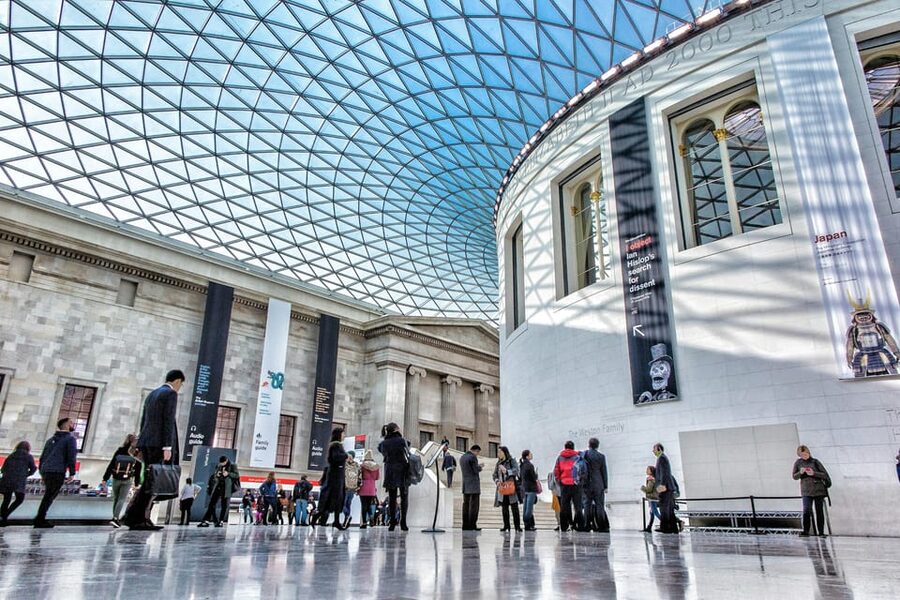
Guide quality is the biggest variable here. Daniel has been described as informative and fluid, with the skill to move a group through crowds while keeping the visit within two hours. Filomena has also received praise for her stories, enthusiasm, and ability to make the subject appealing to adults and school-age children.
That positive side deserves emphasis, but you should also plan for the practical risk. One very poor visit involved a thick accent, a crowded gallery, and no headphones. Several people left because they could not hear or understand the explanations. The complaint also included an offensive personal remark, which would be unacceptable on any guided activity.
You cannot control the guide’s accent or the noise level, but you can improve your position. Arrive at the meeting point on time, stay near the guide, and speak up early if you cannot hear. If your family depends on clear spoken English, this is worth considering before you pay.
The activity does not state that audio headsets are supplied. Do not assume they will be. In a noisy museum, the difference between hearing every explanation and catching only fragments can change the value of the tour.
Who will get the most from this tour
I would choose this tour for a first visit, a short London stay, or a family that wants a clear introduction before exploring alone. It is also useful if you have a list of famous objects but no idea how the museum is arranged.
The mix of locations suits you if you like variety. In one visit, you can move from Egyptian writing to Greek sculpture, Roman art, Anglo-Saxon treasure, and a Moai from Easter Island. That is a lot of cultural ground in a short period.
School-age children may respond well to the Rosetta Stone, mummies and pharaohs, statues, treasure, and the Moai. The guide’s storytelling style matters here, so a lively guide can make the difference between a memorable visit and two hours of standing in crowded rooms.
I would hesitate if you want a quiet, slow museum visit. The tour is designed around highlights, and the exact emphasis depends on the guide. Art specialists may prefer to choose their own galleries, while repeat visitors may find more value in a focused collection tour.
Making the $37 price work
At $37, the tour is not the cheapest way into a free public museum, but admission is included and the guide saves you the time spent finding the main objects. The price makes the most sense when you treat the visit as a two-hour orientation.
You are paying for selection and explanation. Without that help, you may walk past important objects or spend too long in one gallery. With a guide, you get a framework that can make a later self-guided visit much easier.
The value drops if the guide is difficult to hear or spends too long on objects that do not match the advertised highlights. That is why the hearing issue is not a small detail. It affects the central service you are buying.
The flexible booking terms help if your London schedule is uncertain. You can reserve now and pay later, and cancellation is free up to 24 hours before the activity for a full refund. Starting times vary, so check availability for your date.
Should you book the British Museum tour?
Book it if you want a fast, guided introduction to the museum’s major cultural collections and you value stories more than a slow, specialist study. The Rosetta Stone, Parthenon sculptures, Roman objects, Sutton Hoo treasures, and Hoa Hakananai’a make a strong two-hour route.
I would be cautious if clear audio is essential or if your main goal is to see one specific object in depth. Ask about the guide’s language, headset arrangements, and the planned Rosetta Stone stop before booking.
For most first-time visitors, $37 is a reasonable price for a focused orientation. Plan to stay after the tour if you find a collection that grabs you. The guided visit gives you the map, then the museum lets you choose your own road.
FAQ
How long does the British Museum tour last?
The guided tour lasts two hours.
What does the price include?
The price includes the entry ticket and the British Museum guided tour.
Which languages are available?
The live guide is available in English, French, and Italian.
Where do I meet the guide?
Meet in front of the British Museum portals, on the stairs near the pillars, after passing the security check. The meeting point is not outside the gates.
How do I receive my entry ticket?
Tickets are provided through WhatsApp one to two hours before the tour. If you do not have WhatsApp, contact the provider by email so the tickets can be sent there.
Is the museum wheelchair accessible?
Yes, the museum is wheelchair accessible.
More 2-Hour Experiences in London
- London: Ghastly Ghosts 2-Hour Walking Tour
★ 4.9 · 794 reviews - James Bond Shooting Locations 2-Hour Walking Tour of London
★ 4.7 · 332 reviews - 2-Hour Jack the Ripper Small Group Walking Tour in London
★ 4.5 · 160 reviews - London: 2-Hour Historic Pub Tour
★ 4.9 · 133 reviews
More London history walks
- London Small Group Tour of Historical Pubs
★ 5.0 · 10,422 reviews - Soho Music & Historic Pubs Tour
★ 5.0 · 1,993 reviews - London: Historic Pubs of Central London Walking Tour
★ 4.9 · 1,065 reviews - London: Soho Music and Historic Pubs Walking Tour
★ 4.9 · 836 reviews
Latest arrivals on the London list
- Easy Access Tower of London Royal Secrets & Scandals Tour★ 5.0 · 3 reviews
- Stonehenge Special Access Guided Morning Tour from London★ 4.5 · 3 reviews
- Shoreditch & East London Walking Tour with a Local, Custom & Private★ 5.0 · 3 reviews
- Madame Tussauds London Fast Track and Champagne Experience★ 3.5 · 3 reviews
- Private transfer from London Heathrow Airport to Southampton★ 5.0 · 3 reviews
- London Private Brixton Tour with a Local – Culture & Stories★ 4.9 · 3 reviews
- Private Full Day Tour – Fast Track Tower of London and Lunch★ 4.6 · 3 reviews
- London Soho District – Guided Walking Tour 12 guests 2,5h★ 4.8 · 3 reviews
British Museum Tours, compared.

British Museum London Guided Tour Semi-Private 8ppl Max
Read our review →
British Museum Audio Tour & Priority Entrance Ticket
Read our review →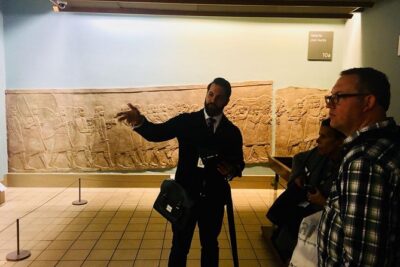
The British Museum London – Exclusive Guided Museum Tour
Read our review →

Browse the lists this tour appears in