
Reviewed · BRITISH MUSEUM TOURS
London: British Museum Archaeology Course and Guided Tour
The most interesting thing about this British Museum tour is its clear human story. Instead of rushing from one famous object to the next, archaeologist Rossa links early tools, writing, cities, empires, and archaeology into one long account of how people shaped the world. You also get to play the ancient Royal Game of Ur, a fine change of pace after several hours among glass cases.
I like the archaeological approach, which explains not only what an object is but how we know what we know. I also like the way the tour works for families: several parents found that Rossa kept 13-year-olds engaged for the full session. The main drawback is time. Five and a half hours is a long stretch on your feet, and the museum is far too large to see properly in one visit.
In This Review
- Key points at a glance
- Why this British Museum tour feels different
- Meeting at Russell Square Station
- From early humans to the first cities
- Egyptian hieroglyphs and the return of written language
- Assyria, empire, and the evidence carved in stone
- Greece and Rome, including the Parthenon Marbles
- Sutton Hoo, the Vikings, and the world after Rome
- The Aztecs and a wider view of civilization
- Playing the Royal Game of Ur
- How archaeologists date objects and sites
- The five-and-a-half-hour pace
- Is $81 good value?
- Who should book this course?
- Should you book the British Museum archaeology course?
- FAQ
- Where does the British Museum archaeology tour start?
- How early should I arrive?
- How long does the experience last?
- Is entrance to the British Museum included?
- Is lunch included?
- What objects will I see?
- Is the tour suitable for children?
- Is the tour wheelchair accessible?
Key points at a glance
- A five-hour story of civilization: Follow humanity from Neanderthal tools and early African origins through Mesopotamia, Egypt, Assyria, Greece, Rome, the Vikings, and the Aztecs.
- A practicing archaeologist as your guide: Rossa brings specialist knowledge and lively storytelling to objects that can otherwise feel remote or difficult to understand.
- World-famous objects with useful context: See the Rosetta Stone, Parthenon Marbles, Sutton Hoo Helmet, and Lewis Chessmen as part of a wider human story.
- Hands-on ancient history: Learn and play the Royal Game of Ur, one of the oldest board games known.
- A lesson in how archaeology works: Find out how sites become buried, how objects are dated, and how Egyptian hieroglyphs and Sumerian cuneiform were read again.
- Practical half-day planning: The tour starts at Russell Square Station, includes museum entry, and allows a 40-minute lunch break, but food is not included.
Why this British Museum tour feels different
The British Museum can be overwhelming. You walk through one room filled with Egyptian statues, turn a corner, and find yourself face to face with Assyrian reliefs, Greek sculpture, Viking objects, and artifacts from the Americas. Without a plan, it is easy to remember the big names but miss the connections.
This course gives you a route through that enormous collection. The focus is not simply on famous sights. You are shown how archaeologists build a picture of the past from tools, writing, burial remains, buildings, art, and trade goods.
That difference matters. A display label may tell you that an object is ancient. Rossa explains what it reveals about a society, what questions archaeologists ask, and where uncertainty remains. You come away with a better sense of archaeology as a method, not just a hunt for spectacular objects.
The tour is conducted in English by a live guide. Its overall rating is 4.7 from 113 reviews, and the most consistent praise centers on Rossa’s command of the subject, his energy, and his ability to make a long session feel purposeful. That is especially useful at a museum where a self-guided visit can quickly become a blur of dates and names.
More British Museum visits:
- London: British Museum Guided Tour
★ 4.3 · 1,182 reviews - British Museum London Guided Tour Semi-Private 8ppl Max
★ 5.0 · 984 reviews - London: Tour of the British Museum
★ 4.1 · 678 reviews
Meeting at Russell Square Station
You meet outside Russell Square Station, where the guide holds an iPad displaying the local partner’s name. Arrive 10 minutes early. From the station, it is about a five-minute walk to the British Museum, so the opening transfer is simple and entirely on foot.
This is a sensible meeting point for a central London museum visit, but do not treat it as a place to arrive at the last second. A large station, street traffic, and the need to identify the guide can eat up those spare minutes. Keep the meeting instructions handy and look for the iPad.
The tour finishes inside the British Museum. That is useful because you can continue looking around afterward if the museum remains open and you still have energy. The tour itself covers a great deal, so many people will want to return to a favorite gallery at their own pace.
From early humans to the first cities
The opening section sets up the whole course by tracing human origins and the earliest evidence of human activity. You move from Stone Age tools and Neanderthal material toward the development of settled communities and the first cities.
This is where the archaeological method becomes especially useful. A stone tool is not merely an old object. Its shape, wear, material, and location can help reveal how it was made and used. You begin to see how archaeologists move from a physical fragment to a cautious explanation of human behavior.
The course then turns to Mesopotamia, where cities, administration, and writing changed the scale of human society. This is a strong part of the itinerary for anyone who wants more than a parade of royal names. You see how urban life created new needs: records, accounting, laws, organized labor, and systems of power.
The pace is intentionally selective. The British Museum holds far more material than any guide could cover in five hours. Rossa chooses objects that help carry the story forward, rather than trying to mention every important case.
Egyptian hieroglyphs and the return of written language
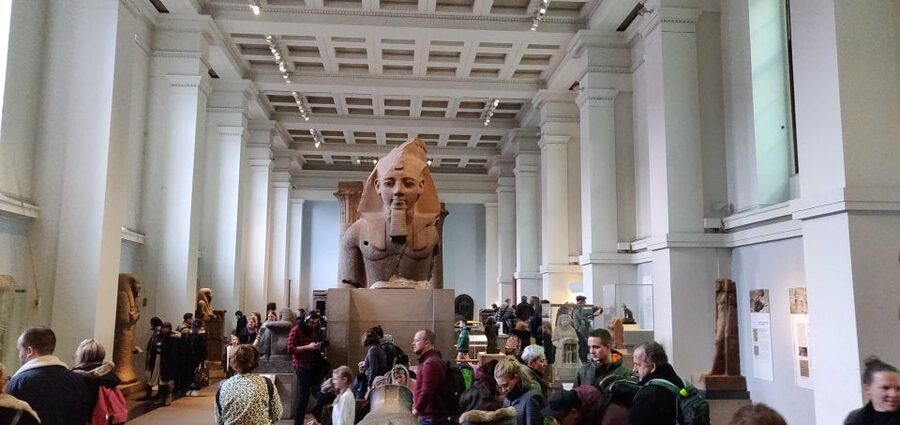
Ancient Egypt is one of the museum’s biggest draws, and this tour uses it to explain both civilization and the work of modern scholarship. You study the culture behind the objects, then learn how Egyptian hieroglyphs were deciphered.
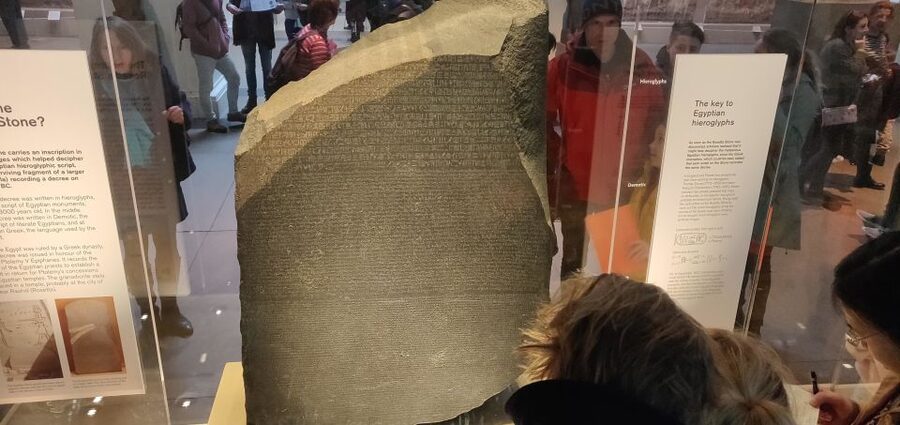
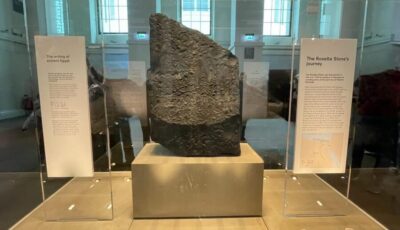
The Rosetta Stone is the obvious centerpiece. Its importance is not only its appearance or fame. It provided the same decree in different scripts, giving scholars the comparison needed to begin reading Egyptian hieroglyphs again.
That story gives the display a practical edge. You are not just told that the stone helped with translation. You learn why repeated text matters, how scholars test a reading, and why the recovery of a lost script can change the study of an entire civilization.
The Egyptian galleries can be crowded, especially on a Saturday. One useful advantage here is having a guide who can project his voice and keep the group focused. You will still need to accept that other museum visitors are around you, but the tour is designed to function in a busy public gallery.
More London museums to visit:
- Tower of London and Crown Jewels Exhibition Ticket
★ 4.5 · 6,677 reviews - London: Chelsea Football Club Stadium and Museum Tour
★ 4.8 · 4,576 reviews - Chelsea FC Stadium Tours and Museum
★ 5.0 · 1,908 reviews - London Transport Museum Entrance Ticket
★ 4.5 · 1,323 reviews
Assyria, empire, and the evidence carved in stone
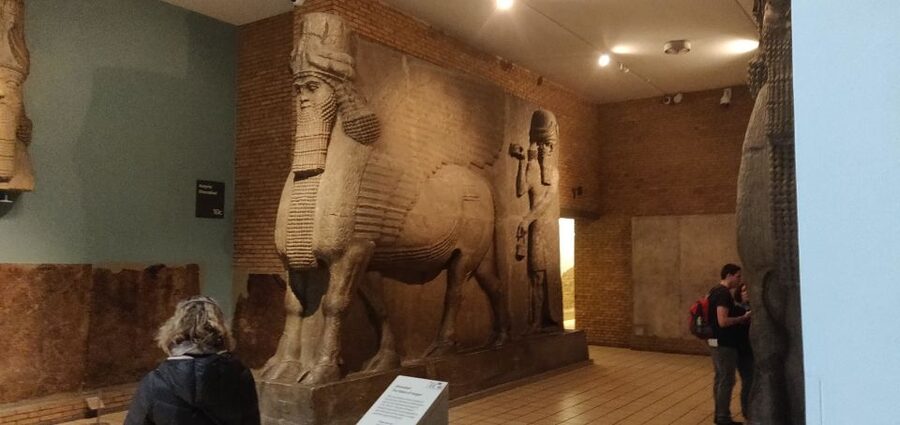
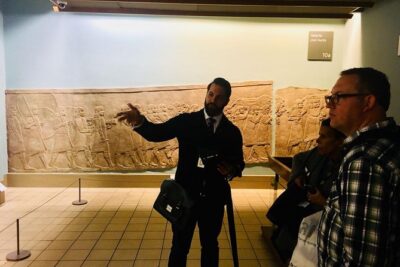
The Assyrian section shifts the focus from Egypt to imperial power. Monumental reliefs and palace objects show how rulers presented their authority, recorded warfare, and shaped the official version of events.
This part is valuable because the objects are large and visually striking, yet easy to view without context. The guide helps you read the scenes as political statements, not just decorative panels. You consider who commissioned them, where they were placed, and what message they were meant to send.
The course keeps returning to a useful question: what can an object tell us, and what might it conceal? Royal art often gives us a powerful view of the ruler. It may tell us less about ordinary workers, families, or conquered people. That tension is part of what makes archaeological interpretation interesting.
Greece and Rome, including the Parthenon Marbles
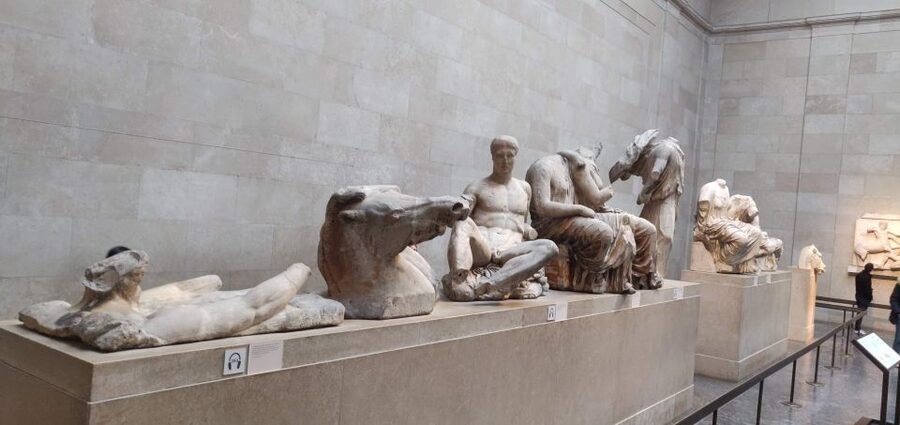
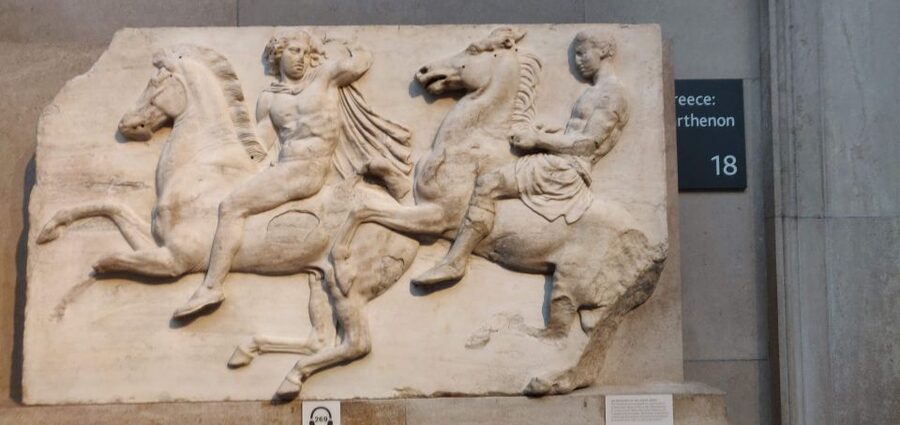
The Ancient Greece and Rome galleries bring in some of the museum’s most recognizable material. The Parthenon Marbles are a major stop, but the tour places them within the wider story of Greek art, civic life, and Roman power.
You get a chance to consider how ideas, artistic styles, and political systems moved across the ancient Mediterranean. Rome did not appear from nowhere, and its influence did not vanish the moment the empire weakened. Looking at Greece and Rome in sequence helps you follow those links.
The Parthenon Marbles also raise questions about collecting, ownership, and the movement of objects from their original settings into modern museums. This experience is mainly an archaeology course rather than a dedicated ethics tour, but the wider story of explorers, relic hunters, and collectors is part of its frame.
That context makes the museum feel less like a neutral warehouse. Every object has an excavation story, a collecting story, and a modern display story. You are encouraged to think about all three.
Sutton Hoo, the Vikings, and the world after Rome
The itinerary does not stop with classical civilization. The Sutton Hoo Helmet and the Lewis Chessmen bring you into the medieval world, while the Viking galleries show how trade, travel, conflict, and belief continued to shape Europe after Rome’s collapse.
The Sutton Hoo material is especially useful for understanding burial archaeology. An object found in a burial does not have the same meaning as an object recovered from a workshop or settlement. Its placement can point to status, ceremony, identity, or beliefs about death.
The Lewis Chessmen offer a more intimate view of the past. A small carved game piece can tell you about leisure, craftsmanship, trade, and social life. It is a welcome reminder that history is not made only from monuments and weapons.
These stops also help correct the common idea that the end of Rome was the end of organized culture. The tour presents the centuries that followed as a period of change, movement, and new forms of society.
The Aztecs and a wider view of civilization
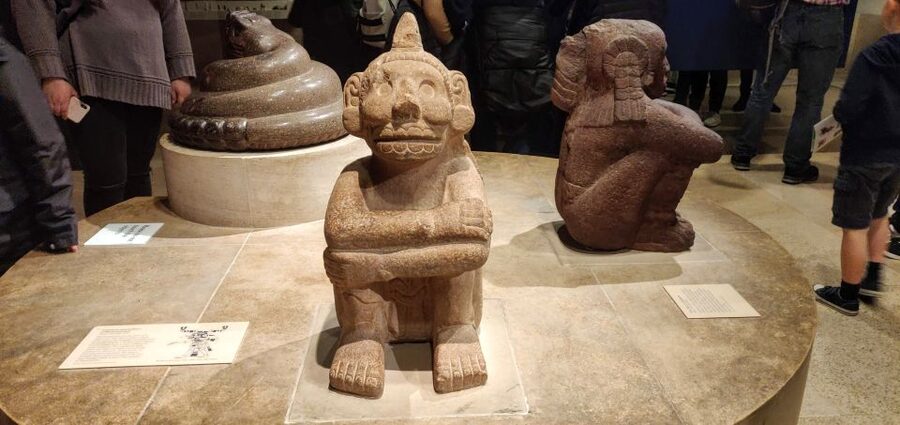
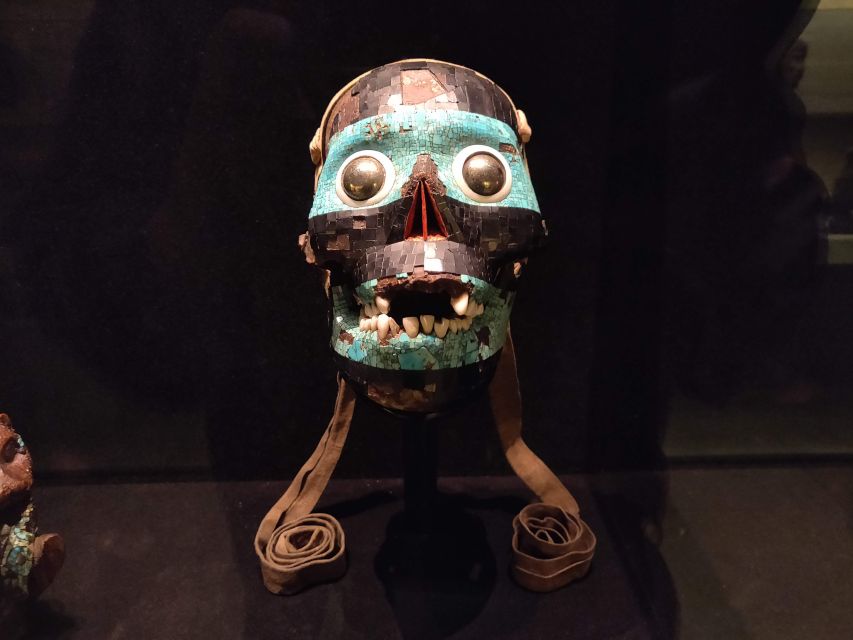
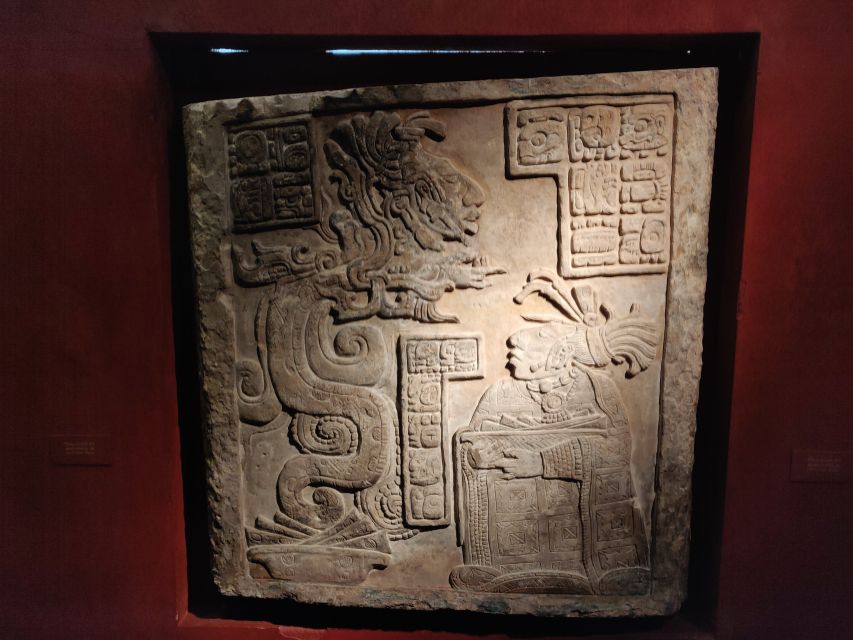
The Aztec material expands the story beyond Europe and the ancient Mediterranean. That matters because a tour centered on Egypt, Greece, and Rome can easily become too narrow.
Here, the museum’s collections support a broader look at how societies organize power, religion, cities, art, and trade. The Aztec galleries are not treated as an isolated final stop. They form part of the course’s larger argument that complex civilizations developed in different regions and on different timelines.
The comparison is useful, but the five-and-a-half-hour format means no single civilization can receive a full specialist treatment. If the Aztecs are your main interest, you may want to spend extra time in those galleries after the guided portion ends.
Playing the Royal Game of Ur
The Royal Game of Ur is one of the tour’s best breaks from listening. British Museum scholars reconstructed its rules, and you get to play this ancient Mesopotamian board game yourself.
This small activity gives you a physical sense of the past. Instead of looking at a game behind glass, you handle the idea of how people spent leisure time thousands of years ago. It also helps younger participants stay involved during a long museum session.
Do not expect a full workshop devoted to the game. It is one element within a much larger course. Still, it is memorable, and it turns an abstract lesson about ancient life into something immediate.
How archaeologists date objects and sites
The final part looks at the science behind archaeology. You learn how ancient places become buried, how relics are dated, and why some questions remain open.
Burial is not random in every case. Soil, flood deposits, collapsed buildings, rubbish layers, and later construction can all place objects beneath the modern surface. The position of an artifact can be as important as the artifact itself.
Dating is also more than guessing from appearance. Archaeologists compare layers, styles, inscriptions, materials, and scientific tests. Each method has limits. A strong interpretation comes from several pieces of evidence agreeing, not from one dramatic clue.
This section gives the tour its lasting value. Once you understand how dates and conclusions are built, you will read museum labels with a sharper eye. You can appreciate what is certain, what is likely, and what is still debated.
The five-and-a-half-hour pace
Five and a half hours is a serious commitment. The course includes breaks and a 40-minute lunch period, but lunch is not included. You should plan to buy food at one of the museum outlets or bring a packed lunch if permitted by the museum’s current rules.
Wear comfortable shoes. You may be standing and walking for much of the session, and the museum’s scale makes fatigue a real consideration. One practical tip is to ask for a folding stool at the entrance. Portable stools are available and can make a major difference, especially for older visitors or anyone who finds long periods of standing difficult.
Bring water and avoid luggage or large bags. A small day pack was reported as manageable, but the tour information specifically says large bags and luggage are not allowed. Pack lightly so security and gallery movement do not become a problem.
The experience is listed as wheelchair accessible and suitable for people with limited mobility. Contact the operator in advance if you have special requirements. The long duration still matters, even if the route itself can accommodate limited mobility.
Is $81 good value?
At $81 per person, this is not the cheapest way to enter the British Museum, since general admission is free. You are paying for the five-and-a-half-hour structure, the specialist guide, the selected route, and the explanations that connect objects across thousands of years.
I think the price makes sense if you want a guided course rather than a quick highlights walk. A free museum visit can give you access to famous objects, but it does not automatically provide a coherent account of human civilization or explain how ancient languages were deciphered.
The value is strongest for first-time visitors who feel intimidated by the museum’s size. It is also strong for families with older children, students, and anyone who wants archaeological method explained in plain language.
The calculation changes if you prefer to browse slowly, read every label, or focus on one culture. In that case, the fixed five-and-a-half-hour route may feel too demanding, and a shorter tour or self-guided visit could suit you better.
Who should book this course?
I would choose this tour if you want:
- A chronological account of human civilization
- An archaeologist-led visit rather than a general sightseeing walk
- Clear explanations of writing, dating, excavation, and interpretation
- A family-friendly format that can hold a teenager’s attention
- A planned introduction to the British Museum before exploring alone
- A lively guide with strong storytelling and room for questions
I would think twice if you have limited time in London, dislike long museum sessions, or already know exactly which galleries you want to study. This is a broad survey, not a quiet deep study of one collection.
Should you book the British Museum archaeology course?
Book it if you want the museum to make sense as a story. Rossa’s strength is connecting objects to the human problems behind them: how people organized cities, recorded goods, honored the dead, built empires, and left evidence for later generations to interpret.
The best practical plan is to arrive early, bring water, wear supportive shoes, pack a light lunch, and ask for a folding stool if needed. Keep the rest of your day flexible. After five and a half hours, you may want only a short look around, or you may be ready to revisit one gallery with your new context.
For $81, you are buying much more than entry. You are buying a guided framework for one of London’s hardest museums to tackle alone. If that sounds useful, this is one of the better ways to spend a half-day at the British Museum.
FAQ
Where does the British Museum archaeology tour start?
The meeting point is outside Russell Square Station. Your guide will hold an iPad showing the name of the local partner.
How early should I arrive?
Arrive 10 minutes before the scheduled start time.
How long does the experience last?
The course and guided museum visit last 5.5 hours. Some sessions may run slightly longer if the group remains engaged and curious.
Is entrance to the British Museum included?
Yes. Museum entrance and the guided tour are included. General museum admission is free.
Is lunch included?
No. Lunch is not included. The tour allows a 40-minute lunch break, so bring a packed lunch or plan to buy food at one of the museum’s outlets.
What objects will I see?
The route includes the Rosetta Stone, Parthenon Marbles, Sutton Hoo Helmet, and Lewis Chessmen, along with galleries covering Ancient Egypt, Assyria, Ancient Greece and Rome, the Vikings, and the Aztecs.
Is the tour suitable for children?
Yes. The course is presented as suitable for families, and the content has held the attention of children aged 13 in past sessions. The length may still be demanding for younger children.
Is the tour wheelchair accessible?
Yes. The experience is listed as wheelchair accessible and suitable for people with limited mobility. Contact the operator ahead of time with any special requirements.
Latest arrivals on the London list
- Heathrow Airport to London Arrival Transfer★ 4.5 · 50 reviews
- London Beatles Tour★ 5.0 · 50 reviews
- One Way Taxi Transfer from London to Gatwick Airport★ 5.0 · 51 reviews
- London: Hidden Baker Street Tube Station Tour★ 4.7 · 51 reviews
- City & Secrets: Explore London’s Hidden Gems★ 5.0 · 51 reviews
- London Christmas Lights Open-Top Bus Tour. 2025 Early Bird★ 3.6 · 51 reviews
- 4 hour London Private Tour, with your own Black Cab Tour Guide★ 5.0 · 51 reviews
- The Beatles Magical History Black Taxi Tour London★ 5.0 · 51 reviews
British Museum Tours, compared.

British Museum London Guided Tour Semi-Private 8ppl Max
Read our review →
British Museum Audio Tour & Priority Entrance Ticket
Read our review →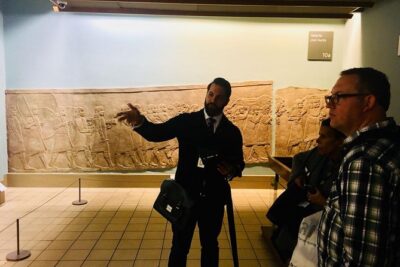
The British Museum London – Exclusive Guided Museum Tour
Read our review →

Browse the lists this tour appears in