
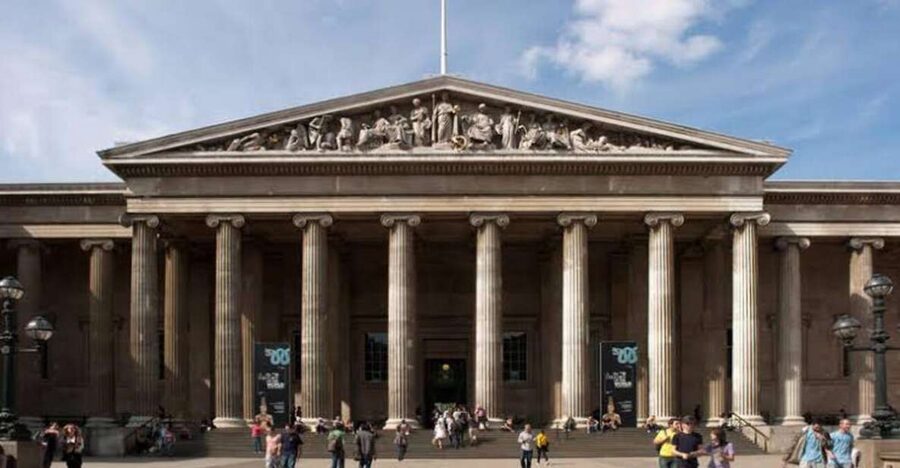
Reviewed · BRITISH MUSEUM TOURS
London: British Museum Guided Tour
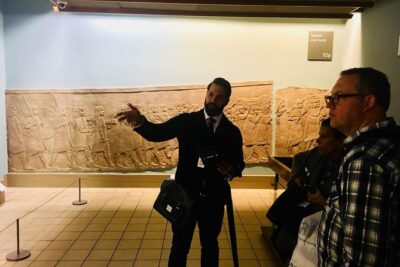
The most useful thing about this British Museum tour is that it gives shape to a collection big enough to leave you wandering in circles. In two hours, an English-speaking guide leads a group of no more than 10 through objects from Mesopotamia, Egypt, Greece, and other ancient cultures, explaining why each piece matters.
I like the small-group format, which leaves room for questions rather than forcing you to trail behind a flag. I also like the guides’ flexibility: Diana has adjusted the route to suit individual interests, while Wesley has tailored the visit for guests who wanted a clearer path through the museum. The main drawback is timing. Two hours goes quickly, and parts of the museum may be closed on the day you visit.
In This Review
- Key points to know before booking
- Why a guide helps inside the British Museum
- Meeting near the museum entrance
- Mesopotamia and the beginnings of organized society
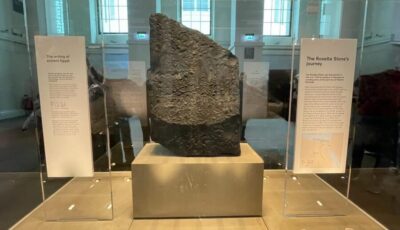
- Ancient Egypt and the Rosetta Stone
- Greece, the Elgin Marbles, and difficult questions
- From famous icons to less familiar objects
- Small groups and guide quality
- What two hours can and cannot cover
- Is $90 good value?
- Who should book this British Museum tour?
- My verdict on the two-hour visit
- FAQ
- How much does the British Museum guided tour cost?
- How long does the tour last?
- Is museum admission included?
- Where does the guide meet the group?
- What language is the tour conducted in?
- How large is the group?
- Are food and drinks included?
- Does the tour include hotel pickup or drop-off?
- Can I cancel for a refund?
- Can I reserve now and pay later?
- Are pets allowed?
Key points to know before booking
- A focused route through a huge museum: You get a guided introduction instead of trying to choose from thousands of objects alone.
- Groups are limited to 10 people: This makes conversation and questions much easier than on a large coach-style tour.
- Major objects receive useful context: Expect discussion of the Rosetta Stone, Elgin Marbles, Mesopotamian artifacts, and other landmark pieces.
- Guides may shape the visit around you: Diana and Wesley have adapted tours to personal interests when conditions allowed.
- The tour lasts two hours: It is a helpful first look, not a complete visit to every gallery.
- Museum admission is included: Food, drinks, and hotel transport are not part of the price.
Why a guide helps inside the British Museum
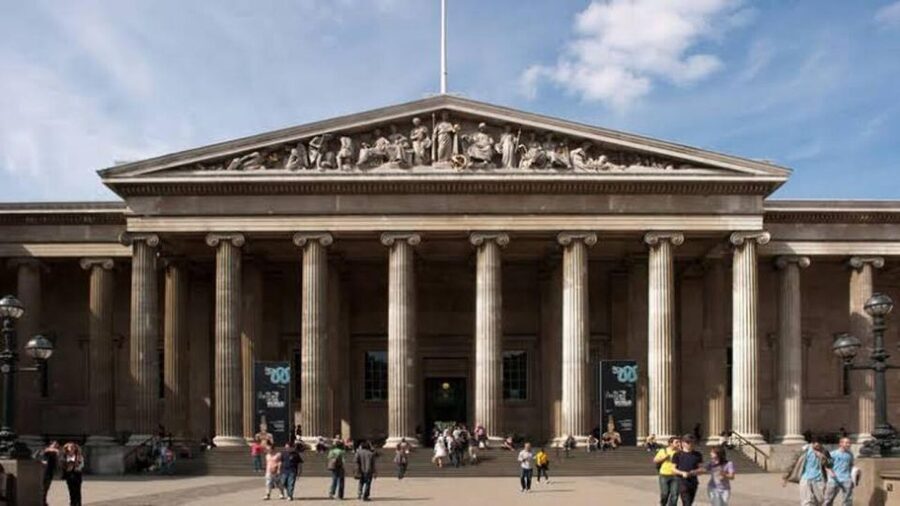
The British Museum is not a place you casually conquer in one afternoon. Its rooms cover human cultures across continents and thousands of years, so the challenge is not finding something interesting. The challenge is deciding what deserves your limited attention.
A guide gives you a thread to follow. Instead of seeing a stone, statue, or carved relief as an isolated object, you hear how it fits into a wider story about writing, religion, government, trade, art, and daily life.
That context matters most with objects whose meaning is not obvious at first glance. A carved figure from Mesopotamia may look like a decorative fragment until you learn what its symbols meant. A Greek sculpture may be famous, but a guide can explain what it represented, how it was made, and why its present location prompts debate.
The tone is intended to be conversational rather than a silent march from one case to the next. You can ask questions, compare cultures, and request more attention to a particular period. That makes the experience a better fit for someone who wants to understand the museum rather than simply photograph its best-known objects.
More British Museum visits:
- London: British Museum Guided Tour
★ 4.3 · 1,182 reviews - British Museum London Guided Tour Semi-Private 8ppl Max
★ 5.0 · 984 reviews - London: Tour of the British Museum
★ 4.1 · 678 reviews
Meeting near the museum entrance
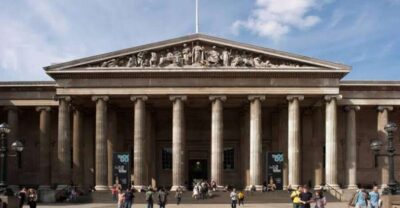
The meeting point is in front of Starbucks, directly across from the museum entry. That is simple enough, but give yourself time to identify the correct guide and group before the two-hour visit begins.
There is no hotel pickup or drop-off. You make your own way to the museum, and food and drinks are also your responsibility. This keeps the arrangement straightforward, but it means you should handle coffee, water, and any meal before or after the tour.
The museum is in South East England, in London. The supplied meeting instructions identify the Starbucks across from the entrance, so check the booking details carefully before setting off. A clear meeting point matters in central London, where several nearby streets and entrances can make a quick rendezvous less quick than expected.
Mesopotamia and the beginnings of organized society
One of the strongest parts of this experience is its attention to Mesopotamia, often described as the cradle of civilization. Here, the guide can help you connect objects with some of the earliest developments in urban life, administration, writing, and organized religion.
That is valuable because Mesopotamian collections can be hard to read without explanation. Clay tablets, carved seals, reliefs, and figures may not immediately offer the drama of a monumental statue, yet they can show how people recorded goods, marked ownership, honored rulers, and explained their world.
I would pay close attention to how the guide links small objects to large changes in human life. A tablet is not just an old piece of clay. It can point to the need for records, officials, commerce, and systems for managing a growing community.
The guide’s role here is especially useful for connecting archaeology with ordinary life. You may hear about the people who made, used, or commissioned the objects, rather than receiving only dates and names. The result is a clearer sense of how early societies worked.
Ancient Egypt and the Rosetta Stone
Egypt is another major part of the British Museum experience. The collection includes objects that help explain religious beliefs, royal power, writing, burial customs, and artistic conventions across a long period.
The Rosetta Stone is the obvious headline object. Its importance is not simply that it is old or famous. The same decree appears in different scripts, allowing scholars to compare them and make progress in reading Egyptian hieroglyphs.
A good explanation turns the stone from a crowded-room photo stop into a lesson about how knowledge can be recovered. It also shows why language matters in archaeology. Without the ability to compare the scripts, much of ancient Egyptian writing would have remained inaccessible to modern scholars.
You should expect the guide to provide context and answer questions, but not assume that every Egyptian room can be covered in detail. The two-hour limit requires choices. If Egypt is your main reason for booking, tell the guide early so the route can reflect that interest when possible.
More London museums to visit:
- Tower of London and Crown Jewels Exhibition Ticket
★ 4.5 · 6,677 reviews - London: Chelsea Football Club Stadium and Museum Tour
★ 4.8 · 4,576 reviews - Chelsea FC Stadium Tours and Museum
★ 5.0 · 1,908 reviews - London Transport Museum Entrance Ticket
★ 4.5 · 1,323 reviews
Greece, the Elgin Marbles, and difficult questions
The Greek galleries bring another set of major objects and complicated issues. The Elgin Marbles, also known as the Parthenon sculptures, offer a chance to discuss classical art, temple decoration, preservation, and the continuing argument over ownership and location.
This is one place where a guide can add value beyond a standard label. You can ask how the sculptures were made, what role they played on the Parthenon, and why their removal and display remain contentious.
The guide may also help you notice details that are easy to miss when you are focused only on the grand scale of the sculptures. Carved folds, body movement, fragments, and traces of the original architectural setting all help explain how the pieces once worked together.
You should not expect the tour to settle a debate that involves law, national identity, and cultural heritage. Its strength is giving you enough background to understand the argument and form your own view.
From famous icons to less familiar objects
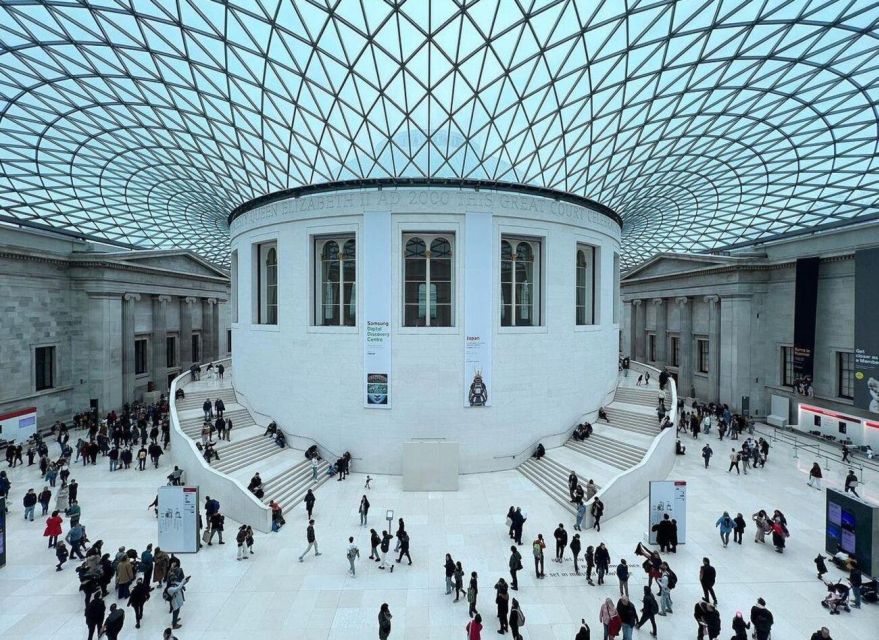
The tour description also points to the Rosalila Temple’s intricate details, alongside better-known objects such as the Rosetta Stone and Elgin Marbles. That mix is important. A good museum visit should not become a checklist of only the objects you have already seen in books.
Less familiar pieces can show how different cultures solved similar problems. You may notice repeated themes involving rulers, sacred spaces, animals, death, writing, and the display of power. The guide can help you compare those themes without pretending that all societies were the same.
This comparative approach is one of the best reasons to choose a guided tour. You are not just moving from Mesopotamia to Egypt to Greece. You are considering how ideas traveled, changed, and took new forms across time and place.
The exact selection depends on the guide, the group’s interests, and which museum areas are open. That flexibility is helpful, though it also means you should not treat the advertised highlights as a guaranteed minute-by-minute route.
Small groups and guide quality
A maximum of 10 participants is a practical advantage. You can hear the guide more easily, ask follow-up questions, and avoid the impersonal feel of a large group.
The experience is conducted in English. Several guides have earned strong praise for their command of the material and their clear delivery. Diana is described as a specialist who communicated in advance and adjusted the visit to suit the group. Wesley has also been willing to customize the route, which is useful if you have a particular interest in Egypt, Greece, Mesopotamia, or another area.
Vincent has been singled out for strong subject knowledge as well. The available feedback includes a very brief Swedish comment praising his expertise, so English remains the stated tour language, but the important point is that guide quality appears to be central to the experience.
No guide can make every museum room equally compelling for every person. That is why I would tell your guide what you already know, what you want to see, and what you find confusing. A clear request at the start may produce a much more personal two hours.
What two hours can and cannot cover
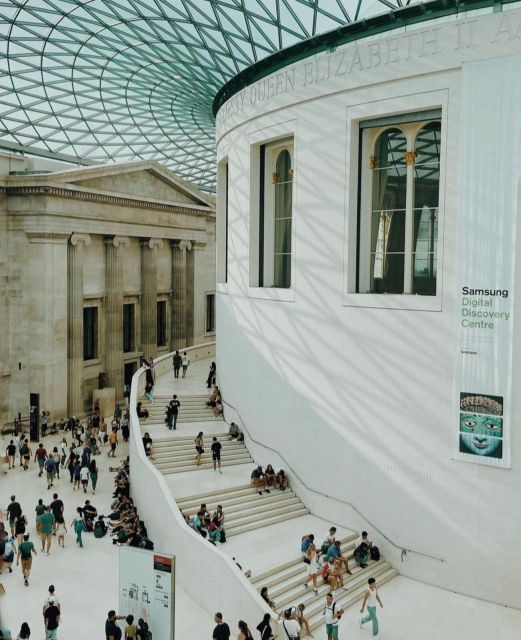
Two hours is long enough for a well-paced introduction and too short for a full British Museum visit. Think of it as a strong orientation that helps you decide what to revisit later.
You will likely spend more time at key objects than you would on your own, because the guide supplies the background that makes them worth studying. The trade-off is that many galleries will remain untouched.
This length suits a first visit, a short London stay, or anyone who feels overwhelmed by large museums. It also works for repeat visitors who want a specialist-led route rather than another unplanned walk through familiar rooms.
The museum can also have closures. One guest specifically found that substantial areas were shut, which reduced the amount of the visit available for exploration, even though the guide was considered excellent. That is a useful warning: a strong guide cannot fully replace access to closed galleries.
Is $90 good value?
At $90 per person for two hours, this is not a bargain museum stroll. You are paying about $45 per hour for the guide, with museum entry included.
The price makes the most sense if you value interpretation, structure, and the chance to ask questions. A person who already knows the collection well and prefers to wander alone may find the cost harder to justify.
For a first-time visit, the calculation is different. The British Museum’s size can lead to wasted time, missed highlights, and a vague memory of attractive but disconnected objects. A good guide can help you spend two hours with purpose.
The small group also supports the price. You are not buying a large, fixed speech. You are buying access to a guide who can explain, respond, and sometimes alter the route. That value depends heavily on the individual guide and on which galleries are available that day.
Who should book this British Museum tour?
I would recommend it to you if you want a clear introduction to ancient civilizations, prefer discussion to reading labels alone, or feel unsure where to begin in a very large museum.
It is especially suitable for families with older children, couples with different interests, and repeat museum-goers who want a fresh route. The ability to ask questions makes it more useful than a standard audio guide for people who learn best through conversation.
You may want to skip it if you only have one narrow object in mind and need guaranteed, extended time in a specific gallery. You should also think twice if you prefer complete independence or if a closed section would seriously disrupt your plans.
The experience does not include food, drinks, or transportation, and pets are not allowed. You can cancel up to 24 hours in advance for a full refund, and the reserve-now, pay-later option allows you to hold a place without paying at the time of booking.
My verdict on the two-hour visit
I like this tour because it tackles the British Museum’s biggest problem: too much to see and too little time. Its best qualities are the small group, the opportunity for discussion, and guides such as Diana and Wesley who can adjust the route when possible.
The main caution is the $90 price and the limited duration. Book it when understanding the objects matters more to you than covering every gallery, and tell the guide your priorities before the route begins. If you want a thoughtful first look at Mesopotamia, Egypt, Greece, and major museum pieces, this is a sensible way to begin.
FAQ
How much does the British Museum guided tour cost?
The tour costs $90 per person.
How long does the tour last?
The guided visit lasts two hours.
Is museum admission included?
Yes, museum entry is included in the tour price.
Where does the guide meet the group?
The guide meets the group in front of Starbucks, directly across from the museum entrance.
What language is the tour conducted in?
The live tour guide speaks English.
How large is the group?
The group is limited to 10 participants.
Are food and drinks included?
No. Food and drinks are not included.
Does the tour include hotel pickup or drop-off?
No. Hotel pickup and drop-off are not included.
Can I cancel for a refund?
Yes. You can cancel up to 24 hours in advance for a full refund.
Can I reserve now and pay later?
Yes. The reserve-now, pay-later option lets you book without paying immediately.
Are pets allowed?
No. Pets are not allowed on the activity.
Latest arrivals on the London list
- Easy Access Tower of London Royal Secrets & Scandals Tour★ 5.0 · 3 reviews
- Stonehenge Special Access Guided Morning Tour from London★ 4.5 · 3 reviews
- Shoreditch & East London Walking Tour with a Local, Custom & Private★ 5.0 · 3 reviews
- Madame Tussauds London Fast Track and Champagne Experience★ 3.5 · 3 reviews
- London Private Brixton Tour with a Local – Culture & Stories★ 4.9 · 3 reviews
- Private Full Day Tour – Fast Track Tower of London and Lunch★ 4.6 · 3 reviews
- Private transfer from London Heathrow Airport to Southampton★ 5.0 · 3 reviews
- London Soho District – Guided Walking Tour 12 guests 2,5h★ 4.8 · 3 reviews
British Museum Tours, compared.
British Museum London Guided Tour Semi-Private 8ppl Max
Read our review →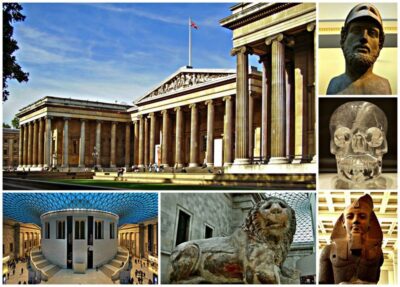
British Museum Audio Tour & Priority Entrance Ticket
Read our review →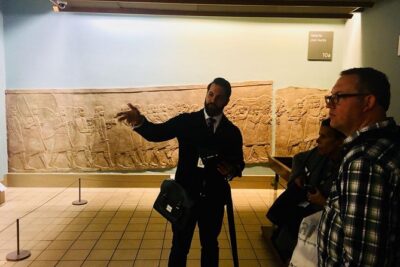
The British Museum London – Exclusive Guided Museum Tour
Read our review →
Browse the lists this tour appears in