
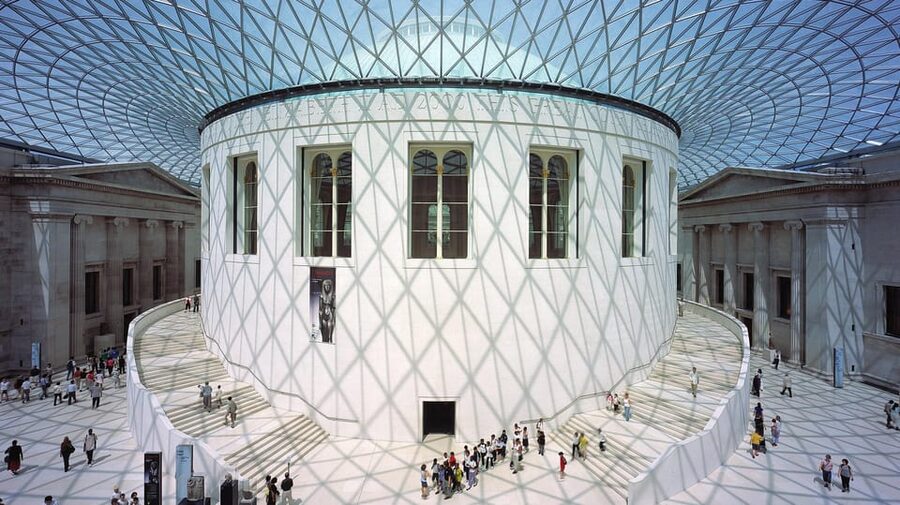
Reviewed · BRITISH MUSEUM TOURS
London: British Museum Guided Tour with Free Entrance Ticket
The British Museum can feel like a city made of stone, with galleries stretching in every direction and famous objects scattered across several floors. This two-hour guided tour gives you a clear route through the collection, from the Rosetta Stone and Ramses II to the Parthenon sculptures and the Sutton Hoo treasures.
I like the fast-track entry and the way the tour gathers major highlights into one sensible visit. I also like that the guide adds the stories behind the objects, rather than simply pointing at labels. Angel, one of the named guides, has earned praise for his storytelling and for keeping in touch when a train delay held him up.
The main consideration is the meeting point. Large groups may be redirected from the front entrance to Montague Place, and the museum can be difficult to enter at busy times. You need comfortable shoes, an early arrival, and a quick check of your WhatsApp messages before setting out.
In This Review
- Key points to know before booking
- Why two hours works well at the British Museum
- Meeting your guide after security
- The Rosetta Stone and the Egyptian galleries
- The Parthenon sculptures and a difficult museum question
- Assyrian lions and the power of protective figures
- The Aztec double-headed snake
- Moai, Sutton Hoo, and Roman Britain
- The Mold Cape and Lewis Chessmen
- Guide quality and the private-group choice
- What to bring and how to make the most of it
- Should you book this British Museum tour?
- FAQ
- How long is the British Museum guided tour?
- How much does the tour cost?
- What objects will I see?
- Is museum entry included?
- Where do I meet the guide?
- How early should I arrive?
- What languages are available?
- Can I book a private tour?
- Are backpacks allowed?
- Is the tour suitable for wheelchair users?
Key points to know before booking
- Rosetta Stone and Ramses II: See two of the museum’s most famous Egyptian objects early in the route.
- Fast-track museum entry: Your ticket includes expedited entry, though security checks still apply.
- Parthenon sculptures: Examine the disputed Athenian works and hear the story behind their removal.
- Rare objects beyond Egypt and Greece: The tour also includes an Aztec double-headed snake, Assyrian winged lions, and a Moai from Easter Island.
- Short, focused format: Two hours works well for first-time visitors who want the major sights without wandering alone.
- Language and group choice: Tours run in English, Spanish, or Italian, with a private-group option available.
Why two hours works well at the British Museum
The British Museum is not a place you casually conquer in an afternoon. Its collection covers objects from ancient Egypt, Assyria, Greece, Rome, Britain, Easter Island, Mexico, and many other places. If you walk in without a plan, you can spend half an hour getting your bearings before seeing anything you came for.
This tour solves that problem with a short route through the museum’s best-known pieces. You get a guide, a ticket, and a structure for the visit. The pace is brisk, but that is useful here. You will not see every room, and the tour does not pretend otherwise.
I see the two-hour length as a good first visit rather than a complete museum day. After the tour, you can decide which sections deserve more of your time. If you already know the British Museum well, or if you want long stretches with individual objects, the guided format may feel too quick.
The price is $35 per person. That is reasonable if you value a planned route, live explanations, and help getting through the entrance process. The museum’s scale is the real value of the guide. You are paying less for the objects themselves than for the time saved and the stories that help you understand them.
More British Museum visits:
- London: British Museum Guided Tour
★ 4.3 · 1,182 reviews - British Museum London Guided Tour Semi-Private 8ppl Max
★ 5.0 · 984 reviews - London: Tour of the British Museum
★ 4.1 · 678 reviews
Meeting your guide after security
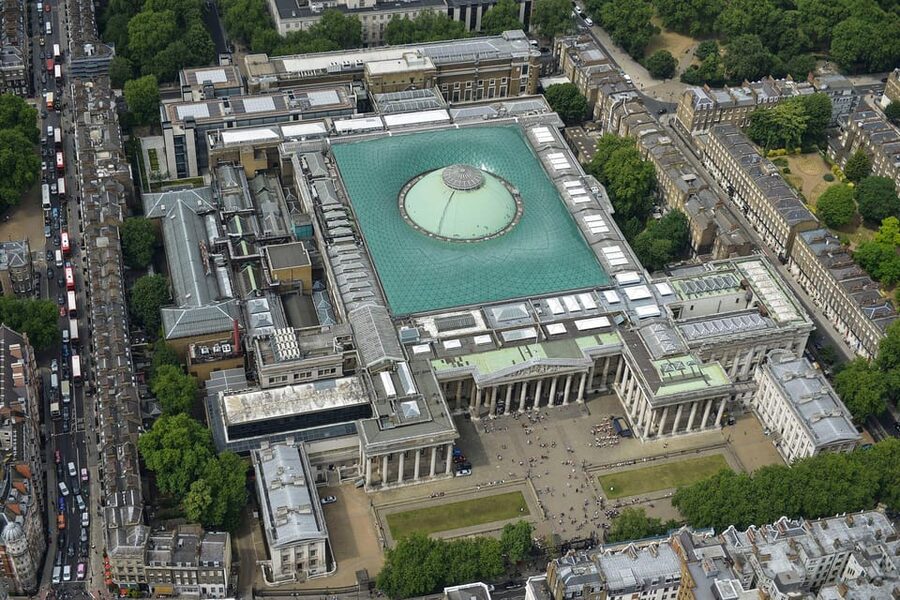
You are asked to arrive at least 15 minutes before your scheduled start. The normal meeting point is the main entrance, after the security check, on the staircase. Do not treat this as a casual suggestion. The front entrance can become slow during busy periods, and arriving late may mean rushing through security while the rest of the group waits.
Check your WhatsApp messages before leaving for the museum and again near the entrance. The meeting point can change to Montague Place, especially when the main entrance is crowded or when the group is larger than eight. One visitor had to walk around to the back of the building because the front route did not accept a larger group, so you should allow extra time for that possibility.
The fast-track benefit is helpful, but it does not mean you walk straight past every check. Security remains part of the process. Backpacks are not allowed, and flash photography is not permitted. Bring a small camera if you wish, but keep your hands free and your footwear sensible.
The Rosetta Stone and the Egyptian galleries
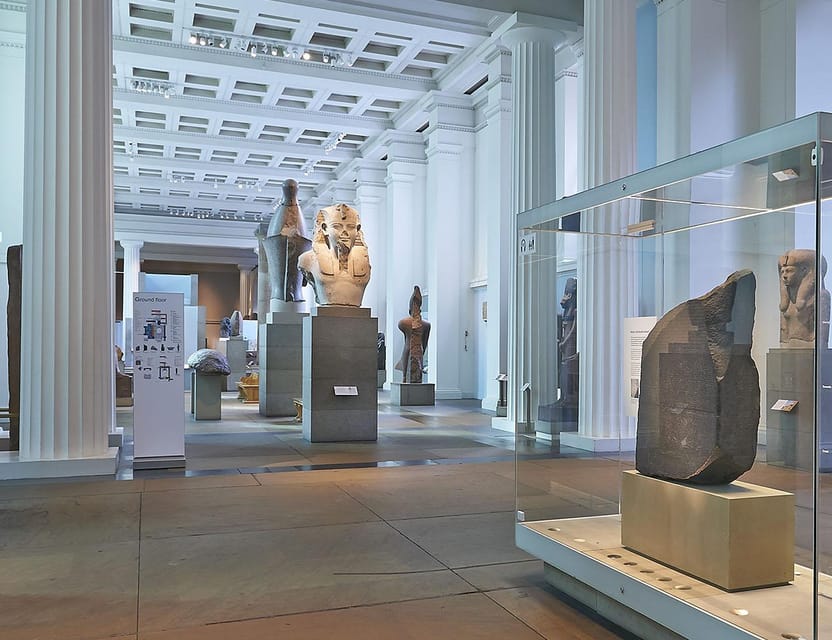
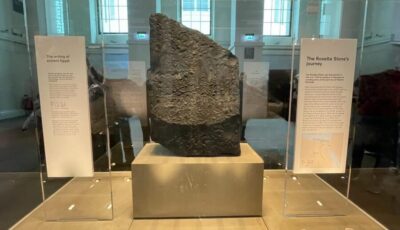
The Rosetta Stone is an excellent first major stop because it gives the guide a natural way to explain how ancient Egyptian writing became readable. The stone carries the same decree in three scripts, which allowed scholars to compare the known Greek text with the Egyptian forms.
You may have seen pictures of it many times, but its importance is easier to grasp when someone explains what you are looking at. The stone is not simply an old slab with writing. It is the key object in a much larger story about language, scholarship, and the study of ancient Egypt.
The colossal statue of Ramses II shifts the mood from close inspection to sheer scale. Ramses II was one of Egypt’s most powerful pharaohs, and the statue was made to project authority. The size matters. A guide can point out how royal art presents the ruler as calm, permanent, and larger than ordinary human life.
These stops also show why a guide is useful in a museum with so many labels. You can read the basic facts on your own, but a good explanation connects the object to the political and religious world that produced it. That is where Angel’s storytelling style has been especially well received.
The Parthenon sculptures and a difficult museum question
The Parthenon sculptures, often called the Elgin Marbles, bring a modern argument into an ancient gallery. The sculptures came from Athens and form part of the decoration once associated with the Parthenon. Their presence in London is tied to Lord Elgin’s removal of many pieces in the early 19th century.
The tour gives you a chance to look closely at the carvings while also hearing why their ownership and location remain disputed. This is not only an art stop. It is a question about collecting, imperial power, cultural ownership, and where major works should be displayed.
I appreciate this inclusion because it keeps the visit from becoming a parade of famous objects with no difficult questions attached. You can admire the carving and still think about how it arrived here. The tour is not designed as a full debate on restitution, so you should see this stop as a concise introduction rather than the final word.
The sculptures also offer a change in scale after the Egyptian galleries. Instead of one huge royal figure, you see movement, folds of cloth, and human and divine figures worked into architectural decoration. A guide helps you notice details that can disappear when you are looking at a long run of marble fragments.
More London museums to visit:
- Tower of London and Crown Jewels Exhibition Ticket
★ 4.5 · 6,677 reviews - London: Chelsea Football Club Stadium and Museum Tour
★ 4.8 · 4,576 reviews - Chelsea FC Stadium Tours and Museum
★ 5.0 · 1,908 reviews - London Transport Museum Entrance Ticket
★ 4.5 · 1,323 reviews
Assyrian lions and the power of protective figures
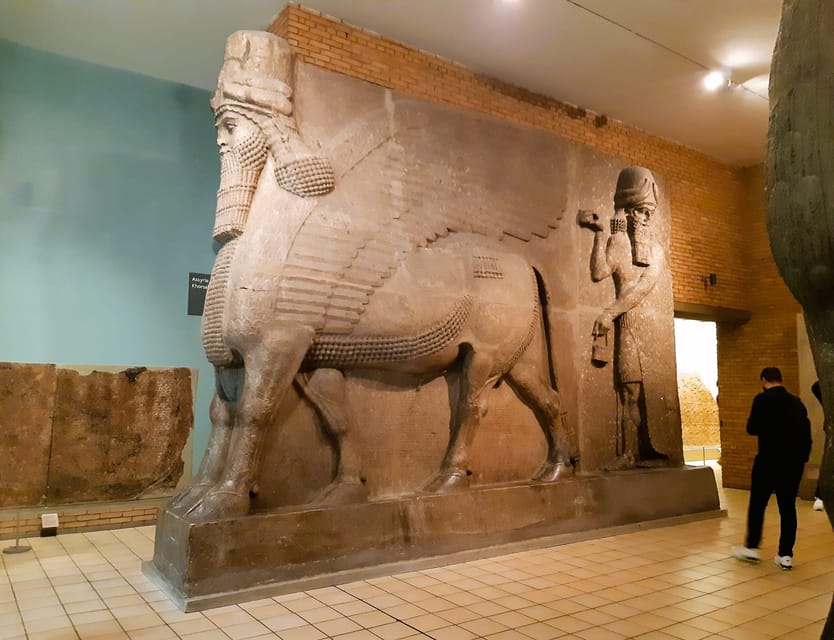
The Assyrian human-headed winged lions are among the most memorable stops because they combine the body of a powerful animal with a human head and wings. These figures were placed as guardians, and their size and design were meant to protect important spaces.
Look closely at the legs. Assyrian sculptors gave some guardian figures five legs so they appeared to stand firmly when viewed from the front and stride forward when viewed from the side. That kind of detail rewards a guide’s explanation. Without it, you might admire the carving but miss the clever visual planning.
The lions also broaden the tour beyond the better-known Egyptian and Greek galleries. You get a sense of how ancient rulers used art to project strength, order, and divine protection. The stop is especially useful for families and first-time museum visitors because the figures are easy to read at a glance, yet still offer plenty to discuss.
The Aztec double-headed snake
The Aztec double-headed mosaic snake is one of the tour’s more unusual objects. Made with turquoise-colored mosaic, it is visually striking and far less familiar to most people than the Rosetta Stone or the Parthenon sculptures.
The snake is rare, and its two heads give it an almost dreamlike appearance. The guide can help place it within the world of Aztec art and belief, where animals could carry powerful religious and symbolic meaning.
This stop gives the route welcome variety. After stone architecture and monumental royal sculpture, you encounter a smaller object whose effect comes from color, pattern, and shape. It is a good reminder that the museum’s strongest pieces are not all huge or instantly famous.
Moai, Sutton Hoo, and Roman Britain
The Moai from Easter Island brings another shift in place and scale. These monumental human figures are closely associated with the island’s culture, and the museum’s example gives you a direct look at the carved form that has become one of the world’s most recognizable types of sculpture.
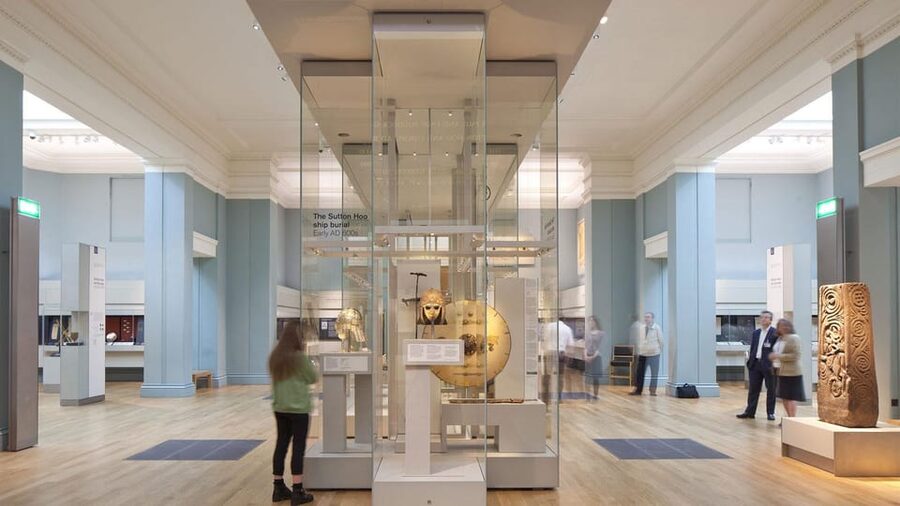
The tour also reaches the Sutton Hoo burial ship, one of the most important discoveries in British archaeology. The ship burial dates to early medieval England and offers a window into status, ceremony, craftsmanship, and long-distance connections. The objects linked to Sutton Hoo are valuable because they show that Britain’s early medieval world was not isolated or simple.
Roman Britain adds another layer to the story of the islands. Rather than keeping Britain’s past in a separate national box, the museum places it within the wider Roman world. You can see how conquest, trade, military power, and local life shaped the objects left behind.
These sections are useful if your interests go beyond Egypt and Greece. The route does not linger over every piece, but it gives you enough signposts to return later. I would make a mental note of the rooms you want to revisit, since the guide’s two-hour route can only offer a sample.
The Mold Cape and Lewis Chessmen
The Mold Cape is a remarkable Bronze Age object associated with the area around Stonehenge. It is made from gold and is highly decorated, showing the level of skill and social power present in prehistoric Britain.
The object is not large, so it benefits from explanation. At a glance, you may notice the metal and pattern before understanding how difficult such work would have been. A guide adds the human scale: someone commissioned it, someone made it, and someone wore it in a society capable of organizing skilled labor and valuable materials.
The medieval chessmen from the Isle of Lewis are a lighter and more approachable stop. Their carved faces and individual personalities make them easy to remember, but they also point to trade, gaming, status, and the movement of objects across medieval Europe.
I like ending with pieces such as these because they balance the grand monuments. The tour leaves you with faces you can recall, not just famous names. The chessmen are also a good example of how a small object can carry a large story.
Guide quality and the private-group choice
The strongest part of a guided museum visit is the person leading it. Angel has been singled out for his stories and for keeping the group informed when a delayed train threatened to affect the start. That kind of communication matters in London, where a small transport delay can quickly become a missed meeting point.
The tour offers English, Spanish, and Italian. Make sure you select the language that will let you follow fast explanations about dates, rulers, and disputed objects. A two-hour route leaves little time to translate mentally or pause over every label.
A private group is available. That option may suit families, couples, or small groups with a clear interest in certain periods. It should also make it easier to ask questions, though the supplied details do not specify the exact private-group price or size.
The tour is not aimed at visitors who need a slow, fully accessible route. It is listed as unsuitable for people with mobility impairments and wheelchair users. If stairs, distance, or standing are concerns, you should confirm suitability before booking rather than assuming a famous museum will meet your needs.
What to bring and how to make the most of it
Wear comfortable shoes. The museum is large, and even a focused route involves walking and standing. Bring water, but do not plan on carrying a large bag, since backpacks are not allowed.
A camera is allowed, but flash photography is not. Keep the camera ready for objects that catch your eye, while remembering that the guide’s explanation is often more valuable than a quick photograph.
I would also save the tour confirmation and meeting details somewhere easy to reach. Arrive early, complete security, and then look for the guide on the staircase or follow any updated directions to Montague Place.
The tour is offered at different starting times, subject to availability. Its free-cancellation policy allows you to cancel up to 24 hours ahead for a full refund, and reserve-now, pay-later booking can help if your London schedule is still moving around.
Should you book this British Museum tour?
Book it if this is your first British Museum visit and you want the major objects explained in a clear two-hour route. The $35 price makes sense for you if fast-track entry, a live guide, and saved planning time are worth more than exploring alone.
I would especially recommend it to first-time visitors, families, and anyone who wants the Rosetta Stone, Ramses II, Parthenon sculptures, Assyrian lions, Aztec snake, Moai, Sutton Hoo, and British treasures in one visit. The guide’s stories are the main reason to choose it over simply walking through with a map.
Skip it if you want a slow museum day, already know the collection well, or need wheelchair access. Also think carefully about the meeting instructions. Arrive early, check WhatsApp, and be ready for an entrance change. Do that, and this tour gives you a practical first look at one of London’s most demanding museums.
FAQ
How long is the British Museum guided tour?
The tour lasts two hours.
How much does the tour cost?
The listed price is $35 per person.
What objects will I see?
The route includes the Rosetta Stone, the colossal statue of Ramses II, the Parthenon sculptures, Assyrian human-headed winged lions, the Aztec double-headed mosaic snake, a Moai, the Sutton Hoo burial ship, Roman Britain, the Mold Cape, and the Lewis Chessmen.
Is museum entry included?
Fast-track entry and access to the British Museum’s famous objects are included.
Where do I meet the guide?
Meet at the main entrance after the security check, on the staircase. During busy periods, the entrance may change to Montague Place.
How early should I arrive?
Arrive at least 15 minutes before your scheduled tour.
What languages are available?
Live tours are available in English, Spanish, and Italian.
Can I book a private tour?
Yes. A private-group option is available.
Are backpacks allowed?
No. Backpacks are not allowed, and flash photography is also prohibited.
Is the tour suitable for wheelchair users?
No. The activity is listed as unsuitable for wheelchair users and people with mobility impairments.
Latest arrivals on the London list
- Easy Access Tower of London Royal Secrets & Scandals Tour★ 5.0 · 3 reviews
- Stonehenge Special Access Guided Morning Tour from London★ 4.5 · 3 reviews
- Shoreditch & East London Walking Tour with a Local, Custom & Private★ 5.0 · 3 reviews
- Madame Tussauds London Fast Track and Champagne Experience★ 3.5 · 3 reviews
- Private transfer from London Heathrow Airport to Southampton★ 5.0 · 3 reviews
- London Private Brixton Tour with a Local – Culture & Stories★ 4.9 · 3 reviews
- Private Full Day Tour – Fast Track Tower of London and Lunch★ 4.6 · 3 reviews
- London Soho District – Guided Walking Tour 12 guests 2,5h★ 4.8 · 3 reviews
British Museum Tours, compared.
British Museum London Guided Tour Semi-Private 8ppl Max
Read our review →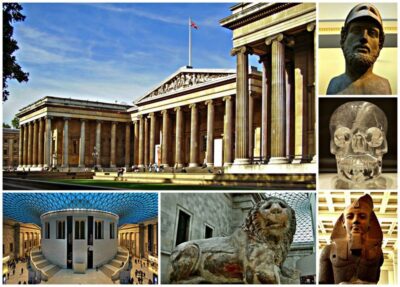
British Museum Audio Tour & Priority Entrance Ticket
Read our review →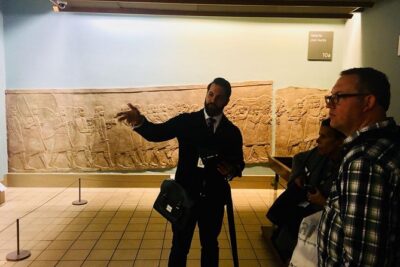
The British Museum London – Exclusive Guided Museum Tour
Read our review →
Browse the lists this tour appears in