
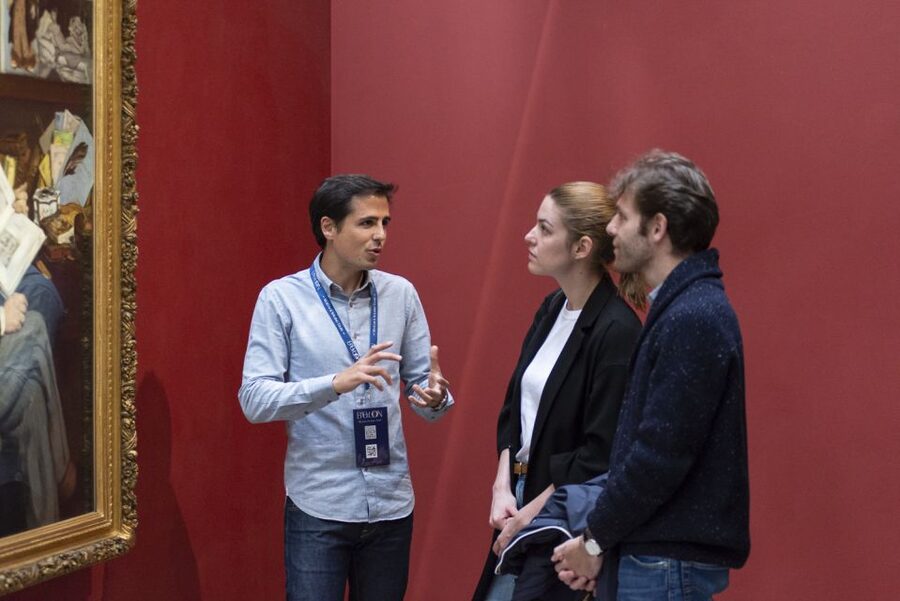
Reviewed · BRITISH MUSEUM TOURS
London: British Museum Highlights Guided Small Group Tour
The British Museum can swallow an entire day before you reach the objects you came to see. This 2 to 2.5 hour highlights tour gives you a clear route through 6,000 years of human history, with a guide explaining why the Rosetta Stone, Lewis Chessmen, and Assyrian Lion Hunt reliefs matter.
I like two things here. First, the tour links famous objects to the people and cultures that made them, instead of treating the museum as a parade of old stuff. Second, the small group format, with no more than eight people on the semi-private option, leaves room for questions and makes it easier to see the displays.
The trade-off is simple: you cannot see everything in this enormous museum in one short visit. Some stops may change if an object is on loan or being restored, and several visitors have wished for another 30 minutes to add more highlights.
In This Review
- Key points at a glance
- Why a guide helps inside this huge museum
- Starting with the Rosetta Stone
- Assyrian Lion Hunt reliefs and the drama of royal power
- The Parthenon sculptures and questions of ownership
- The Lewis Chessmen and the human side of history
- The Oxus Treasure and the reach of ancient Persia
- The Royal Game of Ur and the Mummy of Katebet
- Samurai armor and the value of a varied route
- Two hours is efficient, but not leisurely
- Private or semi-private: which option makes sense?
- Who will get the most from this tour?
- Practical details before you book
- Should you book the British Museum highlights tour?
- FAQ
- How long does the British Museum highlights tour last?
- What objects are included on the tour?
- Is the tour private or shared?
- How many people are needed for the semi-private tour?
- Is the tour available in languages other than English?
- Can wheelchair users join the tour?
- What should I bring and what is not allowed?
- Is hotel pickup included?
Key points at a glance

- The Rosetta Stone anchors the visit: See the actual inscribed stone that helped scholars read Egyptian hieroglyphs.
- The route crosses continents and centuries: Expect ancient Egypt, Assyria, Greece, Persia, medieval Scotland, and Japan in one morning or afternoon.
- Guides bring the objects to life: Guides such as James H, Andy, Sasha, Stef, Sheldon, and Luis have been praised for clear storytelling, humor, and strong subject knowledge.
- Eight people is the semi-private limit: A small party makes it easier to follow explanations and ask questions.
- The tour is built for first-time visitors: It gives you a useful framework before you return to galleries on your own.
- Plan around the bag rule: Bring identification if requested, but leave luggage and large bags elsewhere.
Why a guide helps inside this huge museum
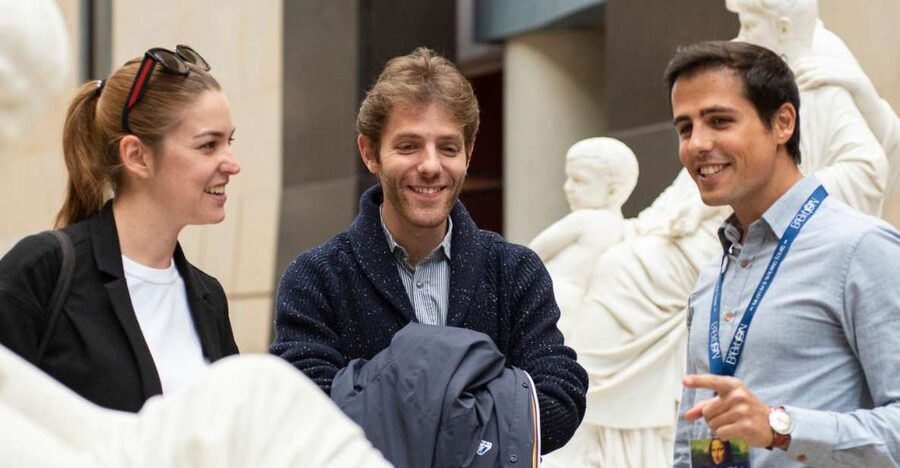
The British Museum holds more than any sensible person can absorb in a single visit. Without a plan, you can spend twenty minutes admiring a case and still miss the objects that explain an entire civilization.
A good guide solves that problem by choosing a limited group of important pieces and giving each one a reason to matter. You are not simply told that an object is old or beautiful. You learn what it was used for, what it reveals about its makers, and how it fits into a larger story about power, religion, trade, warfare, or daily life.
That approach is especially useful here because the collection ranges across the world. One moment you may be looking at a royal scene from Assyria, and soon after you are considering a medieval chess set from Scotland or ceremonial armor from Japan. The contrast keeps the tour lively, but the guide also gives you enough context to avoid feeling as if the museum is jumping randomly from one subject to another.
The strongest guiding style seems to be conversational. Andy, who has a PhD in history, has been singled out for painting vivid pictures around the objects. Stef was praised for mixing information, humor, and enthusiasm. Luis was appreciated for including children and moving the group through crowded galleries without losing the thread of the story.
Guide assignments vary, so you should not book on the assumption that one particular person will lead your visit. Still, the range of names associated with this experience suggests a team comfortable with both serious history and family groups.
More British Museum visits:
- London: British Museum Guided Tour
★ 4.3 · 1,182 reviews - British Museum London Guided Tour Semi-Private 8ppl Max
★ 5.0 · 984 reviews - London: Tour of the British Museum
★ 4.1 · 678 reviews
Starting with the Rosetta Stone
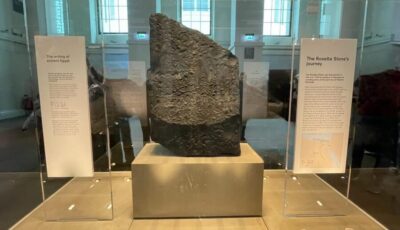
The Rosetta Stone is the obvious opening act, and for good reason. It is not a language-learning product, but the actual ancient stone whose inscriptions in different scripts helped scholars understand Egyptian hieroglyphs.
At the display, your guide can turn a familiar name into a useful lesson about decipherment, writing, and the way a single object can change modern understanding of the ancient world. This is the sort of context that a label alone cannot easily provide.
Expect the area around famous objects to be busy. A small group does not remove the crowds, but it helps you stay together and gives you someone to point out details you might miss while trying to take a photograph.
The Rosetta Stone also sets the tone for the rest of the tour. The point is not to rush from one celebrity object to the next. It is to understand why each one became important and what question it helps answer.
Assyrian Lion Hunt reliefs and the drama of royal power
The Assyrian Lion Hunt reliefs are among the most gripping stops on the route. They show royal hunts with a level of detail that makes the carved scenes feel immediate, even though they were created centuries ago.
Your guide will likely draw your attention to the way the animals, hunters, and ruler are presented. These panels are not just records of sport. They communicate authority, courage, and control over nature. The king is shown in a carefully shaped story of power.
This is also a good place to ask questions. Museum objects can look self-explanatory until you realize that their original purpose was not simply decoration. The guide helps you read the scene as a political message as well as a work of art.
For me, this is one of the tour’s best examples of why a human explanation matters. You see the carved figures immediately, but the meaning behind them takes a little help to understand.
The Parthenon sculptures and questions of ownership
The Parthenon sculptures offer beauty, technical skill, and a serious discussion about how objects arrived in a national museum. They are often called the Elgin Marbles, though the term Parthenon sculptures is more neutral and more useful in a modern conversation.
The tour gives you a chance to admire the figures and architectural fragments while also considering the difficult history behind their removal from Athens. One private-tour visitor valued a guide’s willingness to discuss the less flattering parts of British history, and that kind of honesty improves a museum visit.
Do not expect a full seminar on museum ethics in a few minutes. The tour has many stops to cover. But a good guide can give you enough background to see the sculptures as both great works of art and objects connected to ongoing cultural debate.
That balance is important. You can appreciate the craftsmanship without pretending that the story of ownership is simple.
More London museums to visit:
- Tower of London and Crown Jewels Exhibition Ticket
★ 4.5 · 6,677 reviews - London: Chelsea Football Club Stadium and Museum Tour
★ 4.8 · 4,576 reviews - Chelsea FC Stadium Tours and Museum
★ 5.0 · 1,908 reviews - London Transport Museum Entrance Ticket
★ 4.5 · 1,323 reviews
The Lewis Chessmen and the human side of history
The Lewis Chessmen change the mood. Instead of monumental sculpture or royal propaganda, you are looking at small medieval chess pieces, including expressive carved figures that have become some of the museum’s most memorable objects.
Their appeal is immediate, especially for children and anyone who likes artifacts with a face. Your guide can use them to talk about play, status, craftsmanship, and the movement of objects through the medieval world.
This stop also gives the tour a welcome human scale. After seeing huge reliefs and grand architectural sculpture, you are suddenly focused on pieces made to be held and used. The figures help you imagine ordinary leisure and social life, not just kings, temples, and armies.
Families appear to benefit from this variety. Guides including Alex, Luis, and Ivo have been praised for keeping younger visitors involved, and Ivo in particular was noted for building a theme that worked for both children and adults.
The Oxus Treasure and the reach of ancient Persia
The Oxus Treasure is another major stop, with objects linked to the ancient Persian world. It helps show how art, wealth, belief, and trade crossed broad distances long before modern borders or fast transport.
A guide can explain what you are seeing and why a collection of small precious objects deserves as much attention as the museum’s larger monuments. This is one of those displays that can pass quickly if you are wandering alone, especially when you are trying to cover several galleries.
The value here is comparison. The Rosetta Stone is famous for writing, the Assyrian reliefs for royal power, and the Parthenon sculptures for classical art and modern ownership debates. The Oxus Treasure adds another view of wealth and cultural exchange.
The tour’s broad route means you will not become a specialist in ancient Persia. You will leave with a clearer sense that the ancient world was connected, creative, and far less isolated than a simple timeline might suggest.
The Royal Game of Ur and the Mummy of Katebet
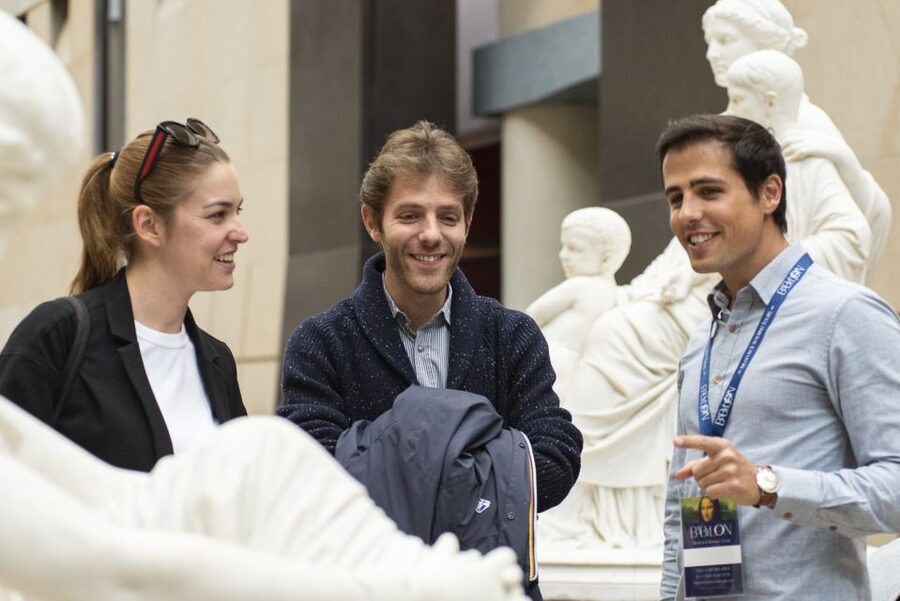
The Royal Game of Ur offers a different doorway into the past. A board game makes ancient people feel familiar. They played, competed, and passed time just as people do now, even though the rules and setting belonged to a very different society.
That connection can be particularly useful for younger visitors. It turns ancient history from a list of rulers into something personal and easy to picture.
The Mummy of Katebet takes you back to ancient Egypt, but with a more individual focus than the Rosetta Stone. You are not only looking at an Egyptian burial object. You are considering the beliefs and practices surrounding one person.
The guide’s role is to keep these objects connected rather than letting them become isolated curiosities. With the right explanation, the game board and mummy both become evidence of how people lived, hoped, feared, and marked important moments.
Samurai armor and the value of a varied route
Samurai armor gives the tour a striking change of scene. Its materials, shape, and purpose open a window onto Japanese warrior culture, and the display is visually easy to appreciate even if you know little about the subject.
This is a smart inclusion because the British Museum’s strength is its global range. You are not spending the entire tour in one ancient civilization. You are comparing different ways societies expressed rank, duty, protection, and identity.
The same variety can also be tiring. Moving between subjects requires concentration, and you may find yourself wishing for more time with an object that catches your interest. The short format favors breadth with selected detail, not a slow examination of every gallery.
If you already have a favorite area, consider booking the private option. The guide can give more attention to your interests, within the limits of the available route and collection.
Two hours is efficient, but not leisurely
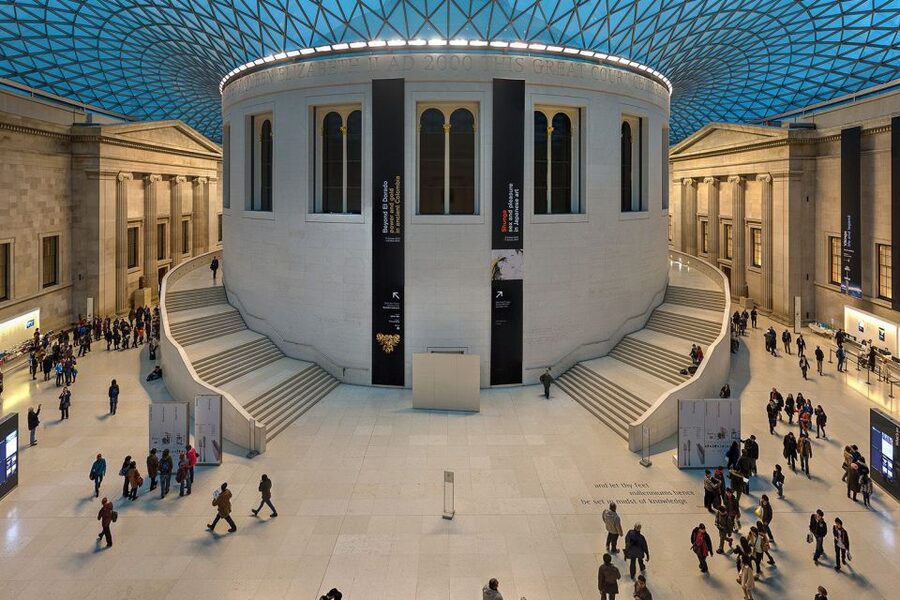
The tour lasts two to two and a half hours. That is long enough to create a coherent visit, but short enough to fit into a busy London day.
I would call the pace purposeful. You will see major areas of the museum, but you should not expect extended free time at each object. Several people have wanted another half hour or more, which tells you exactly what to expect: this is an introduction and orientation, not a complete museum day.
The timing works well if you are visiting London with limited time, bringing children, or trying to avoid the fog that follows an unplanned museum visit. It also leaves you with the rest of the day to return to a gallery that caught your attention.
After the tour, ask your guide for suggestions about what to see next. The experience includes time and ideas for continuing on your own, and that is one of its practical strengths.
Private or semi-private: which option makes sense?
The semi-private tour allows up to eight people and requires at least two people for the booking to run. If the minimum is not met, an alternative date or full refund is offered.
A smaller party matters inside a museum. You can hear more easily, stay close to the guide, and ask questions without holding up a large crowd. It also makes it easier for the guide to include children or adjust the explanation when the group has mixed interests.
The private option costs more in many tour settings, so the value depends on your priorities. At $112 per person, the semi-private tour is not a cheap add-on, but it can be worthwhile if you want a focused visit and have only a few hours. The private format makes more sense for families, people with a particular interest in history, or anyone who needs a wheelchair-accessible arrangement.
The available information says wheelchair tours are offered on request only as private tours. The general activity information also lists wheelchair users as not suitable, so you should contact the provider before booking if access is important. A small amount of walking is involved.
Who will get the most from this tour?
I would recommend it most strongly to first-time British Museum visitors who want context instead of a map and a long list of galleries. It also suits families, since the mix of games, mummies, armor, animals, and famous stones gives a guide many ways to hold a child’s attention.
Teenagers may respond well to the stories and debates, especially when the guide treats the objects as evidence of real choices and conflicts rather than as dusty school material. Several guides have been praised for making history work for younger people.
History fans should also consider it, but with one warning. You may want more time at individual objects than the standard route allows. The private option gives you a better chance to shape the discussion, though the exact stops can depend on what is available on the day.
You should skip it if you prefer to wander alone, read every label, and set your own pace. You should also avoid bringing large luggage, since it is not allowed.
Practical details before you book
The meeting point can vary by the option you select, so check your booking details carefully. The tour is in English and is available daily, with starting times shown according to availability.
Bring a passport or ID card. Leave large bags and luggage behind, since they are not permitted.
The price includes a professional local guide and the private or semi-private format. It does not include hotel pickup, hotel drop-off, temporary exhibitions, or food and drinks unless specifically stated.
You can cancel up to 24 hours before the tour for a full refund, and the reserve-now, pay-later option lets you keep your plans flexible. Those terms are useful in London, where weather, train delays, and changing sightseeing plans can quickly rearrange a day.
Should you book the British Museum highlights tour?
Book it if you want a smart first look at an overwhelming museum, especially if your time is limited or your group includes children. The best part is not simply seeing the Rosetta Stone or the Parthenon sculptures. It is learning how to look at them, and understanding why objects from very different places belong in a single conversation about human achievement.
At $112 per person, the price is easiest to justify when you value a small group, a strong guide, and saved time. It is less appealing if you plan to spend a full day at the museum anyway and enjoy researching each gallery at your own pace.
The tour cannot cover five million objects in two and a half hours. It can give you a route, a set of stories, and enough curiosity to keep exploring after the guide leaves. For most first visits, that is a useful bargain.
FAQ
How long does the British Museum highlights tour last?
The tour lasts approximately 2 to 2.5 hours.
What objects are included on the tour?
Highlights generally include the Rosetta Stone, Assyrian Lion Hunt reliefs, Parthenon sculptures, Lewis Chessmen, Oxus Treasure, Royal Game of Ur, Mummy of Katebet, and Samurai armor. Individual objects can change if they are on loan or being restored.
Is the tour private or shared?
You can book a private tour or a semi-private tour. The semi-private option has a maximum of eight guests.
How many people are needed for the semi-private tour?
A minimum of two people is required for the semi-private tour to run. If the minimum is not met, an alternative date or full refund is offered.
Is the tour available in languages other than English?
The live tour guide service is offered in English.
Can wheelchair users join the tour?
Wheelchair tours are available on request as private tours only. The guide cannot provide a small group tour for guests who require wheelchair access, so contact the provider before booking.
What should I bring and what is not allowed?
Bring a passport or ID card. Luggage and large bags are not allowed.
Is hotel pickup included?
No. Hotel pickup and drop-off are not included, and the meeting point may vary depending on the option booked.
Latest arrivals on the London list
- Heathrow Airport to London Arrival Transfer★ 4.5 · 50 reviews
- London Beatles Tour★ 5.0 · 50 reviews
- One Way Taxi Transfer from London to Gatwick Airport★ 5.0 · 51 reviews
- London: Hidden Baker Street Tube Station Tour★ 4.7 · 51 reviews
- City & Secrets: Explore London’s Hidden Gems★ 5.0 · 51 reviews
- London Christmas Lights Open-Top Bus Tour. 2025 Early Bird★ 3.6 · 51 reviews
- 4 hour London Private Tour, with your own Black Cab Tour Guide★ 5.0 · 51 reviews
- The Beatles Magical History Black Taxi Tour London★ 5.0 · 51 reviews
British Museum Tours, compared.
British Museum London Guided Tour Semi-Private 8ppl Max
Read our review →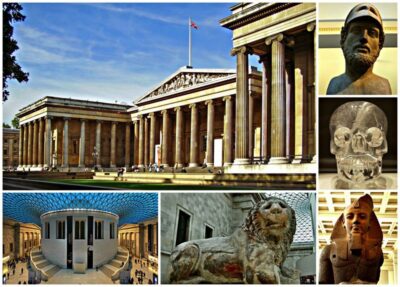
British Museum Audio Tour & Priority Entrance Ticket
Read our review →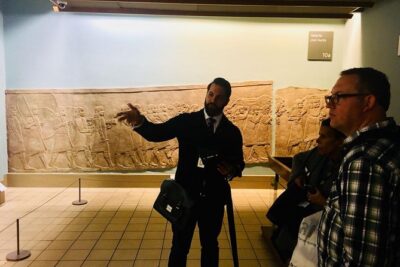
The British Museum London – Exclusive Guided Museum Tour
Read our review →
Browse the lists this tour appears in