
Reviewed · BRITISH MUSEUM TOURS
London: British Museum Highlights Tour: How Beauty Was Born
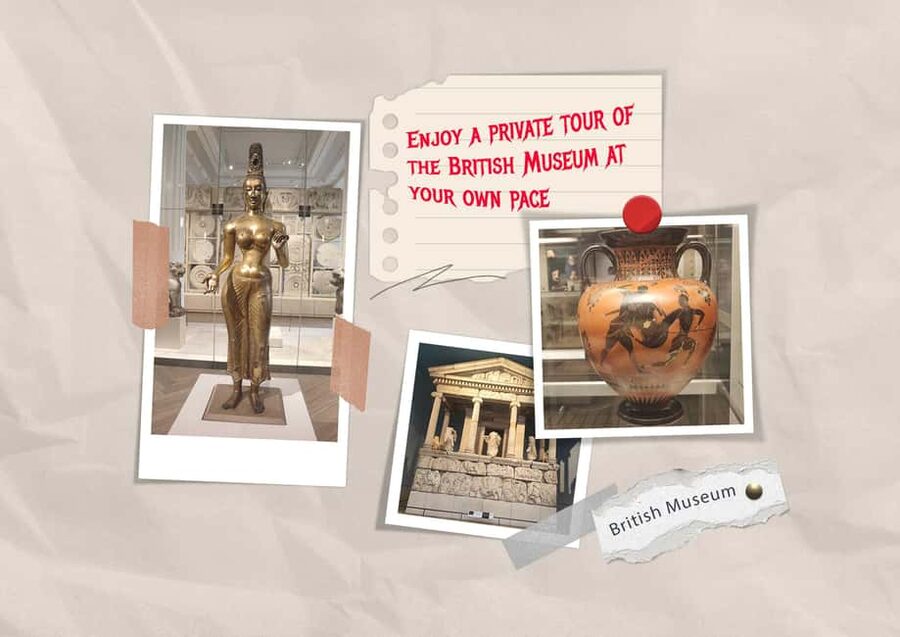
The most interesting part of this British Museum tour is its central question: How did people decide what was beautiful? Instead of marching through eight million objects, you follow a human thread through Greece, Egypt, Mesopotamia, India, and medieval Europe.
I like the small group of eight and the way the route links famous objects to big ideas about love, death, beauty, faith, and storytelling. I also like the practical two-hour length, which gives you a focused introduction without turning your afternoon into a museum endurance test.
The main consideration is access. The tour involves a moderate amount of walking and is not suitable for wheelchair users or people with mobility impairments. Large bags and backpacks are not allowed inside, so plan what you carry before meeting at Edward VII’s Entrance.
In This Review
- Key points to know before you book
- A two-hour idea tour, not a race through eight million objects
- Meeting the guide at Edward VII’s Entrance
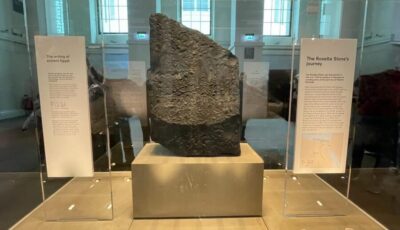
- The Rosetta Stone and the power of a written clue
- Greek sculpture and the changing shape of beauty
- Egyptian mummies and the line between life and death
- Mesopotamia, India, and ideas that still shape daily life
- Tragic love stories told through ancient art
- Medieval comic-book images of Jesus
- What the $33.67 price buys you
- Walking, bags, photographs, and comfort
- Who should book the British Museum Highlights Tour?
- Should you book this two-hour museum tour?
- FAQ
- How long does the British Museum Highlights Tour last?
- What is the price per person?
- How many people can join the tour?
- What language is the tour conducted in?
- Where does the tour start?
- Where does the tour end?
- Is museum entry included?
- Can I take photographs inside?
- Are backpacks allowed inside the museum?
Key points to know before you book
- The Rosetta Stone anchors the language story: See the object that helped scholars read Egyptian hieroglyphs.
- The Parthenon Marbles give beauty a Greek face: Consider how ancient Greek art still shapes modern ideas about the human form.
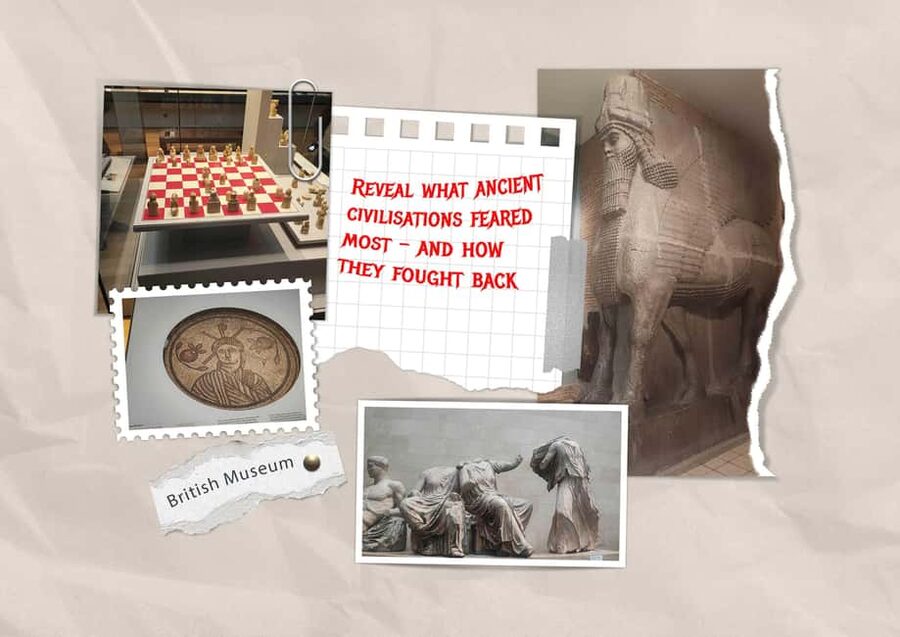
- The route reaches beyond the usual highlights: Egyptian mummies, Mesopotamian inventions, Indian spiritual ideas, tragic love stories, and medieval accounts of Jesus all enter the discussion.
- Eight people is the maximum: A small party makes it easier to hear the guide and ask questions.
- The tour lasts about two hours: It works well as a first visit or as a focused introduction before exploring on your own.
- Entry is handled through express security: You still need to meet at the correct entrance and follow the museum’s bag rules.
A two-hour idea tour, not a race through eight million objects
The British Museum can feel overwhelming. Its collection covers thousands of years and much of the world, while the building itself offers more rooms than you can sensibly tackle in one visit.
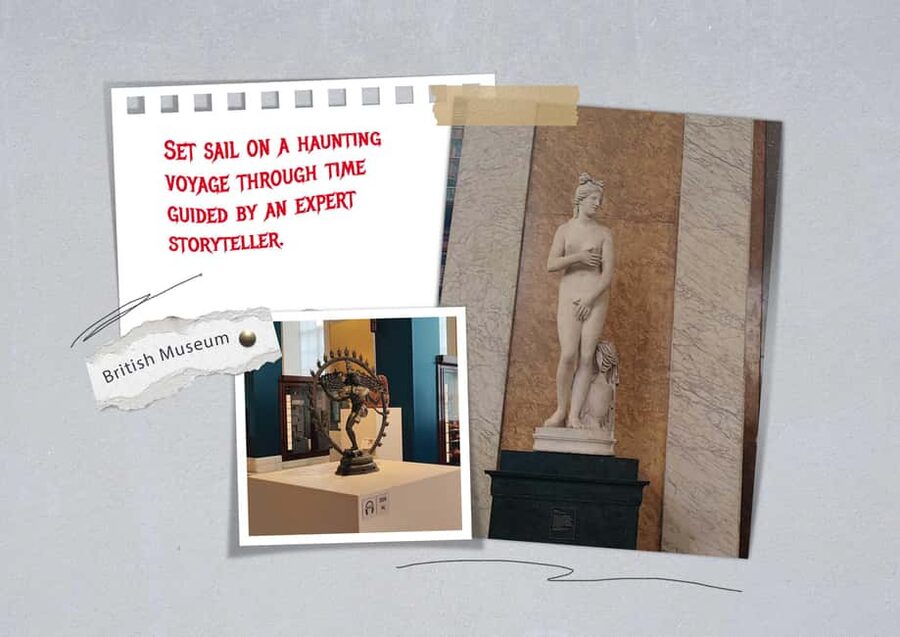
This tour solves that problem with a theme rather than a simple list of famous objects. The guide uses beauty as the connecting idea, then stretches the meaning of beauty to include art, belief, power, the body, death, and the stories people tell about themselves.
That approach matters because you will not just hear dates and names. You will be asked to think about why certain forms became admired, why some stories survived, and how old ideas still affect the way you look at art today.
The pace is designed for about two hours. That is long enough to see major highlights and make useful connections, but short enough to leave you time for lunch, another London sight, or a return visit to rooms that caught your attention.
You should expect walking, standing, and moving between different parts of the museum. Wear comfortable shoes, bring water for before or after the tour, and do not count on carrying food or drinks through the exhibition halls.
More British Museum visits:
- London: British Museum Guided Tour
★ 4.3 · 1,182 reviews - British Museum London Guided Tour Semi-Private 8ppl Max
★ 5.0 · 984 reviews - London: Tour of the British Museum
★ 4.1 · 678 reviews
Meeting the guide at Edward VII’s Entrance
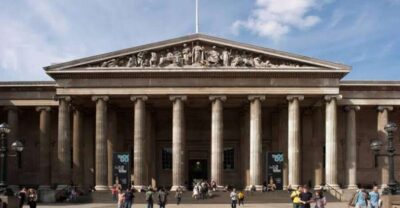
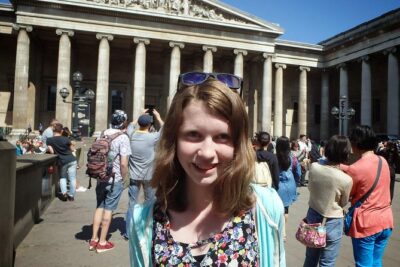
Your starting point is the group entrance at Edward VII’s Entrance. Look for the guide holding a My London Guide sign.
This detail is worth taking seriously. The British Museum has several entrances and the area around the museum can be busy, so give yourself enough time to find the right door. The activity ends back at the same meeting point, which makes it easier to plan your next stop.
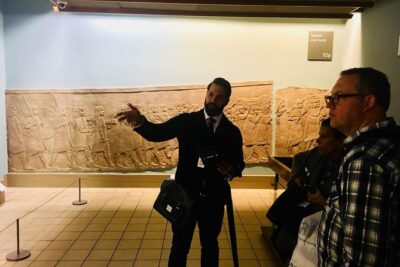
The tour is in English and uses a live guide rather than an audio device. With no more than eight people, you should be able to hear the explanations clearly and ask a question without having to call across a crowd.
The tour includes express security access, but that does not remove the museum’s security rules. Large bags and backpacks are not permitted inside. Pack lightly, and avoid arriving with a bag you expect to check unless you have confirmed the current arrangements separately.
One useful sign of the guide’s role came when an entry problem arose at the museum. The guide resolved it for the party, a reminder that a human guide can help when the practical side of a major attraction becomes less tidy than the brochure suggests.
The Rosetta Stone and the power of a written clue
The Rosetta Stone is one of the museum’s essential stops. Its importance is not only visual. The stone carried the same decree in three scripts, giving scholars the evidence they needed to make sense of Egyptian hieroglyphs.
That makes it a fine opening for a tour about beauty and human expression. The stone shows that a culture’s art and ideas cannot be fully appreciated if its writing remains unreadable. Once the signs could be understood, the symbols on temples, tombs, and monuments became part of a larger story.
Your guide can use the stone to explain how language changes the way we see an object. Instead of looking at carved marks as decoration, you begin to recognize political messages, religious beliefs, and the careful way ancient societies presented themselves.
The drawback is that the Rosetta Stone is famous for a reason, so it can draw a crowd. You may not have a quiet, private view. A guided explanation helps you get more from the moment, even if the physical space around the stone feels busy.
Greek sculpture and the changing shape of beauty
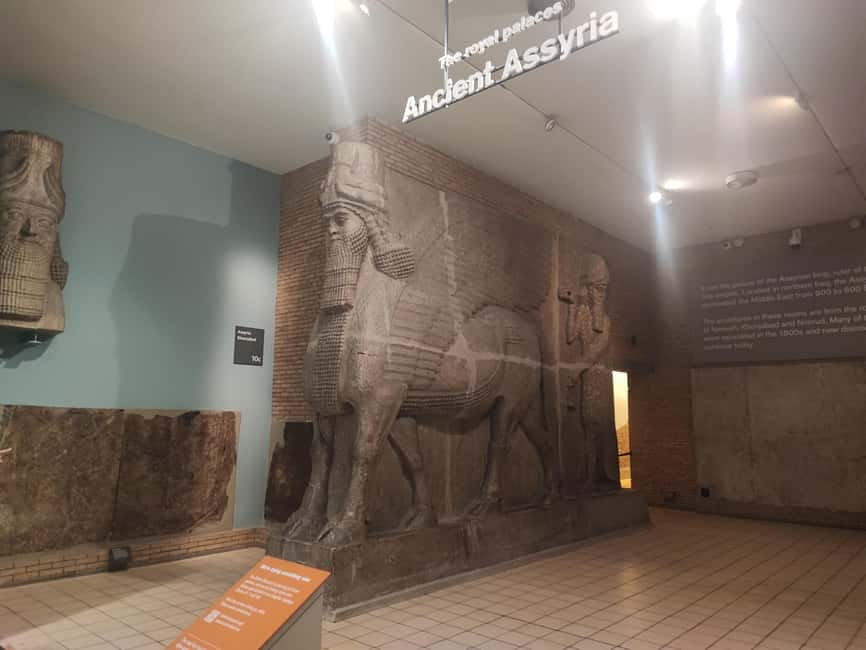
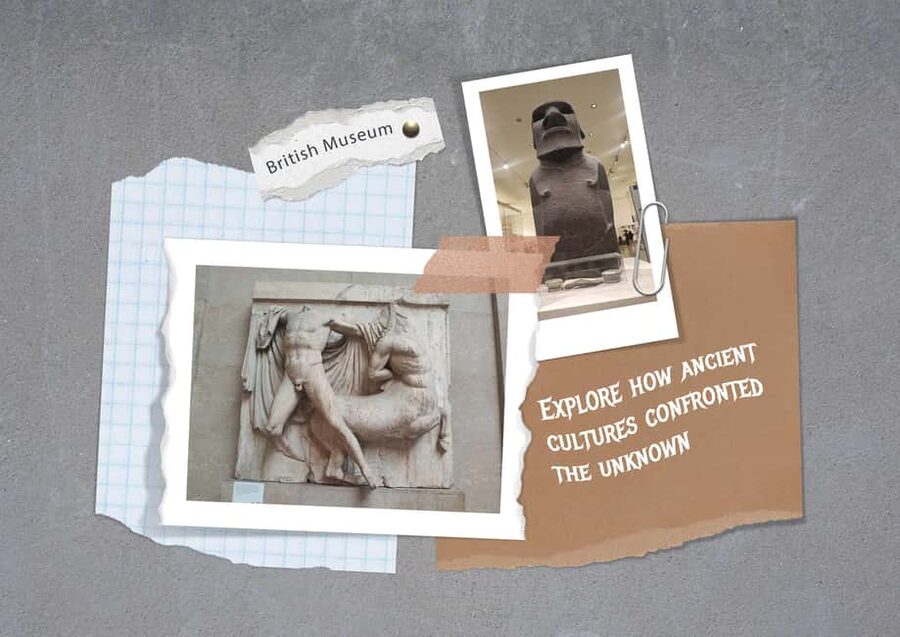
The tour then turns to ancient Greece and the Parthenon Marbles. These sculptures are often treated as a lesson in artistic skill, but the more useful question is why their treatment of the human body became such a lasting model.
Greek art helped spread an ideal of balance, proportion, and controlled movement. The tour connects that ideal to modern ideas about beauty, art, sport, theatre, and culture. You do not need to know Greek mythology or train like an Olympic athlete to follow the discussion.
The Parthenon Marbles also invite a harder question about ownership and removal. The information provided for this experience focuses on beauty rather than presenting a full debate about museum ethics, so you should see this stop as an introduction, not the final word on the marbles’ contested history.
I like this part because it moves beyond beautiful object equals beautiful object. You start thinking about who created the image, who admired it, and why later societies kept returning to the same body shapes and artistic rules.
If ancient sculpture is your main reason for visiting, you may want extra time after the tour. Two hours gives you a guided look, not a full study of the Greek galleries.
More London museums to visit:
- Tower of London and Crown Jewels Exhibition Ticket
★ 4.5 · 6,677 reviews - London: Chelsea Football Club Stadium and Museum Tour
★ 4.8 · 4,576 reviews - Chelsea FC Stadium Tours and Museum
★ 5.0 · 1,908 reviews - London Transport Museum Entrance Ticket
★ 4.5 · 1,323 reviews
Egyptian mummies and the line between life and death
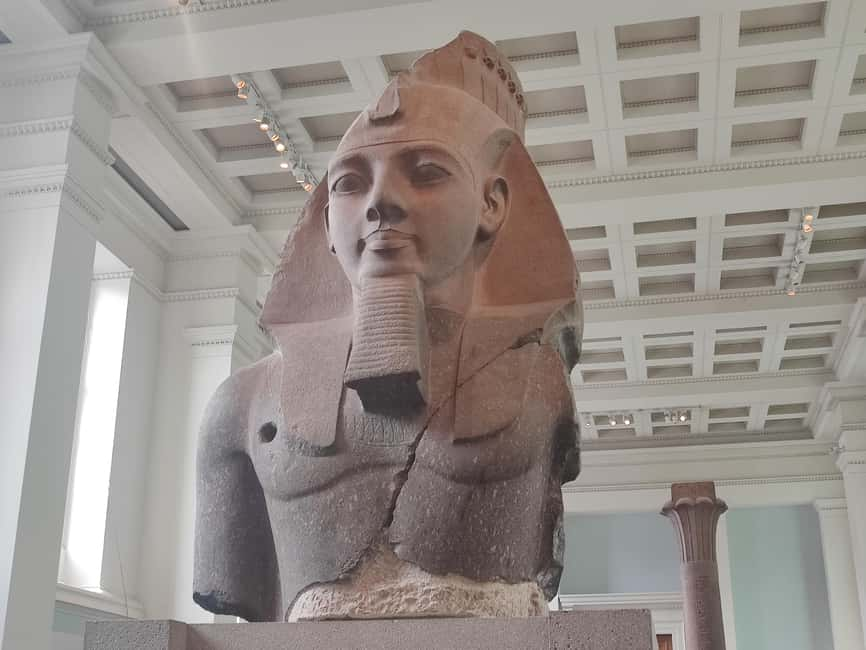
Egyptian mummies bring a different kind of beauty into the conversation. Here, the subject is not simply the ideal body. It is the effort to preserve identity, prepare for death, and maintain a connection between the living and the dead.
The guide uses Egyptian objects to discuss pyramids, hieroglyphs, and advances in medicine. Mummies can be striking, but the most valuable part of the stop is the chance to place them inside the beliefs that shaped their creation.
You may find this section more powerful than pretty. That is part of the point. Ancient Egyptian art often served religious and practical purposes at the same time, and the objects ask you to consider how every culture decides what deserves care after death.
This is also a stop where the guide’s storytelling matters. A label can tell you what an object is. A live explanation can connect it to ideas about the soul, the body, and the human wish to continue beyond one lifetime.
Mesopotamia, India, and ideas that still shape daily life
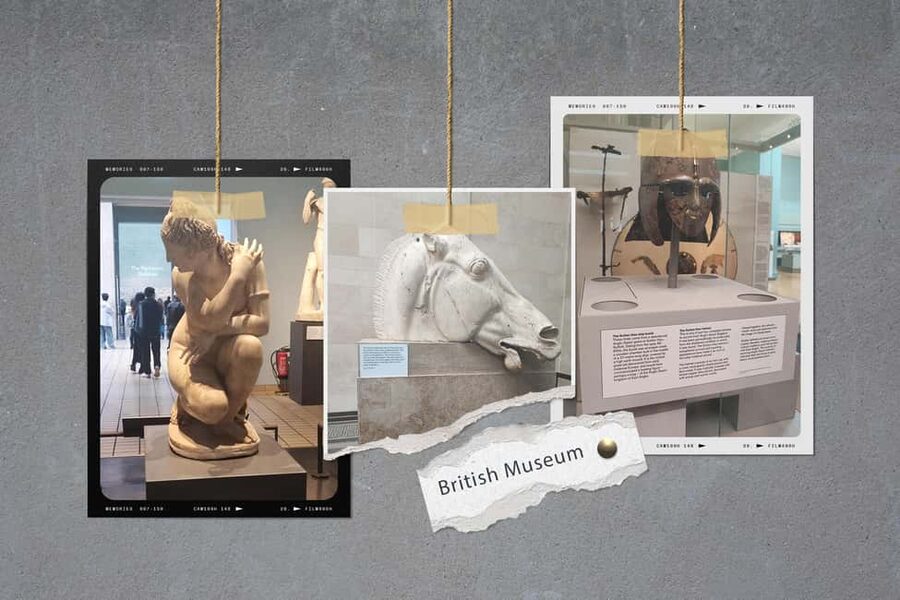
The tour reaches farther east, with Mesopotamian and Indian material adding two different angles.
Mesopotamia is presented through inventions and systems that still affect modern life: the wheel, siege engines, and farming methods. These objects may not fit a narrow definition of beauty, but they show that human creativity is not limited to sculpture and painting.
That is a useful correction. A well-made tool, a clever machine, or a system that helps a society survive can express the values of its makers just as clearly as a statue can.
Indian material introduces yoga, rebirth, and paths toward enlightenment. The connection to the modern world is easy to recognize, but the tour gives you a chance to consider the older beliefs behind familiar practices.
You should not expect a full course in Indian religion or Mesopotamian civilization in this short visit. Instead, these sections broaden the theme. Beauty can appear in an object’s design, a society’s ideas, or a person’s search for peace.
Tragic love stories told through ancient art
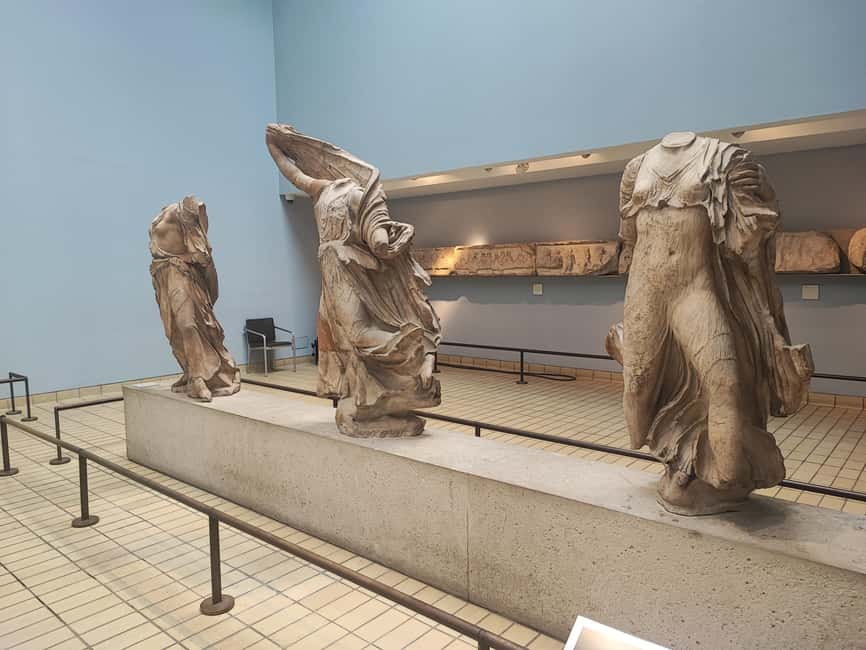
The tour also follows stories of tragic love and fate. This is one of the more personal parts of the route, since these themes need no translation. People have long used art to express desire, loss, sacrifice, jealousy, and the fear that happiness will not last.
The guide asks what these stories meant to the audiences who first heard or saw them. That question helps you look at old art as something made for living people, not as a collection of silent relics.
This section may appeal most if you enjoy mythology, theatre, or literature. It also gives the tour a change of mood after the large historical subjects of language, empire, and religion.
The information does not name each love story or promise a single famous myth, so you should treat this as a theme rather than a fixed theatrical performance. The guide’s selection and storytelling style will shape how much time this part receives.
Medieval comic-book images of Jesus
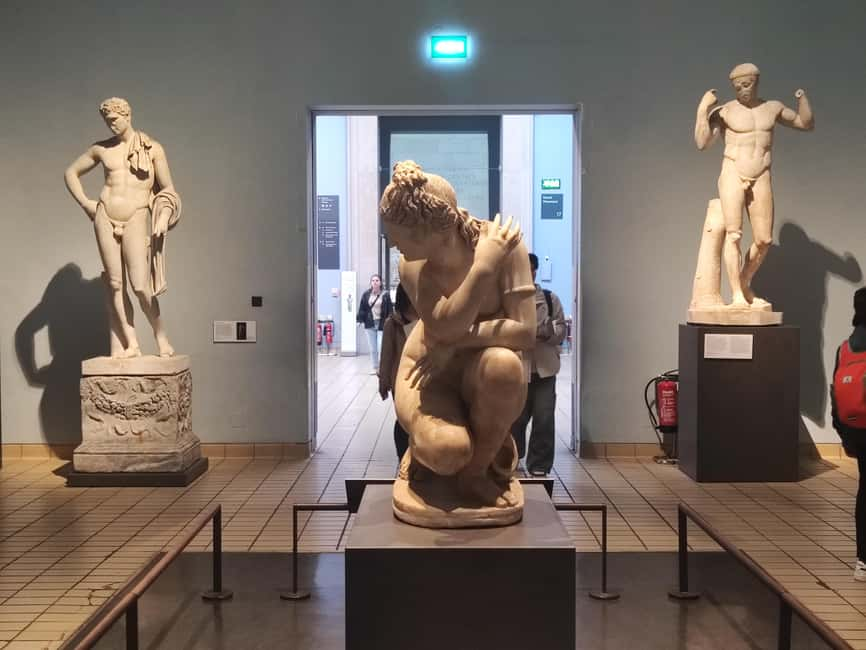
One of the most unusual promised subjects is the childhood of Jesus in medieval art. The tour looks at alternative stories that sit outside the familiar Gospel accounts, presented through medieval visual storytelling.
The comic-book comparison is a playful way to understand the material. Medieval artists often had to make complex religious ideas clear to people who might not read, so images could carry a story through gestures, scenes, and repeated characters.
This stop is not a replacement for the traditional Christian accounts. It is a look at the extra stories and imaginative traditions that grew around a figure who shaped world culture more than anyone else, according to the tour’s framing.
I like this inclusion because it keeps the route from becoming a predictable parade of famous stones and statues. You see how people use art to fill gaps, explain mystery, and give familiar religious figures a more human childhood.
What the $33.67 price buys you
At $33.67 per person, the tour sits in a reasonable range for a guided London museum experience. The British Museum itself is a major attraction, but the value here is not simply getting through the door. It is the time saved by following a planned route and the interpretation supplied by a live storyteller.
The price makes the most sense for a first visit, especially if you would otherwise wander from room to room without knowing what deserves your attention. It is also useful if you have only a short window in London and want a clear introduction to several civilizations.
You may find it less worthwhile if you already know the British Museum well, prefer silent museum visits, or want to spend an entire day studying one collection. In that case, the tour’s broad range may feel too fast.
The small group improves the value. Eight people is still enough for conversation, but far more manageable than a large walking group. You are paying for focus and access to the guide’s attention, not just for a route between famous objects.
The experience has a five out of five rating from four published ratings, a small sample that suggests strong satisfaction but should not be treated as a broad measure of every possible tour date. One especially useful detail is the guide’s ability to sort out an entry issue, which adds practical value beyond the art history.
Walking, bags, photographs, and comfort
Plan on a moderate amount of walking. Comfortable shoes are a basic requirement, especially if you intend to continue sightseeing after the two-hour route.
Photography is allowed without flash. That lets you record objects for personal memory, but keep your camera ready for quick use rather than expecting a long photo session at every stop.
Backpacks and large bags are not allowed inside. This is one of the most important practical details. Carry only what you need, and do not bring food or drinks into the exhibition halls.
The tour is not suitable for wheelchair users or people with mobility impairments. Since the information does not provide a detailed step-free route or seating plan, you should not assume that the standard tour can be adapted.
Cancellation is flexible up to 24 hours before the activity for a full refund, and you can reserve now and pay later. Those terms help if your London schedule is still changing, but they do not alter the walking and bag restrictions.
Who should book the British Museum Highlights Tour?
I would choose this tour if you want the British Museum to feel manageable rather than endless. It suits first-time visitors, curious couples, families with older children who enjoy stories, and anyone who prefers connections between objects instead of a dry list of dates.
It is particularly good for people interested in how art reflects beliefs about the body, the soul, love, death, and faith. The mix of famous highlights and less expected subjects gives the two hours a clear personality.
I would hesitate if you need wheelchair access, dislike walking, or want a slow, specialist visit to one civilization. I would also think twice if you need a tour in a language other than English, since English is the only language offered.
Should you book this two-hour museum tour?
Book it if you want a focused introduction to the British Museum and like your art served with questions rather than a stack of dates. The Rosetta Stone, Parthenon Marbles, Egyptian mummies, and medieval religious art provide plenty of famous material, while Mesopotamian inventions, Indian beliefs, and tragic love stories keep the route from feeling routine.
At $33.67, the strongest value comes from the small group, planned route, live storytelling, and express security access. Just arrive at Edward VII’s Entrance with light luggage, comfortable shoes, and realistic expectations about walking.
FAQ
How long does the British Museum Highlights Tour last?
The tour lasts about two hours. Starting times vary, so check availability when booking.
What is the price per person?
The listed price is $33.67 per person.
How many people can join the tour?
The tour is limited to a maximum of eight participants.
What language is the tour conducted in?
The live tour guide conducts the experience in English.
Where does the tour start?
The meeting point is the group entrance at Edward VII’s Entrance at the British Museum. The guide will hold a My London Guide sign.
Where does the tour end?
The activity ends back at the meeting point.
Is museum entry included?
The tour includes fast-track entry through an express security check at the British Museum.
Can I take photographs inside?
Photography is allowed, but flash photography is not permitted.
Are backpacks allowed inside the museum?
Large bags and backpacks are not allowed inside the museum. Food and drinks are also not permitted in the exhibition halls.
Latest arrivals on the London list
- Stonehenge Special Access Guided Morning Tour from London★ 4.5 · 3 reviews
- Easy Access Tower of London Royal Secrets & Scandals Tour★ 5.0 · 3 reviews
- Shoreditch & East London Walking Tour with a Local, Custom & Private★ 5.0 · 3 reviews
- Madame Tussauds London Fast Track and Champagne Experience★ 3.5 · 3 reviews
- London Private Brixton Tour with a Local – Culture & Stories★ 4.9 · 3 reviews
- Private Full Day Tour – Fast Track Tower of London and Lunch★ 4.6 · 3 reviews
- Private transfer from London Heathrow Airport to Southampton★ 5.0 · 3 reviews
- London Soho District – Guided Walking Tour 12 guests 2,5h★ 4.8 · 3 reviews
British Museum Tours, compared.
British Museum London Guided Tour Semi-Private 8ppl Max
Read our review →
British Museum Audio Tour & Priority Entrance Ticket
Read our review →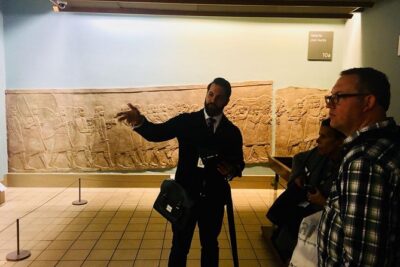
The British Museum London – Exclusive Guided Museum Tour
Read our review →
Browse the lists this tour appears in