
Reviewed · BRITISH MUSEUM TOURS
London: British Museum Private Guided Tour with Tickets
The British Museum can swallow a whole day, yet this private tour gives you a clear route through its greatest hits in about 2.5 hours. With Blue Badge guide Anthony Matthews, you’ll move from the Rosetta Stone and ancient Egypt to Greece, Rome, and Anglo-Saxon Sutton Hoo without wandering the galleries in a daze.
I like the personal route: you can tell Anthony what matters most, and he can give extra attention to a favorite period. I also like the archaeologist’s viewpoint, which connects objects to real people, beliefs, politics, and daily life rather than treating each display as an old thing behind glass.
The main drawback is simple: 2.5 hours is enough for highlights, not the whole museum. The tour is in English, and you must arrive 15 minutes early at the correct meeting point to use the express security entrance.
In This Review
- Key points at a glance
- Why a private British Museum tour can save your day
- Meeting Anthony Matthews outside the museum
- The Rosetta Stone and the key to Egyptian writing
- Greek galleries, the Parthenon sculptures, and Athens versus Sparta
- Rome’s empire, a gladiator’s helmet, and ancient glass
- Sutton Hoo and the Anglo-Saxon world
- The pace, questions, and family appeal
- What is included, and what you still need to plan
- Who should book this British Museum experience?
- FAQ
- How long does the British Museum private tour last?
- How much does the private tour cost?
- Are museum entry tickets included?
- Where do I meet the guide?
- How early should I arrive?
- Is the tour available in languages other than English?
- Can I cancel the booking or pay later?
- Should you book it?
Key points at a glance
- A fast route through major collections: Cover Egypt, Greece, Rome, and Sutton Hoo without spending a full day finding your way around.
- Anthony Matthews as your guide: He is presented as a retired archaeologist and Blue Badge professional guide with a lively, conversational style.
- The Rosetta Stone with proper context: Learn why its three scripts helped scholars understand Egyptian hieroglyphs.
- A family-friendly pace: Children and teenagers are kept involved through stories, questions, and links between the objects.
- Private space for your group: The price covers up to six people, so you can ask questions and adjust the emphasis.
- Express security included: Arrive early, meet beside the red telephone boxes, and avoid wasting time at the entrance.
Why a private British Museum tour can save your day
The British Museum is free to enter in general, but free does not mean easy. Its collection spans continents and thousands of years, and famous objects are scattered among galleries that can be confusing on a first visit. You can spend an hour simply trying to decide where to begin.
A private guide changes the visit from a scavenger hunt into a story. Instead of seeing the Rosetta Stone, a Greek sculpture, and a Roman helmet as unrelated prizes, you hear how writing, religion, warfare, empire, and burial customs shaped the societies that made them.
The private format matters most for families and mixed-interest groups. Your eight-year-old may want an Egyptian animal figure, your teenager may prefer Rome, and you may want the Parthenon sculptures. Anthony can take questions as they arise and adjust the emphasis instead of delivering the same fixed talk to a large crowd.
The price is $337 for a group of up to six. That is a serious outlay for a museum visit, especially since the museum itself does not normally charge general admission. For six people, it works out to about $56 per person. For one or two people, the per-person cost is much higher.
I see the value in the guide’s time, the express security entrance, and the efficient route. You are paying less for a ticket and more for judgment: what to see, what to skip, and how to understand the objects in front of you. If you already know the museum well or prefer to browse quietly, the price may not make sense. If you have only one London morning and want the main collections explained well, it can be money well spent.
More British Museum visits:
- London: British Museum Guided Tour
★ 4.3 · 1,182 reviews - British Museum London Guided Tour Semi-Private 8ppl Max
★ 5.0 · 984 reviews - London: Tour of the British Museum
★ 4.1 · 678 reviews
Meeting Anthony Matthews outside the museum
The meeting point is on Great Russell Street, to the left of the main entrance gates and to the right of the red telephone boxes, opposite Starbucks. This sounds precise, but the museum entrance area can be busy, so check the meeting photographs and arrive 15 minutes early.
That early arrival is not a minor suggestion. The tour uses an express security check, and being late can mean missing the group or losing the advantage of the quicker entrance. The tour runs rain or shine, although most of the experience takes place indoors.
Anthony Matthews is the guide named throughout the tour details. He is described as a retired archaeologist and Blue Badge guide, and his approach is conversational rather than stiff. He has also been praised for handling questions from children, teenagers, and older family members in the same group.
You cannot make an audio recording, so plan to listen and take written notes if you want a record of the visit. The tour is in English.
The Rosetta Stone and the key to Egyptian writing
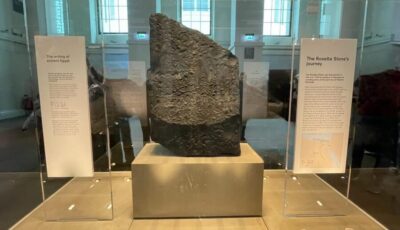
The tour begins with one of the museum’s essential objects, the Rosetta Stone. Its importance is not just that it is famous. The stone carries the same decree in three forms of writing, which gave scholars the material they needed to work out Egyptian hieroglyphs.
Anthony can explain how the different scripts relate to one another and why the stone changed the study of ancient Egypt. One particularly unusual detail from the tour is that he can read multiple languages on the stone, including hieroglyphics. That gives the explanation a useful, hands-on quality.
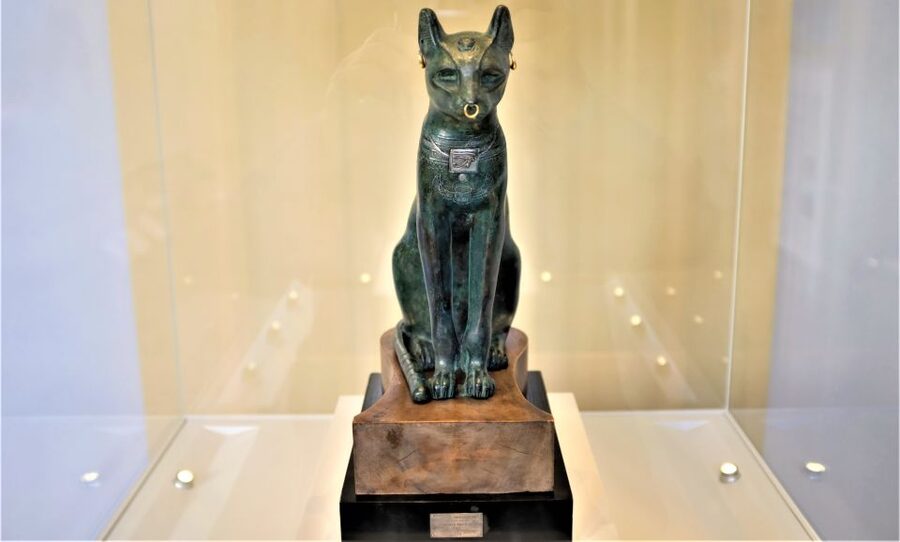
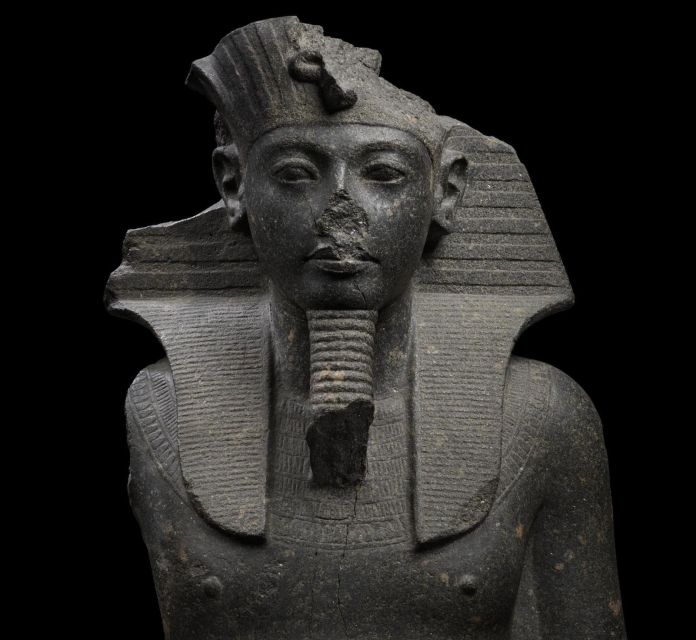
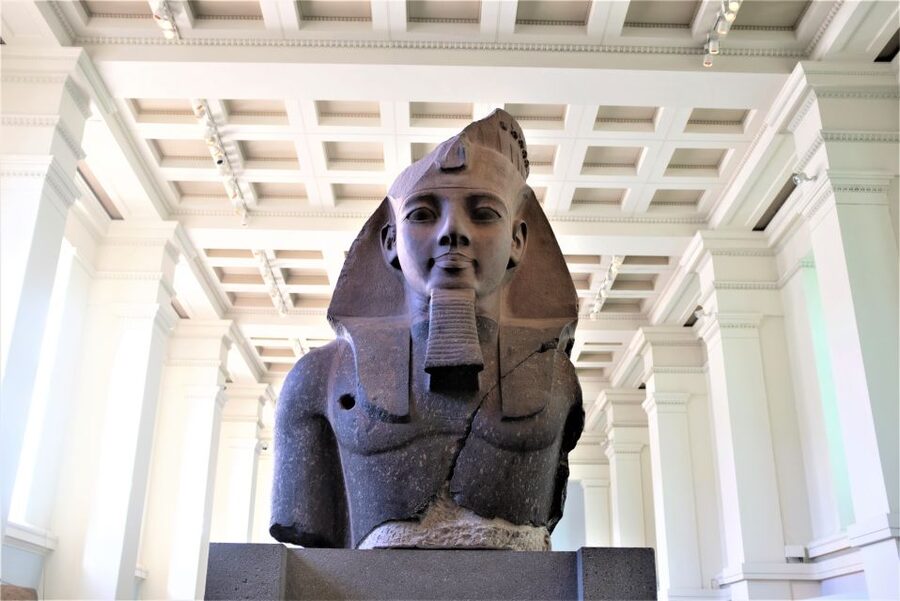
From there, the Egyptian section opens into larger stories about kingship, religion, and death. You may see a statue of Tutankhamun, the great statue of Ramesses II, a sacred metal cat, and a giant scarab beetle. Each object offers a different way into Egyptian life.
Tutankhamun is especially effective as a teaching point. The tour covers how he died and why his burial is often described as the only pharaoh’s grave never discovered. The wording here needs care, since Tutankhamun’s tomb was found, while the supplied tour description uses this point as part of its presentation. Ask Anthony to clarify the story and the distinction between the discovery of Tutankhamun’s tomb and the broader mystery surrounding royal burials.
The Egyptian galleries can be visually overwhelming. Huge statues compete with small objects, and it is easy to look without really seeing. A guide helps you slow down at the pieces that carry the most meaning, including the animal figures and burial-related objects that reveal how religion shaped ordinary decisions.
Greek galleries, the Parthenon sculptures, and Athens versus Sparta
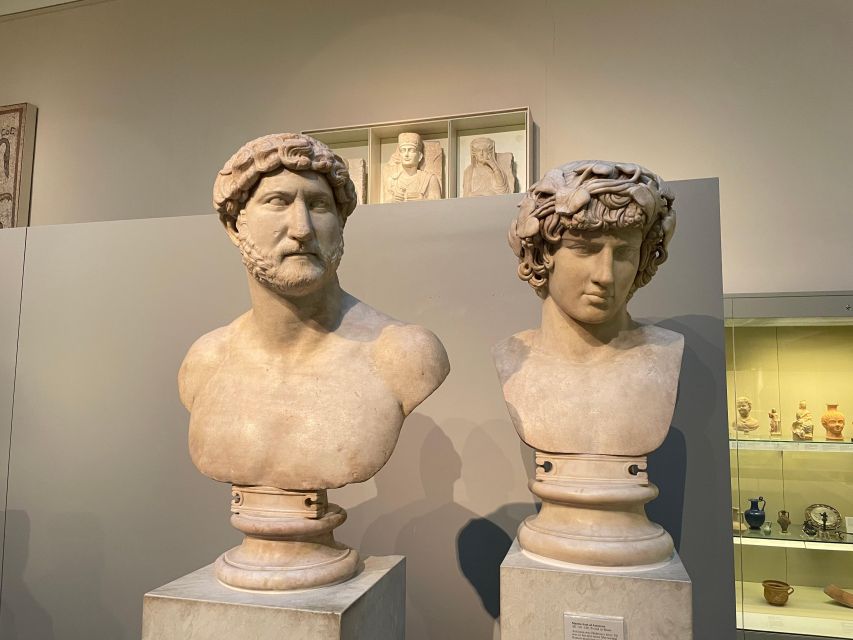
The Greek collection gives the tour a change of mood. The scale becomes grand, and the conversation shifts toward city-states, artistic ideals, architecture, and political power.
A major stop is the room holding the Parthenon sculptures. You will hear why the room’s design is considered architecturally flawless and how the sculptures once belonged to a larger building in Athens. The display invites you to look at both the individual figures and the way the museum presents them as part of a temple program.
This is also a good place to ask questions about ownership, removal, and the modern arguments surrounding the sculptures. The supplied details do not promise a dedicated debate on repatriation, so you should not expect a full political seminar. Still, the objects naturally raise questions about how museums acquired major works and how different countries understand their cultural heritage.
The tour also brings in Sparta and Athens. Those names are familiar, but a guide can make the contrast more useful than a schoolbook list of facts. You get a sense of how different Greek communities organized themselves and why their ideas still shape the way people talk about citizenship, military life, art, and public space.
This section may appeal most to adults and older children who enjoy connections between objects and political life. Younger children can still follow the stories, but the larger ideas may need Anthony’s lively delivery to hold their attention.
More London museums to visit:
- Tower of London and Crown Jewels Exhibition Ticket
★ 4.5 · 6,677 reviews - London: Chelsea Football Club Stadium and Museum Tour
★ 4.8 · 4,576 reviews - Chelsea FC Stadium Tours and Museum
★ 5.0 · 1,908 reviews - London Transport Museum Entrance Ticket
★ 4.5 · 1,323 reviews
Rome’s empire, a gladiator’s helmet, and ancient glass
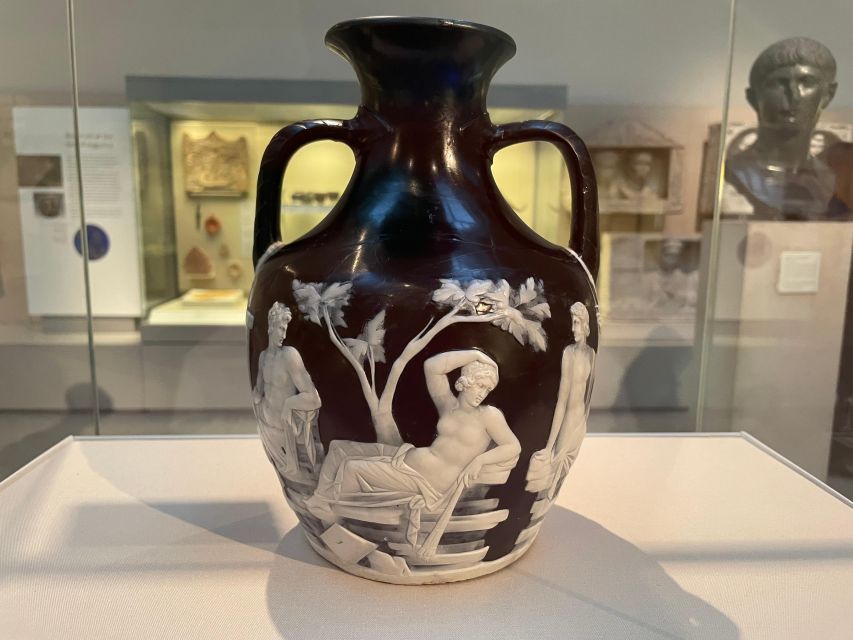
The Roman section moves from Greek culture to conquest. The tour asks how and why Rome conquered every country bordering the Mediterranean, turning the museum visit into a lesson about military organization, administration, ambition, and power.
You can expect to see a gladiator’s helmet, brilliant Roman glass, and a bust of a major Roman emperor. These objects work well together because they show different layers of Roman society. The helmet points toward spectacle and violence. The glass shows technical skill and luxury. The portrait reveals how rulers wanted to be seen.
The Roman galleries are full of objects that can seem familiar at first glance. The guide’s job is to give you a reason to look twice. A bust is not simply a face. It can show the political image an emperor wanted to project. A piece of glass is not merely decorative if it demonstrates what Roman craftspeople could produce and how goods moved across the empire.
Rome can also be the most abstract part of the tour because the subject covers so much ground. In a short visit, you will get a focused overview rather than every emperor, battle, and province. That is a strength if you want the main structure of Roman expansion, but a limitation if Rome is your chief interest and you want a specialist tour devoted only to it.
Sutton Hoo and the Anglo-Saxon world
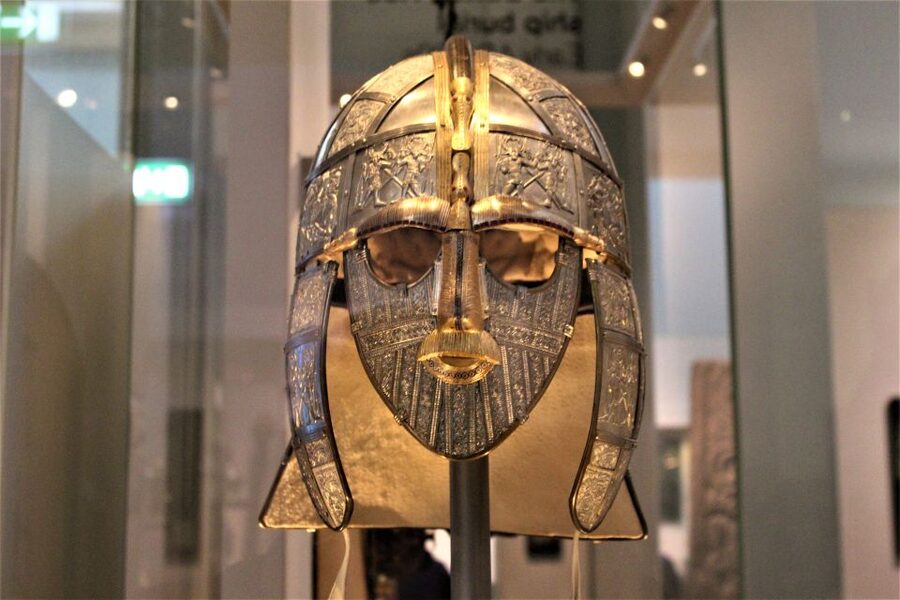
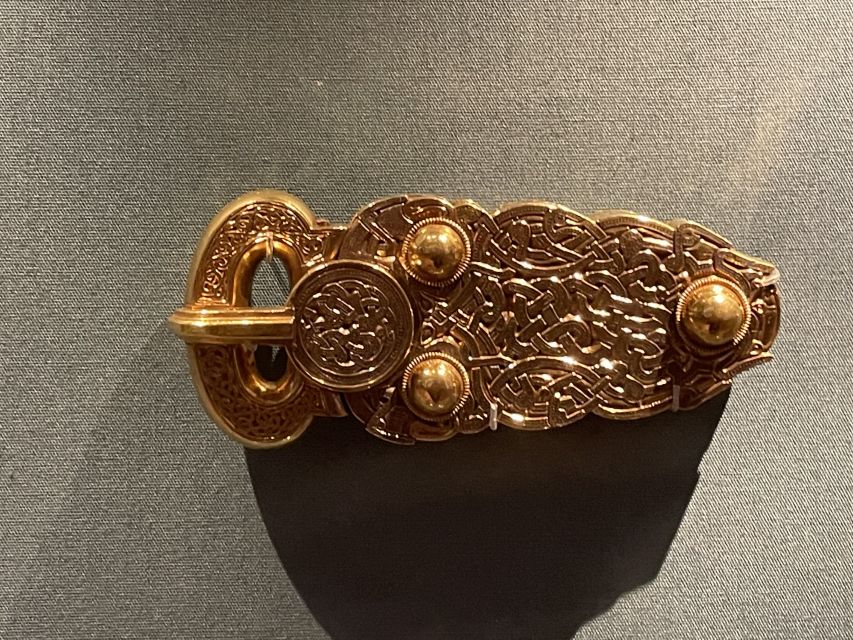
The Sutton Hoo display brings the tour back to England. The burial is one of the museum’s best ways to introduce the Anglo-Saxon world that helped shape early England.
The mystery of the Sutton Hoo burial gives the section a natural hook. Who was buried there? Why was such effort spent on the grave? What can the objects tell us about status, trade, belief, and contact with other parts of Europe? The tour explores those questions while showing you the material evidence behind them.
Sutton Hoo is valuable because it corrects the idea that early medieval England was an isolated or empty period between Roman Britain and later English history. The burial objects point toward a society with hierarchy, craftsmanship, ceremony, and wider connections.
Families often find this section easier to picture than a room of broken fragments. Burial goods create a human story, and the mystery gives children a question to follow. If you have already seen the film The Dig, you may find the display especially interesting, though the tour details do not promise a film-focused discussion.
The pace, questions, and family appeal
A 2.5-hour museum visit can feel short, but it is long enough to become tiring if the guide talks without pause. Anthony’s reported style is energetic, funny, and conversational, which helps keep the pace moving. The tour covers a large range, yet the experience is meant to feel like a connected explanation rather than a race between objects.
I would consider this tour for families with children from about eight years old upward, based on the way the guide has handled children as young as eight and nine, as well as teenagers. That does not mean every child will love every gallery. It means the tour has room for questions, humor, and stories that make difficult material easier to follow.
Older relatives and people with limited mobility can also fit into the private format. The tour is wheelchair accessible, and a private group gives you more control over questions and attention. The supplied details do not give a specific route length, number of rest stops, or seating arrangements, so ask about those needs when booking if they are important for your group.
The English-only format is worth noting. If nobody in your group is comfortable listening to an extended English explanation, you may not get full value from the tour.
What is included, and what you still need to plan
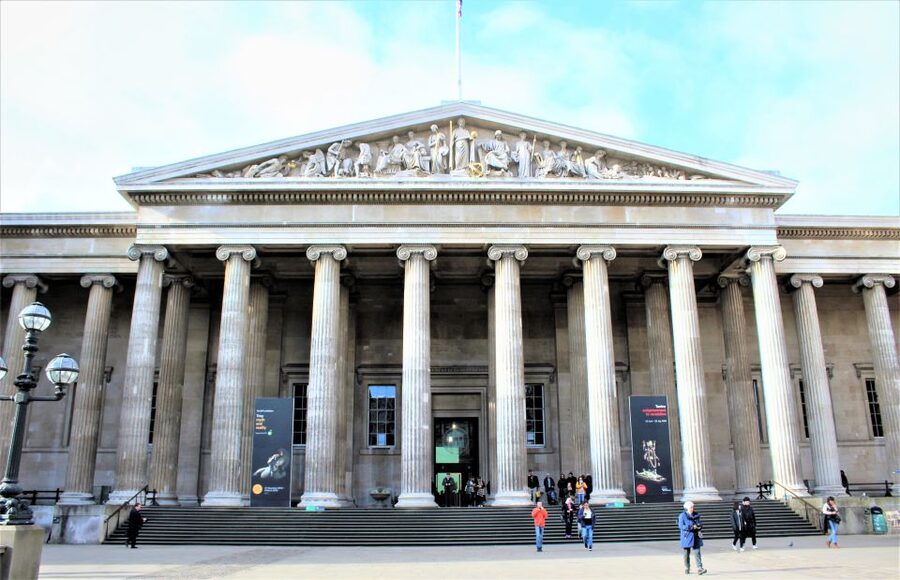
The price includes the private tour, Anthony’s guiding, and entry tickets. Transportation is not included, so you need to make your own way to the British Museum on Great Russell Street.
Food and drinks are also not included. The tour lasts 2.5 hours, so eat beforehand or plan a break after the visit. Do not expect the experience to include a meal, refreshments, or transport to another London sight.
The booking terms are useful for uncertain plans. You can reserve now and pay later, and you can cancel up to 24 hours in advance for a full refund. Starting times depend on availability, so check the date and time before you commit your London schedule.
Who should book this British Museum experience?
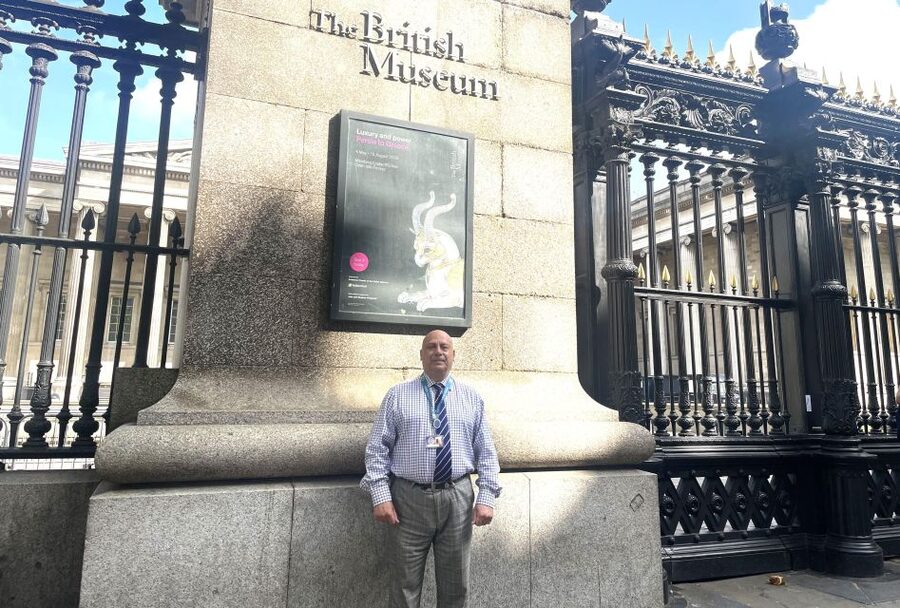
I would book it for a first visit when the museum’s scale feels intimidating. It is also a strong choice for a family group of four to six, since the fixed group price becomes easier to justify and the guide can speak to different ages at once.
This tour suits you if you want:
- A fast introduction to the museum’s most famous collections
- Human stories rather than dates and labels alone
- A guide who can answer questions as you go
- A private pace tailored to Egyptian, Greek, Roman, or Anglo-Saxon interests
- A family-friendly way to keep children involved
- Help getting through security and straight to the important galleries
I would skip it if you want several hours of independent browsing, have already studied the British Museum in detail, or are visiting alone on a tight budget. You might also prefer a different arrangement if you need a language other than English or want permission to record the guide.
FAQ
How long does the British Museum private tour last?
The tour lasts 2.5 hours.
How much does the private tour cost?
The price is $337 for a private group of up to six people.
Are museum entry tickets included?
Yes. Entry tickets are included in the tour price.
Where do I meet the guide?
Meet on Great Russell Street, to the left of the main entrance gates, to the right of the red telephone boxes, and opposite Starbucks.
How early should I arrive?
Arrive 15 minutes early. The tour uses an express security check, and being on time helps you use the skip-the-line arrangement.
Is the tour available in languages other than English?
No. The live tour guide language is English.
Can I cancel the booking or pay later?
You can reserve now and pay later. You can also cancel up to 24 hours in advance for a full refund.
Should you book it?
Book this tour if you want the British Museum explained by a guide who can connect the Rosetta Stone, Egyptian royalty, Greek art, Roman power, and Sutton Hoo into one readable story. Anthony Matthews is the main reason to choose this particular experience, especially if you value archaeology, questions, and a guide who can keep both children and adults involved.
The price is easiest to defend when six people share it. For a small group, compare the cost with the value of your limited London time. If you would otherwise wander, miss major galleries, or leave without understanding what you saw, this focused private visit earns its keep.
Latest arrivals on the London list
- Heathrow Airport to London Arrival Transfer★ 4.5 · 50 reviews
- London Beatles Tour★ 5.0 · 50 reviews
- One Way Taxi Transfer from London to Gatwick Airport★ 5.0 · 51 reviews
- London: Hidden Baker Street Tube Station Tour★ 4.7 · 51 reviews
- City & Secrets: Explore London’s Hidden Gems★ 5.0 · 51 reviews
- 4 hour London Private Tour, with your own Black Cab Tour Guide★ 5.0 · 51 reviews
- The Beatles Magical History Black Taxi Tour London★ 5.0 · 51 reviews
- London Christmas Lights Open-Top Bus Tour. 2025 Early Bird★ 3.6 · 51 reviews
British Museum Tours, compared.

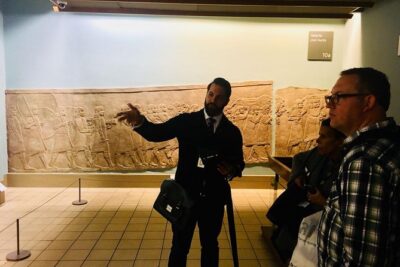
British Museum London Guided Tour Semi-Private 8ppl Max
Read our review →
British Museum Audio Tour & Priority Entrance Ticket
Read our review →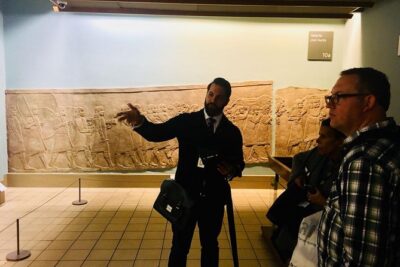
The British Museum London – Exclusive Guided Museum Tour
Read our review →

Browse the lists this tour appears in