
Reviewed · BRITISH MUSEUM TOURS
London: British Museum Tour with Archaeologist Guide
The best thing about this British Museum tour is its sense of direction. An archaeologist guide, often Rossa, leads you past famous pieces while explaining who made them, how they were found, and what experts still debate. I especially like the focused route through a huge museum and the way the tour connects objects to real people and ancient societies. The Lewis Chessmen and Sutton Hoo hoard receive attention alongside the expected stars, so you get more than a greatest-hits parade.
I also like the small-group feel reported on several departures, with one group numbering seven, and the guide’s strong voice, which helps in noisy galleries. The main catch is time: two and a half hours cannot cover the British Museum, and Rossa’s detailed stories can sometimes reduce the number of objects you see. Arrive early, wear good shoes, and be ready to leave Russell Square promptly at 9:45 a.m.
In This Review
- Key points at a glance
- Why the British Museum needs a plan
- Meeting at Russell Square at 9:45 a.m.
- The British Museum’s famous opening acts
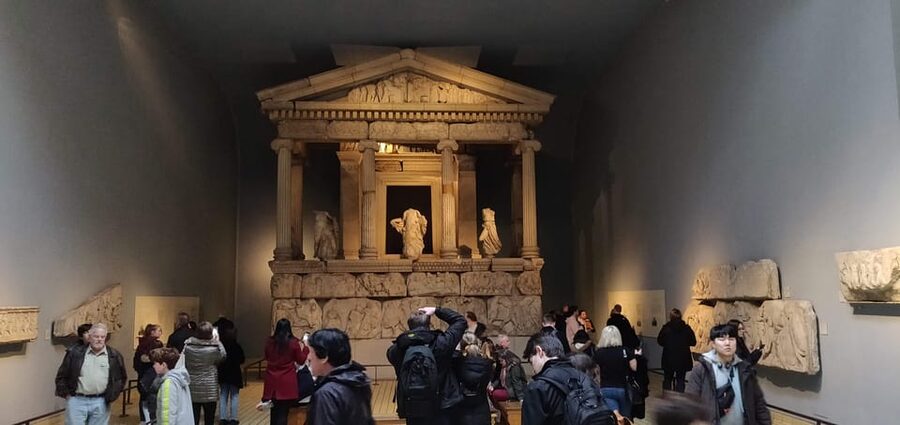
- The Parthenon Marbles and the question of ownership
- Lewis Chessmen and the human side of history
- Sutton Hoo and the mystery of King Raedwald
- Aztec treasures and Moai statues
- What the archaeologist guide adds
- Timing, crowds, and the best way to use the visit
- Is $58 a fair price?
- Who should book this British Museum tour?
- My verdict: book it for a focused first visit
- FAQ
- Where does the British Museum tour meet?
- What time does the group leave Russell Square?
- How long is the guided visit?
- Is museum entry included?
- Which language is the tour conducted in?
- Is the tour wheelchair accessible?
- What should I bring, and what is not allowed?
Key points at a glance
- Rosetta Stone with context: Learn how its inscriptions helped scholars read Egyptian hieroglyphs.
- Sutton Hoo and King Raedwald: See one of Britain’s most striking early medieval treasure collections.
- Archaeologist-led storytelling: Rossa brings background, discovery stories, and scholarly questions to the displays.
- A sensible first visit: The route gives you major highlights without trying to conquer every gallery.
- Short walk to the museum: Meet at Russell Square Station, then walk about five minutes to the entrance.
- Good value for limited time: The $58 fee includes museum entry and a 2.5-hour guided visit.
Why the British Museum needs a plan
The British Museum is not a quick stop where you wander through one neat sequence of rooms. Its collection crosses ancient Egypt, Greece, Assyria, the Viking world, Mesoamerica, Easter Island, and early medieval Britain. You can easily spend hours reading labels and still leave without a clear idea of how the objects fit together.
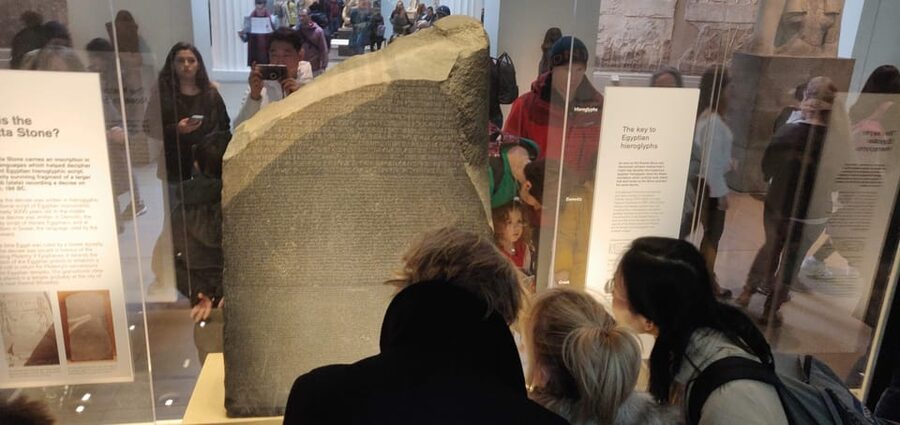
That is where this tour earns its keep. The guide selects major works and explains their place in a wider story. You are not simply pointed toward the Rosetta Stone, then left to read a wall panel. You hear why the stone mattered, how its different scripts worked together, and how that helped scholars make sense of Egyptian writing.
I like this approach for a first visit. You get a working map of the museum, not just a list of famous objects. After the tour, you can return to the galleries that caught your attention and explore at your own pace.
The trade-off is unavoidable. The British Museum is too large for a complete visit in 2.5 hours. This is a highlights tour with selected personal favorites, not a full survey of every civilization or period represented in the building.
More British Museum visits:
- London: British Museum Guided Tour
★ 4.3 · 1,182 reviews - British Museum London Guided Tour Semi-Private 8ppl Max
★ 5.0 · 984 reviews - London: Tour of the British Museum
★ 4.1 · 678 reviews
Meeting at Russell Square at 9:45 a.m.
Your guide meets you at the entrance to Russell Square Station, holding a tablet marked Spirit of Discovery. From there, the group walks about five minutes to the British Museum.
This meeting point is simple, but punctuality matters. The group must leave promptly at 9:45 a.m. to make its timed museum entry. Latecomers cannot expect the guide to hold the group at the station, so allow extra time for the London Underground and station exits. If you are delayed, call the tour provider for directions to the group.
The short walk is easy for most people and gives you a moment to get settled before the museum begins. Comfortable shoes matter more once you are inside. You will be standing and walking through galleries for most of the 2.5 hours.
The tour is wheelchair accessible. Large bags and luggage are not allowed, and sharp objects or weapons are prohibited. Bring water, but food and drinks are not included.
The British Museum’s famous opening acts
Once inside, expect the guide to establish a broad sense of time and place before focusing on individual displays. The route includes ancient Egypt, Greece, Assyria, the Viking age, the Aztec Empire, Easter Island, and early medieval Britain.
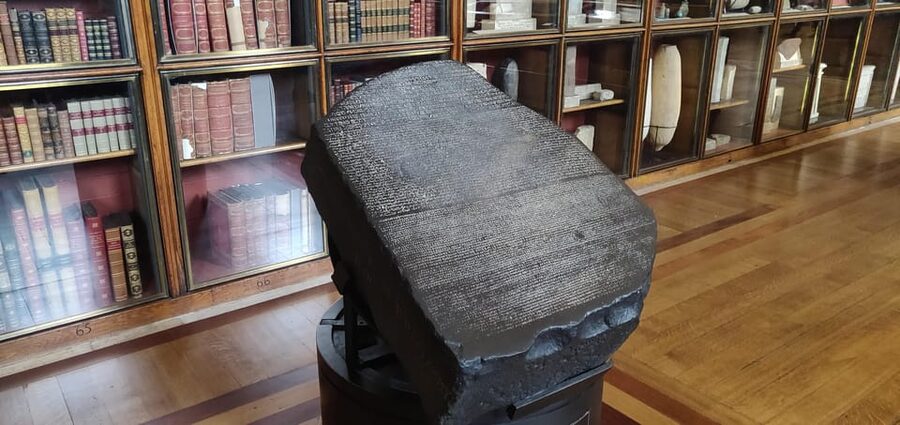
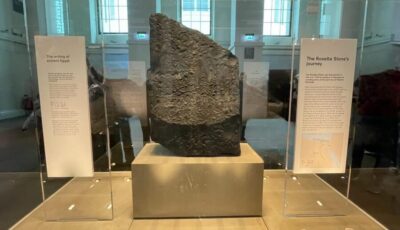
The Rosetta Stone is an obvious starting point for good reason. It gives the guide a clear way to explain how historians compare languages and inscriptions. The stone carries the same decree in different scripts, and its importance lies not only in its appearance but in the role it played in reading hieroglyphs.
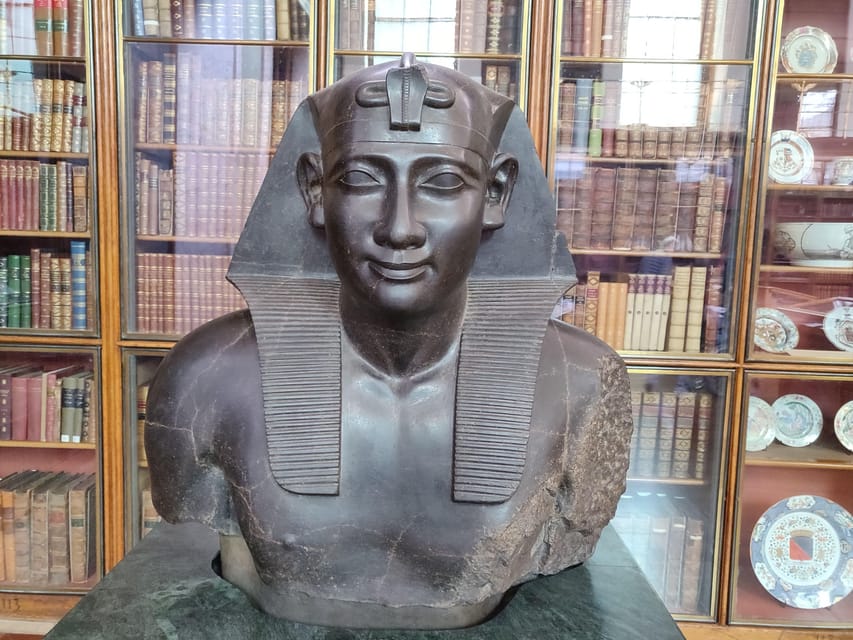
You then encounter the colossal statue of Ramses II, a reminder that scale was part of royal power in ancient Egypt. A huge statue changes how you think about the ruler who commissioned it. Rather than treating it as a pretty object behind glass, the guide can place it within ideas about kingship, public image, and the Egyptian state.
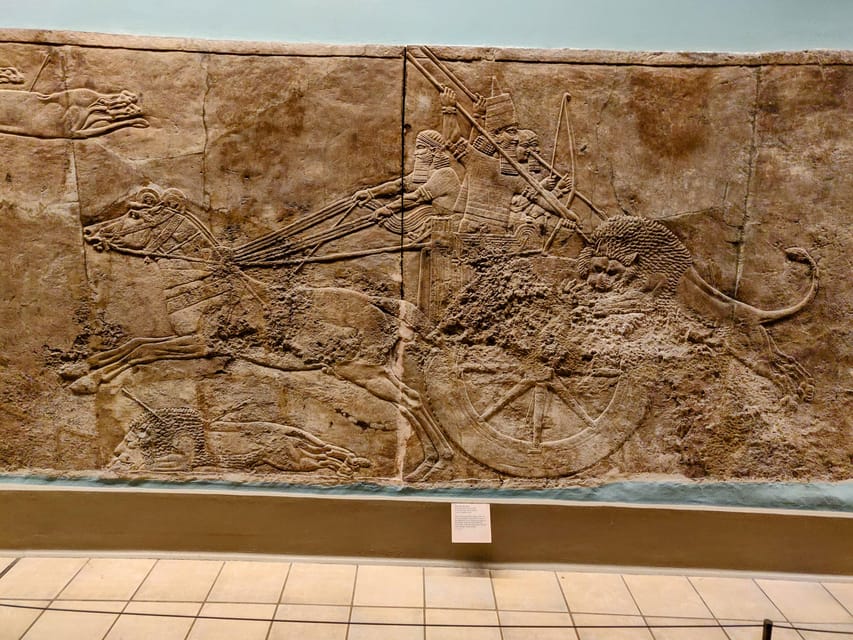
The Assyrian galleries bring a different mood. Their palace reliefs show imperial power through carved scenes of rulers, armies, animals, and ceremony. These panels are impressive on their own, but the stories of the Assyrian Empire make them easier to read. You begin to notice what is being shown and why it was carved.
The Parthenon Marbles and the question of ownership
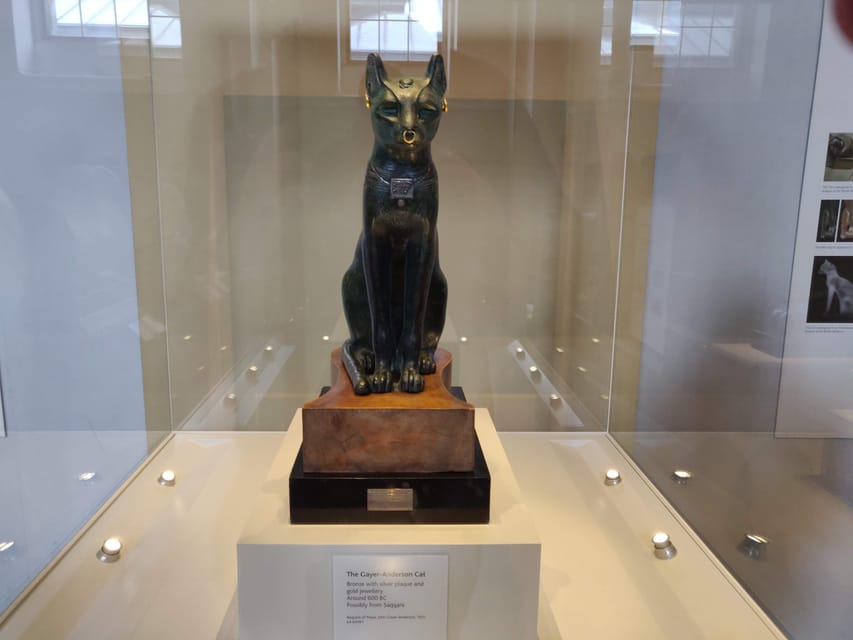
The Parthenon Marbles are among the British Museum’s most famous displays. The sculptures came from the Parthenon in Athens, and their presence in London raises difficult questions about removal, ownership, preservation, and the rights of modern nations to ancient objects.
A good guide can give you the artistic and historical background without pretending the debate is simple. You see the skill of the sculptures, learn about the building they once decorated, and consider the circumstances under which they arrived in Britain.
This is one reason an archaeologist-led tour can be more useful than a quick walk past the galleries. The objects are not isolated masterpieces. They are tied to excavation, collecting, imperial power, and modern arguments about cultural property.
You should not expect a long academic seminar on every dispute. The tour has many stops to cover, and the guide must keep the group moving. Still, the Marbles gain meaning when you understand the building, the ancient setting, and the contested modern journey.
More London museums to visit:
- Tower of London and Crown Jewels Exhibition Ticket
★ 4.5 · 6,677 reviews - London: Chelsea Football Club Stadium and Museum Tour
★ 4.8 · 4,576 reviews - Chelsea FC Stadium Tours and Museum
★ 5.0 · 1,908 reviews - London Transport Museum Entrance Ticket
★ 4.5 · 1,323 reviews
Lewis Chessmen and the human side of history
The Lewis Chessmen offer a welcome change from monumental sculpture and royal propaganda. These small carved figures, associated with the Viking age, are instantly approachable. Their faces and poses make them feel almost modern, even though they come from a very different world.
The guide uses objects like these to bring history down to human scale. You are not only looking at an idea called the Viking Age. You are looking at game pieces made for people who played, traded, traveled, and spent time much as people do now.
Several families found this kind of storytelling especially effective, including those traveling with teenagers. That makes the tour a strong choice if you want a museum visit that works for adults and younger people at the same time. The stories keep the material moving, while the objects give children something concrete to look at.
The Lewis Chessmen also show why the route is selective. A smaller object can tell a powerful story, but it takes time to explain its design, setting, and discovery. You may see fewer displays than on a fast self-guided walk, but you are more likely to remember the ones you do see.
Sutton Hoo and the mystery of King Raedwald
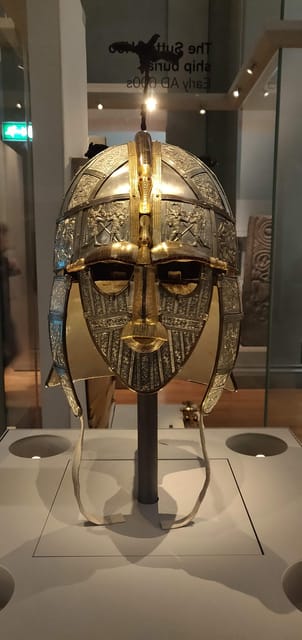
The Sutton Hoo hoard is one of the tour’s most distinctive stops. It offers a rare glimpse into early medieval Britain through an extraordinary burial collection associated with the mysterious King Raedwald.
The attraction is not just the treasure itself. The hoard raises questions about status, belief, trade, craftsmanship, and the person buried with it. A burial site can reveal what a society valued, how it treated its rulers, and how far its connections reached.
This section gives the tour a strong British focus after the galleries devoted to Egypt, Assyria, and Greece. It also adds a sense of discovery. The objects came from a burial mound, and their meaning depends partly on how they were arranged and what that arrangement suggests.
The Sutton Hoo material is especially useful if you think the British Museum is mainly about classical civilizations. It shows that Britain’s early medieval past can be just as compelling as the better-known cultures of the Mediterranean.
Aztec treasures and Moai statues
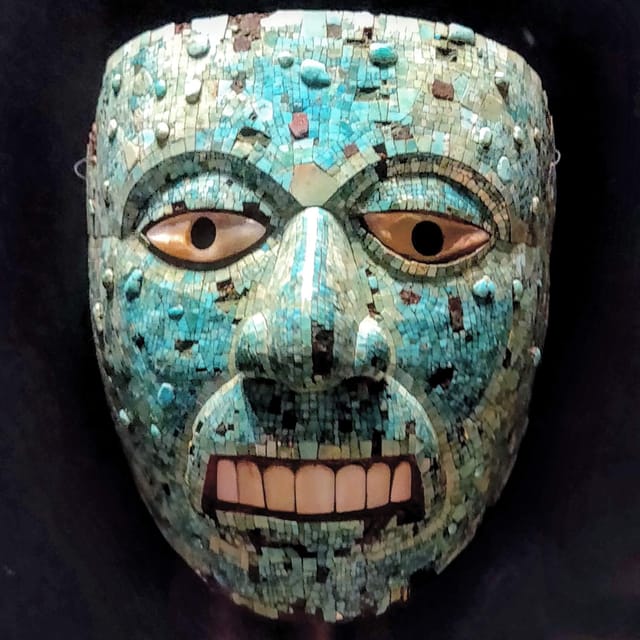
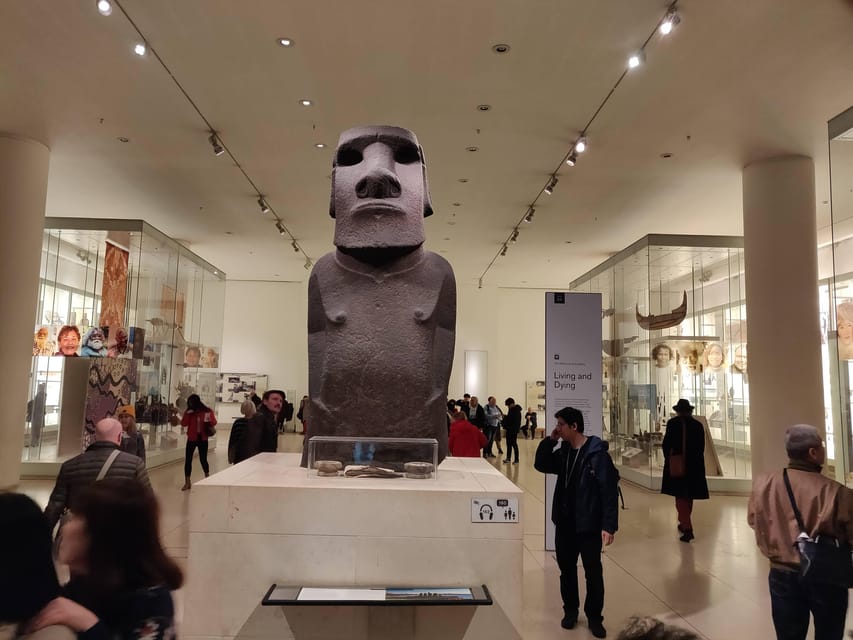
The route also reaches beyond Europe and the ancient Mediterranean. You may see treasures linked with the Aztec Empire and learn about the Moai statues of Easter Island.
The Aztec displays offer a chance to consider wealth, ceremony, religion, and power in a society often reduced to a few dramatic historical episodes. The guide’s job here is to give the objects enough context to be more than exotic sights.
The Moai are equally useful for slowing down easy assumptions. Their size and famous faces attract attention, but the story includes the people who carved, moved, and used them. The guide can also explain what remains uncertain, which is often more interesting than a tidy answer.
These stops widen the tour’s reach. You move from royal Egypt to Assyrian palaces, Greek sculpture, Viking-era gaming pieces, early medieval Britain, Aztec objects, and Polynesian monuments. The sequence is broad, but the guide’s storytelling gives it a human thread: people making objects to express belief, authority, identity, and memory.
What the archaeologist guide adds
The strongest feature here is not simply that the guide has archaeological training. It is the way that training shapes the visit.
Rossa is repeatedly praised for strong storytelling, clear explanations, a friendly manner, and a voice that carries in crowded galleries. He often uses an iPad and historical notes, giving the visit a prepared, classroom-like quality without turning it into a lecture.
I like the attention to discovery stories. Learning who found an object, how it was recovered, and which personalities shaped its journey adds another layer to the display. Archaeology is not only about ancient people. It is also about modern excavation, interpretation, and sometimes disagreement.
The guide also invites questions and gives suggestions for what to see after the official tour. That matters because you finish with useful next steps instead of simply being released into a maze of galleries.
There is one style consideration. Rossa sometimes spends a long time on a single object. Many people appreciate that depth, but if your priority is seeing the largest possible number of rooms, you may wish the tour moved faster. The right choice depends on whether you prefer ten objects explained well or thirty objects seen briefly.
Timing, crowds, and the best way to use the visit
The tour lasts 2.5 hours, which is a sensible length for a first look at such a large museum. It is long enough for the guide to build a story, but short enough to leave you with energy for the rest of your London day.
The British Museum can be crowded, and busy galleries may make it hard to hear or move around. Rossa’s clear voice helps, but no guide can remove the crowd. Stay close, keep sight of the tablet, and avoid drifting away while the group changes rooms.
The tour includes entry and uses a separate entrance to skip the main line. That saves useful time, especially when you have a limited schedule. It does not mean every gallery will be quiet or that the museum will feel private.
Plan to stay after the tour if you can. The guided route gives you the main framework, then you can revisit the Rosetta Stone or Parthenon Marbles, follow up on Egyptian displays, or spend more time with Sutton Hoo and the Lewis Chessmen.
Is $58 a fair price?
At $58 per person, the tour costs more than entering a museum on your own, but the museum entry is included. The real value comes from the guide’s selection and explanations.
If you already know the British Museum well, or enjoy building your own route from a floor plan, you may prefer to visit independently. You will have more freedom and can spend as long as you like in one room.
For a first visit, the calculation is different. You are paying to avoid wandering through a huge collection without a plan, to enter through a separate entrance, and to hear stories that labels cannot always provide. The fee can be worthwhile if your London schedule is tight or if you want the major pieces placed in context.
I would consider the tour particularly good value for families, history fans, and anyone who finds large museums overwhelming. It is also useful for visitors who want a strong introduction before returning alone.
Free cancellation is available up to 24 hours before the start, and you can reserve now and pay later. Check the available starting time when booking, since the fixed 9:45 a.m. departure requires careful planning.
Who should book this British Museum tour?
Book it if you want the museum’s major sights explained by someone who can connect objects to archaeology, politics, religion, and daily life. It suits first-time visitors, families with older children, and anyone with only a few hours.
It is also a good fit if you enjoy stories about how objects were found and interpreted. The tour does not just point out the Rosetta Stone, Ramses II, or the Parthenon Marbles. It explains why each object matters.
You may want to skip it if you dislike fixed routes, prefer silent museum time, or already have a detailed personal plan. You should also know that the tour cannot cover everything, and the most detailed explanations may mean fewer total stops.
My verdict: book it for a focused first visit
I would book this tour for a first British Museum visit, especially if I had one morning and wanted to understand what I was seeing. The $58 price is reasonable for museum entry, a separate entrance, and 2.5 hours with an archaeologist who can make a vast collection manageable.
Choose it for meaning rather than speed. You will not see every room, but you should leave with a clearer sense of how ancient objects connect to the people who made, used, buried, collected, and argued over them. Arrive at Russell Square early, travel light, and keep the afternoon open for a second look at the displays that catch your attention.
FAQ
Where does the British Museum tour meet?
Your guide meets you at the entrance of Russell Square Station. The guide will hold a tablet displaying Spirit of Discovery.
What time does the group leave Russell Square?
The group leaves promptly at 9:45 a.m. to make its museum entry slot. The tour cannot wait for latecomers.
How long is the guided visit?
The guided tour lasts 2.5 hours. It begins with a short walk from Russell Square Station and finishes at the British Museum.
Is museum entry included?
Yes. The price includes entry to the British Museum, the guided tour, and the archaeologist guide.
Which language is the tour conducted in?
The live tour guide speaks English.
Is the tour wheelchair accessible?
Yes, the activity is wheelchair accessible.
What should I bring, and what is not allowed?
Bring comfortable shoes and water. Weapons, sharp objects, luggage, and large bags are not allowed. Food and drinks are not included.
Latest arrivals on the London list
- Heathrow Airport to London Arrival Transfer★ 4.5 · 50 reviews
- London Beatles Tour★ 5.0 · 50 reviews
- One Way Taxi Transfer from London to Gatwick Airport★ 5.0 · 51 reviews
- London: Hidden Baker Street Tube Station Tour★ 4.7 · 51 reviews
- City & Secrets: Explore London’s Hidden Gems★ 5.0 · 51 reviews
- London Christmas Lights Open-Top Bus Tour. 2025 Early Bird★ 3.6 · 51 reviews
- 4 hour London Private Tour, with your own Black Cab Tour Guide★ 5.0 · 51 reviews
- The Beatles Magical History Black Taxi Tour London★ 5.0 · 51 reviews
British Museum Tours, compared.

British Museum London Guided Tour Semi-Private 8ppl Max
Read our review →
British Museum Audio Tour & Priority Entrance Ticket
Read our review →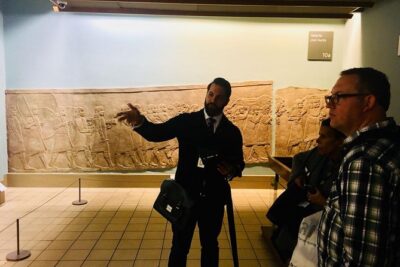
The British Museum London – Exclusive Guided Museum Tour
Read our review →

Browse the lists this tour appears in