
Reviewed · BRITISH MUSEUM TOURS
London: British Museum with Expert Guide.
The Rosetta Stone is the natural star here, but the real value comes from seeing how one object connects to ancient Egypt, Greek sculpture, Assyria, and medieval Scotland. A certified guide gives the museum’s huge collection a clear route instead of leaving you to wander from room to room.
I like the focused 80-minute length and the guide’s attention to major objects. I also like that guides such as Strabo explain difficult subjects with humor and answer questions without drowning you in facts. The tradeoff is simple: this is a highlights tour, not a full museum visit, and a 3.4 rating from 91 reviews suggests the quality may depend on the guide and group on your date.
In This Review
- Key points at a glance
- Why this short British Museum tour works
- Meeting at the Montague Place stone lions
- The Rosetta Stone and the power of writing
- Egyptian mummies, coffins, and life after death
- The Parthenon Sculptures and ancient Greek ambition
- Assyrian lion hunt reliefs and royal power
- The Lewis Chessmen and medieval Scotland
- What the guide adds to the museum visit
- Is $20.20 good value?
- Accessibility, photography, and staying afterward
- Who should book this British Museum experience?
- Should you book it?
- FAQ
- How long does the British Museum guided tour last?
- What is the price of the experience?
- Where does the tour meet?
- Where does the tour finish?
- What language is the tour in?
- Which objects are included in the tour?
- Is the tour wheelchair accessible?
- Can I take photographs inside the museum?
- Can I cancel the booking?
Key points at a glance
- The Rosetta Stone opens the story: See the object that helped scholars read Egyptian hieroglyphs and understand ancient Egypt in a new way.
- Five major collections in 80 minutes: The route covers Egypt, Greece, Assyria, medieval Scotland, and other key museum displays.
- Guides keep the pace lively: Strabo is praised for clear explanations, humor, patience, and easy answers to questions.
- The Parthenon Sculptures raise big questions: You see famous Greek works while also confronting the long-running debate over their ownership.
- You can stay after the tour: The guided portion ends back at the Montague Place meeting point, leaving you free to browse the museum and gift shop.
- The price is modest for a guided visit: At $20.20 per person, you are paying mainly for direction and interpretation rather than an all-day tour.
Why this short British Museum tour works
The British Museum can feel like several museums stitched together. Its displays reach across continents and thousands of years, and that scale is both its strength and its problem. You can spend hours walking past important objects without knowing which ones deserve your time.
This tour solves that first-visit problem. In 80 minutes, you get a guided path through famous pieces that tell a broad story about human power, belief, art, writing, and daily life. You are not expected to master every room. Instead, you get enough context to make the rest of your visit more rewarding.
I especially like the balance between famous sights and less obvious choices. The Rosetta Stone and Parthenon Sculptures are essential stops, but the Assyrian lion hunt reliefs and Lewis Chessmen give the route more range. You see imperial art, religious objects, royal imagery, and medieval craftsmanship rather than one narrow slice of the collection.
The format also suits families and mixed-age groups. A guide who can explain complex subjects with humor, and adjust to younger teenagers, makes a difference in a museum where long labels can quickly lose a child’s attention.
More British Museum visits:
- London: British Museum Guided Tour
★ 4.3 · 1,182 reviews - British Museum London Guided Tour Semi-Private 8ppl Max
★ 5.0 · 984 reviews - London: Tour of the British Museum
★ 4.1 · 678 reviews
Meeting at the Montague Place stone lions
The meeting point is outside the Montague Place entrance, by the two stone lions. This detail matters because the museum has two entrances, and arriving at the wrong one could cost you the start of a short tour.
I would arrive early enough to identify the lions and settle in before the guide gathers the group. The activity begins and ends at this same meeting point, so you have a clear reference point even if you plan to remain inside afterward.
The guide speaks English, and the activity is led by a certified professional. The provider is Strabo, and Strabo is also named in the feedback as a particularly helpful and engaging guide. You should still check the booking details for your specific start time and guide assignment, since starting times vary with availability.
One practical point: the information provided does not give a group size. That means you should not assume a private tour or a very small group. The experience is best viewed as a guided highlights walk through a major public museum.
The Rosetta Stone and the power of writing
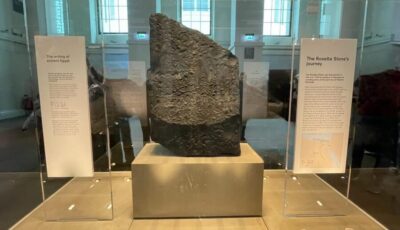
The tour starts with one of the museum’s most important objects, the Rosetta Stone. Its importance is not just visual. The stone carries the same decree in three scripts, including Greek and Egyptian writing, and that comparison helped scholars make progress in reading hieroglyphs.
A good guide can turn this from a famous slab of dark stone into a story about language and discovery. You learn why the scripts mattered and how reading them changed the study of ancient Egypt. That is the sort of context you may miss if you simply take a photograph and move on.
This stop is especially useful for first-time visitors because it gives you a way to think about the rest of the Egyptian collection. You begin with writing and interpretation, then move toward belief, death, ritual, and objects made for the next life.
The stone can attract strong crowds, so do not expect a quiet, private viewing. The guide’s explanation is the main benefit, not an extended period of standing directly in front of the object.
Egyptian mummies, coffins, and life after death
The Egyptian displays shift the focus from written language to belief. You see mummies and coffins while the guide explains the rituals and techniques linked to mummification and ancient Egyptian ideas about life after death.
This part works best when the guide connects the objects to the people who made and used them. A mummy is not just a preserved body, and a coffin is not merely a decorated box. Together, they show how religion shaped art, burial practice, status, and ideas about the human journey beyond death.
You will not receive a full course in Egyptian archaeology in this short visit. You will get a well-chosen introduction, with enough explanation to make the displays less confusing. If Egypt is your main interest, plan to remain afterward and see more of the collection on your own.
Photography is allowed in the museum, but flash photography is prohibited. Food and drinks are not allowed inside the exhibition rooms, so finish snacks before entering the galleries.
More London museums to visit:
- Tower of London and Crown Jewels Exhibition Ticket
★ 4.5 · 6,677 reviews - London: Chelsea Football Club Stadium and Museum Tour
★ 4.8 · 4,576 reviews - Chelsea FC Stadium Tours and Museum
★ 5.0 · 1,908 reviews - London Transport Museum Entrance Ticket
★ 4.5 · 1,323 reviews
The Parthenon Sculptures and ancient Greek ambition
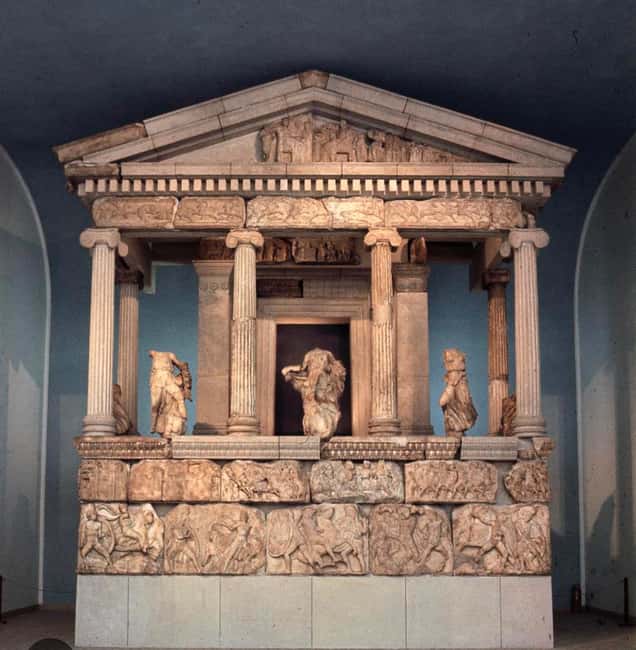
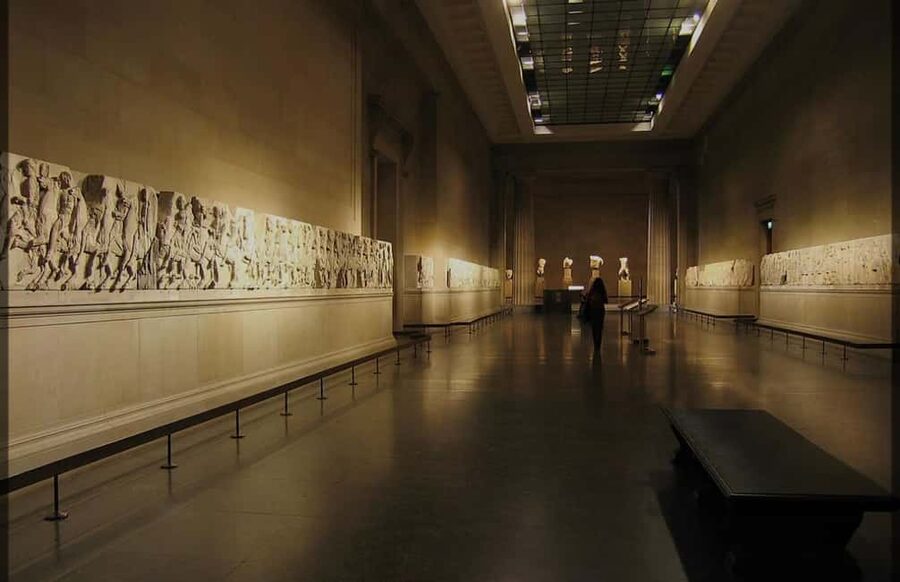
The Parthenon Sculptures, often called the Elgin Marbles, bring you into the world of fifth-century BCE Greece. The works depict scenes linked to Greek mythology and once formed part of the Parthenon in Athens.
The sculptures are impressive because of their scale, detail, and sense of movement. A guide can help you read the figures and explain how the pieces relate to the larger building. Without that explanation, you may see beautiful fragments but miss their original setting and purpose.
This stop also introduces a difficult modern question. The sculptures remain at the center of a dispute about cultural ownership and their removal from Athens. The supplied tour information presents them as a window into ancient Greek grandeur, but a strong guide may also help you understand why the objects remain controversial. I would welcome that added context, though it is not promised as part of every tour.
The Parthenon section is one reason the tour is useful for people with limited time in London. You see works that are difficult to appreciate fully through a guidebook photograph, then receive a quick explanation of their place in Greek art and public life.
Assyrian lion hunt reliefs and royal power
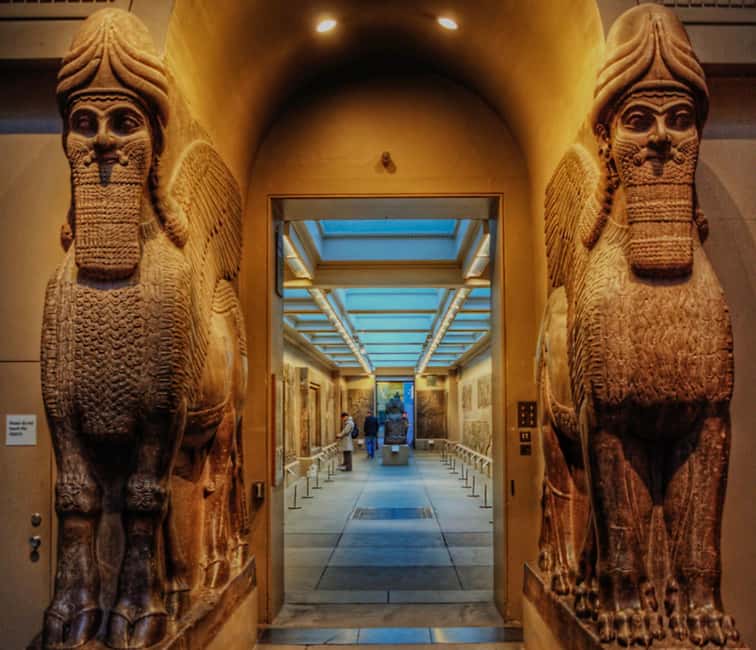
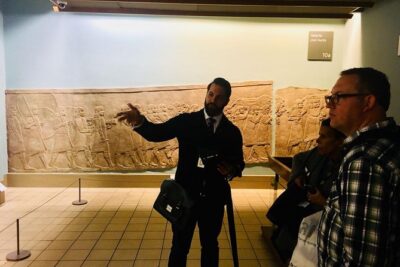
The Assyrian lion hunt reliefs change the mood again. These carved panels show royal hunts and offer a vivid look at the power of the Assyrian court.
The scenes are detailed, dramatic, and surprisingly human. The wounded lions are shown with force and tension, while the king appears controlled and dominant. The message is clear: the ruler has the skill and authority to control even the most dangerous force in nature.
A guide’s interpretation helps you see these panels as political art, not just hunting scenes. They reveal how an empire presented its ruler, how stone carving recorded ceremony, and how royal strength was displayed to anyone entering the palace.
This is a good example of why a guide can add value in a museum full of objects. You may notice the animals first, but the wider meaning involves kingship, propaganda, violence, and imperial order. An 80-minute tour cannot cover every Assyrian display, but this stop gives you a strong reason to return to that section later.
The Lewis Chessmen and medieval Scotland
The Lewis Chessmen offer a smaller, more intimate finale. These carved medieval chess pieces were found on the Isle of Lewis in Scotland and are linked to Viking culture.
Their faces and poses make them unusually easy to connect with. Kings, queens, bishops, knights, and other pieces appear as individual characters rather than anonymous game counters. The set also opens a window onto trade, craftsmanship, leisure, and cultural links across the medieval North Atlantic.
This stop adds welcome variety after the grand scale of Egyptian coffins, Greek sculpture, and Assyrian palace reliefs. It reminds you that museum history is not only about empires and monumental buildings. A handful of carved game pieces can reveal how people played, traveled, worked, and represented status.
If you have children or teenagers with you, the chess pieces may be one of the easiest displays to discuss. You can ask which character they would choose, how the pieces were made, and why such an everyday object survived for centuries.
What the guide adds to the museum visit
The strongest feature of this experience is the human explanation. The guide does not simply point toward objects. The best version of the tour gives you a story, explains unfamiliar terms, and keeps moving before the museum begins to feel tiring.
The feedback highlights several traits worth valuing: clear speech, enthusiasm, humor, patience, and the ability to answer questions. One guide, Strabo, is described as friendly and helpful, with a style that keeps the tour light while still offering useful historical detail.
That approach suits the British Museum particularly well. Its labels can be dense, and its collection can raise questions about excavation, ownership, empire, and cultural identity. A guide cannot resolve every debate in 80 minutes, but a thoughtful one can point out what you are seeing and explain why it matters.
The tour also appears flexible enough to respond to interests. One guided visit included the Rosetta Stone, Egyptian objects, and Aztec material at the group’s request. You should not assume every route will include every section, but it is worth asking about your priorities at the start.
The main caution is that guide quality can vary. The overall rating of 3.4 out of 5 from 91 reviews is not as strong as the individual praise for certain guides. If your visit depends on a specific guide or a highly detailed treatment of one civilization, check the current booking information and keep your expectations centered on a general highlights tour.
Is $20.20 good value?
At $20.20 per person, this is a reasonably priced way to add structure to a museum visit. You are buying 80 minutes of live explanation, not transport, food, a special after-hours opening, or extended access beyond the guided activity.
The value is strongest if you are visiting London for a short time, feel unsure where to begin, or want someone to identify the most important objects. The guide can save you from spending your first hour simply finding the Egyptian and Greek galleries.
It is less essential if you already know the British Museum well or prefer to read every label at your own pace. The museum itself contains far more than the tour can cover, and the route may feel fast if you want long periods at each object.
I see the price as a practical middle ground. It is inexpensive enough to make sense for a first visit, yet the tour is long enough to provide more than a quick orientation. Since you can stay and explore after the guided portion, the experience can serve as your starting point rather than your entire museum day.
The reserve-now, pay-later option also helps if your London plans are still shifting. You can cancel up to 24 hours before the activity for a full refund, according to the supplied booking terms.
Accessibility, photography, and staying afterward
The museum is wheelchair accessible, though some areas may be difficult to navigate. If you use a wheelchair, the activity remains an option, but you may want to ask ahead about the exact route and any gallery access concerns.
Photography is allowed without flash. This is useful for recording favorite objects, though you should give the group and other museum visitors room while the guide is speaking.
The tour ends back at the Montague Place meeting point. Afterward, you can remain at the museum and continue through the collection at your own pace. This is important because 80 minutes is enough for a guided introduction, not enough for a complete visit.
The gift shop is also available after the tour, with books, souvenirs, and replicas. A museum book can be a good follow-up if one collection catches your attention and you want more detail than the guide can provide.
Who should book this British Museum experience?
I would choose this tour if you are visiting the British Museum for the first time and want a clear route through its most famous displays. It is also a good fit for families, couples, and small groups with different levels of interest in history.
You will get the most from it if you enjoy asking questions. The guide’s ability to respond is repeatedly praised, and the short format works better when you engage rather than simply follow along.
The tour is also useful for anyone who wants a broad sample of civilizations. In one visit, you move from Egyptian writing and burial customs to Greek myth, Assyrian royal power, and medieval Scandinavian culture.
I would hesitate if you want a specialist tour devoted only to Egypt, Greece, or Assyria. You may also prefer independent exploration if you dislike fixed pacing or want to spend 20 minutes with one object.
Should you book it?
Book this British Museum tour if you want help finding the essential objects and making sense of them without committing to a full-day guide. The $20.20 price is fair for an 80-minute English-language introduction, especially when you plan to stay afterward.
Go in expecting a brisk highlights route, not an exhaustive museum study. Meet at the Montague Place lions, arrive ready to ask questions, and treat the guided portion as a starting point for your own exploration. If you receive a guide with the clear, humorous style associated with Strabo, the experience should be both useful and enjoyable. If your priorities are highly specific, confirm the likely route before booking.
FAQ
How long does the British Museum guided tour last?
The guided tour lasts 80 minutes. Starting times vary, so check availability when selecting your date.
What is the price of the experience?
The listed price is $20.20 per person.
Where does the tour meet?
Meet outside the Montague Place entrance of the British Museum, by the two stone lions. The museum has two entrances, so use Montague Place rather than assuming both entrances lead to the meeting point.
Where does the tour finish?
The activity ends back at the meeting point outside the Montague Place entrance.
What language is the tour in?
The live tour guide speaks English.
Which objects are included in the tour?
The route includes the Rosetta Stone, Egyptian mummies and coffins, the Parthenon Sculptures, Assyrian lion hunt reliefs, and the Lewis Chessmen. The guide may also discuss other important museum sections.
Is the tour wheelchair accessible?
Yes, the activity is wheelchair accessible. Some museum areas may still be challenging to navigate.
Can I take photographs inside the museum?
Yes, photography is allowed, but flash photography is prohibited.
Can I cancel the booking?
You can cancel up to 24 hours in advance for a full refund. The reserve-now, pay-later option lets you book without paying immediately.
Latest arrivals on the London list
- Heathrow Airport to London Arrival Transfer★ 4.5 · 50 reviews
- London Beatles Tour★ 5.0 · 50 reviews
- One Way Taxi Transfer from London to Gatwick Airport★ 5.0 · 51 reviews
- London: Hidden Baker Street Tube Station Tour★ 4.7 · 51 reviews
- City & Secrets: Explore London’s Hidden Gems★ 5.0 · 51 reviews
- London Christmas Lights Open-Top Bus Tour. 2025 Early Bird★ 3.6 · 51 reviews
- 4 hour London Private Tour, with your own Black Cab Tour Guide★ 5.0 · 51 reviews
- The Beatles Magical History Black Taxi Tour London★ 5.0 · 51 reviews
British Museum Tours, compared.
British Museum London Guided Tour Semi-Private 8ppl Max
Read our review →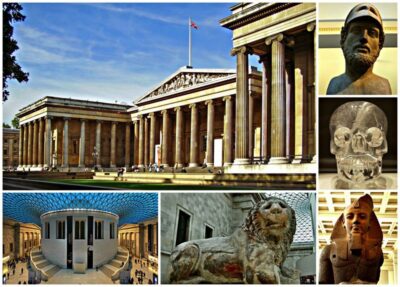
British Museum Audio Tour & Priority Entrance Ticket
Read our review →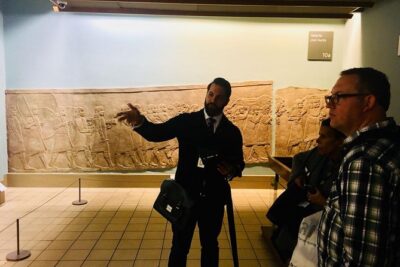
The British Museum London – Exclusive Guided Museum Tour
Read our review →
Browse the lists this tour appears in