
Reviewed · MUSEUMS
London: Natural History Museum Guided Tour
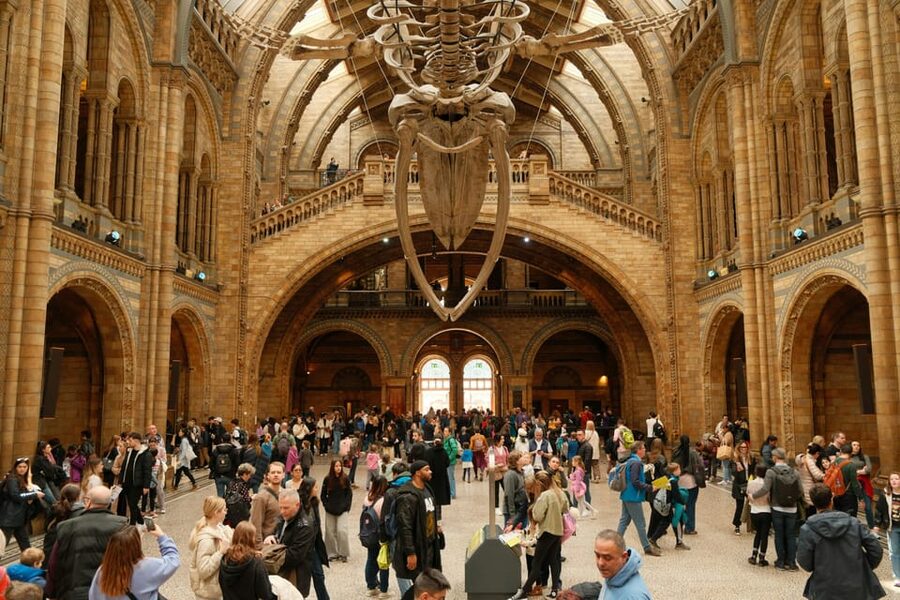
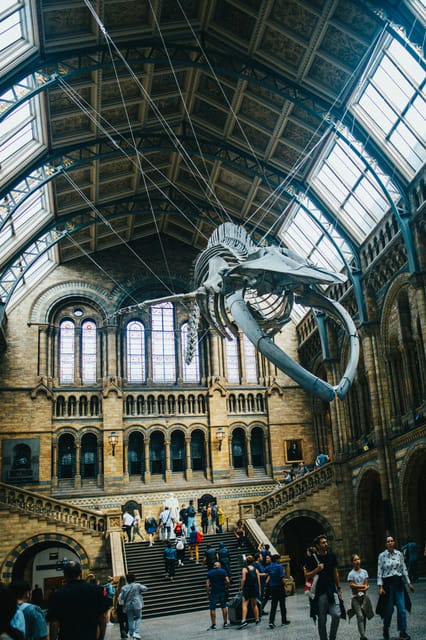
London’s Natural History Museum packs dinosaurs, volcanoes, gemstones, fossils, and space rocks under one grand roof. The most memorable stop is Sophie the Stegosaurus, described as the world’s most complete skeleton of this famous plant-eater. You also get the rare Archaeopteryx fossil, a key link between birds and dinosaurs.
I like the focused route through the museum’s big sights, especially the 1,300-year-old Giant Sequoia cross-section and the casts of Pompeii’s victims. I also like the private or small-group format, which gives you a better chance to ask questions than you would on your own.
The drawback is value. At $93 per person, this is not a cheap museum introduction, and one review found the information fairly basic. If you already know a lot about dinosaurs, volcanoes, gems, and earthquakes, the price may feel high.
In This Review
- Key points to know before booking
- Why this museum tour works best with a guide
- Meeting at Exhibition Road and getting inside
- Sophie the Stegosaurus and the dinosaur story
- Archaeopteryx, Darwin, and the evidence for change
- The Giant Sequoia cross-section
- Pompeii casts and the human cost of Vesuvius
- Gemstones, Moon rock, and Mars material
- What the $93 price gets you
- Who should book this Natural History Museum tour
- Should you book it?
- FAQ
- Where does the Natural History Museum tour meet?
- How long does the experience last?
- What language is the tour conducted in?
- Is this a private tour or a group tour?
- What exhibits are included?
- Does the tour include museum access?
- Is there an express entry option?
- Can I cancel for a refund?
- Is the tour suitable for wheelchair users?
Key points to know before booking
- Sophie the Stegosaurus: See one of the museum’s major dinosaur stars, presented as the world’s most complete stegosaurus skeleton.
- Archaeopteryx and Darwin: Compare a rare dinosaur-bird fossil with the first edition of On the Origin of Species.
- Pompeii and Vesuvius: View plaster casts made from the victims of the eruption, an unusually direct look at a Roman disaster.
- Ancient tree and space rocks: See a cross-section of a 1,300-year-old Giant Sequoia, plus rock from the Moon and Mars.
- Private or small groups: The format is suited to families and visitors who want a guide-led route through a very large museum.
- English only: The live tour is conducted in English, with express security access and a meeting point outside Exhibition Road.
Why this museum tour works best with a guide
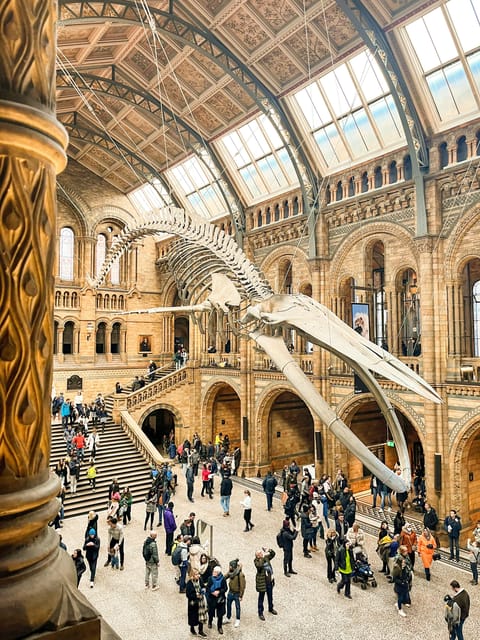
The Natural History Museum is not short on things to see. Its collection includes about 80 million specimens, which is far too much for a two-hour visit. A guide helps you spend your limited time on the objects with the strongest stories.
That matters most if this is your first visit. You can walk into the museum and admire the architecture, but it is harder to know which fossil, tree section, or rock sample deserves your attention. This tour gives you a ready-made path through the main highlights.
The experience is offered as a private or small-group tour. That can make a real difference inside a busy public museum. You are not simply following a large crowd from one display to the next, and you may have more room to ask about the objects that catch your eye.
Still, set your expectations correctly. This is a highlights tour, not a specialist course in paleontology, geology, or natural history. One experience was judged too basic for someone who already knew the main subjects well. I would book it for structure, context, and family-friendly guidance, not for advanced academic detail.
More London museums to visit:
- Tower of London and Crown Jewels Exhibition Ticket
★ 4.5 · 6,677 reviews - London: Chelsea Football Club Stadium and Museum Tour
★ 4.8 · 4,576 reviews - Chelsea FC Stadium Tours and Museum
★ 5.0 · 1,908 reviews
Meeting at Exhibition Road and getting inside
You meet outside the red telephone box opposite the Natural History Museum’s Exhibition Road entrance. This is a useful landmark in a part of London where several major museums sit close together, but give yourself enough time to find the exact meeting point.
The tour includes access accompanied by a guide and an express security check. That does not mean every line at the museum disappears, but it should make the arrival process simpler than entering without guidance.
The advertised experience lasts 2.5 hours. The included museum tour is described as two hours, so the extra time likely covers meeting, entry, and moving through the building. In practical terms, plan for about half a day around this activity, especially if you want to continue exploring after the guided portion.
The tour is in English. If you need another language, this is not the right choice based on the information provided.
Sophie the Stegosaurus and the dinosaur story
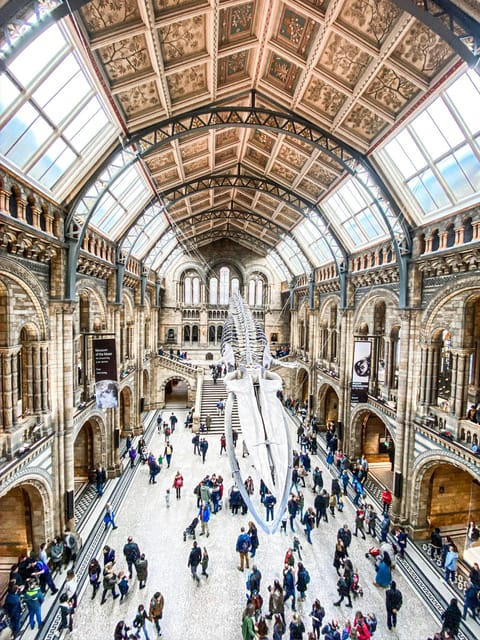
Sophie the Stegosaurus is one of the strongest reasons to book this tour. A complete skeleton lets you see the animal as a whole rather than as a pile of separate bones or a few mounted pieces.
A guide can help you make sense of the creature’s shape and place it in the wider dinosaur story. Even if you have seen stegosaurus illustrations since childhood, the real scale of the skeleton is different. The plates, tail, and body structure become physical objects rather than cartoon features.
The tour also includes the long-extinct Dodo. That gives the visit a useful change of pace. The Dodo is not a dinosaur, but its disappearance raises questions about extinction, human activity, and the limits of what natural history collections can preserve.
This part should work well for families. The displays have an immediate visual pull, and children do not need a long lecture before a huge skeleton makes sense. Still, adults who want detailed scientific explanation should ask questions as you go. The level of discussion can depend on your guide.
Two guides received especially strong personal praise in the available feedback. Sasha was credited with engaging an entire family, while Wesley was described as well-informed and able to keep the time moving without dull patches. Those comments suggest that the guide can shape the experience considerably. A less effective guide may leave the museum’s labels doing too much of the work.
Archaeopteryx, Darwin, and the evidence for change
The Archaeopteryx fossil is another major stop. It is often described as a missing link between birds and dinosaurs, though that phrase can simplify a more complicated scientific story. What matters for your visit is that the fossil helps show features associated with both groups.
This is the sort of object that benefits from explanation. A quick glance may not reveal why it matters. Your guide can point out the details that connect the fossil to the larger question of how scientists interpret evidence from long-extinct animals.
Nearby, you can see a first edition of Charles Darwin’s On the Origin of Species. The value here is not just the age of the book. It represents a turning point in the way people studied and explained the natural world.
I like the pairing of the book and fossil. One shows a scientific idea in print, while the other shows the physical evidence that helped shape our understanding of life. Together, they make this more than a dinosaur viewing session.
If you already have a strong background in evolution, you may find this section familiar. The benefit is seeing the museum’s prized material in person, not hearing a full university-level treatment of evolutionary theory.
More London history walks:
- London Small Group Tour of Historical Pubs
★ 5.0 · 10,422 reviews - Soho Music & Historic Pubs Tour
★ 5.0 · 1,993 reviews - London: Historic Pubs of Central London Walking Tour
★ 4.9 · 1,065 reviews - London: Soho Music and Historic Pubs Walking Tour
★ 4.9 · 836 reviews
The Giant Sequoia cross-section
The Giant Sequoia section offers a calmer and more surprising stop. The tree was already 1,300 years old when it was felled in the 19th century, so its rings record a span of time far beyond a human lifetime.
A tree cross-section can look simple at first. The scale changes that reaction. You are looking at a single piece of a living organism that had been growing for centuries before modern London took its present shape.
This display gives the tour a welcome break from bones and fossils. It also helps connect natural history to time in a way that is easy to understand. You do not need technical knowledge to grasp what those rings represent.
The sequoia is likely to be one of the most powerful objects for visitors who are less interested in dinosaurs. If your group has mixed interests, this stop gives the tour a broader reach. It is also the sort of display where a guide can add useful context without needing a long explanation.
Pompeii casts and the human cost of Vesuvius
The plaster casts of the victims of Mount Vesuvius bring a serious tone to the visit. These casts were made from impressions left by people caught in the eruption at Pompeii.
This is not a light or amusing museum stop. The casts make the disaster personal in a way that a map or a display of volcanic rock cannot. You see evidence of individual lives interrupted by a violent event.
The section fits well with the tour’s wider theme of natural forces. Dinosaurs show extinction across immense stretches of time, while Pompeii shows catastrophe on a human scale. The two subjects are very different, but both ask you to think about how fragile life can be.
Some visitors may find this part upsetting. That is not a reason to skip it, but it is worth knowing before you arrive, particularly if you are visiting with children. The guide’s tone will matter here, and you can take your time if the display affects you.
Gemstones, Moon rock, and Mars material
The tour also reaches the Earth’s minerals and space material. You can see fine gemstones alongside rock from the Moon and Mars.
This section broadens the route again. After animals, trees, fossils, and human disaster, you move into the physical material of planets and the Earth itself. The contrast helps show how many different subjects sit inside a natural history museum.
The gemstones offer visual appeal, while the lunar and Martian samples carry a different kind of excitement. A gemstone is admired for color and structure. A Moon or Mars rock matters because of where it came from and how rarely ordinary people can see such material.
I would pay attention to the guide’s explanation here rather than rushing through the cases. Rocks can be less immediately readable than a skeleton, and a short explanation can make the display more meaningful. If your interests lean toward geology or space, this may be one of the best parts of the route.
The earlier criticism about basic information applies here too. If you already know a great deal about minerals, volcanoes, and planetary geology, you may want more detail than this tour provides. For a general museum visit, though, the range of objects is a real strength.
What the $93 price gets you
At $93 per person, you are paying for more than admission. You are paying for a guide-led route, help with the museum’s main sights, and a more personal format. The value is strongest if you have limited time in London or feel overwhelmed by a huge collection.
The price makes less sense if you plan to spend most of the day at the museum and are comfortable reading labels on your own. In that case, an independent visit may give you more hours for less money, though it will not give you the same prepared route.
The private or small-group setup can also justify part of the cost. A guide who adapts to your family or group is more useful than a standard recorded presentation. Sasha’s ability to keep a family involved and Wesley’s ability to maintain interest show how much the human side can matter.
There is also a risk to consider. One booking reportedly had no guide present, with a request for a refund. That appears to have been a serious service failure, not a normal feature of the tour, but it is still part of the practical picture. Keep your booking details available and confirm the meeting instructions before you go.
Free cancellation up to 24 hours in advance gives you some protection if plans change. You can also reserve now and pay later, which helps if you are still arranging a London itinerary.
Who should book this Natural History Museum tour
I would recommend it most strongly to:
- Families who want children to see the museum’s major sights without wandering at random.
- First-time visitors with only a few hours available.
- Adults who enjoy dinosaurs, fossils, volcanoes, gemstones, and space material but do not want to plan the route themselves.
- Small groups that prefer asking questions directly.
- Visitors who value a guide’s stories more than spending an entire day inside the museum.
I would be more cautious if you already have advanced knowledge of earthquakes, volcanoes, gems, or dinosaurs. The tour may still be worthwhile for access to the collection and the convenience of a planned route, but the commentary may not go far beyond the basics.
The tour is not suitable for wheelchair users according to the provided activity information. Flash photography is not allowed, so bring a camera only if you are happy to photograph without flash.
Should you book it?
Book this tour if you want a well-chosen introduction to the Natural History Museum and you like the idea of seeing Sophie, Archaeopteryx, Darwin’s book, Pompeii casts, the Giant Sequoia, and space rocks in one guided visit.
At $93, I would not call it a bargain. I would call it a time-saving choice whose value depends on the guide and your own level of interest. Sasha and Wesley received especially strong praise for keeping groups engaged, but the mixed feedback also shows that the quality of the explanation and service matters.
For a family or first visit, I think the structure can be worth paying for. For a museum regular or subject expert, visit independently unless the private format and short timetable are your main priorities.
FAQ
Where does the Natural History Museum tour meet?
Meet outside the red telephone box opposite the Exhibition Road entrance to the Natural History Museum.
How long does the experience last?
The activity lasts 2.5 hours. The included guided museum tour is described as two hours.
What language is the tour conducted in?
The live tour guide speaks English.
Is this a private tour or a group tour?
Private and small-group options are available.
What exhibits are included?
The route includes the museum’s main highlights, including Sophie the Stegosaurus, the Dodo, Archaeopteryx, the Giant Sequoia cross-section, Pompeii victim casts, gemstones, and rock from the Moon and Mars.
Does the tour include museum access?
Yes. The experience includes access to the museum accompanied by a tour guide, along with access to the main highlights.
Is there an express entry option?
The activity includes an express security check.
Can I cancel for a refund?
Yes. You can cancel up to 24 hours in advance for a full refund.
Is the tour suitable for wheelchair users?
No. The activity is listed as not suitable for wheelchair users. Flash photography is also not allowed.
Latest arrivals on the London list
- Easy Access Tower of London Royal Secrets & Scandals Tour★ 5.0 · 3 reviews
- Stonehenge Special Access Guided Morning Tour from London★ 4.5 · 3 reviews
- Madame Tussauds London Fast Track and Champagne Experience★ 3.5 · 3 reviews
- Shoreditch & East London Walking Tour with a Local, Custom & Private★ 5.0 · 3 reviews
- London Private Brixton Tour with a Local – Culture & Stories★ 4.9 · 3 reviews
- Private Full Day Tour – Fast Track Tower of London and Lunch★ 4.6 · 3 reviews
- Private transfer from London Heathrow Airport to Southampton★ 5.0 · 3 reviews
- London Soho District – Guided Walking Tour 12 guests 2,5h★ 4.8 · 3 reviews
Museums, compared.
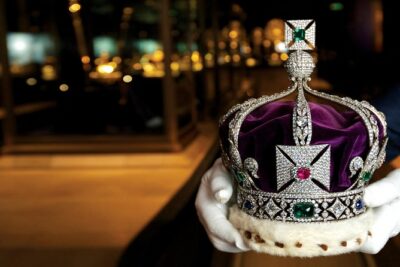
Tower of London and Crown Jewels Exhibition Ticket
Read our review →
Chelsea Football Club Stadium and Museum Tour
Read our review →

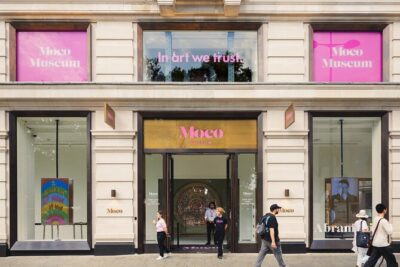
Official tickets: Moco Modern & Contemporary Art Museum
Read our review →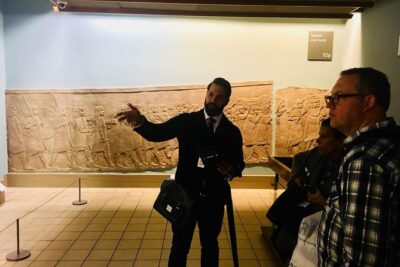
British Museum London Guided Tour Semi-Private 8ppl Max
Read our review →
Browse the lists this tour appears in