
Reviewed · MUSEUMS
London: Natural History Museum Guided Tour
London’s Natural History Museum is far too large for a casual wander to reveal its best stories. This 2.5-hour guided tour takes you from dinosaur fossils and early human history to Pompeii, Darwin, and the eerie Cursed Amethyst, with an art historian helping you make sense of the museum’s 80 million specimens.
I like the way the route mixes famous sights with odd, memorable objects, such as human skulls once used as drinking vessels and a giant slice of Sequoia tree. I also like the small-group limit of eight people, which gives children room to ask questions and lets the guide adjust the pace. The main consideration is price: at $112 per person, this is not a bargain if you are happy exploring on your own.
- Iguanodon teeth and Archaeopteryx: See fossils tied to the changing story of dinosaurs and birds.
- Sophie the Stegosaurus: Meet one of the museum’s memorable dinosaur characters.
- Pompeii casts: Look closely at casts of people caught in the volcanic disaster.
- Dodo skeleton: Get near one of natural history’s most famous extinct birds.
- Darwin’s first edition: See a first edition of On the Origin of Species.
- Private or small-group format: Choose a private visit or a group capped at eight people.
In This Review
- Why a Guide Helps Inside This Huge Museum
- Starting With Dinosaurs and the First Chapters of Life
- Archaeopteryx and the Dinosaur to Bird Story
- The Dodo Skeleton and the Reality of Extinction
- Pompeii Casts and the Human Cost of Disaster
- Darwin’s Book and the Ideas Behind the Displays
- The Cursed Amethyst and a Giant Sequoia Slice
- A Pace That Works for Families
- Private Tour or Small Group?
- Is $112 Per Person Good Value?
- Practical Details Before You Go
- Who Should Book This Museum Tour?
- Should You Book It?
- FAQ
- How long does the Natural History Museum guided tour last?
- What language is the tour offered in?
- What are the main highlights?
- Is the tour private or shared?
- Is there a minimum number of people for a group tour?
- Are food and drinks included?
- Can I bring luggage?
- Is the tour wheelchair accessible?
Why a Guide Helps Inside This Huge Museum
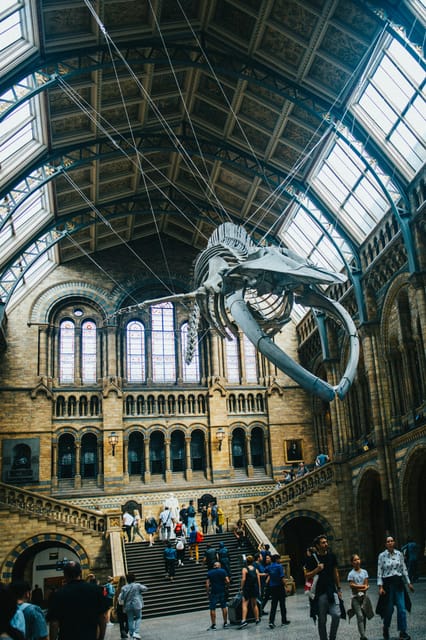
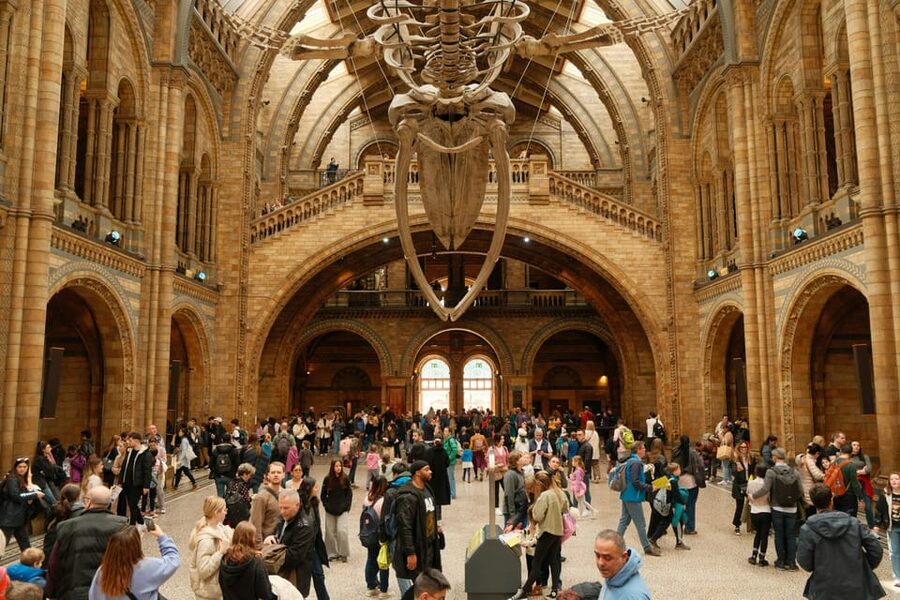
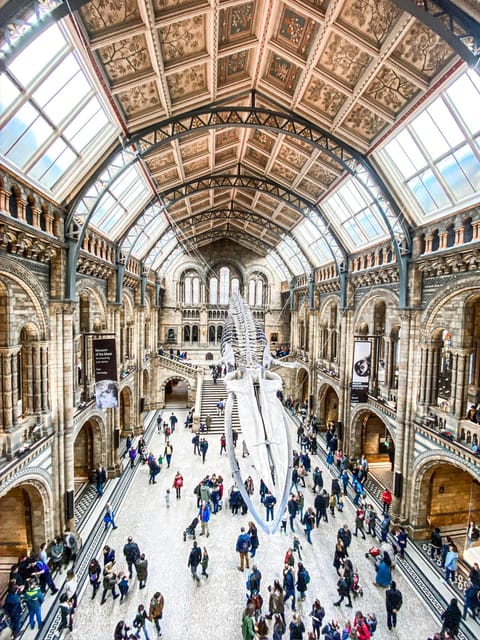
The Natural History Museum can feel like several museums joined together. One gallery leads to another, the building is full of grand displays, and the collection covers an enormous stretch of time. You can certainly visit without help, but it is easy to spend an hour admiring the architecture and still miss the objects with the best stories.
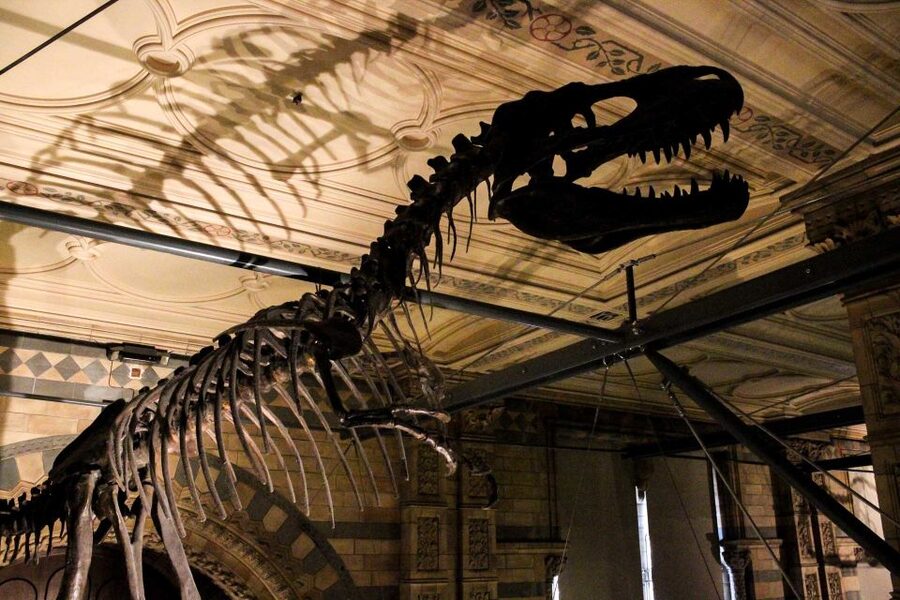
This tour gives you a clear path through that maze. Your guide introduces the museum through individual objects rather than a long lecture. Sophie the Stegosaurus, the Dodo skeleton, the Cursed Amethyst, and the giant Sequoia section become useful markers in a much larger story about life, extinction, geology, and human curiosity.
The guide is an art historian, and that matters here. You are not simply being led from glass case to glass case. The tour connects the scientific objects with the way they are displayed, the building itself, and the human ideas behind collecting and interpreting nature.
The English-language guides named in the feedback include Ivo, Guy V., Matilda, Sacha, Luis, Laurence, Becky, Anthony, and Craig. Their styles vary, but the strongest pattern is clear: the tour works best when the guide explains difficult ideas in plain English, welcomes questions, and keeps both adults and children involved.
Starting With Dinosaurs and the First Chapters of Life
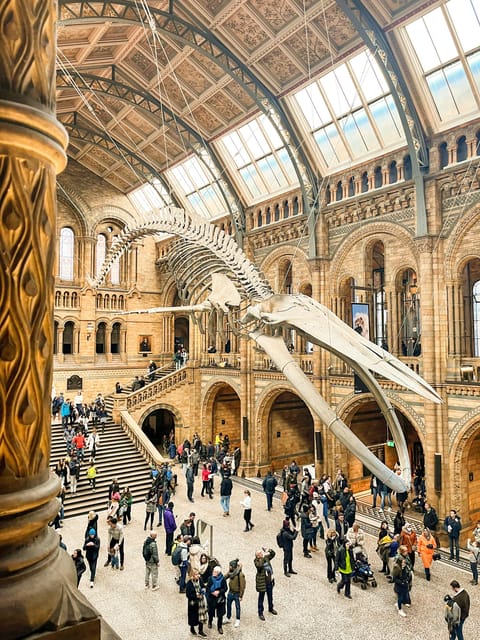
The tour traces the earth’s beginnings toward the arrival of our own species. That is a huge subject for one visit, so the value lies in the guide’s choices. Instead of trying to read every label, you concentrate on a selection of objects that show how scientists piece together the past.
The Iguanodon teeth fossils are a good early stop. Teeth may sound less dramatic than a full skeleton, but they can reveal what an animal ate and how it lived. A guide can turn a small fossil into evidence, helping you see that natural history is not only about impressive bones. It is also about reading clues.
The dinosaur section includes Sophie the Stegosaurus, a friendly focal point for younger visitors. Families should find this part easy to enjoy because it gives children a clear character to follow while the guide explains the wider story of prehistoric life.
The museum’s dinosaur material can be especially useful for children who already have a strong interest in fossils. The guide can answer questions without forcing parents to become walking encyclopedias. Ivo, Guy V., and Anthony were singled out for involving children directly, including children as young as eight and those still learning English.
More London museums to visit:
- Tower of London and Crown Jewels Exhibition Ticket
★ 4.5 · 6,677 reviews - London: Chelsea Football Club Stadium and Museum Tour
★ 4.8 · 4,576 reviews - Chelsea FC Stadium Tours and Museum
★ 5.0 · 1,908 reviews
Archaeopteryx and the Dinosaur to Bird Story
The Archaeopteryx is one of the tour’s more unusual highlights. It is often described as a link between dinosaurs and birds, and its place in the story gives your guide a chance to explain how scientists think about evolution and evidence.
This is the kind of object that benefits from a live explanation. A short label may tell you what the specimen is, but a guide can explain why it matters and how it fits into a larger argument about changing species. You do not need a science background to follow the discussion, though you should expect ideas rather than only spectacle.
The tour’s strength is its range. One moment you are looking at a dinosaur tooth, and the next you are considering how birds relate to ancient reptiles. That shift keeps the visit from becoming a simple parade of fossils.
The Dodo Skeleton and the Reality of Extinction
The Dodo skeleton brings the subject of extinction closer to home. It is one of those objects almost everyone recognizes, even before hearing the story behind it. Seeing the remains up close gives the idea of extinction a physical presence.
I appreciate that this stop is not treated merely as a famous photo opportunity. The Dodo helps open a discussion about how people understand vanished species and how museum collections preserve evidence of life that no longer exists.
The route does not promise every room in the museum. That is a good thing. The collection is too large for a two-and-a-half-hour visit to cover everything properly. You are getting a selected route through major themes, not an exhaustive tour of 80 million specimens.
Pompeii Casts and the Human Cost of Disaster
The Pompeii casts change the mood. After dinosaurs and extinct birds, you encounter the casts of people caught in the volcanic disaster. The display is powerful because it moves natural history into human experience.
These casts can be difficult to look at, especially for children. A good guide will provide context without turning the scene into empty drama. The point is not simply that a volcano erupted. It is that archaeology and geology can preserve the shape of an individual life, making a distant disaster feel immediate.
This section also includes a discussion of civilizations that used human skulls as drinking glasses. It is a strange and unsettling detail, but it fits the tour’s wider purpose. Natural history includes beauty, survival, extinction, ritual, violence, and the many ways humans have tried to understand death.
If you are visiting with children, you may want to tell them in advance that some displays deal with death and human remains. The tour is educational, but not every stop is lighthearted.
More London history walks:
- London Small Group Tour of Historical Pubs
★ 5.0 · 10,422 reviews - Soho Music & Historic Pubs Tour
★ 5.0 · 1,993 reviews - London: Historic Pubs of Central London Walking Tour
★ 4.9 · 1,065 reviews - London: Soho Music and Historic Pubs Walking Tour
★ 4.9 · 836 reviews
Darwin’s Book and the Ideas Behind the Displays
A first edition of On the Origin of Species gives the tour a strong intellectual center. The museum is full of bones, fossils, casts, and preserved specimens, but Darwin’s book reminds you that these objects changed the way people thought about life.
You are not simply looking at an old book. You are looking at a work that helped shape the modern study of natural history. The guide can place it alongside the fossils and specimens, showing how observation, comparison, and argument work together.
This is one reason I would recommend the tour to adults who want more than a dinosaur visit. Children may remember the skeletons, while adults may find the Darwin section gives the whole experience a clearer purpose.
The Cursed Amethyst and a Giant Sequoia Slice
The Cursed Amethyst is a welcome change of pace. After scientific specimens and historical evidence, this object brings in mystery and superstition. Its story gives the guide room to ask why people attach legends to unusual objects and how belief can shape the way we see them.
The giant slice of a Sequoia tree offers the opposite kind of wonder. Its scale shows the long life of a tree in a way that a date on a label cannot. You are looking at a physical record of time, presented in one enormous cross-section.
These stops are useful because they keep the tour from becoming too narrow. You are not only following the history of animals. You are considering minerals, plants, stories, human beliefs, and the sheer size of the natural world.
A Pace That Works for Families
The duration is well judged. Two and a half hours is long enough to build a story, but short enough to avoid the heavy fatigue that can come from trying to see every gallery. One family finished the tour and then headed to the museum cafe, which is a sensible way to use the rest of your visit.
The guides praised in the feedback were good at balancing different ages. Ivo was noted for involving children aged 11 and 16, while Matilda made the material work for both an adult and a 13-year-old. Sacha was described as patient with children, and Luis was praised for keeping attention through the full two and a half hours.
That does not mean every child will remain fascinated throughout. The museum still contains dense material, and some displays require listening rather than quick visual thrills. If your children enjoy asking questions, fossils, animals, or big scientific ideas, the format should suit them well.
The small-group option allows up to eight people. A private tour gives you more control over the pace and is the better choice if your family has specific needs or you want a more personal visit. Group tours require at least two people to run.
Private Tour or Small Group?
The choice between private and small group comes down to price and flexibility. A private tour should suit families who want to pause often, ask many questions, or move at a pace set by the youngest person in the group. It is also the only format available for wheelchair tours upon request.
The small-group format offers a middle ground. Eight people is small enough to avoid the feel of a large coach group, while still keeping the cost below a fully private booking in many cases. You should check the option you are booking because the meeting point may vary.
The English-speaking guide is included, and the tour is available daily. No food or drinks are included, and temporary exhibitions are not part of the visit, so treat this as a tour of the museum’s main collection rather than a pass to every special show.
Is $112 Per Person Good Value?
At $112 per person, the tour costs much more than simply entering a free museum. The question is what your time is worth. If you are visiting London for a short stay, a focused route can save you from wandering without direction and missing the objects you most wanted to see.
I think the price makes the most sense in three situations. First, you have only one visit and want a clear introduction. Second, you are traveling with children and would rather have a guide answer questions than manage the visit alone. Third, you enjoy museums but find scientific displays hard to connect.
The value is weaker if you like reading labels at your own pace or plan to spend most of the day in the museum. In that case, a self-guided visit gives you more freedom and more time in each gallery.
The included professional guide is the main reason to pay. The strongest guide experiences described involved clear explanations, good pacing, humor, and attention to children. Ivo, Matilda, Sacha, Luis, and Laurence received especially warm praise for making the museum easier to understand without making it feel like a classroom.
Practical Details Before You Go
Bring a passport or ID card. Large luggage and big bags are not allowed, and only handbags or small, thin backpacks can pass through security.
Skip-the-line access helps, but it does not guarantee that you will encounter no queue. Increased security measures can create lines even for tours with priority entry. Dress appropriately for entry into some sites, and expect a small amount of walking.
The museum can occasionally close without warning. If opening is delayed by more than an hour, an alternative will be provided, but a refund is not offered in that situation. That is worth knowing before you build a tightly timed day around this booking.
You can cancel up to 24 hours before the tour for a full refund, and the reserve-now, pay-later option allows you to hold a place without paying at once. Check the starting time when booking because it varies by availability.
Wheelchair access must be requested in advance and is available only as a private tour. The general listing says the activity is not suitable for wheelchair users, so contact the provider before booking rather than relying on standard group arrangements.
Who Should Book This Museum Tour?
I would choose this tour for a first visit to the Natural History Museum, especially with children or teenagers. It gives you a route, a human guide, and enough variety to keep the museum from feeling like an endless collection of cases.
It also suits adults who want context around Darwin, Archaeopteryx, extinction, Pompeii, and the museum’s stranger objects. The tour is not only about dinosaurs, even though the dinosaur material provides some of its most approachable moments.
I would skip it if you prefer total freedom, want to study one subject for several hours, or are watching every pound. The museum’s scale rewards returning visitors, and a self-guided visit may serve you better if this is your second or third time.
Should You Book It?
Book it if you want the museum’s major stories explained in a focused 2.5-hour route. The guide quality appears to be the biggest strength, with Ivo, Matilda, Sacha, Luis, Laurence, and others praised for clear explanations, warmth, humor, and patience with children.
At $112, this is a premium introduction rather than a cheap add-on. For a family’s first visit, or for anyone who would otherwise feel lost among 80 million specimens, the structure can justify the cost. If you already know the museum well, save the money and explore independently.
FAQ
How long does the Natural History Museum guided tour last?
The tour lasts 2.5 hours.
What language is the tour offered in?
The live tour guide speaks English.
What are the main highlights?
The tour includes Iguanodon teeth fossils, Pompeii casts, a Dodo skeleton, Archaeopteryx, the Cursed Amethyst, a giant Sequoia tree slice, Sophie the Stegosaurus, and a first edition of On the Origin of Species.
Is the tour private or shared?
You can book a private tour or a small-group tour. Shared groups have a maximum of eight people.
Is there a minimum number of people for a group tour?
Yes. A group tour requires at least two people to run. If the minimum is not met, an alternative date or a full refund will be offered.
Are food and drinks included?
No. Food and drinks are not included.
Can I bring luggage?
No large bags, luggage, or suitcases are allowed. Only handbags or small, thin backpacks can pass through museum security.
Is the tour wheelchair accessible?
Wheelchair tours are available only upon request and only as a private tour. The standard activity is not suitable for wheelchair users.
Latest arrivals on the London list
- Heathrow Airport to London Arrival Transfer★ 4.5 · 50 reviews
- London Beatles Tour★ 5.0 · 50 reviews
- One Way Taxi Transfer from London to Gatwick Airport★ 5.0 · 51 reviews
- City & Secrets: Explore London’s Hidden Gems★ 5.0 · 51 reviews
- London: Hidden Baker Street Tube Station Tour★ 4.7 · 51 reviews
- London Christmas Lights Open-Top Bus Tour. 2025 Early Bird★ 3.6 · 51 reviews
- 4 hour London Private Tour, with your own Black Cab Tour Guide★ 5.0 · 51 reviews
- The Beatles Magical History Black Taxi Tour London★ 5.0 · 51 reviews
Museums, compared.
Tower of London and Crown Jewels Exhibition Ticket
Read our review →
Chelsea Football Club Stadium and Museum Tour
Read our review →
Official tickets: Moco Modern & Contemporary Art Museum
Read our review →
British Museum London Guided Tour Semi-Private 8ppl Max
Read our review →
Browse the lists this tour appears in