
Reviewed · TATE MODERN & ART TOURS
London Tate Modern Museum – Guided Tour 8 guests 2,5h
London’s Tate Modern is at its best when somebody helps you make sense of the strange stuff. This 2.5-hour guided tour moves from Monet’s soft light to Mondrian’s strict grids, then on to Warhol, Rothko, Picasso, Dali, and Duchamp. You are not just looking at famous pictures. You are being asked why they mattered.
I like the small maximum of eight people, which gives an art historian room to answer questions. I also like the range, from Impressionism to abstract expressionism and Pop Art, rather than a narrow tour of one period. The main caution is value: at $112 per person, you should confirm exactly what your chosen option includes, especially the Chinatown food and Buckingham Palace entry mentioned among the highlights.
In This Review
- Key points to know before you book
- Why Tate Modern works well with a guide
- From Monet’s light to Mondrian’s hard lines
- Picasso and Dali in a time of conflict
- Warhol, Marilyn Monroe, and the power of repetition
- Rothko and the quieter side of abstraction
- Duchamp’s Fountain and the question of what counts as art
- The small-group format and guide experience
- What the $112 price really buys you
- Timing, meeting point, and what to carry
- How to make the most of the two and a half hours
- Should you book this Tate Modern tour?
- FAQ
- How long does the Tate Modern tour last?
- What language is the tour offered in?
- How many people are in the semi-private group?
- Is food included?
- Are temporary exhibitions included?
- What should I bring, and can I bring luggage?
Key points to know before you book
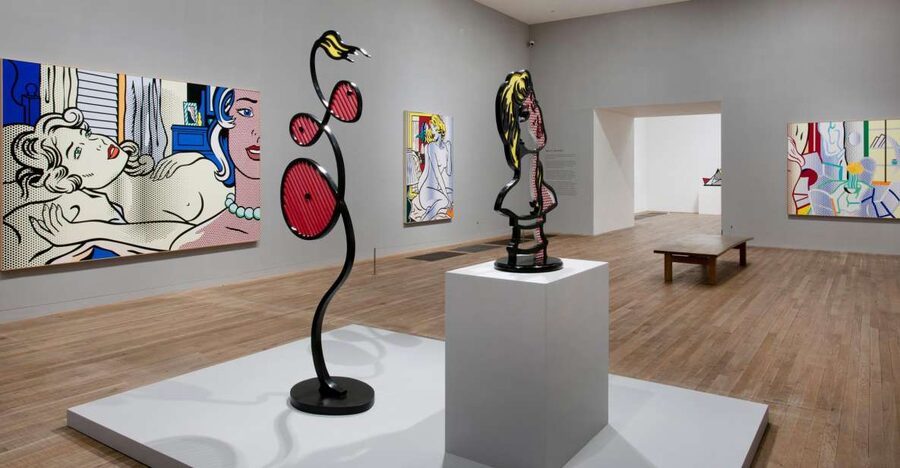
- A compact tour of modern art: The route covers major movements and artists from the 19th and 20th centuries.
- Small groups capped at eight: Semi-private tours require at least two people to operate.
- A guide-led discussion, not just a museum walk: You can expect context about artists, movements, and famous works.
- Becky is one named guide: A booking review specifically praised her lively two-and-a-half-hour tour.
- The $112 price needs careful checking: Food, drinks, and temporary exhibits are not included, while the Chinatown and Buckingham Palace details need confirmation for your selected option.
- Bring photo ID and travel light: Large bags, luggage, and suitcases are not allowed inside.
Why Tate Modern works well with a guide
Tate Modern can feel like a series of large rooms filled with puzzles. One painting looks simple. Another looks unfinished. A third seems to ask whether almost anything can count as art.
That is where a good guide earns the fee. Instead of walking past a square by Mondrian or a blank-looking work by Duchamp, you get the story behind the argument. You learn why exact lines and blocks of color could seem radical, why artists turned away from traditional subjects, and why a urinal could cause such a fuss.
The tour focuses on the best-known names in modern art. That gives you a useful backbone for the museum, especially if this is your first visit. You will not need to know the difference between Cubism, Impressionism, Surrealism, and abstract expressionism before arriving. The guide builds the discussion as you go.
I also like the time limit. Two and a half hours is long enough to cover serious ground, but short enough to leave you with energy for the rest of London. A museum tour that tries to cover every room can turn into an information march. This one has a clearer purpose: show you major works and explain the movements that changed art.
More Tate and gallery visits:
- London: Tate Modern Official Guided Tour
★ 4.6 · 154 reviews - The Tate Modern London – Exclusive Guided Museum Tour
★ 5.0 · 41 reviews - Tate Modern Museum London Guided Tour Semi-Private 8ppl Max
★ 5.0 · 41 reviews
From Monet’s light to Mondrian’s hard lines
The early part of the experience introduces modern art through Impressionism, including Claude Monet. Monet helps explain one of the key shifts in 19th-century painting: artists became more interested in light, color, and the act of seeing than in making every object look perfectly solid and finished.
You might find Monet easier to approach than some of the later works. The guide can use his paintings as a bridge, showing how artists gradually moved away from a literal picture of the world. That change matters because much of what follows at Tate Modern grows from this willingness to question old rules.
Mondrian takes the story in another direction. His lines and squares look spare, even severe. Yet the simplicity was not accidental. The tour discusses how his exact arrangements challenged artists and viewers who expected painting to show recognizable people, places, or objects.
This is one of the strongest reasons to choose a guide. Without context, a Mondrian can look like an attractive design for a wall or a piece of furniture. With context, you start to see the discipline behind the balance of line, shape, and color. You may still decide you do not like it. That is fine. Modern art does not require you to admire everything.
Picasso and Dali in a time of conflict
Picasso and Salvador Dali bring two very different forms of Spanish modernism into the discussion. Picasso is linked here to masterpieces created during the Spanish Civil War, a period when art could carry political force as well as formal invention.
That context helps you look beyond the familiar name. Picasso is often treated as a genius who simply broke rules. A better tour explains which rules he was breaking, why his images look fractured, and how war and politics shaped some of his work.
Dali offers another route into Surrealism. His paintings can feel dreamlike, unsettling, or even playful. The useful question is not simply what the image shows, but why the artist wanted reality to become unstable. A guide can point out how Dali’s work fits into a wider movement that explored the unconscious and challenged ordinary logic.
The museum visit is not a full course in Spanish history, and you should not expect detailed coverage of every artist. But the pairing of Picasso and Dali gives the tour a strong human side. You see how modern art responded not only to new ideas about painting, but also to fear, conflict, politics, and changing views of the mind.
Warhol, Marilyn Monroe, and the power of repetition
Andy Warhol makes modern art feel closer to popular culture. His portraits of Marilyn Monroe are among the images many people recognize before entering the museum. Warhol’s achievement was not just turning a celebrity face into a colorful picture. He made mass production, fame, advertising, and repetition part of the subject.
The guide can help you notice the tension in that work. Marilyn is instantly recognizable, but repeated images can make her seem less like a person and more like a public product. That is a very different effect from a traditional portrait.
Warhol also makes a good stop for anyone who thinks modern art is only about painters working alone in studios. Pop Art looked hard at consumer culture and the flood of images in daily life. It asked whether a soup can, a comic-style picture, or a celebrity portrait could belong in a major museum.
I like this part of the tour because it gives you an easy way into a larger debate. You do not need specialist training to understand the basic question: if an artist changes the setting and the way an image is repeated, does that change its meaning? You may enjoy the wit, dislike the commercial feel, or find both reactions at once.
More London museums to visit:
- Tower of London and Crown Jewels Exhibition Ticket
★ 4.5 · 6,677 reviews - London: Chelsea Football Club Stadium and Museum Tour
★ 4.8 · 4,576 reviews - Chelsea FC Stadium Tours and Museum
★ 5.0 · 1,908 reviews - London Transport Museum Entrance Ticket
★ 4.5 · 1,323 reviews
Rothko and the quieter side of abstraction
Mark Rothko’s abstract paintings ask for a slower look. Large areas of color can appear simple at first, but their effect depends on proportion, tone, edges, and the way one color seems to sit against another.
The tour includes the move from Impressionism to abstract expressionism, so Rothko helps show how far painting traveled in roughly a century. Monet studied the changing appearance of the world. Rothko removed most recognizable objects and made color itself carry the emotional weight.
This is also where a guide’s delivery matters most. A flat, standard explanation can make abstract art feel like homework. A strong guide gives you a way to look without insisting on one correct response. The supplied feedback includes a very positive account of Becky’s tour, describing two and a half hours of insight and fun. That is the kind of balance you want here: enough background to help, but room for your own reaction.
One caution is that guide quality can vary. Another supplied rating was three out of five and described the experience as expensive for what was offered, with a fairly standard presentation. That is useful to keep in mind. The small group improves the chance of conversation, but it does not guarantee a lively guide.
Duchamp’s Fountain and the question of what counts as art
Marcel Duchamp’s Fountain is the tour’s built-in provocation. It is the work most likely to make you scratch your head and ask whether the joke has gone too far.
That reaction is part of the point. Duchamp shifted attention away from the craft of making a beautiful object and toward the act of choosing, naming, and presenting an object as art. His work changed the questions artists and museums could ask.
A guide can explain why Fountain caused such a shock and how it influenced later artists. You may not leave convinced that the object deserves its fame. Still, you will understand why it is important, and that is a worthwhile museum skill. Art history is not a list of things you must like. It is a record of changing arguments.
This stop also gives the tour some humor. After serious discussion of war, psychology, and abstraction, Duchamp reminds you that modern art can be mischievous. If you enjoy asking where the boundary between art and everyday life lies, this may be your favorite part.
The small-group format and guide experience
The semi-private option allows up to eight people, with a minimum of two required for the tour to run. That is a sensible size for a museum. You are not lost in a crowd, and the guide can keep the group together without turning the experience into a private lesson.
The private option is better if you want to set the pace or ask many questions. It should also suit families or companions with very different levels of interest in art, though the supplied information does not specify a separate private-tour price.
Becky is the only guide named in the available feedback. A verified April 2025 booking praised her for an exciting and enjoyable introduction to modern art. I would treat that as a good sign, not a promise that every departure will feel the same. The other rating shows why: one person found the presentation standard and the price high.
The practical lesson is simple. Book this tour if you want interpretation and conversation, not just admission to the museum. If you prefer to wander alone, read labels at your own pace, and spend hours with a handful of favorite works, the guide fee may not feel worthwhile.
What the $112 price really buys you
At $112 per person, this is not a cheap museum outing. You are paying for an English-speaking professional art historian, skip-the-ticket-line access, and either a private or semi-private format. You are also paying for saved time and a planned story through a very large institution.
That can be fair value if you are in London for a short visit and want a strong introduction in one sitting. A good guide can prevent you from spending an hour looking at famous works without understanding why they matter. The small group also gives you a better chance to ask questions than a large public tour.
The price is harder to defend if you expect a meal, temporary exhibitions, or a full day of sightseeing. Food and drinks are not included, and temporary exhibits are excluded. The advertised highlights also mention authentic food in Chinatown and timed entry to Buckingham Palace after the museum tour, but the details provided here do not clearly explain whether those are part of every booking, optional add-ons, or features of a particular package.
I would confirm three points before paying: whether Buckingham Palace entry is included in your exact option, whether Chinatown food is included or simply suggested, and what admission costs are covered by the $112. This matters because the core description is clearly centered on Tate Modern, while the extra highlights suggest a wider London itinerary.
Timing, meeting point, and what to carry
The tour lasts 2.5 hours, with starting times based on availability. The meeting point can vary by the option you book, so check your confirmation carefully rather than assuming you will meet outside Tate Modern.
You should bring a passport or other valid photo ID. Small amounts of walking are involved, and appropriate dress may be required for entry into some sites connected with the tour.
Leave luggage at your accommodation. Large bags, suitcases, and other bulky items are not allowed inside the museum. Only handbags or small, thin backpacks can pass through security. This is especially important if you are arriving in London between hotels or heading to a train station afterward.
Museum or attraction closures can happen without warning. If opening is delayed by more than an hour, an alternative will be provided, but a refund is not offered in those circumstances. That policy makes it wise to avoid booking this as the one immovable activity on a very short day.
Wheelchair-friendly tours are available only by request, while the standard activity is listed as unsuitable for wheelchair users. Ask before booking if accessibility is important for you.
How to make the most of the two and a half hours
I would arrive ready to look, not just listen. The most useful questions are often simple ones: What was this artist reacting against? What would have seemed shocking when this was made? Why is this work still discussed?
Try not to judge every piece by the same standard. A Monet, a Warhol, a Rothko, and Duchamp’s Fountain are trying to do very different things. Ask what each work wants from you, then decide if it succeeds.
You should also expect the tour to move through a selection of works rather than provide a room-by-room survey. Tate Modern is large, and 2.5 hours is a focused introduction, not a complete study of its collection. If one artist catches your attention, make a note and return later on your own if time allows.
The strongest outcome is that you leave with a few useful connections: Impressionist color leading toward abstraction, political conflict shaping Picasso, celebrity and repetition driving Warhol, and Duchamp changing the definition of art. Those links are more valuable than a long list of names.
Should you book this Tate Modern tour?
Book it if you want a clear introduction to modern art, prefer a small group, and value an expert-led route through famous works. It suits first-time museum visitors, couples, families with older children, and anyone who wants help understanding why modern art became so strange and influential.
Think twice if $112 feels steep for a museum visit, if you want to focus on temporary exhibits, or if you prefer complete freedom to wander. The positive feedback about Becky suggests that a lively guide can make the experience engaging, but the mixed rating also shows that the presentation may feel standard for the price.
Before booking, confirm the meeting point and the exact connection between Tate Modern, Chinatown, and Buckingham Palace. If those extras are included in your chosen package, the day could offer a useful mix of art, food, and London sights. If they are not, judge the price on the Tate Modern tour alone.
FAQ
How long does the Tate Modern tour last?
The guided tour lasts 2.5 hours.
What language is the tour offered in?
The live tour guide speaks English.
How many people are in the semi-private group?
Semi-private tours allow a maximum of eight people. At least two guests are required for the tour to operate.
Is food included?
No. Food and drinks are not included. The experience highlights authentic food in Chinatown, but you should confirm whether that refers to your selected option or a separate part of the wider itinerary.
Are temporary exhibitions included?
No. Temporary exhibits are not included.
What should I bring, and can I bring luggage?
Bring valid photo ID, such as a passport or ID card. Large bags, luggage, and suitcases are not allowed inside the museum. Small handbags and thin backpacks are permitted through security.
Latest arrivals on the London list
- Easy Access Tower of London Royal Secrets & Scandals Tour★ 5.0 · 3 reviews
- Stonehenge Special Access Guided Morning Tour from London★ 4.5 · 3 reviews
- Shoreditch & East London Walking Tour with a Local, Custom & Private★ 5.0 · 3 reviews
- Madame Tussauds London Fast Track and Champagne Experience★ 3.5 · 3 reviews
- London Private Brixton Tour with a Local – Culture & Stories★ 4.9 · 3 reviews
- Private Full Day Tour – Fast Track Tower of London and Lunch★ 4.6 · 3 reviews
- Private transfer from London Heathrow Airport to Southampton★ 5.0 · 3 reviews
- London Crimes And Punishment Private Walking Tour★ 5.0 · 3 reviews
Tate Modern & Art Tours, compared.
The Tate Modern London – Exclusive Guided Museum Tour
Read our review →
Tate Modern Museum London Guided Tour Semi-Private 8ppl Max
Read our review →
See Tate Modern with an Art Historian in London
Read our review →
London Tate Modern Guided Small-Group Tour with Max 6 People
Read our review →
Browse the lists this tour appears in