
Reviewed · MUSEUMS
London: The Moonwalkers: A Journey with Tom Hanks Exhibition
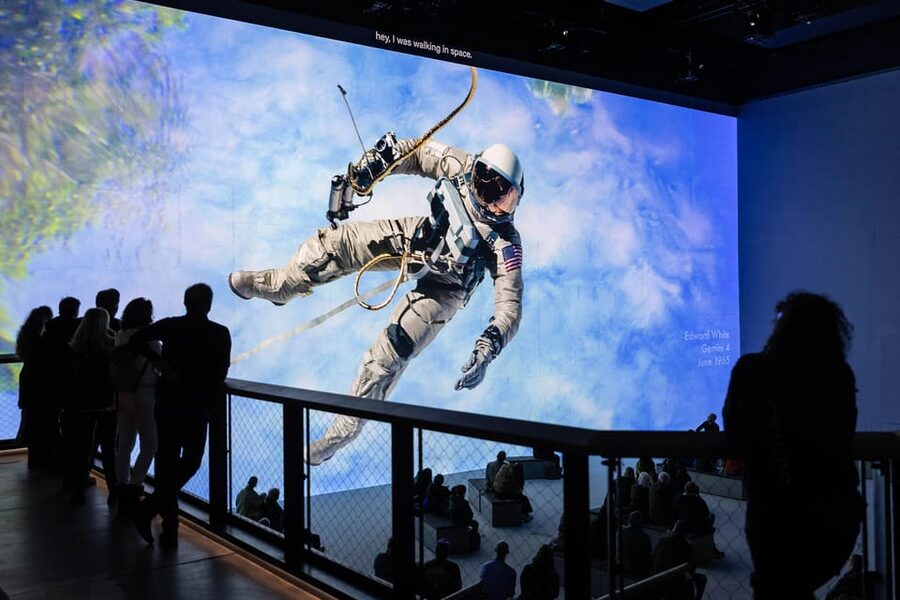
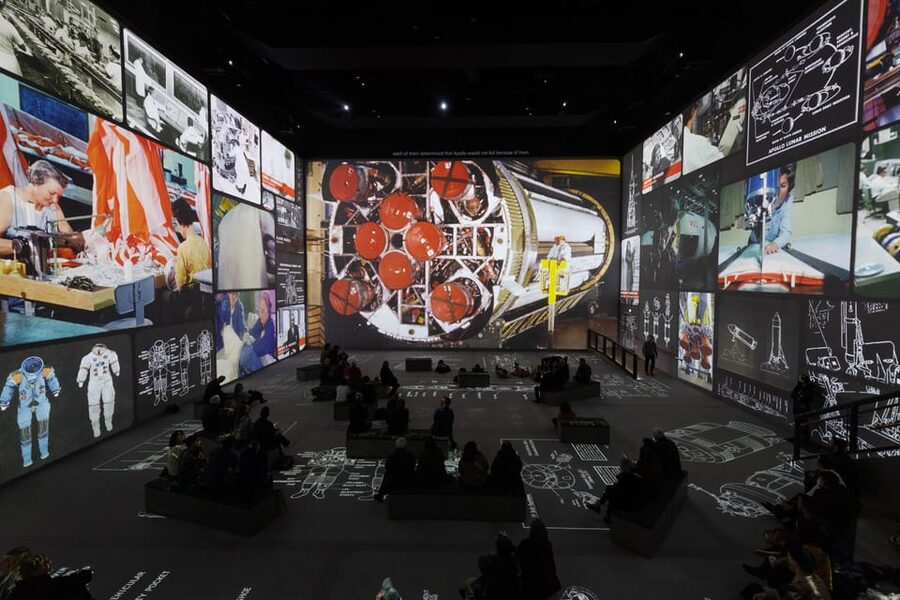
The Moonwalkers turns Lightroom’s large projection space into a front-row seat for the race to the moon. Tom Hanks narrates the story of the Apollo missions, then looks ahead to Artemis, the programme preparing for future crewed lunar surface missions.
I like the huge-scale presentation, which gives rocket launches, lunar journeys, and historic footage room to breathe. I also like the link between Apollo and Artemis, since this is not only a look backward but also a short introduction to what comes next.
The main drawback is value. At $33.67 per person, or about £25 based on the supplied pricing, you are paying for a 50-minute film rather than a full museum visit or hands-on attraction. Seating may also lack backrests, so comfort matters if you are particular about chairs.
In This Review
- Key points to know before booking
- What The Moonwalkers is really offering
- Entering the Apollo missions through Tom Hanks
- Lightroom’s giant screen and sound system
- From Apollo to Artemis
- Christopher Riley and Anne Nikitin’s contributions
- The 50-minute schedule and seating
- Who will get the most from this experience
- Price, flexibility, and practical details
- How to decide if the film format suits you
- Should you book The Moonwalkers?
- FAQ
- How long does The Moonwalkers last?
- Who narrates The Moonwalkers?
- What subjects does the experience cover?
- Where does The Moonwalkers take place?
- Is The Moonwalkers wheelchair accessible?
- Is photography allowed?
- Can I cancel my booking?
Key points to know before booking
- Tom Hanks narrates the film: His voice guides you through Apollo and conversations connected with Artemis.
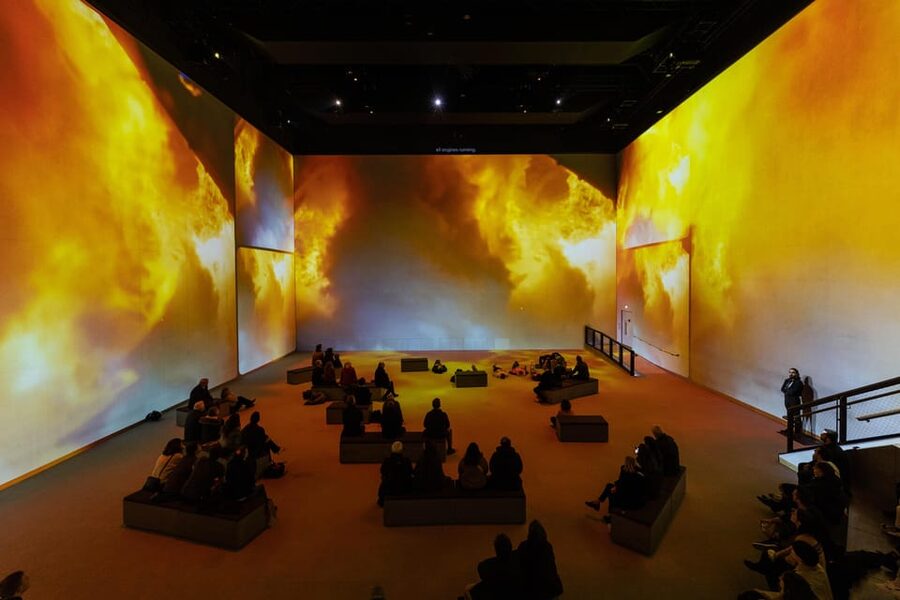
- Apollo is shown at spectacular scale: Lightroom uses powerful projection and sound equipment to fill the room with space footage.
- The programme looks forward as well as back: Interviews with Artemis astronauts add a modern section to the Apollo story.
- Anne Nikitin wrote the original score: Music plays a major part in shaping the mood of the presentation.
- The main presentation lasts 50 minutes: Allow roughly an hour overall, with no meal, drink, or merchandise included.
- The experience is wheelchair accessible: Flash photography is not allowed, and cancellation is free up to 24 hours before the start time.
What The Moonwalkers is really offering
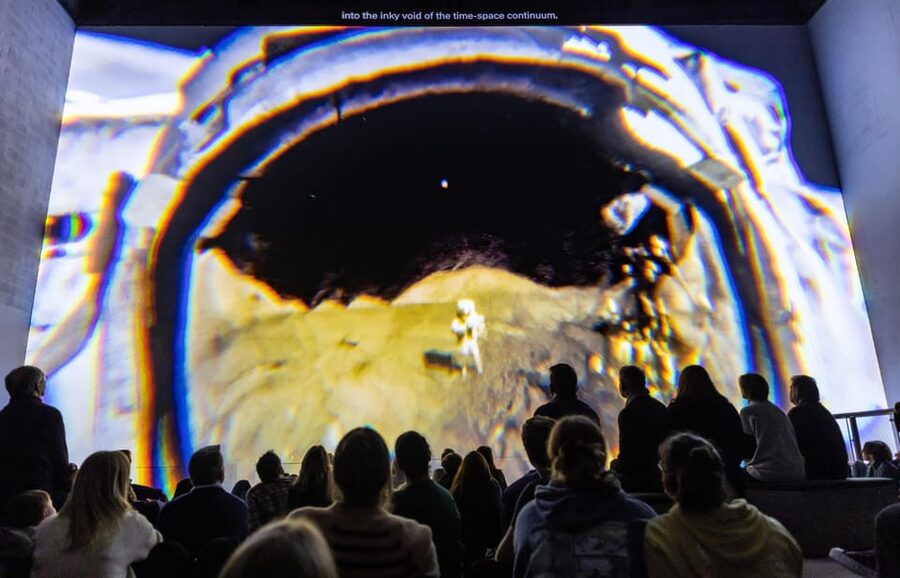
This is best understood as a large-format audio-visual film, not a conventional museum exhibition. You do not move from case to case or inspect spacecraft parts. Instead, you sit in a projection room while images and sound surround you.
That distinction matters when you compare the price with other London attractions. If you want physical objects, technical displays, or a long afternoon of exploration, this will feel brief. If you want a focused film experience with a strong voice, music, and room-filling visuals, the format makes more sense.
The subject also gives the film a useful structure. Apollo supplies the human drama and historical weight. Artemis supplies the forward-looking section, showing that lunar exploration is being treated as an ongoing story rather than a closed chapter.
More London museums to visit:
- Tower of London and Crown Jewels Exhibition Ticket
★ 4.5 · 6,677 reviews - London: Chelsea Football Club Stadium and Museum Tour
★ 4.8 · 4,576 reviews - Chelsea FC Stadium Tours and Museum
★ 5.0 · 1,908 reviews
Entering the Apollo missions through Tom Hanks
The first major part of the presentation tells the Apollo story in detail. The supplied description does not set out a mission-by-mission running order, so you should not expect a conventional guided timeline with clearly marked stops. Instead, the experience presents the missions as one large cinematic account.
Tom Hanks provides the voiceover. That is a meaningful part of the appeal, especially for anyone familiar with his long association with space-themed film and television. His role gives the presentation a single, recognizable voice rather than a series of disconnected narrators.
The Apollo material is designed for scale and atmosphere. Lightroom’s projection system can use the full room rather than a single screen, while its sound system supports the narration, archival footage, and music. You may find the effect more powerful than watching the same clips on a television, but the content remains a film presentation rather than a live performance.
The focus on intimate detail is also useful. Apollo is often reduced to the first moon landing, but the programme involved multiple missions and a much wider story of engineering, training, risk, teamwork, and exploration. The presentation aims to place those missions within a larger human account.
You should keep your expectations in check, though. The experience relies on historic film clips and narration, so it is not an interactive simulation. There is no indication that you will operate controls, handle objects, or meet a guide in the room.
Lightroom’s giant screen and sound system
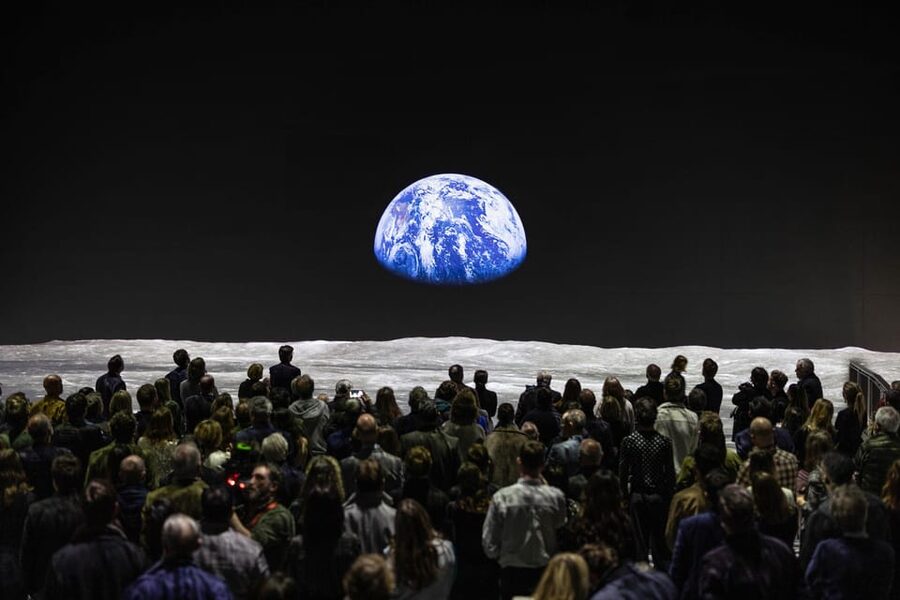
The room itself is one of the main reasons to choose this experience. Lightroom was built for large-scale projection, allowing images to cover the walls and give the film a sense of physical size.
That can make familiar Apollo footage feel different. A launch, spacecraft, or lunar view has more visual weight when it fills the room. Anne Nikitin’s original score adds another layer, helping the film move between excitement, danger, reflection, and anticipation.
I would treat the music as more than background sound. A strong score can guide your attention when the screen contains several images or when the film shifts from historical footage to present-day interviews. If you are sensitive to volume or prefer quiet museum displays, the combination of powerful audio and large projections may feel intense.
The format also has a practical advantage. You do not need to read long panels or keep up with a guide. You can settle into the presentation and follow the story through Hanks’s narration, the images, and the score.
The tradeoff is that cinema-style viewing limits your control. You cannot pause, return to an earlier section, or spend extra time studying a particular image. The film follows its own pace for the full 50 minutes.
From Apollo to Artemis
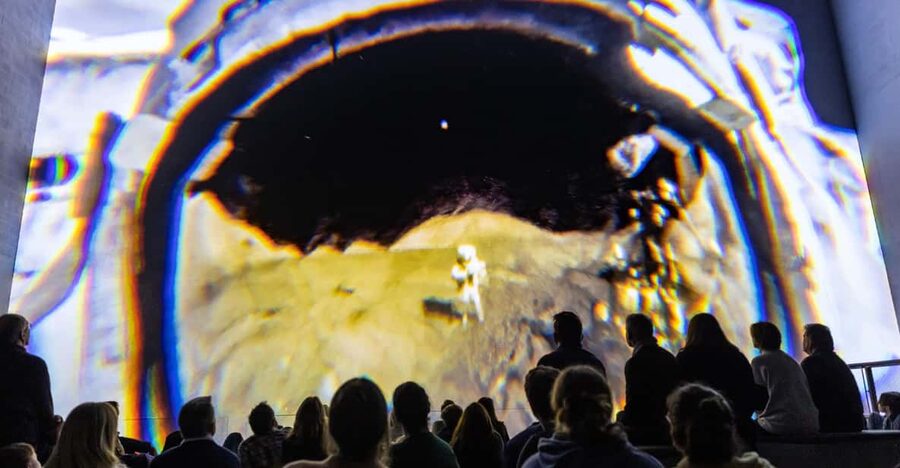
The most useful idea in The Moonwalkers is the connection between past and future. After telling the Apollo story, the film turns toward Artemis, the programme connected with the return of crewed missions to the lunar surface.
This section goes behind the scenes of Artemis and includes interviews between Tom Hanks and Artemis astronauts. Those conversations give the programme a human voice and help connect the technology with the people expected to use it.
For you, this means the experience is not simply a nostalgia trip. Apollo remains the main historical subject, but Artemis gives the closing part a present-day purpose. The film asks you to think about what lunar exploration may look like next, not just what happened decades ago.
The Artemis section will likely appeal most if you enjoy the planning and people behind spaceflight. It is not presented as a technical training session, and the supplied details do not promise a full engineering breakdown. Think of it as a behind-the-scenes look with astronaut interviews, placed within a broader story.
The link between the two programmes also helps prevent the experience from feeling dated. Apollo footage has enormous historical power, but by itself it could leave you looking backward. Artemis changes the direction of the story and gives the final portion a sense of movement toward the future.
Something completely different for your London days:
- London: The London Eye Entry Ticket
★ 4.6 · 35,875 reviews - From London: Harry Potter Warner Bros Studio Tour
★ 4.7 · 26,588 reviews - London: Westminster to Greenwich River Thames Cruise
★ 4.5 · 22,836 reviews - Magical London: Harry Potter Guided Walking Tour
★ 4.7 · 22,044 reviews
Christopher Riley and Anne Nikitin’s contributions
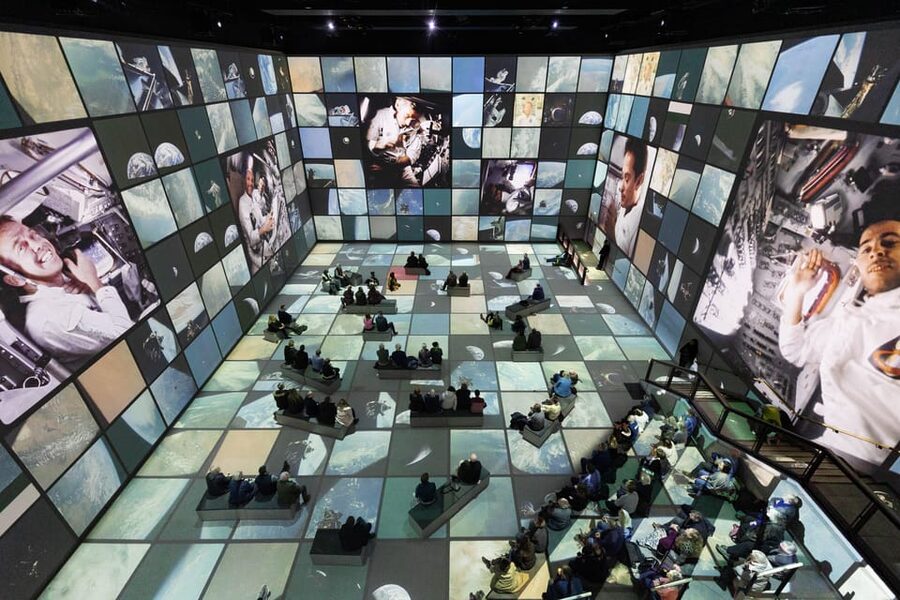
Tom Hanks is the best-known name attached to the project, but he did not create it alone. He co-wrote The Moonwalkers with Christopher Riley, a double BAFTA-nominated writer-director whose work includes major space films and television programmes for the BBC, Netflix, and PBS.
That writing partnership matters because the subject needs clear shaping. Apollo contains a huge amount of material, and a 50-minute presentation must select its moments carefully. Riley’s background in space programming suggests a focus on storytelling rather than a simple montage of famous images.
Anne Nikitin provides the original score. Her music gives the film its own identity and helps it work as a complete presentation rather than a collection of old clips.
You should still see the names as part of the creative team, not as a promise of live appearances. Tom Hanks narrates the presentation, but the supplied information does not say that he attends the show in person. Book this as a narrated film, not a meet-and-greet or stage event.
The 50-minute schedule and seating
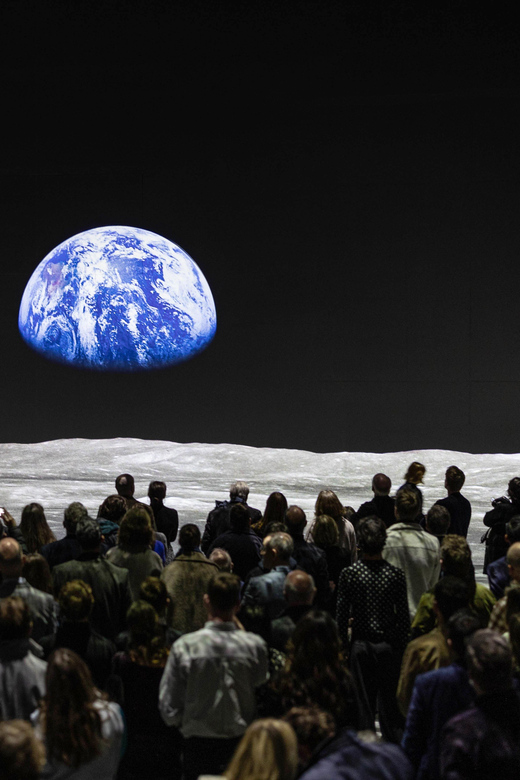
The audio-visual presentation lasts 50 minutes, while the booking duration is listed as one hour. That extra time gives you a little breathing room around the screening, but you should not plan on a half-day activity.
This short length can work well in a London itinerary. You can pair it with another activity before or afterward without giving up a large block of your day. It also suits families or companions who want a clear, contained experience rather than several hours in a museum.
The same length creates the biggest value question. At $33.67 per person, a 50-minute presentation costs more than a standard cinema ticket. You are paying for the specially designed room, the projection technology, the sound, the Tom Hanks narration, and the original score.
I would book it at that price if the format is exactly what you want. If you mainly want to watch Apollo footage, you may feel the experience is expensive. One practical opinion in the supplied feedback puts £10 closer to the perceived value, which tells you how sharply the price may divide people.
Seating deserves attention. One person specifically wanted chairs with backrests. The experience may still be comfortable for many people, but you should not assume traditional cinema seats. If back support is important, contact Lightroom before booking rather than discovering the arrangement when you arrive.
Who will get the most from this experience
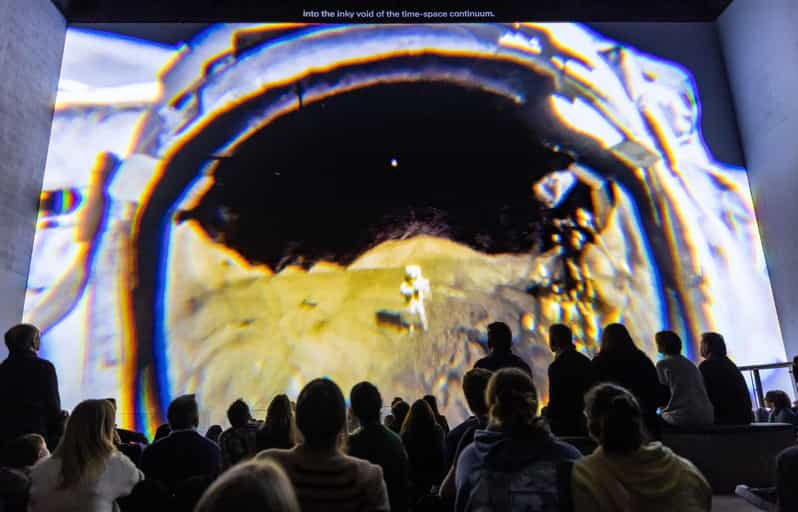
The Moonwalkers suits people who enjoy space history but do not want a technical museum tour. You can follow the main story through narration and images, even if you do not already know every Apollo mission.
It is also a good match for:
- Fans of Tom Hanks and his space-related work
- Families looking for a short educational activity
- Visitors interested in the link between Apollo and Artemis
- People who respond to music, projection, and cinematic storytelling
- Anyone who wants a weather-proof London attraction lasting about an hour
I would be more cautious if you want a detailed spacecraft exhibition or a hands-on activity. The information supplied describes no physical artefacts, workshops, simulator sections, or live speaker. This is a watching experience, and that should guide your decision.
It may also suit a mixed group. Someone deeply interested in Apollo can focus on the mission story, while someone less familiar with space exploration can simply follow the images, narration, and astronaut interviews. The short running time reduces the risk of fatigue.
Price, flexibility, and practical details
The listed price is $33.67 per person. Since the supplied feedback refers to a £25 cost, check the live currency and final total before paying. Food, drinks, and merchandise are not included, so allow for those separately if you want them.
The booking terms are helpful if your London schedule is not fixed. You can reserve now and pay later, and cancellation is free up to 24 hours in advance for a full refund. Check the available start times before arranging other plans, since the experience runs at set times rather than on a fully flexible drop-in basis.
The activity is wheelchair accessible. Flash photography is not allowed, which protects the viewing environment and avoids sudden bursts of light during the screening.
The group type is listed as small, with a limit of nine participants. That is an unusual detail for a large projection experience. It may give the session a less crowded feel, but the supplied information does not explain the seating layout or whether the limit applies to every showing, so check the booking details for your date.
How to decide if the film format suits you
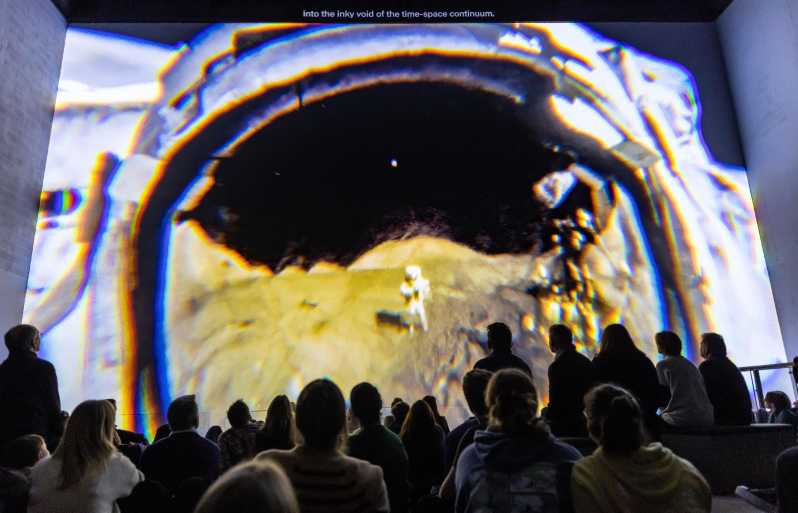
Ask yourself what you want the room to do for you. If you want Apollo images to surround you, sound to carry the emotional force, and one narrator to guide the story, the Lightroom format has a clear reason to exist.
If you want information at your own pace, the format is less flexible. You cannot linger over a display or choose which mission to study. The 50-minute running time also means that the film must move briskly through a subject that could easily fill a full museum.
I like the Apollo to Artemis structure because it gives the presentation a reason to look ahead. The astronaut interviews are especially important in that respect. They keep the story tied to people and plans, rather than ending with the familiar triumph of the first moon landing.
The strongest praised features are the overall quality of the presentation and the sense of spectacle. The main reservations are cost and seating comfort. Those are not minor points, because the experience is short and the ticket price is high for a film-style attraction.
Should you book The Moonwalkers?
Book it if you want a polished, cinematic hour about the Apollo missions, with Tom Hanks narrating, Anne Nikitin’s original music, huge projections, and a clear connection to Artemis. It is especially well suited to families, space enthusiasts, and anyone who values presentation as much as information.
Skip it if you expect a long exhibition, physical spacecraft displays, hands-on activities, or traditional cinema seating with guaranteed backrests. At $33.67, the experience earns its price only if the large-scale room and production style matter to you.
My practical call: check the seating details, confirm the start time, and decide if 50 minutes of film is enough for your budget. If the answer is yes, The Moonwalkers offers a focused way to revisit Apollo while keeping one eye on the next trip to the moon.
FAQ
How long does The Moonwalkers last?
The audio-visual presentation lasts 50 minutes. The listed activity duration is one hour, so allow about an hour overall.
Who narrates The Moonwalkers?
Tom Hanks provides the voiceover. He also co-wrote the presentation with Christopher Riley.
What subjects does the experience cover?
It tells the story of the Apollo missions and looks ahead to the Artemis programme, including interviews between Tom Hanks and Artemis astronauts.
Where does The Moonwalkers take place?
The experience takes place at Lightroom in Greater London, United Kingdom.
Is The Moonwalkers wheelchair accessible?
Yes. The activity is listed as wheelchair accessible.
Is photography allowed?
Flash photography is not allowed.
Can I cancel my booking?
Yes. You can cancel up to 24 hours in advance for a full refund. You can also reserve now and pay later.
Latest arrivals on the London list
- Easy Access Tower of London Royal Secrets & Scandals Tour★ 5.0 · 3 reviews
- Stonehenge Special Access Guided Morning Tour from London★ 4.5 · 3 reviews
- Shoreditch & East London Walking Tour with a Local, Custom & Private★ 5.0 · 3 reviews
- Madame Tussauds London Fast Track and Champagne Experience★ 3.5 · 3 reviews
- Private transfer from London Heathrow Airport to Southampton★ 5.0 · 3 reviews
- London Private Brixton Tour with a Local – Culture & Stories★ 4.9 · 3 reviews
- Private Full Day Tour – Fast Track Tower of London and Lunch★ 4.6 · 3 reviews
- London Soho District – Guided Walking Tour 12 guests 2,5h★ 4.8 · 3 reviews
Museums, compared.

Tower of London and Crown Jewels Exhibition Ticket
Read our review →
Chelsea Football Club Stadium and Museum Tour
Read our review →



Official tickets: Moco Modern & Contemporary Art Museum
Read our review →
British Museum London Guided Tour Semi-Private 8ppl Max
Read our review →
Browse the lists this tour appears in