
Reviewed · MUSEUMS
National Maritime Museum Private Tour
Greenwich’s National Maritime Museum holds two powerful objects side by side in spirit: Turner’s dramatic Battle of Trafalgar and the jacket Nelson wore when he was mortally wounded aboard HMS Victory. A private guide helps you connect those famous objects to Britain’s navy, trade, empire, and the darker story of slavery.
I like the private format, since your group can ask questions and spend more time on the displays that catch your eye. I also like the Queen’s House visit, where you see the Armada Portrait of Elizabeth I rather than spending the whole afternoon in one large museum.
The main drawback is time. Three and a half hours sounds generous, but the National Maritime Museum is large, and the tour covers several major subjects. If you arrive late or want to read every panel, you may need to choose between detail and breadth.
In This Review
- Key points at a glance
- Starting at the Ship in a Bottle in Greenwich
- Turner’s Battle of Trafalgar brings the naval story to life
- Nelson’s jacket makes a famous admiral feel human
- The Trade Gallery explains the East India Company’s reach
- Take the planned coffee and tea break
- The Atlantic Slavery gallery asks for your attention
- British lighthouses add a practical side to sea travel
- Queen’s House and the Armada Portrait
- What the private guide adds
- Is $237.59 per person good value?
- Who should book this Greenwich tour?
- Final verdict: book it for focus, not total coverage
- FAQ
- How long does the National Maritime Museum private tour last?
- What time does the tour start?
- Where do I meet the guide?
- Where does the tour finish?
- Is the tour private?
- What language is the tour offered in?
- Is admission to the National Maritime Museum included?
- Is admission to Queen’s House included?
- Are food and drinks included?
- Can children join the tour?
- How many people are required to book?
- Is the tour near public transportation?
- What physical fitness level is needed?
- Can I cancel for a full refund?
Key points at a glance
- Begin beside Nelson’s Ship in a Bottle: Meet at the southern, observatory-side entrance of the National Maritime Museum at 12:30 pm.
- See Nelson’s actual wounded jacket: The Nelson, Navy, Nation gallery gives the naval story a direct human link.
- Study Turner’s Battle of Trafalgar: The painting offers a dramatic look at one of Britain’s best-known naval victories.
- Face the history of Atlantic slavery: This gallery deals directly with England’s part in the slave trade and is an important, serious part of the route.
- Visit Queen’s House: The 45-minute stop includes Queen Elizabeth I’s Armada Portrait.
- Keep the afternoon personal: Only your own group takes part, with an English-speaking local guide.
Starting at the Ship in a Bottle in Greenwich
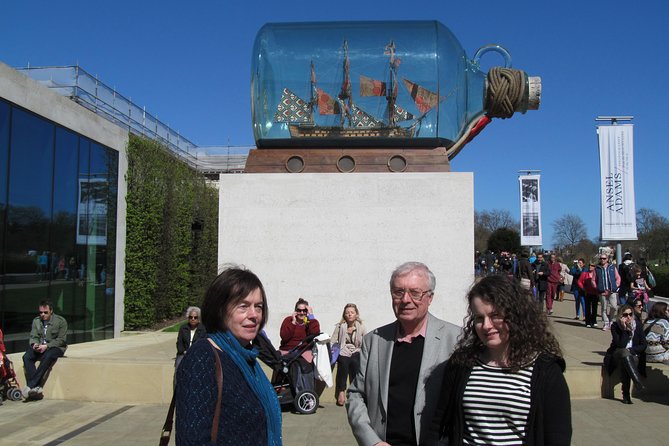
Your meeting point is Nelson’s Ship in a Bottle, at the southern entrance of the National Maritime Museum, on the side nearest the Royal Observatory. This is a useful landmark, but do not simply head toward any entrance marked museum. Look for the large bottle sculpture in the Herbaceous Border area, London SE10 8QY.
The start time is 12:30 pm. Since the tour lasts about three hours and 30 minutes and finishes back at the meeting point, you can plan it as a focused afternoon in Greenwich rather than a quick museum stop.
The private setup matters here. A large maritime museum can feel scattered if you walk through it without a plan. Your guide can set the order, explain why a painting matters, and adjust the pace for your group. Children must be with an adult, and at least two people are required to book.
You should expect a moderate amount of walking and standing. The museum and Queen’s House are near public transportation, so this is practical to pair with other Greenwich sights, but the tour itself does not include transport, food, or drinks.
More London museums to visit:
- Tower of London and Crown Jewels Exhibition Ticket
★ 4.5 · 6,677 reviews - London: Chelsea Football Club Stadium and Museum Tour
★ 4.8 · 4,576 reviews - Chelsea FC Stadium Tours and Museum
★ 5.0 · 1,908 reviews
Turner’s Battle of Trafalgar brings the naval story to life
The tour begins with J. M. W. Turner’s painting of the Battle of Trafalgar, painted in the early 1820s. This is a strong opening because it gives you a grand, emotional image before the route moves into objects and documents.
A guide’s narration is especially useful here. A painting of a famous battle can become a blur of ships, smoke, flags, and wounded men when you view it alone. With context, you can pay attention to the choices Turner made and to the way the battle was remembered in Britain.
I would give this section proper time, even if you are not an art specialist. You do not need to know naval painting to appreciate the scale of the scene. The value comes from seeing how art, national pride, and military memory overlap.
The drawback is that one painting cannot explain the whole battle or the full history of the Royal Navy. Think of it as a dramatic doorway into the museum, not a complete lesson by itself.
Nelson’s jacket makes a famous admiral feel human
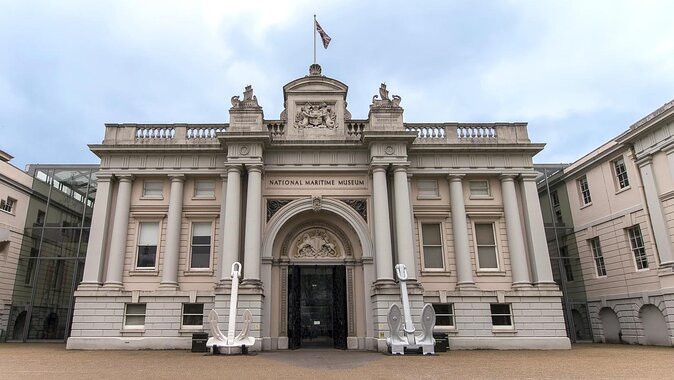
Next comes the Nelson, Navy, Nation gallery and the jacket worn by Horatio Nelson when he was mortally wounded aboard HMS Victory. This is one of the tour’s most affecting objects because it shifts the story from ships and strategy to one person’s final moments.
The jacket is not just naval clothing. It is a direct link to the Battle of Trafalgar and to the way Nelson’s death became part of Britain’s national story. You can expect the guide to use it as a point of connection between Nelson the commander and Nelson the man.
This is the kind of museum object that rewards a slower look. Details such as the cut of the coat, its condition, and the visible marks of use can carry more weight than a room full of general information.
If your family includes a teenager who prefers famous people and real objects to long text panels, this may be one of the easiest displays to connect with. The museum also has interactive material, though the amount of screen-based content may not satisfy every young visitor.
The Trade Gallery explains the East India Company’s reach
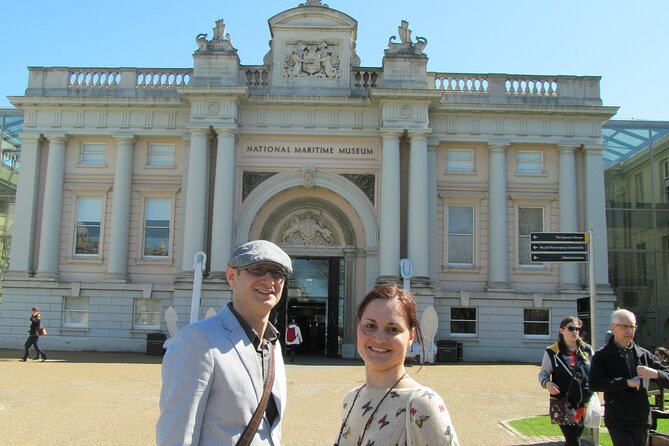
The Trade Gallery turns the route toward commerce with the Far East and the origins of that trade through the East India Company. This is an important change of focus. Britain’s maritime story was not only about battles. Ships also carried goods, money, people, power, and political influence.
I like this part because it helps you see naval history in a wider frame. Trade routes required ships, ports, protection, and administration. Those systems shaped daily life far beyond the deck of a warship.
The guide’s role is useful here, since trade history can become a list of names and goods without a clear thread. Ask questions if your group wants to understand how commercial ambition connected with Britain’s naval strength. The private format gives you room to do that.
Do not expect this one gallery to provide every detail about the East India Company or Britain’s dealings in Asia. It is one section of a much larger museum, and the tour has several more major stops ahead.
A few more London days worth a look
- The Premier Classic London: Private 4-Hour Tour in a Black Cab
★ 5.0 · 2,737 reviews - Stonehenge Inner Circle Private Tour from London with Bath Visit
★ 5.0 · 1,909 reviews - London: Tower of London Entry & Beefeater Private Audience
★ 4.4 · 1,441 reviews - Private Tour: Black Taxi Tour of London
★ 5.0 · 1,153 reviews
Take the planned coffee and tea break
About halfway through the tour, you have the chance to pause at the museum cafe for coffee or tea. Food and drinks are not included, so you should budget separately if you want something during the break.
This pause is more useful than it may sound. A museum route covering naval battles, trade, slavery, lighthouses, and royal portraiture asks for steady attention. A short sit-down can help children and adults reset before the more difficult material in the Atlantic Slavery gallery.
One past family outing included fish and chips at the cafeteria, which suggests the cafe can serve as more than a quick drink stop. Still, the exact food choice and available seating are not specified, so do not book this tour expecting a meal to be part of the package.
The break also creates a natural chance to tell your guide what your group wants from the remaining time. If you are especially interested in naval objects, you can ask for more explanation there. If the children are tiring, you may need to keep the second half moving.
The Atlantic Slavery gallery asks for your attention
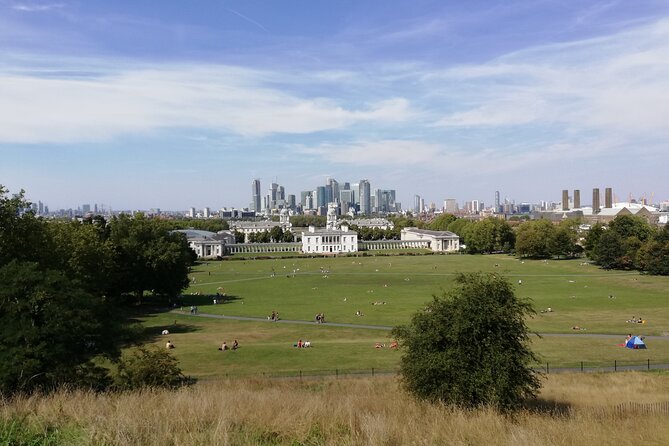
The Atlantic Slavery gallery presents the slave trade and England’s role in it directly. This is not a light or decorative stop, and it should not be treated as one.
Its importance is clear. A tour about Britain’s maritime power would be incomplete if it showed only heroic admirals, exploration, trade, and empire. The Atlantic slave trade was tied to commerce and British activity, and the gallery places that reality within the museum’s wider story.
Allow yourself time to absorb the material. The guide’s narration can help connect the displays to the earlier Trade Gallery, showing that maritime commerce had human costs as well as financial and political effects.
Families should judge this section for themselves. The tour is suitable for families and history buffs, but the subject is serious. Parents may want to prepare older children for the tone of the gallery rather than treating the whole afternoon as a carefree museum outing.
This is also where the private format has real value. Your group can ask questions without feeling exposed in front of a large crowd, and the guide can explain difficult points in plain language.
British lighthouses add a practical side to sea travel
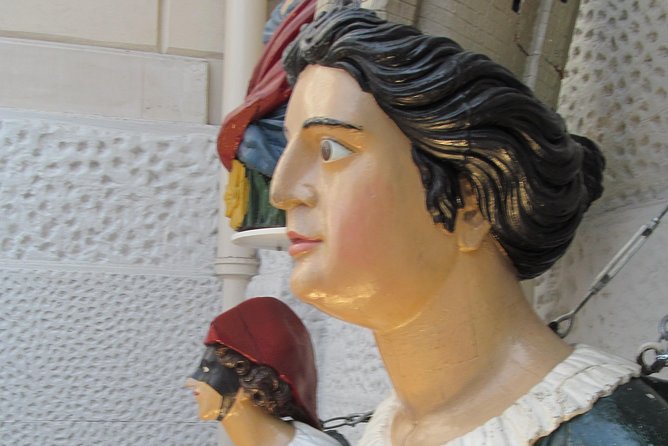
The route also covers lighthouses and their history in the United Kingdom. This is a welcome shift after the intensity of the slavery gallery.
Lighthouses show the practical side of maritime life. Naval victories and trade networks depend on ships reaching shore safely, and coastal lights helped sailors manage dangerous waters. The subject may appeal to children because it connects a familiar object to real problems at sea.
Do not expect a separate, full-length lighthouse tour. It is one part of the museum experience, included alongside the other galleries. Its value is in showing that maritime history includes engineering, navigation, safety, and coastal communities, not just famous commanders.
Queen’s House and the Armada Portrait
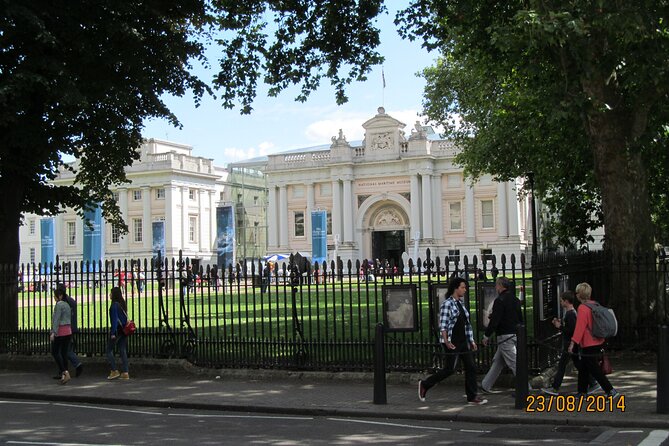
The final listed stop is Queen’s House, with a 45-minute visit included in the tour. The main prize is the Armada Portrait of Queen Elizabeth I, one of the best-known images associated with the Tudor monarch.
This changes the mood again. After ships, trade, naval conflict, and slavery, you move into a royal setting and look at how power was presented through portraiture. The Armada Portrait links Elizabeth directly to the defeat of the Spanish Armada and to the image of England as a strong sea power.
The 45-minute allocation should give you a focused visit rather than an attempt to see every part of Queen’s House. That is a sensible choice. You get a major artwork and a different kind of historical evidence without losing the afternoon to another large collection.
If you are mainly interested in the National Maritime Museum’s naval objects, Queen’s House may feel like a detour. I see it as a strength, though, because it widens the story. You are not only looking at what Britain did at sea, but also at how rulers and nations shaped the way those events were remembered.
What the private guide adds
The guide is the central reason to choose this experience over simply entering the museum on your own. Your English-speaking local guide supplies the thread between separate galleries and can point out why a particular coat, painting, trade display, or portrait deserves your attention.
The quality of a private tour depends partly on the individual guide. Graham has led a family tour praised for clear stories and helpful explanations, while Wendy has guided a shorter Greenwich route that included the Cutty Sark, the maritime museum, Queen’s House, and the Meridian. Those names come from related tour experiences, so you should not assume either person will lead your booking.
Still, the descriptions suggest the kind of guiding to expect: practical help, easy-to-follow stories, and an ability to make several Greenwich sights fit together. That can be especially helpful when your group has limited time.
You should also speak up. Tell the guide if your group cares most about Nelson, art, trade, slavery, exploration, or family-friendly displays. A private tour works best when it becomes a conversation rather than a fixed speech.
Is $237.59 per person good value?
At $237.59 per person, this is not a cheap museum visit. The National Maritime Museum itself has free admission, and the tour does not include food or drinks. The Queen’s House visit is included, but the biggest part of what you are paying for is the guide’s time and the private arrangement.
For two people, the cost is easier to justify if you value personal attention and want a clear route through a large museum. You are paying for roughly three and a half hours with your own group, not for a standard walk-through with strangers.
For a larger family, the total price rises quickly. If you enjoy reading every label and setting your own pace, independent entry may offer better value. If you have only one afternoon in Greenwich and want the main stories explained without getting lost in the galleries, the private tour can make better sense.
The free cancellation policy also gives you some planning protection. You can cancel for a full refund up to 24 hours before the local start time. Cancellations or changes made inside that window are not accepted for a refund.
Who should book this Greenwich tour?
I would point this tour toward families with older children, couples who want a private guide, and people who enjoy naval, imperial, royal, or maritime history. It also suits first-time visitors to Greenwich who want several major themes tied together in one afternoon.
History buffs should like the mix of original objects and large historical questions. You get Nelson’s jacket, Turner’s painting, East India Company trade, the Atlantic Slavery gallery, lighthouses, and Elizabeth I’s Armada Portrait.
The tour may be less suitable if you want a quiet, unhurried museum day. The collection is large, and three and a half hours cannot cover everything. One person who arrived late found there was so much to see that time ran out, which is a useful warning: arrive on time and expect a selection, not a complete museum survey.
Final verdict: book it for focus, not total coverage
Book this tour if you want a personal guide to explain the major objects and connect Britain’s naval power with trade, royal image-making, and slavery. The Nelson jacket and Turner painting give you memorable anchors, while Queen’s House adds a strong artistic and political finish.
Skip it if your main goal is maximum value from a free museum or if you prefer to explore at your own speed. At this price, the guide must matter to you.
For most people who have one afternoon in Greenwich, the private format is the main advantage. Arrive early, meet at the Ship in a Bottle, bring questions, and accept that you will see the museum’s key themes rather than every display.
FAQ
How long does the National Maritime Museum private tour last?
The tour lasts approximately three hours and 30 minutes.
What time does the tour start?
The tour starts at 12:30 pm.
Where do I meet the guide?
Meet at Nelson’s Ship in a Bottle, beside the southern, observatory-side entrance of the National Maritime Museum, at Herbaceous Border, London SE10 8QY.
Where does the tour finish?
The activity ends back at the meeting point.
Is the tour private?
Yes. Only your own group takes part in this private activity.
What language is the tour offered in?
The tour is offered in English.
Is admission to the National Maritime Museum included?
The National Maritime Museum portion lists admission as free.
Is admission to Queen’s House included?
Yes. The 45-minute Queen’s House visit includes admission.
Are food and drinks included?
No. Food and drinks are not included. A coffee or tea break at the museum cafe is available during the tour, with purchases made separately.
Can children join the tour?
Yes. Children can join, but they must be accompanied by an adult.
How many people are required to book?
A minimum of two people per booking is required.
Is the tour near public transportation?
Yes. The meeting area is near public transportation.
What physical fitness level is needed?
A moderate level of physical fitness is recommended.
Can I cancel for a full refund?
Yes. You can cancel at least 24 hours before the experience start time for a full refund. Cancellations or changes made less than 24 hours before the start time are not accepted for a refund.
Latest arrivals on the London list
- Easy Access Tower of London Royal Secrets & Scandals Tour★ 5.0 · 3 reviews
- Stonehenge Special Access Guided Morning Tour from London★ 4.5 · 3 reviews
- Shoreditch & East London Walking Tour with a Local, Custom & Private★ 5.0 · 3 reviews
- Madame Tussauds London Fast Track and Champagne Experience★ 3.5 · 3 reviews
- London Private Brixton Tour with a Local – Culture & Stories★ 4.9 · 3 reviews
- Private Full Day Tour – Fast Track Tower of London and Lunch★ 4.6 · 3 reviews
- Private transfer from London Heathrow Airport to Southampton★ 5.0 · 3 reviews
- London Soho District – Guided Walking Tour 12 guests 2,5h★ 4.8 · 3 reviews
Museums, compared.
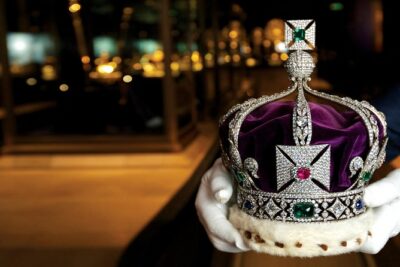
Tower of London and Crown Jewels Exhibition Ticket
Read our review →
Chelsea Football Club Stadium and Museum Tour
Read our review →
Official tickets: Moco Modern & Contemporary Art Museum
Read our review →
British Museum London Guided Tour Semi-Private 8ppl Max
Read our review →
Browse the lists this tour appears in