
Reviewed · BRITISH MUSEUM TOURS
Private Highlights Tour of the British Museum
The most interesting feature here is the freedom to shape your museum visit around your own questions. Instead of being marched past a fixed list of objects, you begin by telling your guide what catches your attention, then move across continents and thousands of years with the route adjusted as you go. The guide also addresses the harder stories behind famous objects, including questions of ownership and removal.
I love the private format, which gives your group room to ask questions without competing with strangers. I also like the guide’s lively range, from Egyptian mummies and Assyrian guards to the wonderfully odd FeeJee Mermaid. The main consideration is the price: $468.78 for up to 10 people is fair for a full group, but expensive for one or two.
In This Review
- Key points to know before you book
- A private start at Montague Place
- The Rosetta Stone and the problem with famous objects
- The Parthenon Sculptures and contested heritage
- British stories from Sutton Hoo to Vindolanda
- The Lewis Chessmen and the Standard of Ur
- Egyptian mummies and Ramesses II
- Objects that reward curiosity, from Tara to Ife
- The Aztec Double-Headed Serpent and Hoa Hakananai’a
- Portland Vase, Assyrian guards, and the museum’s stranger side
- How much value do you get for $468.78?
- Who will enjoy this British Museum tour most?
- Should you book it?
- FAQ
- How long does the private British Museum tour last?
- How much does the tour cost?
- Is British Museum admission included?
- Where does the tour start?
- Where does the tour finish?
- Is the tour private?
- What language is the tour offered in?
- Can the tour be customized?
- Is cancellation free?
Key points to know before you book
- Your interests shape the three-hour route, with a chance to request a particular subject or gallery.
- The group is private, so only your party takes part, with space for questions and conversation.
- The guide tackles difficult history, not just the museum’s most famous objects.
- Entry is free, and the guide uses a lesser-known entrance at Montague Place.
- The route covers major objects across many cultures, including the Rosetta Stone, Sutton Hoo, the Lewis Chessmen, and the Standard of Ur.
- A full group gets the best value, since the $468.78 price covers as many as 10 people.
A private start at Montague Place
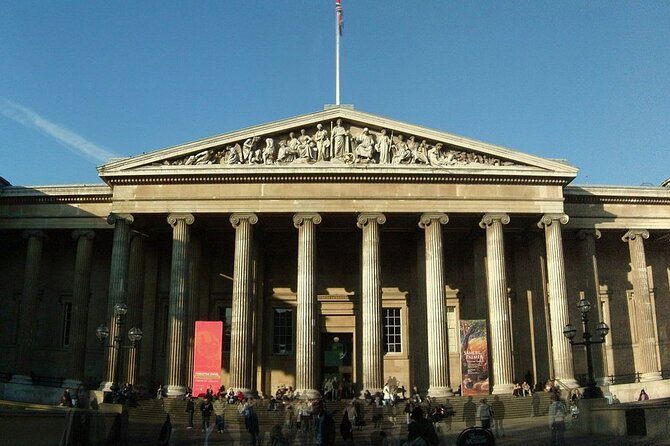
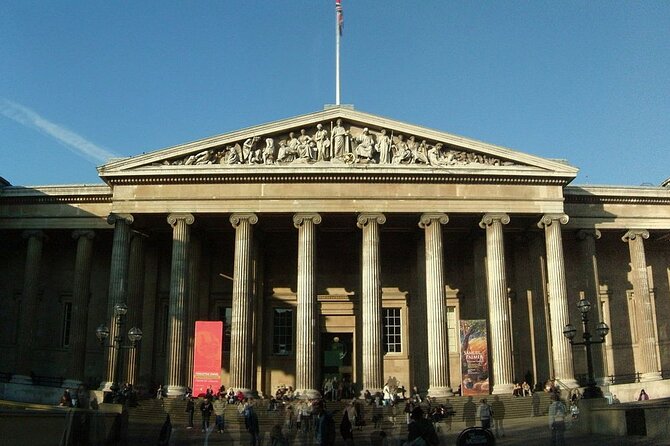
Meet your guide at Montague Place, London, before entering the British Museum through a lesser-known entrance. That small detail matters. The British Museum can feel confusing on a first visit, and beginning with someone who knows where to go saves time that you can spend with the objects.
The tour lasts about three hours and finishes inside the museum on Great Russell Street. You are not simply dropped back at the starting point, so plan the rest of your day from the museum itself. This is useful if you want to continue exploring on your own, though it means you should not expect a guided return to Montague Place.
At the start, your guide asks what interests you. You might care most about ancient Egypt, archaeology, empire, mythology, death, art theft, British history, or unusual objects. The guide can then give more attention to those subjects, although the tour still includes the major highlights.
That opening conversation is one of the best reasons to choose a private tour. A family with teenagers may need a different pace from a pair of museum regulars. A local Londoner may want a fresh way into familiar galleries, while a first-time visitor may need help deciding what deserves attention in a building packed with material.
More British Museum visits:
- London: British Museum Guided Tour
★ 4.3 · 1,182 reviews - British Museum London Guided Tour Semi-Private 8ppl Max
★ 5.0 · 984 reviews - London: Tour of the British Museum
★ 4.1 · 678 reviews
The Rosetta Stone and the problem with famous objects
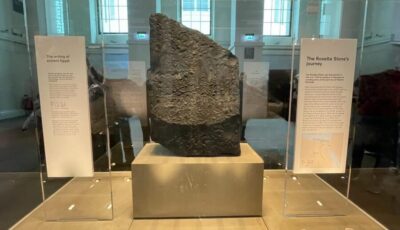
The Rosetta Stone is an obvious first anchor for a British Museum tour. It is famous for its role in helping scholars read Egyptian hieroglyphs, but the object also opens the door to broader questions about collecting, conquest, and who has the right to hold important cultural material.
That is the tone promised by this experience. You are not only told what an object is. You are also encouraged to think about how it reached London and why some museum displays remain controversial.
The guide specifically does not avoid difficult topics. That is valuable at the British Museum, where many celebrated works have complicated ownership stories. You should expect a conversation that treats the museum as both a remarkable storehouse and a place shaped by imperial collecting.
For a child or teenager, the Rosetta Stone can be a good starting point because its importance is easy to grasp. For an adult with a strong interest in cultural heritage, it may lead to a more detailed discussion about museums, national identity, and contested objects. The private setting lets you decide how far that conversation goes.
The Parthenon Sculptures and contested heritage
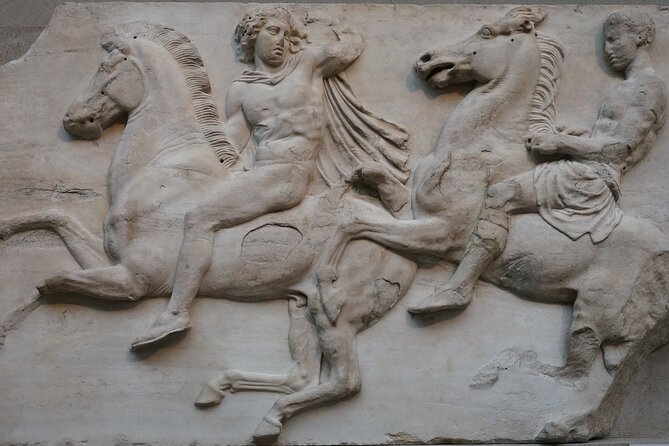
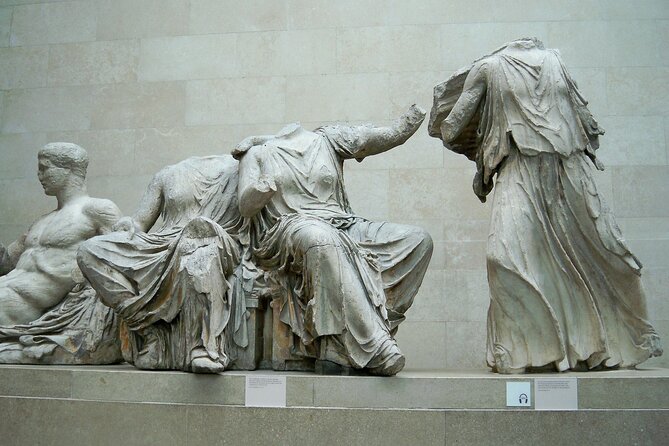
The Parthenon Sculptures, often called the Elgin Marbles, are among the museum’s best-known displays. They are also among its most debated. Their presence gives the guide a clear chance to explain why museum objects can be admired as art while still raising serious questions about removal and ownership.
This is not a tour for someone who wants only a quick list of dates and names. The guide is expected to discuss the controversy behind certain items, and the Parthenon Sculptures are central to that approach.
You will likely find this stop most useful if you want context rather than a photo opportunity. The private format makes it easier to ask direct questions without worrying about slowing down a public group. It also means you can compare the museum’s presentation with your own views.
The drawback is that three hours passes quickly. If the Parthenon Sculptures prompt a long discussion, your guide may need to move faster elsewhere. Tell the guide early if you want extra time in a particular gallery.
British stories from Sutton Hoo to Vindolanda
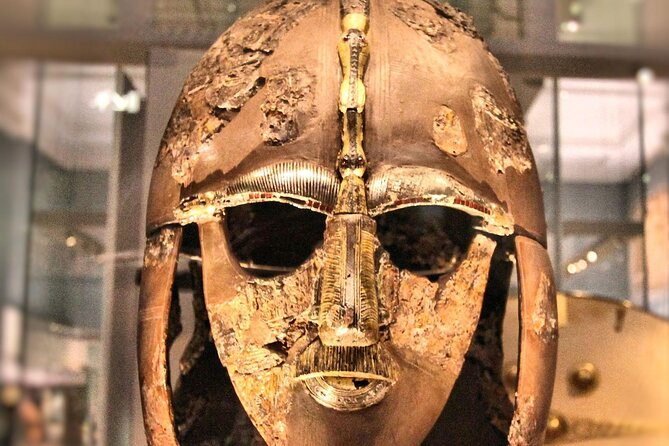
The tour does not treat the British Museum as a place devoted only to Egypt, Greece, or Rome. Sutton Hoo brings early medieval England into the route, while the Vindolanda Tablets offer a direct connection to life on the Roman frontier.
These objects can help you see British history in a wider setting. The museum’s collection is not arranged as one simple national story. Instead, it links Britain with the wider world, showing how objects from different regions can raise similar questions about trade, power, writing, burial, and daily life.
The Vindolanda Tablets are especially appealing if you like the human side of ancient history. Their value is not just that they are old. They offer a more personal route into the past, and a guide can explain why written records matter alongside grand statues and royal treasures.
Sutton Hoo gives the tour another change of pace. It is a useful stop for anyone interested in burial customs, leadership, or early British archaeology. If your group includes children, these displays may work better when the guide turns them into a story rather than a list of facts.
More London museums to visit:
- Tower of London and Crown Jewels Exhibition Ticket
★ 4.5 · 6,677 reviews - London: Chelsea Football Club Stadium and Museum Tour
★ 4.8 · 4,576 reviews - Chelsea FC Stadium Tours and Museum
★ 5.0 · 1,908 reviews - London Transport Museum Entrance Ticket
★ 4.5 · 1,323 reviews
The Lewis Chessmen and the Standard of Ur
The Lewis Chessmen are small, memorable, and easy to enjoy. Their carved faces make them among the most approachable objects on the tour, even for someone who does not think of themselves as a museum person. They also show how a familiar game can offer a route into medieval life, craft, and storytelling.
The Standard of Ur takes you much farther back and into a different part of the world. It gives the guide a chance to compare how societies represented conflict, ceremony, work, and social order. Seeing it alongside British, Egyptian, and Greek objects helps you understand the museum’s global reach.
I like this pairing because the two stops are visually and emotionally different. The Lewis Chessmen have an almost comic quality, while the Standard of Ur feels more formal and ceremonial. A good guide can use that contrast to keep the group alert during a long museum walk.
The museum is large, and no three-hour tour can give equal attention to every object. If these two displays matter most to you, say so at the beginning. The tour is designed to be adjusted, not followed as a rigid script.
Egyptian mummies and Ramesses II
Egyptian mummies are among the British Museum’s most requested sights. They offer a direct and often startling connection to ancient beliefs about the body, death, and the afterlife. The macabre side of the collection is part of the appeal here, and the guide is comfortable pointing out the strange as well as the beautiful.
Ramesses II adds a grand public face to the Egyptian section. A large royal statue can make ancient power feel immediate, but it is more useful when placed beside the everyday and funerary material. The contrast between a ruler presented at monumental scale and the remains of ordinary people gives you a broader view of Egyptian society.
This section suits history buffs who want more than isolated facts. You can ask how rulers shaped their public image, how burial practices worked, or why Egyptian objects have such a strong hold on modern museum culture. The guide’s background in Cultural Heritage and Museum Studies should be particularly useful when the conversation turns from what an object is to how it is displayed.
If you are sensitive to human remains, keep in mind that mummies are included among the featured highlights. The information provided does not specify a separate alternative route, so raise any concerns when the tour begins.
Objects that reward curiosity, from Tara to Ife
The Statue of Tara and the Ife Head bring very different artistic traditions into the same three-hour route. They also remind you that the British Museum cannot be understood through European and Egyptian objects alone.
The Statue of Tara gives the guide an opportunity to discuss religious art and representation. The Ife Head offers a chance to consider portraiture, technical skill, and the way African art has been presented and interpreted by Western museums.
These stops may be especially useful if you want the tour to move beyond the most photographed rooms. The guide can connect them to wider issues in cultural heritage without making the visit feel like a classroom lecture.
The private group helps here. You can ask a basic question without feeling out of place, or spend longer on a work that you had not expected to like. That freedom is harder to get on a large group tour, where the guide must keep everyone moving at the same pace.
The Aztec Double-Headed Serpent and Hoa Hakananai’a
The Aztec Double-Headed Serpent is one of the collection’s most striking objects. Its form is memorable, but the real value of a guided visit is the context around it. The guide can help you connect material, symbolism, and cultural meaning rather than leaving you with a quick glance and a label.
Hoa Hakananai’a introduces another set of questions about sacred objects and collecting. Its presence in London can lead naturally into discussion about how objects move from their original communities into major international museums.
These are the kinds of stops that can make a private museum tour feel less predictable. You may arrive expecting the Rosetta Stone and the mummies, then find that an object from a different gallery becomes the one you remember best.
The guide’s willingness to discuss controversy matters here. You are given room to admire the workmanship while also considering what has been lost, changed, or disputed when objects are removed from their original setting.
Portland Vase, Assyrian guards, and the museum’s stranger side
The Portland Vase shows a more delicate side of the collection. It gives the tour a chance to shift from monumental stone and human remains to fine craftsmanship and close looking.
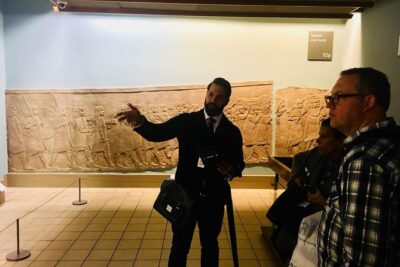
The Assyrian guards bring back the scale. Monumental figures at an entrance or gallery can make a museum visit feel physical, not just intellectual. They also provide a useful way to talk about royal power, protection, and the role of art in public spaces.
Then comes the FeeJee Mermaid, an object that belongs to the museum’s stranger and more macabre side. Its inclusion tells you something about the tone of the tour. This is not a solemn procession through only the grandest masterpieces. The guide is ready to point out objects that are curious, unsettling, or downright odd.
That variety is a strength for mixed groups. Adults interested in museum ethics can engage with the difficult questions, while younger visitors may perk up when the route turns toward the bizarre. A group of 10, including teenagers, has been handled successfully by Jessica, whose descriptions and stories kept the whole party involved.
How much value do you get for $468.78?
The price is $468.78 per group, with up to 10 people included. At the maximum group size, that works out to about $46.88 per person. The British Museum itself has free admission, so you are paying for the private guide, planning, interpretation, and access through a lesser-known entrance, not for a museum ticket.
For a group of relatives or friends, the cost can make good sense. Ten people sharing one private booking usually get more value than ten separate places on a premium small-group experience. It also lets your group choose the emphasis instead of accepting a standard route.
For two people, the calculation is different. The total cost is still $468.78, so this becomes a special-purpose experience rather than a low-cost museum visit. You may find it worthwhile if the British Museum is a major reason for your London trip, if you want expert guidance, or if you have a specific subject you want to pursue.
The three-hour length is another part of the value. It is long enough to create a clear framework for the museum without trying to cover every room. You will still need more time if you want to inspect the full collection afterward.
Who will enjoy this British Museum tour most?
This tour suits history buffs, museum fans, and people who want to ask questions about cultural heritage. It is also a good choice for London locals who have visited before but want a fresh route through familiar galleries.
Families may find the private format helpful. The guide can adjust explanations for adults and teenagers, and the confirmed group experience with Jessica included 10 family members. That does not guarantee a particular guide for your booking, but it shows the format can handle a large family party.
The tour is less suitable if you want complete independence or prefer to wander without a schedule. It is also not the best match for someone who wants to see every major gallery in detail. Three hours and a large museum require choices.
Most travelers can participate, service animals are allowed, and the museum is near public transportation. The tour is offered in English only. Confirmation is provided at booking, and free cancellation is available until at least 24 hours before the start time. Changes or cancellations inside that window are not accepted for a refund.
Should you book it?
Book this private tour if you want the British Museum to feel less like a huge catalogue and more like a guided conversation. The strongest reasons are the custom route, the private group, and the guide’s willingness to discuss controversial objects instead of smoothing over the difficult parts.
I would choose it for a family group, a circle of history-minded friends, or a visitor with a clear interest in one culture or subject. The value is strongest when you can fill most of the 10 places. If you are alone or traveling as a couple on a tight budget, use the museum’s free entry and explore independently instead.
For the best result, arrive ready to name two or three subjects you care about. Ask for extra attention to a specific gallery if you have one in mind, and remember that the tour ends inside the museum. That small bit of planning will help your three hours feel purposeful rather than rushed.
FAQ
How long does the private British Museum tour last?
The tour lasts approximately three hours.
How much does the tour cost?
The price is $468.78 per group, with up to 10 people included.
Is British Museum admission included?
The guide provides free entry to the British Museum through a lesser-known entrance. The tour information lists admission as free.
Where does the tour start?
The meeting point is Montague Place, London, UK.
Where does the tour finish?
The tour finishes inside the British Museum at Great Russell Street, London WC1B 3DG.
Is the tour private?
Yes. Only your group participates in the activity.
What language is the tour offered in?
The tour is offered in English.
Can the tour be customized?
Yes. At the beginning, you discuss your interests with the guide, and the route can be shaped around particular subjects or galleries. You can also contact the provider about a fully bespoke focus.
Is cancellation free?
Yes. You can cancel at least 24 hours before the experience start time for a full refund. Cancellations or changes made less than 24 hours before the start time are not refunded or accepted.
Latest arrivals on the London list
- Easy Access Tower of London Royal Secrets & Scandals Tour★ 5.0 · 3 reviews
- Stonehenge Special Access Guided Morning Tour from London★ 4.5 · 3 reviews
- Shoreditch & East London Walking Tour with a Local, Custom & Private★ 5.0 · 3 reviews
- Madame Tussauds London Fast Track and Champagne Experience★ 3.5 · 3 reviews
- London Private Brixton Tour with a Local – Culture & Stories★ 4.9 · 3 reviews
- Private Full Day Tour – Fast Track Tower of London and Lunch★ 4.6 · 3 reviews
- Private transfer from London Heathrow Airport to Southampton★ 5.0 · 3 reviews
- London Soho District – Guided Walking Tour 12 guests 2,5h★ 4.8 · 3 reviews
British Museum Tours, compared.
British Museum London Guided Tour Semi-Private 8ppl Max
Read our review →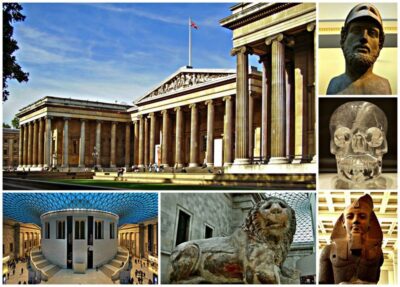
British Museum Audio Tour & Priority Entrance Ticket
Read our review →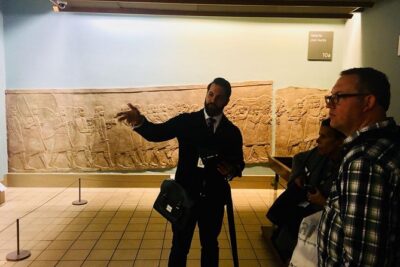
The British Museum London – Exclusive Guided Museum Tour
Read our review →
Browse the lists this tour appears in