
Reviewed · BRITISH MUSEUM TOURS
Private London British Museum Tour for Kids and Families
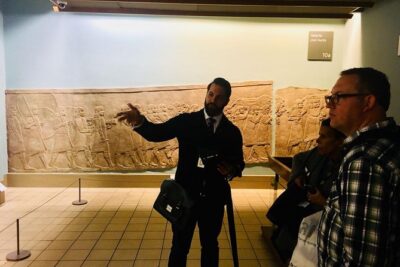
The British Museum can feel like a history book exploded across several floors. This private tour gives your family a clear route through the chaos, using games, questions, stories, and short explanations to make ancient objects meaningful to children. You focus on major displays instead of wandering until everyone is tired.
I like the private guide, because the pace and conversation can suit your own children. I also like the smart selection of highlights, especially Ginger the 5,400-year-old mummy, the Rosetta Stone, Ramses II, the Parthenon Sculptures, and the Sutton Hoo treasure. The main drawback is the price: at $247.40 per person, this is a serious splurge, especially for a larger family.
- Ginger the mummy: Meet one of the museum’s most memorable Egyptian displays, a naturally preserved body dating back about 5,400 years.
- Games and quizzes: Guides such as Vicky use questions and activities to keep children involved rather than simply asking them to listen.
- A private 2.5-hour route: Your guide can focus on your group instead of following a fixed crowd.
- Big museum, small bite: The tour selects major objects from 6,000 years of human history rather than trying to cover everything.
- Morning or afternoon choices: The two start-time options help you fit the museum around meals and other London plans.
- Strong family focus: Guides including Jeremy, Lucy, Alexandra, Larry, Tim, and Denisa have been praised for adjusting explanations to different ages.
In This Review
- Why a private British Museum tour helps
- Meeting outside Great Russell Street
- Egyptian galleries: mummies, pharaohs, and the Rosetta Stone
- Greek sculpture and the Parthenon story
- Sutton Hoo and the medieval world
- Games, stories, and the art of holding a child’s attention
- What the $247.40 price really buys you
- Timing, crowds, and practical limits
- The families who will get the most from it
- Should you book the private British Museum tour?
- FAQ
- Where does the tour begin?
- Where does the tour end?
- How long does the tour last?
- What age is this tour suitable for?
- Is the tour private?
- What language is offered?
- Which museum highlights are included?
- Are museum galleries guaranteed to be open?
- What is included in the price?
- Can I cancel for a refund?
Why a private British Museum tour helps
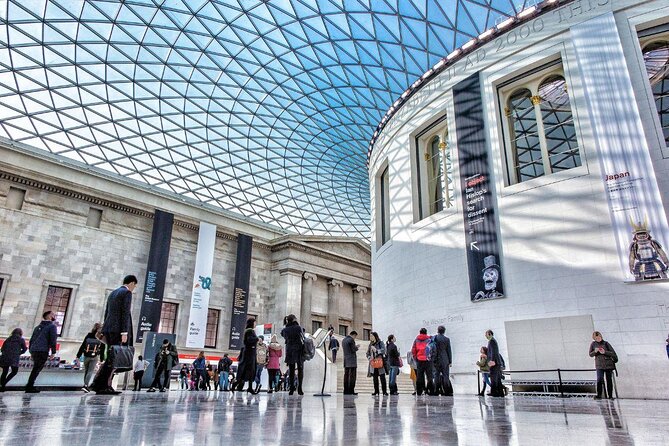
The British Museum is free to enter, but free does not mean easy. The collection covers roughly 6,000 years of human history, and its galleries can be hard to connect without a plan. A child may see an Egyptian statue, Greek sculpture, and medieval treasure as unrelated objects. A good guide supplies the thread between them.
That is the real purpose of this experience. You are not paying simply to walk into the museum. You are paying for a route, interpretation, crowd management, and someone who knows how to turn a display case into a story your child can remember at dinner.
The private format matters most when children are different ages. A six-year-old may need a game or a mystery, while a 12-year-old can handle more detail. Adults can ask questions without worrying about slowing down another group. The guides named in the feedback, including Jeremy, Alexandra, Darcy, Larry, Lucy, Marina, Catherine, Tim, Ainura, and Denisa, are repeatedly praised for adjusting their style to the children in front of them.
You should still keep your expectations sensible. This is a highlights tour, not a leisurely examination of every room. The museum is far too large for that in two and a half hours. If you want to linger over minor objects, read every label, or follow your own specialist interest, exploring alone afterward may suit you better.
Meeting outside Great Russell Street
The tour begins outside the British Museum at Great Russell Street, London WC1B 3DG. It ends back at the same meeting point, so you do not need to arrange transport from a distant final stop.
The museum is near public transportation, which makes it a practical choice for a London sightseeing day. The experience offers morning and afternoon options, a useful detail when you are balancing breakfast, jet lag, theatre tickets, or a full day of sightseeing.
Allow a little mental space before the tour begins. One family found that the guide helped make the entrance wait feel shorter on a rainy morning, while another guide started involving the children before they were fully inside. Those details matter with young children. A good start can decide whether the next two hours feel like an adventure or a forced march.
The tour is offered in English, and a mobile ticket is provided. Children must be accompanied by an adult. Service animals are allowed, and the activity is described as suitable for most participants, with a recommended minimum age of five.
More British Museum visits:
- London: British Museum Guided Tour
★ 4.3 · 1,182 reviews - British Museum London Guided Tour Semi-Private 8ppl Max
★ 5.0 · 984 reviews - London: Tour of the British Museum
★ 4.1 · 678 reviews
Egyptian galleries: mummies, pharaohs, and the Rosetta Stone

The Egyptian section is the natural opening act. It is described as the widest in Europe, so your guide’s selection is especially useful here. Instead of trying to see every case, you concentrate on objects that give children an immediate way into ancient Egypt.
Ginger, the 5,400-year-old mummy, is one of the clearest examples. A child does not need a long lecture to grasp the basic wonder of seeing a person preserved for thousands of years. The object creates an opening for your guide to explain burial customs, daily life, and what archaeologists can learn from human remains.
The monumental statue of Ramses II provides a different kind of impact. Its size helps children understand royal power before they know much about Egyptian government or religion. You can look at the scale, posture, and carved details, then connect those features to the image of a pharaoh.
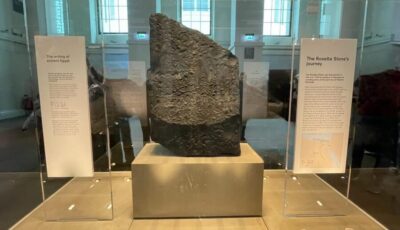
The Rosetta Stone is another essential stop. The key idea is wonderfully simple: the same message was written in more than one script, helping scholars work out Egyptian hieroglyphics. A child can understand it as a code-breaking story, while adults can appreciate the language and archaeology behind it.
This is where the family format earns its keep. Guides can ask children what they notice first, turn hieroglyphics into a puzzle, or invite them to guess why an object mattered. Reviews repeatedly praise this approach, with children described as staying involved through stories and questions rather than being left behind by a formal lecture.
Greek sculpture and the Parthenon story
The route then moves into the Greek galleries and the Parthenon Sculptures. These works allow the guide to shift from mummies and pharaohs to temples, gods, athletes, and the ancient city of Athens.
The sculptures are visually powerful, but their story can be complicated. Your guide can help you look at the figures as part of a larger building rather than as isolated pieces of marble. That context is valuable for children, who may otherwise see a damaged statue and wonder why it deserves so much attention.
The tour’s goal is not to settle every debate surrounding the sculptures. It is to explain why they are important and how they came to be in a London museum. The supplied information does not promise access to private rooms, special collections, or behind-the-scenes areas. Do not book expecting that. One dissatisfied customer specifically had that impression, but this experience is a guided highlights visit through public museum spaces.
Crowds can make this section difficult at busy times, especially on a Saturday in July. Several guides are praised for moving groups through crowded galleries, but a private guide cannot make a packed room empty. If your children need room to sit, sketch, or stare quietly at one object, you may find the pace brisk.
Sutton Hoo and the medieval world

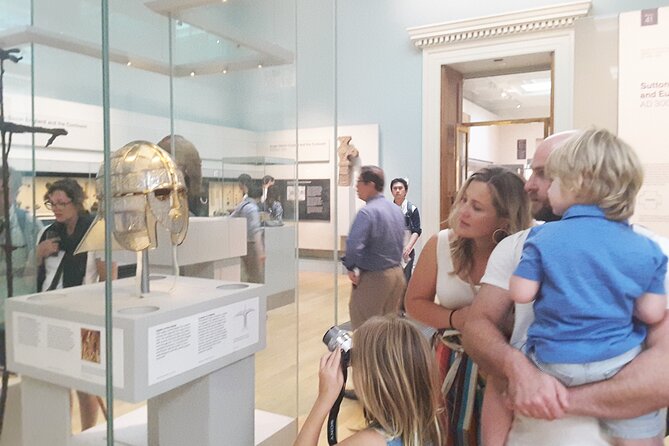
The Sutton Hoo burial treasure gives the tour a shift in tone. After Egypt and Greece, you move into medieval England and encounter objects linked to an Anglo-Saxon ship burial.
For children, this can work as a detective story. A burial site, a buried treasure, and clues about a powerful person create a natural narrative. The guide can explain what the objects suggest about status, belief, travel, and craftsmanship without requiring your child to memorize dates.
This section also connects the museum more directly to British history. That may matter if your child has a particular interest in England, medieval life, military history, or archaeology. One family wished the route had focused more closely on British history and on an 11-year-old’s interest in Civil War reenactments. That is a useful warning: tell your guide your children’s interests early, and do not assume every family route will match a specialized topic.
The stated highlights include the Sutton Hoo burial treasure, but the exact order and selection can change. Galleries may close for renovation, and the guide may replace unavailable displays with other objects. That flexibility is practical, though it means you should treat the advertised route as a strong outline rather than a guarantee of every single stop.
More London museums to visit:
- Tower of London and Crown Jewels Exhibition Ticket
★ 4.5 · 6,677 reviews - London: Chelsea Football Club Stadium and Museum Tour
★ 4.8 · 4,576 reviews - Chelsea FC Stadium Tours and Museum
★ 5.0 · 1,908 reviews - London Transport Museum Entrance Ticket
★ 4.5 · 1,323 reviews
Games, stories, and the art of holding a child’s attention
The best feature here is not a single artifact. It is the way the guide uses the museum as a set of challenges and stories.
Vicky’s quiz is a good example of the method. Children answer questions as they move through history, giving them a reason to look closely. Other guides use mysteries, anecdotes, and jokes. Jeremy is praised for making the adults laugh while keeping a nine-year-old involved. Darcy reportedly won over a child who began the day complaining about another museum.
That kind of response is what you want from a family guide. The aim is not to turn every object into a game or to simplify everything into entertainment. It is to offer enough interaction that children can stay present while still learning something real.
The guides also appear to adjust to age. Larry is praised for shaping his explanations around a 12-year-old boy. Tim handled a group of children from six to 15, while Denisa kept four- and six-year-olds engaged during a 2.5-hour visit. Lucy adjusted well to a 10-year-old, and another family found her effective with children aged seven and nine.
Still, two and a half hours is a long museum session for a young child. One family found two hours close to their boys’ limit, which makes the tour length worth considering. Children who tire quickly may need encouragement, snacks before or after, or a quiet break once the tour finishes.
What the $247.40 price really buys you
At $247.40 per person, this is expensive for a museum visit, particularly because the museum itself has no general admission charge according to the activity details. The value depends almost entirely on how much help your family needs with focus, navigation, and interpretation.
For two adults and one child, the total cost is substantial. For a larger group, the private format may make more sense if group discounts apply, though the available information does not state the discount amount. Check the final price carefully for your party before booking.
I would consider the price reasonable only if at least one of these points is true:
- Your children usually lose interest in large museums.
- You have limited time in London and want a focused introduction.
- You value private attention and the ability to ask questions.
- You feel overwhelmed by the British Museum’s size.
- You want a guide to adapt explanations for several age groups.
I would skip it if your family enjoys wandering independently, already knows what it wants to see, or plans to spend a full day studying the collection. The tour is designed to make the museum digestible, not to replace a slow visit.
The high satisfaction figure, 98 percent recommended and a 4.9 rating from 60 reviews, suggests that the family format usually works well. But one three-star experience raises a fair concern about price and personalization. The guide was described as warm and enthusiastic, yet the route did not fully match the child’s interests. That is the clearest reason to contact the operator or state your priorities when arranging the tour.
Timing, crowds, and practical limits
A private tour gives you your own group and guide, but it does not give you the museum to yourself. Crowded galleries can limit how long you spend in front of an object, and some displays may be difficult for shorter children to see.
Morning and afternoon start times give you useful choice. A morning visit may suit children who are freshest early in the day. An afternoon tour can work after a slower breakfast or another central London activity. The supplied information does not identify the exact start times, so check those before choosing.
Food and drinks are not included, and hotel pickup and drop-off are not provided. Plan your route to Great Russell Street independently and feed the family before or after the experience. The tour ends where it begins, which makes it easy to continue into Bloomsbury or return to public transportation.
Galleries can change or close for renovation. The guide is expected to select other interesting objects when this happens. That is normal for a large working museum, but it is another reason not to promise children one exact display as the sole purpose of the outing.
Free cancellation is available if you cancel at least 24 hours before the local start time. Changes or cancellations made inside that window are not accepted for a refund.
The families who will get the most from it
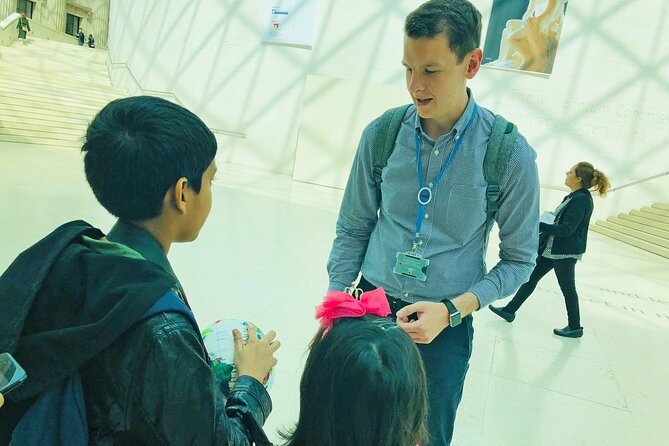
This tour is best for families with children aged five and older who need a reason to care about museum objects. It also suits grandparents introducing grandchildren to London, as one family found, and groups of two families with children roughly eight to 13.
It can work across a wide age spread, but your guide needs useful information. Tell them if your child prefers battles, animals, codes, royalty, engineering, mythology, or human stories. The more specific you are, the easier it is to make the selected objects feel relevant.
You should also book with realistic stamina in mind. A private guide can change the emphasis and notice when children are tiring, but the tour still lasts about 2 hours and 30 minutes. Families with very young children may prefer to treat the final portion as optional mentally, even though the full booking remains scheduled.
Should you book the private British Museum tour?
Book it if the British Museum feels too large to tackle alone, your children need active encouragement, and you want a focused first visit. The private setting, child-friendly activities, and clear route through Egypt, Greece, and Sutton Hoo give you a far better chance of leaving with actual memories instead of a blur of display cases.
Think twice if $247.40 per person strains your budget or if your family wants to pursue one narrow subject. This is a highlights tour through public galleries, not an exclusive museum-access experience. For the right family, Jeremy, Lucy, Alexandra, Larry, Vicky, Tim, or another well-matched guide can turn a difficult museum into a two-hour family story. For the wrong fit, the price may feel hard to justify.
FAQ
Where does the tour begin?
It begins outside the British Museum at Great Russell Street, London WC1B 3DG, UK.
Where does the tour end?
The activity ends back at the British Museum meeting point.
How long does the tour last?
The tour lasts approximately 2 hours and 30 minutes.
What age is this tour suitable for?
The experience is suitable for children aged five and older. Children must be accompanied by an adult.
Is the tour private?
Yes. Only your group participates in the private tour or activity.
What language is offered?
The tour is offered in English.
Which museum highlights are included?
The planned highlights include the Egyptian galleries, Ginger the 5,400-year-old mummy, the statue of Ramses II, the Rosetta Stone, the Parthenon Sculptures, and the Sutton Hoo burial treasure.
Are museum galleries guaranteed to be open?
No. Galleries can change or close for renovation. If a planned area is unavailable, the guide will select other interesting objects and art.
What is included in the price?
A local guide, a child-friendly guide, and a private tour are included. Food, drinks, and hotel pickup and drop-off are not included.
Can I cancel for a refund?
You can cancel at least 24 hours before the experience start time for a full refund. Cancellations or changes made less than 24 hours before the start time are not accepted for a refund.
Latest arrivals on the London list
- Heathrow Airport to London Arrival Transfer★ 4.5 · 50 reviews
- London Beatles Tour★ 5.0 · 50 reviews
- One Way Taxi Transfer from London to Gatwick Airport★ 5.0 · 51 reviews
- London: Hidden Baker Street Tube Station Tour★ 4.7 · 51 reviews
- City & Secrets: Explore London’s Hidden Gems★ 5.0 · 51 reviews
- London Christmas Lights Open-Top Bus Tour. 2025 Early Bird★ 3.6 · 51 reviews
- 4 hour London Private Tour, with your own Black Cab Tour Guide★ 5.0 · 51 reviews
- The Beatles Magical History Black Taxi Tour London★ 5.0 · 51 reviews
British Museum Tours, compared.

British Museum London Guided Tour Semi-Private 8ppl Max
Read our review →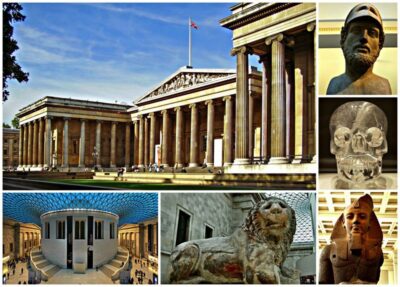
British Museum Audio Tour & Priority Entrance Ticket
Read our review →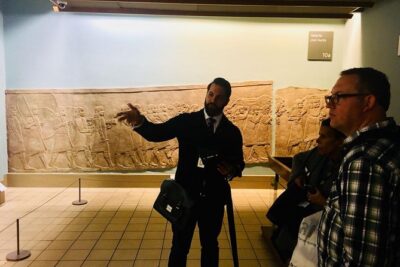
The British Museum London – Exclusive Guided Museum Tour
Read our review →
Browse the lists this tour appears in