
Reviewed · BRITISH MUSEUM TOURS
The British Museum: a highlights tour with a TV historian
The most interesting part of this British Museum tour is not simply seeing famous objects. It is hearing the stories behind them from Loona, a former museum staff guide who knows the building well and has even supervised sleepovers with the mummies. He connects ancient objects to Harry Potter, Hollywood, and modern life, which helps children and adults see the museum as more than a row of glass cases.
I like the private format, since your group gets the guide’s full attention rather than following a large crowd. I also like the wide sweep, from Egyptian writing and Mesopotamian tablets to Anglo-Saxon treasure, Aztec jewellery, Chinese sculpture, and the Parthenon Sculptures. The main thing to plan for is entry: the museum is free, but you still need to book a timed ticket directly through its website, and getting inside can take about 30 minutes.
In This Review
- Key points to know before you book
- Why a guide helps inside the British Museum
- Starting with the Rosetta Stone and ancient Egypt
- Fakes, lost libraries, and the first great stories
- Sutton Hoo, Celtic jewellery, and early Britain
- Assyrian warfare and the birth of written records
- Aztec jewellery, Mayan carvings, and human rights
- Benin Bronzes and the questions behind museum collections
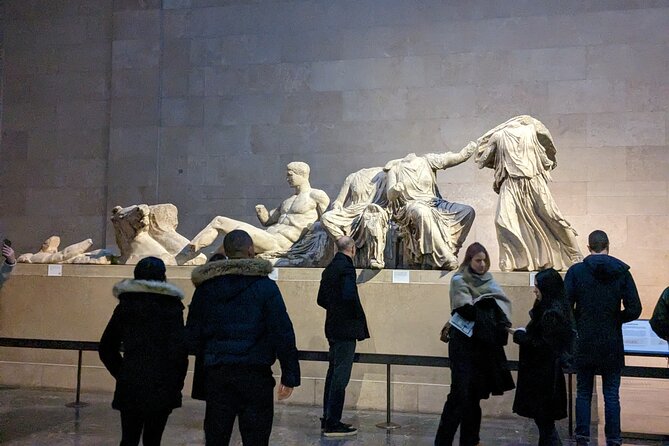
- The Lewis Chess pieces and the Parthenon Sculptures
- Easter Island, China, and India
- Timing, meeting point, and museum entry
- Who will get the most from this private tour
- Cancellation and booking advice
- Should you book the British Museum highlights tour?
- FAQ
- How long does the British Museum highlights tour last?
- What time does the tour start?
- Where does the tour meet?
- Do I need to book a museum ticket separately?
- What does the tour include?
- Is this a private tour?
- What is the cancellation policy?
Key points to know before you book
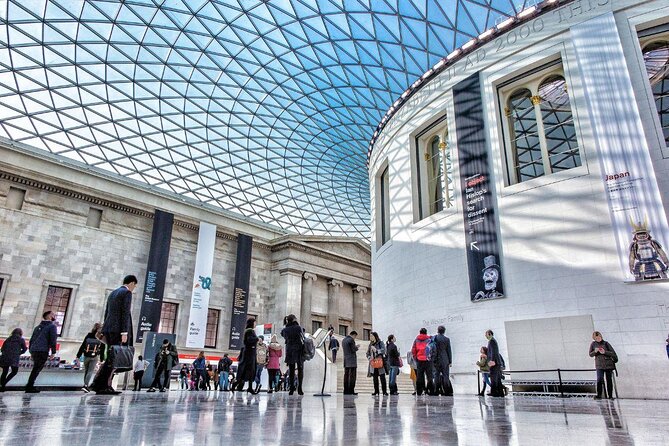
- Former British Museum staff guide: Loona brings personal museum experience and behind-the-scenes stories to a three-hour private visit.
- Major objects in one route: Expect the Rosetta Stone, Rameses II, Sutton Hoo, Benin Bronzes, Lewis Chess pieces, Parthenon Sculptures, and more.
- Stories beyond the labels: The tour covers deciphering hieroglyphs and cuneiform, fake crystal skulls and mermaids, ancient warfare, religion, and early declarations of human rights.
- Family-friendly storytelling: Harry Potter references, films, and modern examples help make difficult subjects easier to follow.
- Free museum admission, paid guiding: Your museum ticket costs nothing, but the tour includes guiding services only, and you must arrange museum entry yourself.
- Private and in English: Only your group takes part, with a scheduled start at 11:00 am and a visit lasting about three hours.
Why a guide helps inside the British Museum
The British Museum can be hard to tackle on your own. It holds objects from many periods and parts of the world, and the most famous pieces are spread across different galleries. You can walk in with a list of must-sees and still leave having missed important objects nearby.
This tour gives you a clear route through major turning points in human history. You move from early writing and royal power to trade, warfare, belief, art, and cultural contact. The value is not just speed. A good guide explains why an object matters, how it was understood, and what questions it raises today.
Loona’s former staff experience is especially useful here. He knows the museum well enough to point out less obvious displays, including fakes such as crystal skulls and mermaids. That is a welcome change from a tour that simply rushes from one famous object to the next.
The format is private, so you can ask questions without waiting for a large group to catch up. You also have a better chance of adjusting the pace. If your children need a short break, or you want more time with the Sutton Hoo treasure, you can tell the guide.
More British Museum visits:
- London: British Museum Guided Tour
★ 4.3 · 1,182 reviews - British Museum London Guided Tour Semi-Private 8ppl Max
★ 5.0 · 984 reviews - London: Tour of the British Museum
★ 4.1 · 678 reviews
Starting with the Rosetta Stone and ancient Egypt
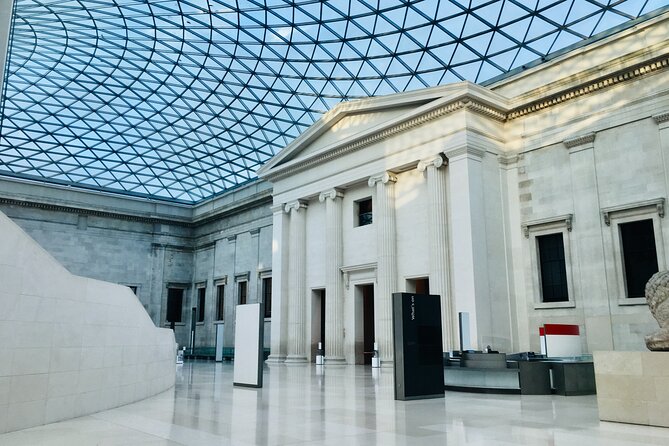
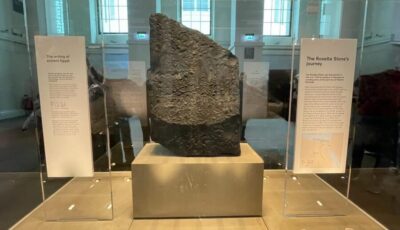
The Rosetta Stone is a natural place to begin. It is famous because its inscriptions helped scholars decipher Egyptian hieroglyphs, but the important point is how the translation worked. The same message appears in different forms of writing, allowing scholars to compare them and begin reading a script that had been undeciphered for centuries.
That explanation gives you a useful key for the rest of the Egyptian galleries. Instead of seeing rows of names and symbols, you begin to understand writing as a tool of government, religion, and memory.
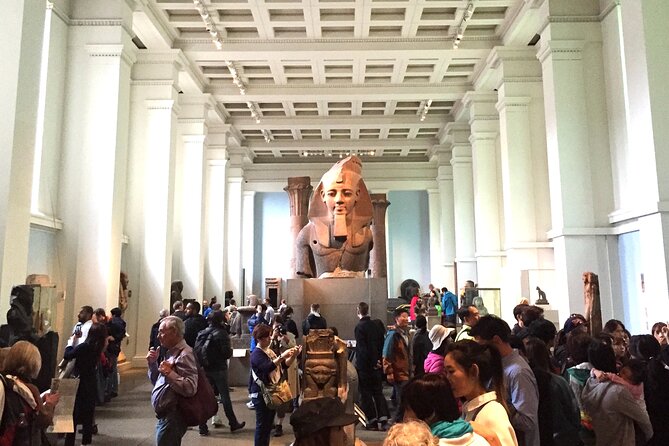
The bust of Rameses II adds the royal side of ancient Egypt. A guide can help you read the object not only as a portrait, but also as a statement of authority. The tour also includes the mummies gallery, where Loona’s experience supervising museum sleepovers gives him an unusual connection to the displays.
You should expect a brisk visit rather than a slow study of every Egyptian object. The point is to understand the major ideas and see the best-known pieces within the allotted time.
Fakes, lost libraries, and the first great stories
The tour does not treat every museum object as automatically genuine. The section on crystal skulls and mermaids introduces the problem of fakes and shows why testing, research, and careful comparison matter. This can be one of the more entertaining parts for children, while also teaching a serious lesson about how museums decide what belongs on display.
You will also hear about the oldest library and the world’s oldest epic story. These stops shift attention from statues and jewellery to the survival of written ideas. The British Museum is at its best when it shows that civilization is not only about rulers and monuments. It is also about people recording laws, stories, accounts, and beliefs.
The exact path through the galleries can vary, but the themes connect well. You see how writing allowed ideas to travel across time, and how modern scholars use those surviving records to reconstruct earlier societies.
Sutton Hoo, Celtic jewellery, and early Britain
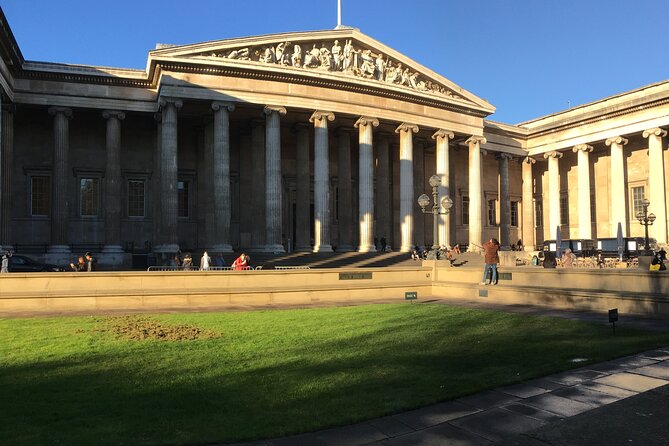
The Anglo-Saxon Sutton Hoo treasure is one of the tour’s strongest stops. The objects offer a close look at early medieval Britain, with its links to power, ceremony, craft, and long-distance exchange. If you are mainly visiting for Roman or Egyptian material, this section may surprise you with its detail and atmosphere.
Celtic jewellery adds another view of Britain’s past. It is easy to treat early European objects as a side note after seeing Egypt and Assyria, but a guide can show you how design, status, and identity appear in small items as clearly as in monumental sculpture.
The tour’s broad range works well here. You are not looking at Britain in isolation. You are placing Sutton Hoo and Celtic art beside objects from Egypt, Mesopotamia, Asia, and the Americas. That comparison makes the museum feel like a record of connected cultures rather than a collection of unrelated rooms.
More London museums to visit:
- Tower of London and Crown Jewels Exhibition Ticket
★ 4.5 · 6,677 reviews - London: Chelsea Football Club Stadium and Museum Tour
★ 4.8 · 4,576 reviews - Chelsea FC Stadium Tours and Museum
★ 5.0 · 1,908 reviews - London Transport Museum Entrance Ticket
★ 4.5 · 1,323 reviews
Assyrian warfare and the birth of written records
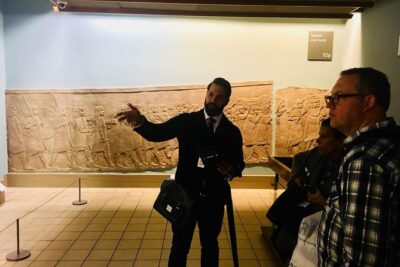
The Assyrian material brings a harder edge to the visit. The tour covers the Assyrian war machine, so you will encounter the way empire used military force, visual propaganda, and official records. These displays can be striking, but they also call for context. A guide helps explain what the scenes were designed to communicate and how rulers used art to project power.
Cuneiform is another major theme. The tour explains how this writing was translated, giving you a second example of scholars recovering an ancient script. The Rosetta Stone and cuneiform belong to different cultures and writing systems, but together they show the work needed to read the ancient world.
This part should appeal to adults and older children who enjoy puzzles, codes, and military stories. Younger children may respond better when the guide connects the material to films or familiar fictional worlds. The supplied information specifically notes Harry Potter and Hollywood references, so Loona’s style is designed to keep the subject moving.
Aztec jewellery, Mayan carvings, and human rights
The tour reaches the Americas through Aztec jewellery associated with Montezuma and Mayan carvings. These objects widen the story beyond the ancient Mediterranean and Europe. You get a chance to consider how political authority, religion, craftsmanship, and record keeping took different forms in societies separated by great distances.
The mention of jewellery worn by Montezuma gives the stop a personal angle. Small objects can raise questions about rank, ceremony, and daily life in ways a huge monument cannot. Mayan carvings bring writing and imagery back into the discussion, linking this section to the earlier treatment of hieroglyphs and cuneiform.
You will also hear about what is described as the first declaration of human rights. This is a useful moment to slow down and consider how modern ideas are often connected to much older claims about justice, rule, and the treatment of people. The guide’s role is important because a short label cannot explain the debates around such a claim.
Benin Bronzes and the questions behind museum collections
The Benin Bronzes are among the most important objects on this route, not only for their artistry and history but also for the questions they raise about acquisition. The tour promises to explain how objects entered the museum, so you are not asked to look at the collection without considering its past.
That is a major advantage for a modern museum visit. The British Museum holds objects from many regions, and the story of how they arrived in London is not always simple. A guide can connect the object itself with the wider issue of collecting, empire, ownership, and public display.
The information provided does not give a detailed position on the Benin Bronzes or the museum’s current policies, so you should not expect the tour to settle every debate. It does, however, offer a chance to hear the acquisition story rather than seeing only the finished display.
The Lewis Chess pieces and the Parthenon Sculptures
The Lewis Chess pieces are among the most approachable objects on the route. Chess gives children an immediate point of contact, while the pieces also open a window onto medieval life, craft, trade, and status. This is a good stop for a family group because the objects are easy to understand at first glance but reward more questions.
The Parthenon Sculptures bring one of the museum’s most familiar and contested displays into the tour. You will see major works connected with ancient Greece and hear about their background, including how the museum acquired them. As with the Benin Bronzes, the subject is not only artistic quality. It is also the movement of cultural objects and the arguments that follow.
A guide can help you keep the basic facts in view while acknowledging that museum collections can carry difficult political and ethical questions. That balance is more useful than a visit focused only on admiration.
Easter Island, China, and India
The final group of highlights reaches Easter Island, China, and India. The Easter Island statue provides a memorable change of scale and culture. The Chinese Buddha offers a way to discuss religious art and the visual language of devotion, while the Shiva statue from India introduces another major religious and artistic tradition.
These stops matter because they prevent the tour from becoming an Egypt and Greece greatest-hits walk. You get a wider sense of the museum’s holdings, even within a three-hour visit. At the same time, such range means you will not spend long with every object.
If you already have a particular interest in Chinese, Indian, or Pacific art, tell Loona at the start. The tour includes these highlights, but the schedule is full. A private visit gives you more opportunity to ask for emphasis than a fixed large-group route would.
Timing, meeting point, and museum entry
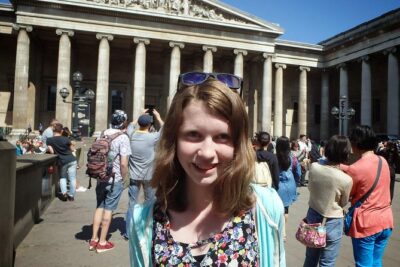
The tour starts at 11:00 am at the British Museum Reading Room on Great Russell Street. It ends at the museum, with the mummies gallery listed as the end location. Allow extra time before the start because you need to enter the museum and pass through its admission process.
The museum itself is free, but timed entry is still limited. Book your free ticket directly through the British Museum website several days ahead when possible. Do not assume that a free museum means you can simply arrive without a reservation.
Your tour purchase covers guiding services only. Souvenirs, fees, taxes, and the museum entry booking are not included. Since there is no separate museum admission charge, the value rests mainly in the private guide’s time, route, explanations, and ability to make sense of a huge collection.
The tour lasts about three hours, though one booking record describes a visit of roughly three and a half hours. Plan for a substantial morning or early afternoon, and wear comfortable shoes. Breaks are possible, but this is still a concentrated visit with many galleries and subjects.
Who will get the most from this private tour
I would choose this tour if you have limited time in London and want a clear introduction to the British Museum. It is also a strong fit if you like the idea of learning how objects were found, translated, displayed, or acquired, rather than simply collecting photographs.
Families are well served by Loona’s use of Harry Potter, Hollywood, and contemporary references. Children who do not usually enjoy history may respond to the mix of mummies, fakes, war scenes, ancient puzzles, and famous treasures. The private setting also means the guide can address different ages within one group.
You may prefer exploring alone if you want to read every label, stay in one gallery, or set your own route. A three-hour highlights tour must keep moving. The wide subject range is a strength, but it can also feel quick if you want detailed art history on each object.
The tour is offered in English. Most people can participate, and service animals are allowed. It is near public transportation, and confirmation arrives when you book.
Cancellation and booking advice
Free cancellation is available if you cancel at least 24 hours before the local start time. Cancellations or changes within 24 hours are not refunded or accepted. The experience also requires a minimum number of participants, so a cancellation by the operator could result in another date, another experience, or a full refund.
The most important booking task is separate from the tour reservation. Secure your free British Museum timed ticket first or as soon as possible, then allow about 30 minutes for entry. Arriving late could reduce the time you have with Loona.
Should you book the British Museum highlights tour?
Book it if you want the famous objects explained in a lively, connected way, especially if you are visiting with children or have only one museum morning. Loona’s former staff experience, private format, and range of subjects give you more than a checklist of the Rosetta Stone, Sutton Hoo, and Parthenon Sculptures.
Skip it if you prefer complete freedom or plan to spend half a day studying one culture in depth. For most first-time visitors, though, the guiding service offers solid value because the museum admission itself is free and the collection can otherwise feel overwhelming.
The winning plan is simple: reserve the tour, book your separate free museum ticket, arrive early, and tell Loona what your group most wants to see. That preparation lets you spend the three hours listening, asking questions, and following the story instead of worrying about entry.
FAQ
How long does the British Museum highlights tour last?
The tour lasts approximately three hours. One booking description records a visit of about three and a half hours, so you should allow some flexibility.
What time does the tour start?
The scheduled start time is 11:00 am.
Where does the tour meet?
The meeting point is the British Museum Reading Room on Great Russell Street in London.
Do I need to book a museum ticket separately?
Yes. The museum is free, but you are advised to book a free timed-entry ticket directly through the British Museum website.
What does the tour include?
It includes guiding services only. Souvenirs, fees, taxes, and the separate museum entry booking are not included.
Is this a private tour?
Yes. Only your group participates in the private activity.
What is the cancellation policy?
You can cancel for a full refund up to 24 hours before the experience start time. Cancellations or changes made less than 24 hours before the start are not refunded or accepted.
Latest arrivals on the London list
- Easy Access Tower of London Royal Secrets & Scandals Tour★ 5.0 · 3 reviews
- Stonehenge Special Access Guided Morning Tour from London★ 4.5 · 3 reviews
- Shoreditch & East London Walking Tour with a Local, Custom & Private★ 5.0 · 3 reviews
- Madame Tussauds London Fast Track and Champagne Experience★ 3.5 · 3 reviews
- London Private Brixton Tour with a Local – Culture & Stories★ 4.9 · 3 reviews
- Private Full Day Tour – Fast Track Tower of London and Lunch★ 4.6 · 3 reviews
- Private transfer from London Heathrow Airport to Southampton★ 5.0 · 3 reviews
- London Soho District – Guided Walking Tour 12 guests 2,5h★ 4.8 · 3 reviews
British Museum Tours, compared.
British Museum London Guided Tour Semi-Private 8ppl Max
Read our review →
British Museum Audio Tour & Priority Entrance Ticket
Read our review →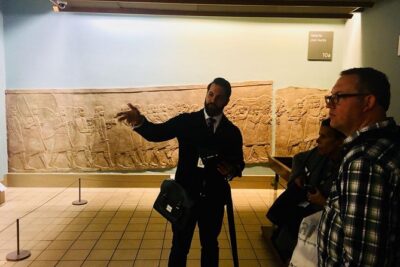
The British Museum London – Exclusive Guided Museum Tour
Read our review →
Browse the lists this tour appears in