
Reviewed · MUSEUMS
The Postal Museum Admission Ticket
London’s most unusual museum ride runs beneath the streets, not above them. At The Postal Museum, you explore five centuries of communication before boarding Mail Rail, the former underground railway that carried letters beneath the city. The little train is dark, noisy, and compact, which is exactly why children tend to love it.
I like the mix of hands-on exhibits and serious social history. I also like that the museum gives postal workers a human place in London’s story, from bicycles and stamps to the lockers left behind when a station closed. The main drawback is simple: the attraction is split between two buildings, and the Mail Rail ride may not operate during maintenance or other closures.
In This Review
- Key points at a glance
- Why Mail Rail makes this museum different
- Start with the Mail Rail ride
- Two buildings, one postal story
- Interactive exhibits keep the visit moving
- What the ticket costs and what it includes
- A strong rainy-day plan, with one weather warning
- Access, noise, and family comfort
- Who will enjoy this most?
- How to plan your visit
- Should you book The Postal Museum?
- FAQ
- Where is The Postal Museum located?
- How long does a visit take?
- Is the Mail Rail ride included?
- Is an audio guide available?
- Is this attraction good for children?
- Is there a play area for young children?
- Is the museum step-free?
- Are accessible facilities available?
- Can I visit if I cannot walk far or climb stairs?
- Can I cancel or change my ticket?
Key points at a glance
- Ride through London’s secret postal tunnels: Mail Rail is the main thrill, with audio and visual storytelling along the route.
- Two buildings require planning: The railway experience and main museum are across the street from one another, so allow time to find both.
- Good for children and adults: Interactive models, pneumatic tubes, and postal equipment give younger visitors plenty to do.
- A useful rainy-day choice: Nearly all of the experience is indoors, though poor weather can affect operations.
- Allow up to 2.5 hours: A quick visit can be shorter, but families often need extra time for the interactive displays.
- Check the practical details: The ticket is mobile, the experience is in English, and admission is non-refundable.
Why Mail Rail makes this museum different
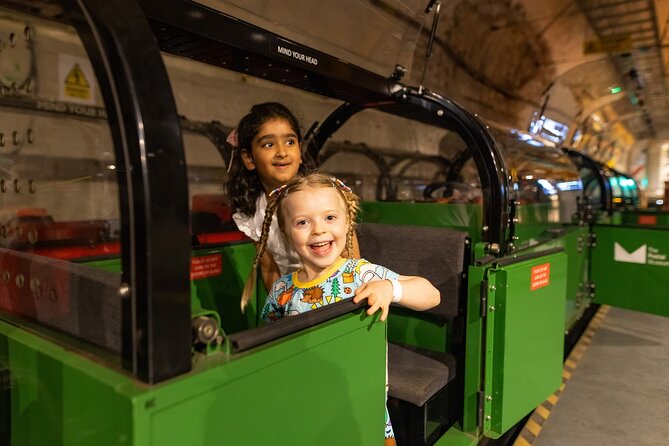
Many museums explain how letters were sorted and delivered. The Postal Museum lets you ride through the system itself.
Mail Rail once moved post beneath London, avoiding traffic on the streets above. The ride gives you a direct sense of the tight working conditions and unusual engineering behind that service. It is not a long railway journey, but it is a memorable one because the setting does much of the work: low tunnels, limited light, and the feeling of passing through a place most people never see.
The storytelling continues during the ride, with information about how the railway operated and changed over time. You are not simply sitting in a train and looking at a tunnel. The journey connects the machinery below ground with the wider postal network above it.
The train is small. If you are tall, you may find the roof uncomfortably close. The ride can also be loud and dark, so a child who dislikes confined spaces may need extra reassurance. For most families, though, those qualities make it feel like an adventure rather than a standard museum display.
More London museums to visit:
- Tower of London and Crown Jewels Exhibition Ticket
★ 4.5 · 6,677 reviews - London: Chelsea Football Club Stadium and Museum Tour
★ 4.8 · 4,576 reviews - Chelsea FC Stadium Tours and Museum
★ 5.0 · 1,908 reviews
Start with the Mail Rail ride

The best plan is to make Mail Rail your first priority. Its operating times are tied to the attraction’s schedule, and one family visit was badly affected when the train was unavailable for planned maintenance. The museum had posted advance notice, but the information was missed before booking.
That makes a quick check of current operations worthwhile, especially if the railway is the main reason you are coming. If the ride is not running, the rest of the museum still offers plenty to see, but the experience changes from a transport adventure into a more conventional museum visit.
The train experience itself is suitable for adults as well as children. Young railway fans get the excitement of moving through the tunnels, while adults can pay attention to the changing role of postal communication and the working life below London. The compact setting also means you do not need to commit to a long journey if your family has a short attention span.
The attraction has a maximum group size of seven for this bookable experience. That should suit people who prefer a smaller scheduled visit rather than a large guided group. No guide names are provided, and the standard admission is in English. An audio guide upgrade is available if you want more explanation as you explore.
Two buildings, one postal story
The Postal Museum is not contained in a single easy-to-find entrance. The main exhibition and the Mail Rail building are across the street from one another. That layout has caused some confusion, so pay attention to signs and give yourself a few minutes to get your bearings.
The Mail Rail building combines the railway ride with exhibits about the underground service. It is a natural place to begin because the train gives context to the equipment and working areas you see afterward. Displays include the contents of workers’ lockers from the day a station closed, a small detail that helps turn an old transport system into a human workplace.
Then cross to the main museum. This is where you find the broader postal story, covering five centuries of communication and the effect of the postal service on British society and connections around the world.
The museum’s subject is wider than stamps and envelopes. You see how postal communication helped people keep in touch, conduct business, and maintain links across distance. The displays also place the postal service within social history, including the importance of postmen and women in local communities.
One particularly important exhibition is Voices of Resistance: Slavery and Post in the Caribbean. It adds a necessary wider view to the institution’s story and is worth seeking out rather than rushing past the familiar items such as stamps and mailboxes.
Interactive exhibits keep the visit moving
This is not a museum that asks you to stand quietly in front of rows of cases. Models, working displays, and interactive equipment give you reasons to stop and try something.
The pneumatic tubes are a particular favorite. They make an old method of moving messages feel immediate and playful. Children can understand the basic idea quickly, while adults get a glimpse of the mechanical systems once used to move information and objects through large organizations.
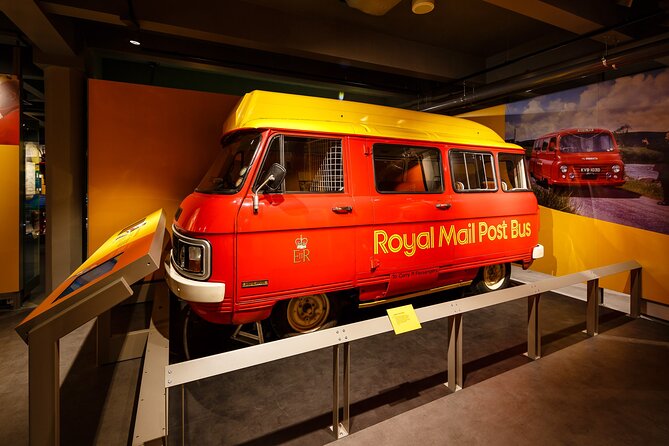
You will also see unusual postal vehicles, including five-wheeled cycles, along with examples connected to the first postage stamps. These objects help explain how the service worked in practical terms. A bicycle tells you more about daily delivery than a paragraph on a wall, and a stamp shows how a small piece of paper changed the way people paid for communication.
Plan more time than you first expect if you are visiting with children. A family can move through the museum in about 90 minutes, but that is a brisk visit. If your children want to test every interactive model, two to two and a half hours is more realistic.
The museum is also useful for different generations together. Grandparents can explain how post offices and local postal workers once functioned in everyday life, while children can compare that world with the parcel-focused service they know now. That contrast gives the exhibits a clear purpose rather than making them feel like a collection of outdated objects.
A few more London days worth a look
- London: The London Eye Entry Ticket
★ 4.6 · 35,875 reviews - London: Tower Bridge Entry Ticket
★ 4.7 · 15,560 reviews - London: Westminster Abbey Entrance Ticket
★ 4.6 · 11,254 reviews - London: St Paul’s Cathedral Entry Ticket
★ 4.7 · 9,813 reviews
What the ticket costs and what it includes

The listed price is $25.55 per person. For a London attraction lasting around 1.5 to 2.5 hours, that is a reasonable price if you ride Mail Rail and take time with the main exhibitions. The train is what gives the ticket extra value. If it is closed, the price feels less attractive, so confirm availability before committing.
Your ticket includes admission. It does not include annual entry to the museum’s exhibitions, listed at £2 per person, or Sorted! The Postal Play Space, which costs £4.50 per person for children aged 0 to 8. Those are separate choices, not essential parts of the standard visit.
A mobile ticket makes entry convenient, particularly if you are fitting this between other London plans. You can choose from a range of time slots, and the activity is usually booked about 13 days ahead. That is a useful guide for planning, though school holidays and busy periods may require more attention.
An audio guide upgrade is available. I would consider it if you are especially interested in postal systems or want more background while moving through the galleries. Families focused on the train and interactive displays may be perfectly happy with the standard admission.
A strong rainy-day plan, with one weather warning
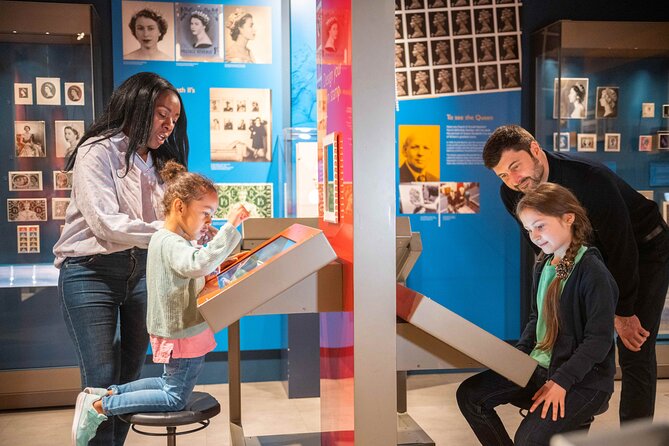
The Postal Museum is a natural choice when London weather spoils an outdoor plan. The galleries, railway building, café, and toilets are indoors, and the exhibits give children something active to do rather than another room of framed objects.
There is an odd practical wrinkle: the experience requires good weather, and the provider may cancel because of poor conditions. If that happens, you are offered another date or a full refund. The available information does not explain exactly which part of the operation weather affects, so check the status before setting out on a wet day.
The café is family-friendly and accredited, but expectations should remain modest. The available food selection can be limited, and one visit found no hot food. If lunch matters to your schedule, it is sensible to treat the café as a convenient stop for drinks or a light bite rather than the reason to choose this museum.
Access, noise, and family comfort

All museum spaces have step-free access. The Mail Rail building is also step-free, except for the ride itself. There are gender-neutral accessible toilets and a Changing Places facility, and service animals are allowed.
The practical access requirement is more demanding than the step-free description alone suggests. You must be able to walk unaided for at least 100 metres over uneven surfaces with minimal lighting and climb at least 70 steep steps. That matters when deciding if the railway portion is suitable for everyone in your group.
The museum provides accessibility information, resources for autistic visitors, and an audio-described introduction. Since the train is dark and loud, those resources may be helpful for visitors who are sensitive to sound, light, or enclosed spaces. One deaf visitor found the spoken information under the train difficult to follow, so consider the audio and communication arrangements carefully if hearing access is important to you.
Children must be accompanied by an adult. The attraction suits most people, but very young children may respond differently to the train’s confined interior. Sorted! The Postal Play Space is available separately for children aged 0 to 8, adding another option for families with small children.
Who will enjoy this most?

I would choose The Postal Museum for families with children roughly in the primary-school years, railway fans, people interested in British social history, and anyone who wants something less predictable than another royal palace or art gallery.
It works particularly well for children who need movement and participation. The Mail Rail ride gives the visit a clear center, while the hands-on exhibits keep the rest from feeling like a lecture.
Adults with a personal connection to postal work may get more from the museum than they expect. The exhibits show how delivery workers supported local communities, and the working spaces add a human scale to the story. The Caribbean exhibition also gives the museum an important subject beyond traditional postal memorabilia.
I would not choose it if you have only 45 minutes, cannot manage the walking and steps required for the railway experience, or want a quiet museum with no darkness, noise, or enclosed spaces. You may also feel disappointed if Mail Rail is closed and you have paid mainly for the ride.
How to plan your visit
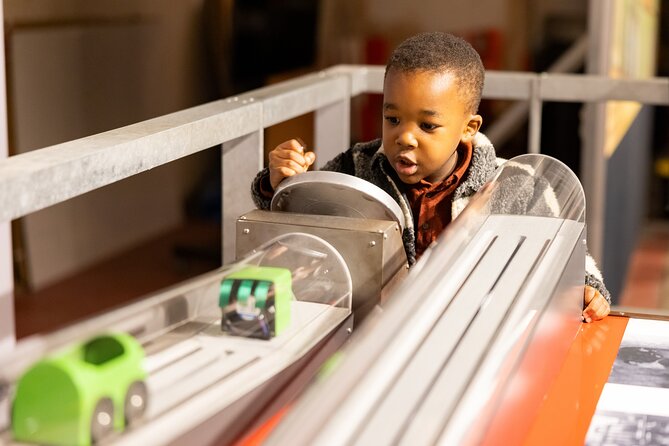
Book a time slot that gives you room after the attraction rather than squeezing it between two fixed appointments. The stated duration is approximate, and children can easily spend extra time with the interactive equipment.
Begin at the Mail Rail building, then visit the main museum across the street. This order protects you from missing the train and gives the rest of the exhibits more meaning. Allow at least 90 minutes for a focused visit, and closer to 2.5 hours if you are bringing children or want to read the displays carefully.
Use the mobile ticket for easy entry, and consider the audio guide if you want extra explanation in English. Check current railway operations before booking because the train can close for planned maintenance.
The experience is non-refundable and cannot be changed after booking. If poor weather causes cancellation, you are offered a different date or a full refund, but you cannot count on changing the booking simply because your own plans shift.
Should you book The Postal Museum?
Yes, if you want a family-friendly London attraction with a real sense of place. Mail Rail is the reason to go, but the museum earns its ticket by showing how postal communication shaped ordinary life and by giving children plenty to operate, touch, and question.
Book it when the train is running, start with the railway building, and leave enough time for the main museum. If the ride is unavailable, you may still enjoy the exhibitions, especially Voices of Resistance and the working postal displays, but I would not pay the full price without first checking.
FAQ
Where is The Postal Museum located?
The experience is in London, England. The main museum and the Mail Rail building are across the street from one another.
How long does a visit take?
Allow approximately 1 hour 30 minutes to 2 hours 30 minutes. A shorter visit is possible, but families may need extra time for the interactive exhibits.
Is the Mail Rail ride included?
Yes. Admission includes the museum visit and the Mail Rail experience when the railway is operating.
Is an audio guide available?
Yes. You can upgrade your admission to add an audio guide. The standard experience is offered in English.
Is this attraction good for children?
Yes. The museum has family-friendly interactive exhibits, and children often enjoy the Mail Rail train, pneumatic tubes, and working models. Children must be accompanied by an adult.
Is there a play area for young children?
Yes. Sorted! The Postal Play Space is available separately for children aged 0 to 8. It costs £4.50 per person.
Is the museum step-free?
All spaces in The Postal Museum have step-free access. The Mail Rail building is also step-free except for the ride.
Are accessible facilities available?
Yes. The museum has gender-neutral accessible toilets and a Changing Places facility. Service animals are allowed, and accessibility resources are available for autistic visitors.
Can I visit if I cannot walk far or climb stairs?
The railway experience requires you to walk unaided for at least 100 metres on uneven surfaces with minimal lighting and climb at least 70 steep steps. Check the museum’s full accessibility information before booking.
Can I cancel or change my ticket?
No. The experience is non-refundable and cannot be changed for any reason. If the provider cancels because of poor weather, you are offered another date or a full refund.
Latest arrivals on the London list
- Heathrow Airport to London Arrival Transfer★ 4.5 · 50 reviews
- London Beatles Tour★ 5.0 · 50 reviews
- One Way Taxi Transfer from London to Gatwick Airport★ 5.0 · 51 reviews
- City & Secrets: Explore London’s Hidden Gems★ 5.0 · 51 reviews
- London: Hidden Baker Street Tube Station Tour★ 4.7 · 51 reviews
- London Christmas Lights Open-Top Bus Tour. 2025 Early Bird★ 3.6 · 51 reviews
- 4 hour London Private Tour, with your own Black Cab Tour Guide★ 5.0 · 51 reviews
- The Beatles Magical History Black Taxi Tour London★ 5.0 · 51 reviews
Museums, compared.

Tower of London and Crown Jewels Exhibition Ticket
Read our review →
Chelsea Football Club Stadium and Museum Tour
Read our review →


Official tickets: Moco Modern & Contemporary Art Museum
Read our review →
British Museum London Guided Tour Semi-Private 8ppl Max
Read our review →
Browse the lists this tour appears in