
Reviewed · BRITISH MUSEUM TOURS
The Private British Museum Tour
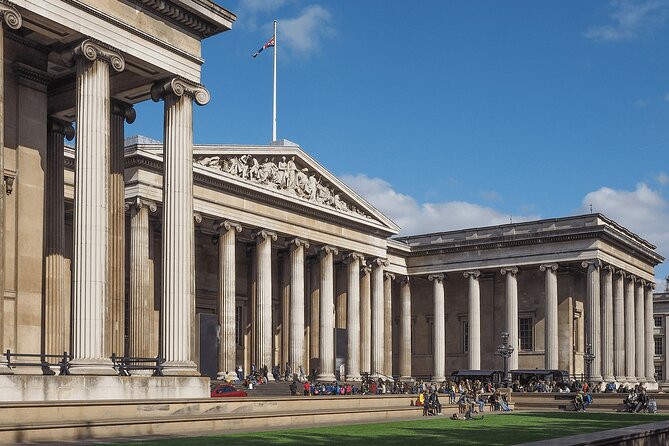
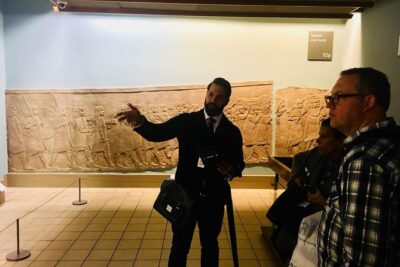
The British Museum’s greatest strength is also its biggest problem: there is far too much to see. This private tour cuts through the maze and takes you to major pieces such as the Rosetta Stone, Egyptian mummies, the Lewis Chessmen, and the Sutton Hoo Burial Treasures. Guides Daniel and Jamie have both led especially engaging visits, with room for questions and different interests.
I like the personal attention and the way the tour makes a huge museum manageable in about two and a half hours. I also like that admission is included, so you can focus on the objects rather than sorting out another ticket. The main consideration is simple: this is a highlights tour, not a full survey of the museum, and the $17 price should be checked carefully when booking since a private guided visit at that rate may vary by date or availability.
In This Review
- Key points to know before booking
- Why a Private British Museum Tour Helps
- Meeting at Goodge Street and Getting Started
- The Rosetta Stone and the Power of One Object
- Egyptian Mummies and the Museum’s Ancient World
- Sutton Hoo and the Lewis Chessmen
- What Two and a Half Hours Really Buys You
- A Private Tour for Families and Mixed Interests
- Mobility, Accessibility, and Practical Comfort
- The Guide Makes the Difference
- Is $17 Good Value?
- Who Should Book This Tour?
- FAQ
- Where does the tour begin?
- Where does the activity end?
- Is admission to the British Museum included?
- How long does the tour last?
- Is this a private tour?
- Can I cancel for a full refund?
- Should You Book the Private British Museum Tour?
Key points to know before booking
- Rosetta Stone and Egyptian mummies: See two of the museum’s best-known displays with context from your guide.
- Private group format: Only your group takes part, giving you a chance to ask questions without a large crowd around you.
- Daniel and Jamie as standout guides: Their tours have included tailored explanations, efficient routes, and strong help for families and visitors with mobility needs.
- Goodge Street meeting point: Begin and finish at Goodge Street Underground Ltd on Tottenham Court Road.
- About two and a half hours: The museum visit itself is listed at two hours, while the full activity lasts about two hours and 30 minutes.
- Free cancellation up to 24 hours ahead: A full refund is available if you cancel at least one day before the start time.
Why a Private British Museum Tour Helps
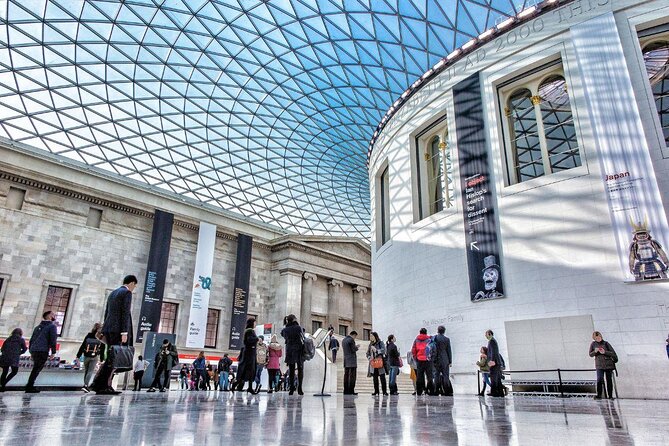
The British Museum is not difficult to enter, but it can be difficult to use well. Its galleries hold objects from across the world and thousands of years of human history. Without a plan, you can spend much of your visit finding the famous rooms, then run out of time before you understand what you are looking at.
A private guide changes the pace. Instead of reading every label or wandering from gallery to gallery, you move toward the objects with the greatest appeal. Your guide supplies the basic story, points out details worth noticing, and leaves time for questions. That makes this a useful choice if you have only one morning or afternoon in London.
The private format matters most for families, couples, and small groups with mixed interests. You can ask why an object matters, how it was found, or what a symbol means without waiting for a scheduled group question period. If one person cares about ancient Egypt and another prefers medieval Europe, your guide can adjust the conversation.
The tour is also a good first visit to the museum. You will not see everything, but you can learn the layout and return later to galleries that caught your attention. Think of it as a guided introduction rather than a complete museum education.
More British Museum visits:
- London: British Museum Guided Tour
★ 4.3 · 1,182 reviews - British Museum London Guided Tour Semi-Private 8ppl Max
★ 5.0 · 984 reviews - London: Tour of the British Museum
★ 4.1 · 678 reviews
Meeting at Goodge Street and Getting Started
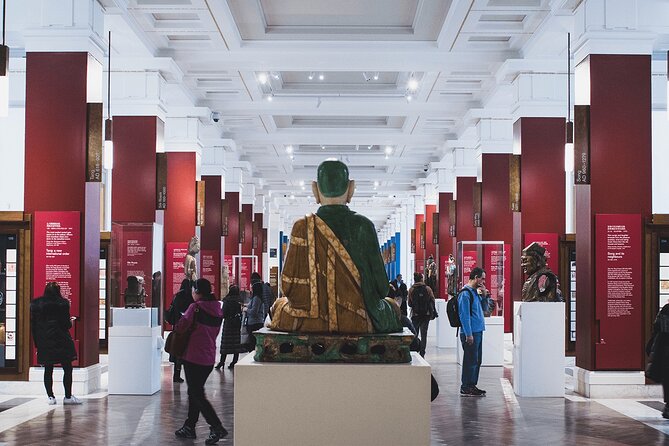
The meeting point is Goodge Street Underground Ltd, at 75 Tottenham Court Road, London W1P 9PA. The activity also ends back at this meeting point, so allow a little time for the return when planning lunch, a show, or another appointment.
This detail is worth taking seriously. The British Museum is the main attraction, but the listed start and end point is Goodge Street rather than a museum entrance. Read your confirmation carefully and arrive with enough time to locate the meeting place. The booking confirmation is issued at the time of booking.
The guide takes your group into the British Museum, where museum admission is included. Food and drinks are not included, so plan to eat before or after the tour. Since the visit is relatively focused, you do not need to carry supplies for a full day inside the building.
The precise route can change with museum conditions and your interests. That flexibility is one of the better reasons to choose a private tour, but it also means you should tell the guide at the start if a particular object or period matters most to you.
The Rosetta Stone and the Power of One Object
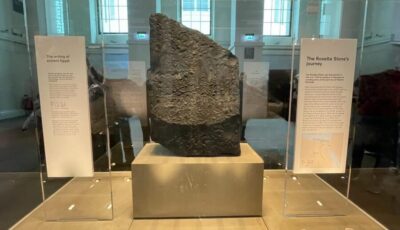
The Rosetta Stone is an obvious first target, and rightly so. It is not simply a famous slab behind glass. Its importance comes from the same text appearing in different scripts, which helped scholars make progress in reading ancient Egyptian writing.
A guide can make that point easier to grasp than a label alone. You can look at the stone while hearing how its inscriptions connected languages and opened a path into a civilization that had been difficult for modern scholars to read. The object becomes a key to a much larger story.
The drawback is that famous objects attract crowds. One tour participant described the guide moving efficiently through a large crowd during a particularly busy week. That is a practical advantage in a museum where the best-known displays can become slow-moving gathering points.
Do not expect a quiet, private room around the Rosetta Stone. The private part of the tour means your group has its own guide, not that the public gallery belongs only to you. A good guide helps you get into position, understand what you are seeing, and move on before too much time disappears.
Egyptian Mummies and the Museum’s Ancient World
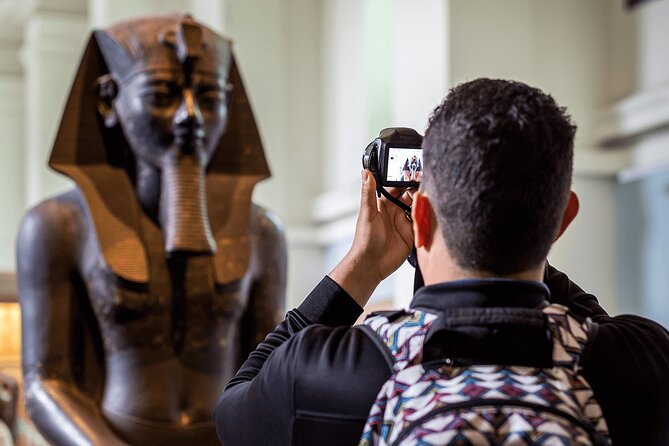
The Egyptian galleries provide another major focus. Mummies can draw children and adults alike, but they are more than dramatic objects. They open questions about burial, belief, family, preservation, and the way ancient people understood death.
Your guide provides the background needed to look beyond the first impression. Instead of seeing only a wrapped body or painted case, you can pay attention to the signs of care, ritual, and status. The tour summary specifically includes ancient Egyptian mummies among its main stops, so this is one of the strongest reasons to book if Egypt is high on your list.
The Egyptian rooms can also be a useful test of the guide’s style. You may prefer dates and archaeological facts, while someone else in your group may want the human story. With a private visit, you can ask for more explanation or keep moving when a topic has had enough time.
This section may be especially effective for families. One family chose the tour so the children could see key objects without spending all day reading labels. That is the practical value here: the guide turns a large subject into a series of clear moments rather than a long march through display cases.
More London museums to visit:
- Tower of London and Crown Jewels Exhibition Ticket
★ 4.5 · 6,677 reviews - London: Chelsea Football Club Stadium and Museum Tour
★ 4.8 · 4,576 reviews - Chelsea FC Stadium Tours and Museum
★ 5.0 · 1,908 reviews - London Transport Museum Entrance Ticket
★ 4.5 · 1,323 reviews
Sutton Hoo and the Lewis Chessmen
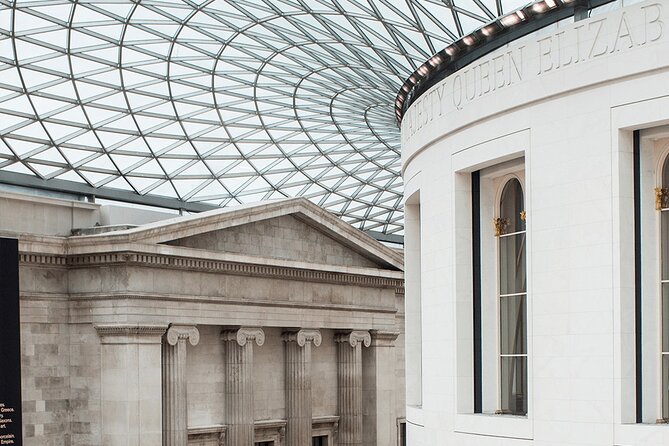
The Sutton Hoo Burial Treasures bring the British Museum closer to home. These objects come from an Anglo-Saxon ship burial in Suffolk and offer a view of early medieval Britain through weapons, ornaments, and signs of status. The famous helmet is often the image people remember, but the wider collection matters because it shows the scale and ceremony of the burial.
A guide can help connect individual objects to the burial as a whole. That gives you a stronger sense of why the find changed how people think about early medieval England. It also adds variety after the ancient Egyptian displays.
The Lewis Chessmen offer a different kind of appeal. These small medieval figures are instantly recognizable, but their value is not only visual. They invite questions about games, craftsmanship, trade, and daily life. They are also a fine stop for children because the pieces have strong personalities and are easier to take in than a long row of similar objects.
The combination of Sutton Hoo and the Lewis Chessmen shows why a highlights tour can work well. You move from royal burial and early medieval power to a set of game pieces that feel familiar and human. The guide’s job is to make those links clear without burying you in dates.
What Two and a Half Hours Really Buys You
The full experience lasts approximately two hours and 30 minutes. The museum stop is listed as two hours, so the difference likely allows for meeting, entry, and movement, though the exact timing may depend on the day.
Two hours inside the British Museum is enough for a strong introduction. It is not enough to cover every major gallery, read every label, or spend long periods sketching and studying individual objects. If you want a slow museum day, book extra time before or after the guided portion for your own exploration.
For most people, the shorter format is a benefit. London days fill quickly, and a concentrated museum visit leaves room for Covent Garden, the West End, Bloomsbury, or another sight. You get a clear route through important rooms without giving the museum an entire day.
The private format also reduces wasted time. Your guide can move your group toward the selected displays instead of stopping for every case. That does not mean rushing from object to object. It means the time is shaped around a plan.
A Private Tour for Families and Mixed Interests
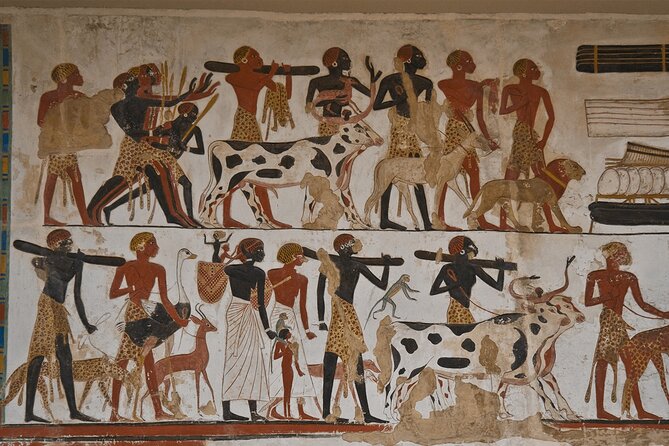
The tour is particularly well suited to families. Children often lose patience in a huge museum, especially when every gallery appears to demand close reading. A guide can keep the visit moving and focus on objects with a strong visual or story element, such as mummies, chess pieces, and burial treasures.
Adults benefit too. You do not have to choose between keeping the children engaged and learning something yourself. The private setting gives you room to ask follow-up questions while the guide adjusts the level of detail.
Couples and small groups with different interests can also make good use of the format. Tell the guide what you care about early. You may get more from the visit if you say you want archaeology, medieval Britain, ancient writing, or family-friendly explanations rather than simply accepting a fixed route.
The tour is less suitable if your main goal is solitude. The museum itself can be busy, especially around famous displays, and a guide cannot remove the public from the galleries. It is also not the best pick for someone who wants a specialized, academic study of one collection for several hours.
Mobility, Accessibility, and Practical Comfort
The information provided says service animals are allowed and that most people can participate. Several visits also included practical help for people using wheelchairs or mobility scooters, including assistance with entry and a wheelchair arranged during one visit.
That is encouraging, but you should still explain your needs when booking or at the meeting point. The guide may be able to help, as Daniel did for one visitor, but the information does not promise a specific vehicle, route, or level of assistance for every booking.
A private group can be easier to manage than a large scheduled party. You are not trying to keep up with strangers or apologizing for taking extra time. That flexibility is useful for anyone who needs a slower pace.
Still, the tour involves movement through a major museum, and conditions can change. Ask the provider directly about your exact mobility requirements if you use a scooter, need seating, or require a particular route. Service animals are explicitly allowed.
The Guide Makes the Difference
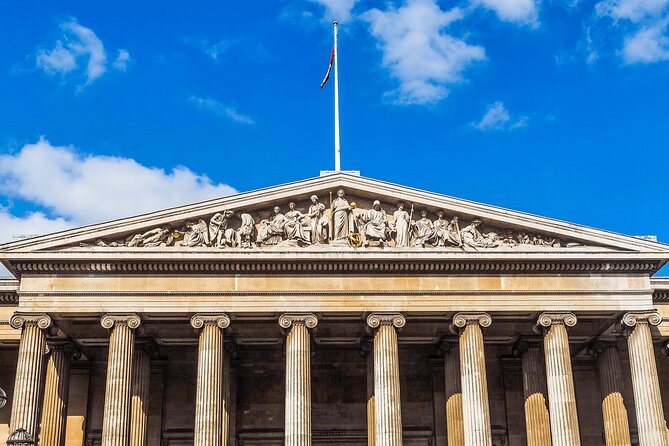
The strongest part of this experience is the guide. Daniel is described as open to questions and able to adapt the tour to specific interests. Jamie is noted for patience, strong background explanations, and efficient movement through a crowded museum.
Those qualities matter more here than a long list of objects. The British Museum already provides the displays. What you are paying for is help in deciding what deserves your attention and why it matters.
A good private guide should also know when to pause. You can ask about a detail that catches your eye, compare two objects, or request more context about a period. The private format gives the guide room to respond instead of following a script for a large group.
There is no guarantee that you will receive Daniel or Jamie unless your booking specifically confirms the guide. Their names are useful indicators of the style you can hope for: friendly, well prepared, patient, and attentive to the people in front of them. The best sign during the visit is whether your guide listens to your interests rather than simply reciting facts.
Is $17 Good Value?
At $17, this looks like a strong value if the listed price applies to your date and group. Museum admission is included, along with a local guide and a private format. For a short introduction to one of London’s major museums, that combination is appealing.
Price needs a little care, though. A private tour usually costs more than entering a museum alone, and the advertised amount may depend on the booking details. Check the final price before payment, especially if your group size or date changes.
The value is highest for people who dislike wandering without a plan. If you would otherwise spend two hours searching for the Rosetta Stone, Egyptian galleries, Sutton Hoo, and the Lewis Chessmen, the guide can save time and add meaning. If you already know the museum well, the price may be less compelling unless you want a tailored refresher.
Free cancellation up to 24 hours before the start time adds useful flexibility. Cancel at least 24 hours ahead for a full refund. Cancellations or changes made within 24 hours are not refunded or accepted, based on the stated policy.
Who Should Book This Tour?
Book it if you want the British Museum’s major sights without giving up half a day. It is a good match for first-time visitors, families, short London stays, and small groups that want to ask questions as they go.
It is also a sensible choice if you are unsure how to connect the museum’s famous objects. The Rosetta Stone, mummies, Sutton Hoo treasures, and Lewis Chessmen come from very different periods. A guide gives you a route and a story.
Think twice if you prefer to move at your own pace, spend an hour with one object, or explore less famous galleries. You may get more from an unguided visit with extra time. Also confirm the meeting point, duration, and final price before booking.
FAQ
Where does the tour begin?
It begins at Goodge Street Underground Ltd, 75 Tottenham Court Road, London W1P 9PA, UK.
Where does the activity end?
The activity ends back at the Goodge Street meeting point.
Is admission to the British Museum included?
Yes. Your British Museum admission ticket and local guide are included.
How long does the tour last?
The experience lasts approximately two hours and 30 minutes. The British Museum stop is listed as two hours.
Is this a private tour?
Yes. Only your group participates in the private activity.
Can I cancel for a full refund?
Yes, if you cancel at least 24 hours before the experience start time. Cancellations or changes made less than 24 hours ahead are not refunded or accepted.
Should You Book the Private British Museum Tour?
I would book this tour if you want a focused first look at the British Museum, especially with children, limited time, or mobility concerns. The included admission, private setting, and chance to ask questions give the $17 price real appeal if that rate is available for your booking.
You should skip it if your ideal museum visit means wandering alone for hours. For everyone else, this is a practical way to meet the Rosetta Stone, Egyptian mummies, Sutton Hoo, and the Lewis Chessmen without getting lost in one of London’s biggest collections. Check the final price and confirm the meeting details, then let the guide handle the route.
Latest arrivals on the London list
- Easy Access Tower of London Royal Secrets & Scandals Tour★ 5.0 · 3 reviews
- Stonehenge Special Access Guided Morning Tour from London★ 4.5 · 3 reviews
- Madame Tussauds London Fast Track and Champagne Experience★ 3.5 · 3 reviews
- Shoreditch & East London Walking Tour with a Local, Custom & Private★ 5.0 · 3 reviews
- London Private Brixton Tour with a Local – Culture & Stories★ 4.9 · 3 reviews
- Private Full Day Tour – Fast Track Tower of London and Lunch★ 4.6 · 3 reviews
- Private transfer from London Heathrow Airport to Southampton★ 5.0 · 3 reviews
- London Soho District – Guided Walking Tour 12 guests 2,5h★ 4.8 · 3 reviews
British Museum Tours, compared.
British Museum London Guided Tour Semi-Private 8ppl Max
Read our review →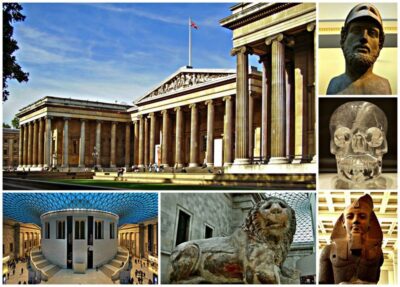
British Museum Audio Tour & Priority Entrance Ticket
Read our review →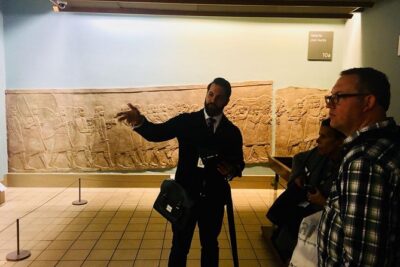
The British Museum London – Exclusive Guided Museum Tour
Read our review →
Browse the lists this tour appears in