
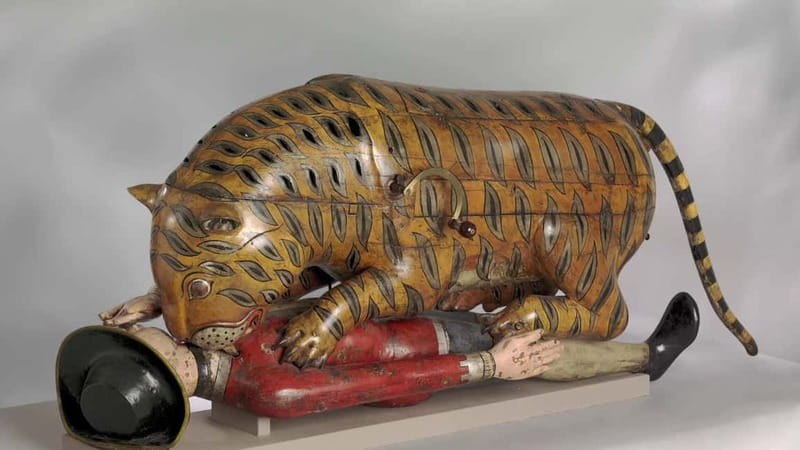
Reviewed · MUSEUMS
Victoria and Albert Museum London Private Guided Tour 3 hour
The best part of this three-hour private tour is the freedom to make sense of a very large museum without wandering from room to room on your own. The V&A covers art, fashion, furniture, jewelry, textiles, ceramics, drawings, woodwork, and more, so a guide gives your visit a clear thread.
I like the chance to shape the tour around your interests, and I like the personal pace. Guide Robert Miller has led especially lively visits, using humor, stories, and questions to connect objects with the people who made and used them. The main consideration is that temporary exhibitions are not included, and the tour is offered in English only.
In This Review
- Key points at a glance
- Why a private V&A tour can make sense
- Entering the V&A through art, fashion, and design
- Seeing craftsmanship in the details
- Interactive displays and installations
- Robert Miller’s storytelling style
- A three-hour route at your own pace
- What the $262.66 group price buys
- Who should book this private museum visit
- Practical tips for getting more from the tour
- Should you book the V&A private tour?
- FAQ
- Where does the V&A private tour begin?
- Where does the tour end?
- How long does the tour last?
- How many people can join the private group?
- What language is the tour offered in?
- Can the tour focus on my interests?
- Are temporary exhibitions included?
- Is the tour wheelchair accessible?
- What is the cancellation policy?
Key points at a glance
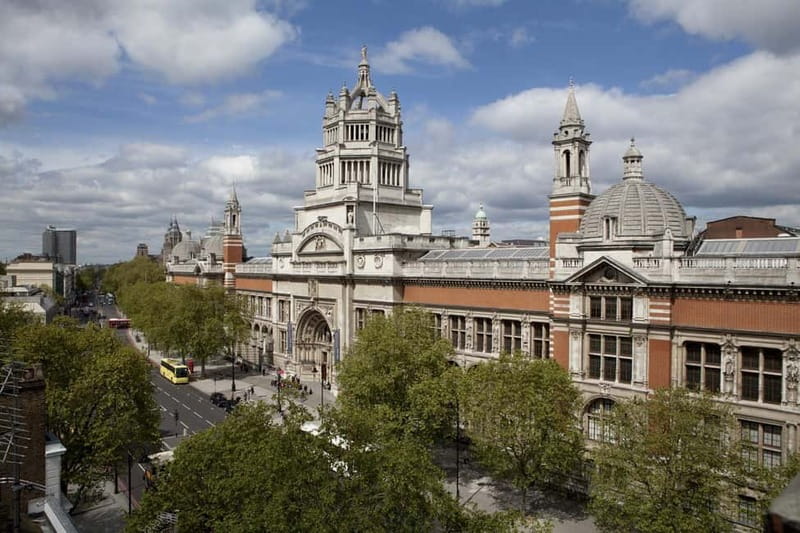
- Three hours inside the V&A: A focused visit through major works in art, design, and decorative arts.
- Private group for up to five: You get a personal guide rather than a set group moving at someone else’s pace.
- Robert Miller may be your guide: He is praised for clear explanations, humor, and bringing objects to life.
- Your interests can shape the route: Ask to spend more time with fashion, jewelry, ceramics, textiles, furniture, or another area.
- Interactive displays add variety: Some installations help show how design works rather than simply placing objects behind glass.
- Temporary exhibitions cost extra: The included tour focuses on the museum’s main collections.
Why a private V&A tour can make sense
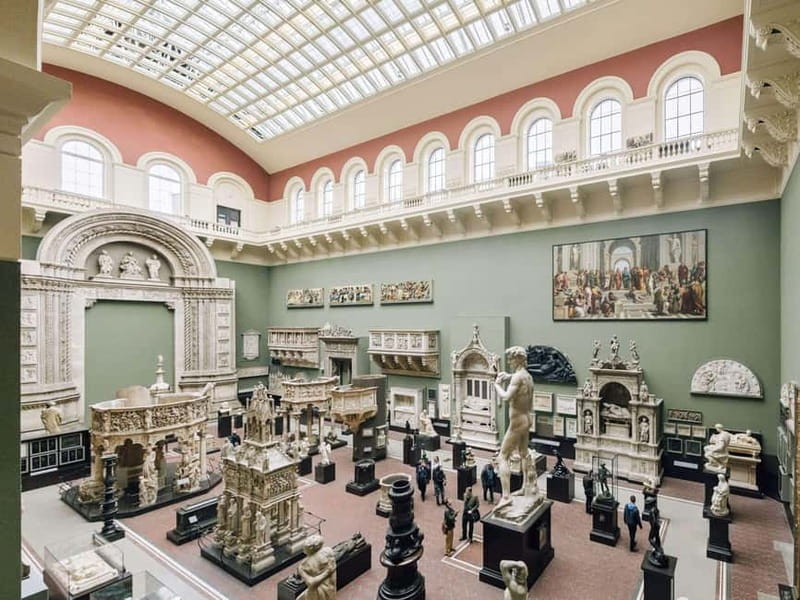
The Victoria and Albert Museum is not a single-subject collection. It is a huge storehouse of objects made for daily life, ceremony, decoration, clothing, worship, and display. That range is its strength, but it can also make a first visit feel scattered.
A private guide helps you connect the rooms. A ceramic object is not only a beautiful vessel. A piece of furniture can reveal social habits, technology, taste, and status. A necklace may show both fine craft and the values of the person who wore it. The guide’s job is to make those links clear without turning the visit into a lecture.
You are not buying a museum admission ticket with a few comments added on. You are paying for interpretation, direction, and flexibility. That matters most if you have only three hours, if you are visiting the V&A for the first time, or if the museum’s broad collection feels hard to organize.
The tour begins outside the main entrance on Cromwell Road and ends back at that meeting point. You will need to get yourself to the museum, but once inside, the guide handles the route and the storytelling.
More London museums to visit:
- Tower of London and Crown Jewels Exhibition Ticket
★ 4.5 · 6,677 reviews - London: Chelsea Football Club Stadium and Museum Tour
★ 4.8 · 4,576 reviews - Chelsea FC Stadium Tours and Museum
★ 5.0 · 1,908 reviews
Entering the V&A through art, fashion, and design
The first part of the visit is about orientation. Rather than rushing to one famous object, your guide can help you understand the kind of museum you are entering. The V&A brings together objects from many places and periods, with design as the common thread.
That makes the museum especially useful for travelers who enjoy more than paintings and statues. You might spend time looking at the cut of a garment, the surface of a ceramic, the joinery of a wooden object, or the tiny details in a piece of jewelry. These are objects made to be handled, worn, used, displayed, or admired, and that gives the collection a different feel from a traditional fine-art museum.
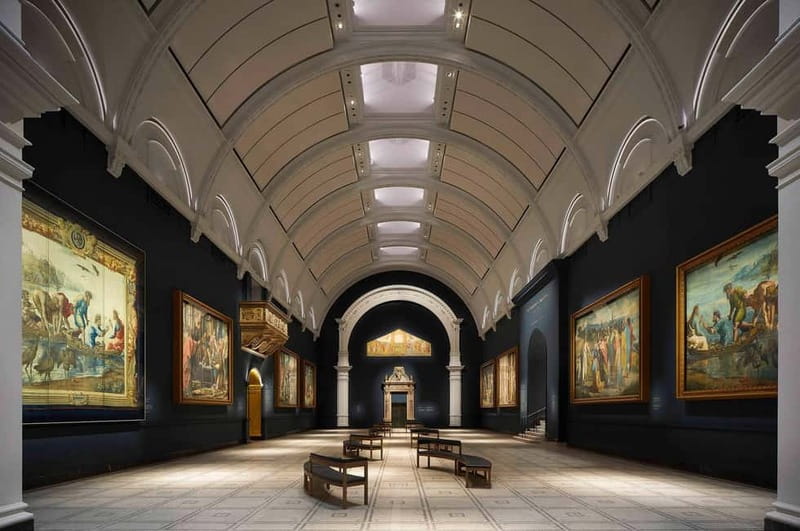
The museum’s architecture and interior design are also part of the visit. Your guide can point out how the setting affects the way objects are displayed, helping you notice the building instead of treating it as a simple container for the collection.
If you have a particular interest, say so early. The tour can be adjusted toward fashion, textiles, furniture, ceramics, drawings, jewelry, woodwork, or decorative arts. That flexibility is one of the clearest reasons to choose a private visit instead of a standard group tour.
Seeing craftsmanship in the details
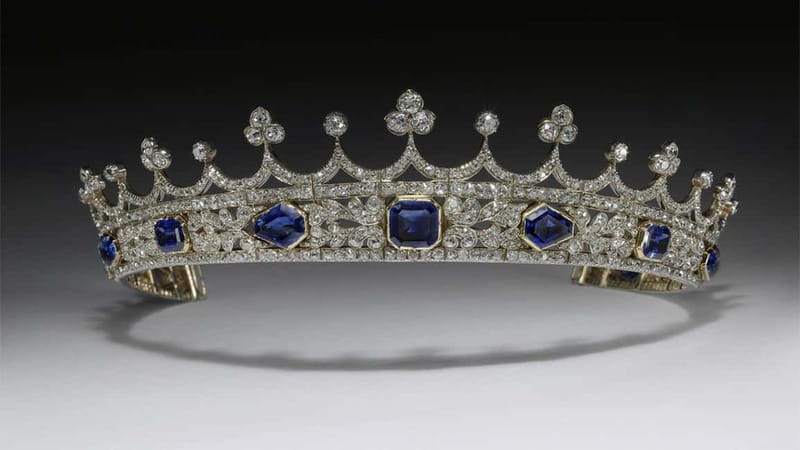
A major pleasure of the V&A is close looking. Many objects reward a slower pace because the important features are small: a pattern, a carved surface, a join, a thread, a setting, or a change in texture.
On your own, you may notice that something is attractive without knowing why it matters. A guide can direct your eye to the choices behind it. What material was used? How was it shaped? Was it made for everyday use or a special occasion? Who could afford it? What does its decoration tell you about the time and place where it was made?
Those questions turn display cases into evidence of human choices. You are not simply ticking off famous objects. You are learning how design works and why skilled making has value.
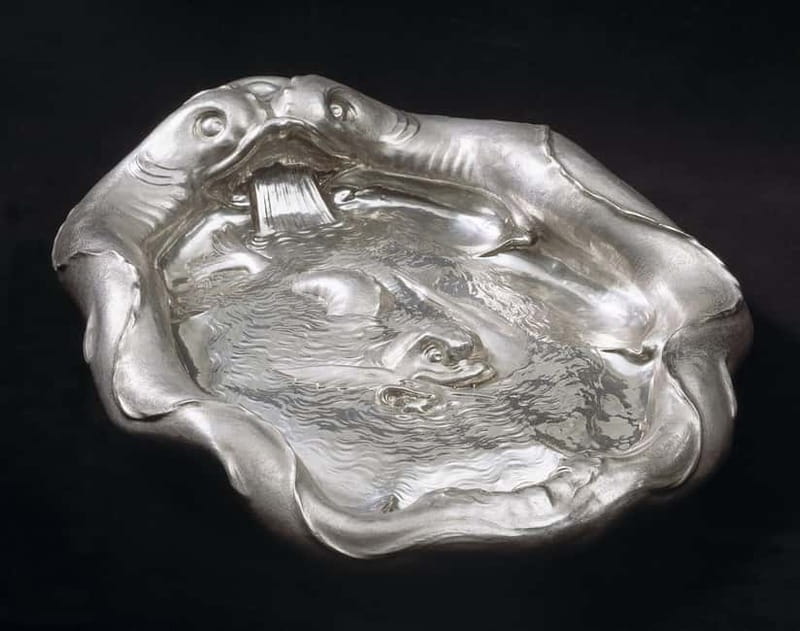
The collection includes sculptures, ceramics, furniture, drawings, jewelry, textiles, woodwork, and other decorative arts. Because the subject matter is so varied, the guide can adjust the balance for your group. A design student may want technical detail. A family may prefer vivid stories and interactive displays. A mixed-interest company group may need a route that moves between several types of object.
That last point matters. Five people rarely want the same museum visit. A private tour gives the guide room to change direction when one display catches your attention.
Interactive displays and installations
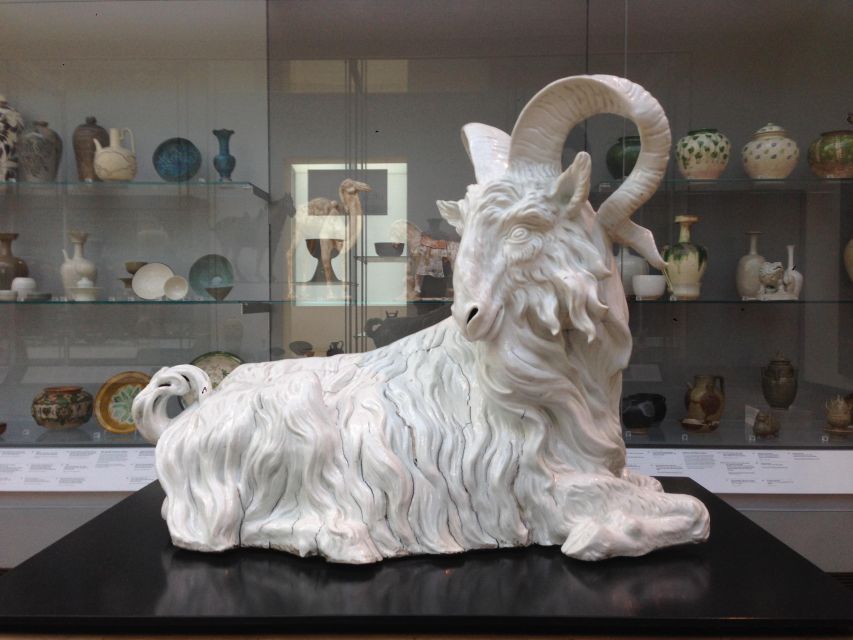
The V&A is not limited to quiet rooms filled with objects. Interactive displays and installations help explain design in a more active way. They can show how an object works, how a form was developed, or how design affects the people using it.
This is useful if you are traveling with someone who finds a long succession of display cases tiring. It also gives the tour a change of rhythm. You may spend one moment examining a delicate historical object and the next considering a display that asks you to think about movement, materials, or function.
The supplied details do not promise a fixed list of interactive stops, so the exact route may vary. Your guide can decide which installations fit your interests and the time available. That is another reason to discuss your priorities at the start instead of assuming every room will be covered.
Do not expect to see every corner of the museum in three hours. The V&A’s size makes that unrealistic. The goal is a well-chosen selection that leaves you with a better sense of the collection and a short list of areas you may want to revisit later.
A few more London days worth a look
- Westminster 3 Hour Walking Tour and Visit of Churchill War Rooms
★ 5.0 · 967 reviews - Highlights of Royal London Bike Tour (3 Hours)
★ 4.8 · 140 reviews - London: 3-Hour Secret Indian Food Tour
★ 4.8 · 91 reviews - London: 3-Hour Sunset Bike Tour
★ 4.7 · 77 reviews
Robert Miller’s storytelling style
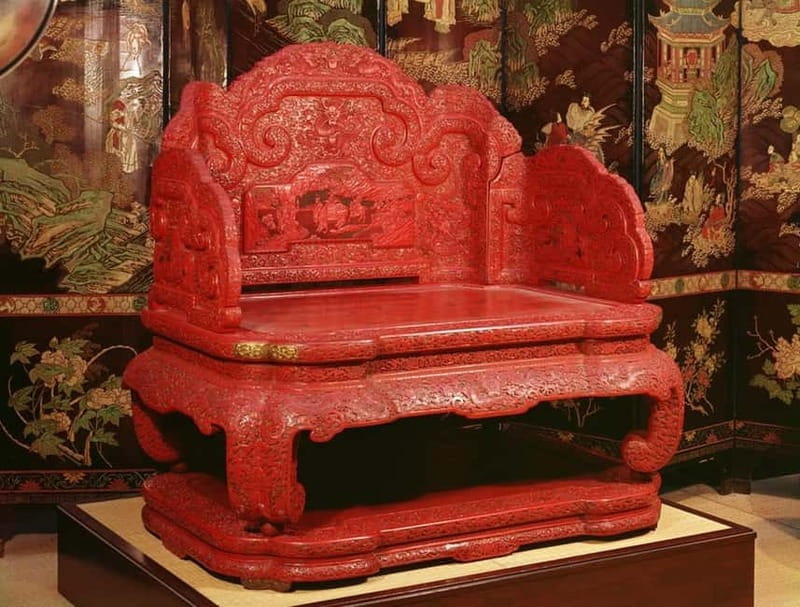
If Robert Miller is your guide, expect a visit shaped by explanation and conversation. He has been praised for exceptional subject knowledge, a personalized route, kindness, humor, and small stories about objects and artists.
Those details are important because a private tour can be either warm and engaging or overly formal. Robert’s approach, as described by the experience, includes frequent questions and room for you to ask your own. That keeps the tour from becoming a one-way speech.
A particularly useful feature is the way he connects objects across time and place. The V&A’s collections span many centuries and cultures, and it is easy to lose the larger picture. A good guide gives you enough context to see how ideas about beauty, usefulness, status, and craft change over time.
He also seems well suited to mixed groups. One five-person company group found the activity difficult to choose for everyone, yet the visit worked because the guide covered a broad range, added humor, and kept making space for questions. That suggests a practical benefit for families, friends, or colleagues with different levels of interest.
No guide can guarantee that every object will appeal to every person. Still, the private format gives you a better chance to say, This is fascinating, or We would rather spend less time here, and have the visit adjusted.
A three-hour route at your own pace
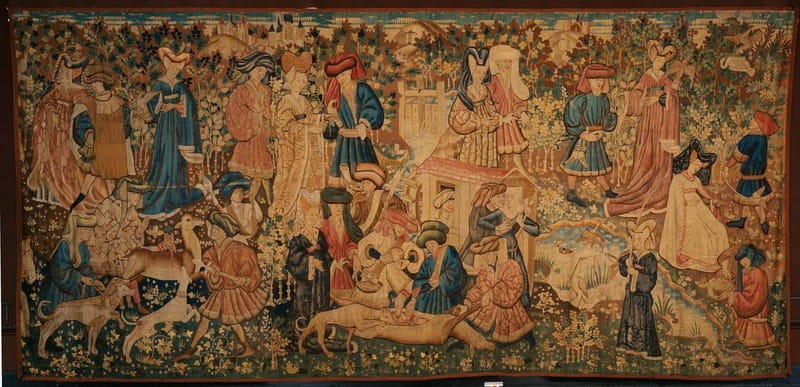
Three hours is long enough for a serious introduction but short enough to fit into a busy London schedule. I would treat it as a focused first look, not a complete museum visit.
The route may begin with broad highlights, then narrow toward your chosen subjects. You could ask for more emphasis on fashion and textiles, or guide the visit toward furniture, ceramics, jewelry, drawings, sculpture, or woodwork. The tour is bespoke, so the exact balance depends on what your group wants to see.
The pace is another advantage. You can stop to ask questions, spend time on a detail, or move on when an object does not hold your attention. In a public group, one person’s curiosity can slow everyone down. Here, the conversation belongs to your group.
You should wear comfortable shoes and arrive ready to walk through a large museum, although the experience is wheelchair accessible. The information does not provide a fixed route or guaranteed list of galleries, so anyone seeking one specific object should mention that interest when booking or at the start.
The tour returns to the original meeting point outside the main entrance. That makes the end simple, especially if you have arranged lunch, another museum visit, or an afternoon in the surrounding area.
What the $262.66 group price buys
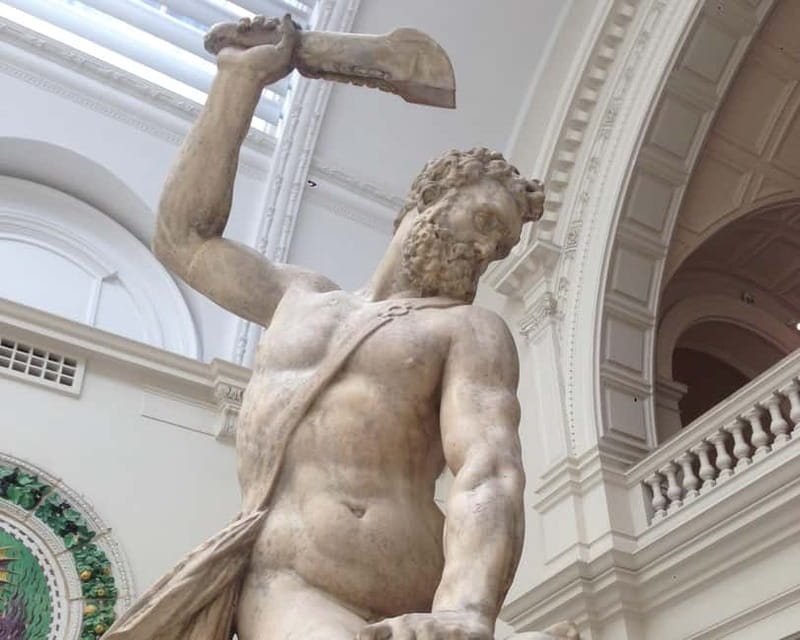
The price is $262.66 for a private group of up to five people. If five people share the cost, that works out to about $52.53 each. For a couple, the per-person cost is much higher, so the value depends on how much you want personal guidance.
The strongest value comes when your group uses the flexibility. If you have a clear interest in design, fashion, decorative arts, or craftsmanship, a tailored route can save time and make the museum more rewarding. It is also useful when the group has different tastes and needs a guide who can move between subjects.
For a solo visitor or a pair on a tight budget, a private tour may feel expensive compared with exploring independently. The V&A’s size can justify the cost, but only if you want interpretation and conversation rather than simply access to the collection.
Temporary exhibitions are not included and require pre-booked tickets at an additional cost. If a special exhibition is the main reason you want to visit, budget for that separately and confirm its ticket arrangements before you book this tour.
You can reserve now and pay later, which helps if your London plans are still changing. Free cancellation is available up to 24 hours in advance for a full refund. Those policies reduce some of the risk, though you should still check the available start times before committing your day.
Who should book this private museum visit
I would recommend it most strongly for:
- First-time V&A visitors who want a clear introduction
- Small families who need a flexible pace
- Friends or colleagues with several different interests
- Design, fashion, craft, and decorative-arts enthusiasts
- People who enjoy asking questions rather than reading every label alone
- Visitors with only three hours for the museum
It may be less suitable if you want to explore silently and independently, or if your main plan is a temporary exhibition. It is also offered in English, so you should be comfortable following a detailed spoken tour in that language.
The activity is wheelchair accessible. The supplied information says it is not suitable for people with visual or hearing impairments, so contact the provider before booking if you need adaptations or rely on accessibility support beyond the stated arrangements.
Practical tips for getting more from the tour
Tell the guide what your group cares about before the visit begins. A simple list such as fashion, jewelry, furniture, or ceramics gives the tour a useful starting point.
If your group includes people with different interests, say that too. The guide can vary the route and keep the visit from becoming too narrow. Robert Miller’s reported use of humor, short stories, and questions suggests that a mixed group can work well when the guide knows what the group needs.
Do not try to force every major collection into the three hours. Pick two or three strong themes and allow time for questions. You will remember more from a handful of well-explained objects than from a hurried march past dozens.
If a temporary exhibition matters to you, arrange its ticket separately. It is not part of the private tour price, and the main collection route may not include it.
Should you book the V&A private tour?
Book it if you want the V&A to feel manageable, personal, and connected rather than simply large. The best reasons are the private format, the ability to tailor the route, and the chance to spend real time with objects in fashion, jewelry, ceramics, furniture, textiles, and design.
The price makes the most sense for a group of four or five, especially when your interests are specific or your time is limited. If you are happy to read labels and set your own route, save the money and explore independently. If you want a guide who can explain why the objects matter, answer questions, and adjust the visit as you go, this three-hour experience is a strong choice.
FAQ
Where does the V&A private tour begin?
You meet your guide outside the main entrance of the Victoria and Albert Museum on Cromwell Road.
Where does the tour end?
The tour ends back at the original meeting point outside the museum.
How long does the tour last?
The private guided tour lasts three hours. Starting times depend on availability.
How many people can join the private group?
The listed price covers a private group of up to five people.
What language is the tour offered in?
The live tour guide provides the experience in English.
Can the tour focus on my interests?
Yes. The route can be tailored to particular interests, including areas such as fashion, jewelry, textiles, ceramics, furniture, drawings, woodwork, and decorative arts.
Are temporary exhibitions included?
No. Temporary exhibitions require pre-booked tickets at an additional cost.
Is the tour wheelchair accessible?
Yes, the activity is wheelchair accessible.
What is the cancellation policy?
You can cancel up to 24 hours in advance for a full refund. You can also reserve now and pay later.
Latest arrivals on the London list
- Easy Access Tower of London Royal Secrets & Scandals Tour★ 5.0 · 3 reviews
- Stonehenge Special Access Guided Morning Tour from London★ 4.5 · 3 reviews
- Shoreditch & East London Walking Tour with a Local, Custom & Private★ 5.0 · 3 reviews
- Madame Tussauds London Fast Track and Champagne Experience★ 3.5 · 3 reviews
- London Private Brixton Tour with a Local – Culture & Stories★ 4.9 · 3 reviews
- Private Full Day Tour – Fast Track Tower of London and Lunch★ 4.6 · 3 reviews
- Private transfer from London Heathrow Airport to Southampton★ 5.0 · 3 reviews
- London Soho District – Guided Walking Tour 12 guests 2,5h★ 4.8 · 3 reviews
Museums, compared.
Tower of London and Crown Jewels Exhibition Ticket
Read our review →
Chelsea Football Club Stadium and Museum Tour
Read our review →
Official tickets: Moco Modern & Contemporary Art Museum
Read our review →
British Museum London Guided Tour Semi-Private 8ppl Max
Read our review →
Browse the lists this tour appears in