
Reviewed · BRITISH MUSEUM TOURS
British Museum & National Gallery Highlight Tour 8 guests 5h
London’s two great museums can swallow a whole day, yet this tour gives you a clear route through both in about 5.5 hours. At the National Gallery, you move from Botticelli and da Vinci to Monet and Seurat. After lunch, the British Museum brings you face to face with the Rosetta Stone, Assyrian lion hunts, samurai armor, and the Lewis Chessmen.
I like the small maximum of eight people, which gives the guide a better chance to answer questions than a large coach tour. I also like the story-first approach. You are not simply pointed toward famous objects. You learn why a painting or artifact matters, and that helps the visit stick. The main caution is timing: two enormous museums in one day means highlights, not a leisurely look at every room.
In This Review
- Key points to know before booking
- Why a guided route helps at the National Gallery
- The paintings that anchor the first half
- What the National Gallery visit feels like in practice
- A lunch break before the British Museum
- Six thousand years inside the British Museum
- Objects that make the second half memorable
- Guide quality matters more than usual here
- Is $206 a fair price?
- Timing, walking, bags, and access
- Who should choose this museum tour?
- Should you book it?
- FAQ
- How long does the tour last?
- Which museums are included?
- What famous works and objects might I see?
- Is lunch included?
- How large is the group?
- What should I bring?
- Is the tour wheelchair accessible?
Key points to know before booking
- Two major museums in one morning and afternoon: Visit the National Gallery first, then the British Museum after a lunch break.
- A focused selection of famous works: Possible highlights include Sunflowers, The Ambassadors, The Arnolfini Portrait, the Rosetta Stone, and the Lewis Chessmen.
- Small-group format: The semi-private option has a maximum of eight people, with private tours also available.
- Strong guide feedback: Becky received especially warm praise for her wit and knowledge, while Matilda was singled out as an outstanding guide.
- Lunch is on your own: The break between museums gives you time to eat, but food and drinks are not included.
- Bring identification and leave large bags behind: A passport or ID card is required, and luggage is not allowed.
Why a guided route helps at the National Gallery
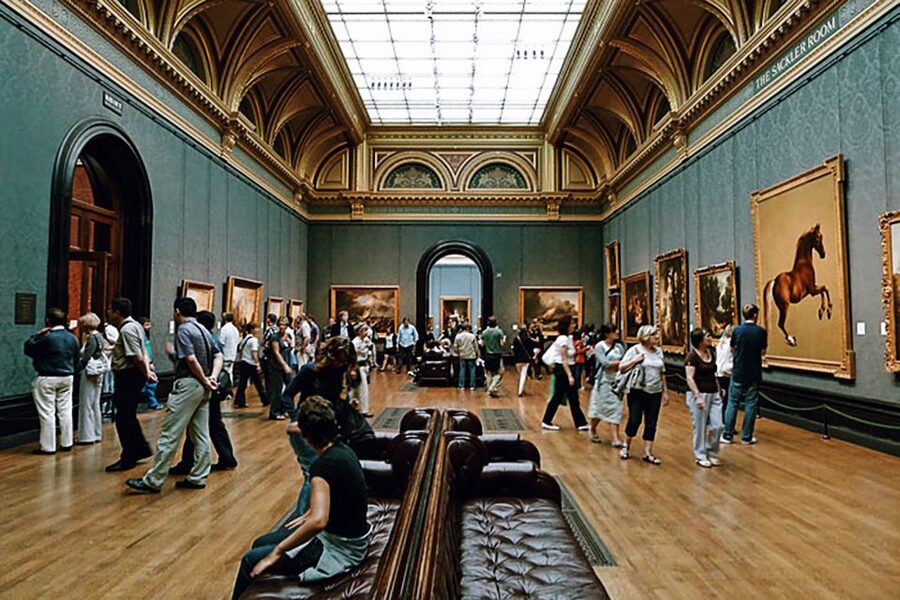
The National Gallery is free to enter, but its size can make a first visit feel like a hunt for famous names. Its collection covers paintings from the 1300s onward, with about 2,300 works on display. Without a plan, you can spend a lot of time walking and still miss the paintings you most wanted to see.
This tour gives you that plan. The guide introduces the painters behind the pictures, then connects their work to changes in style, subject, and technique. You begin with artists such as Botticelli, Leonardo da Vinci, Rembrandt, Vermeer, Van Gogh, Monet, and Seurat.
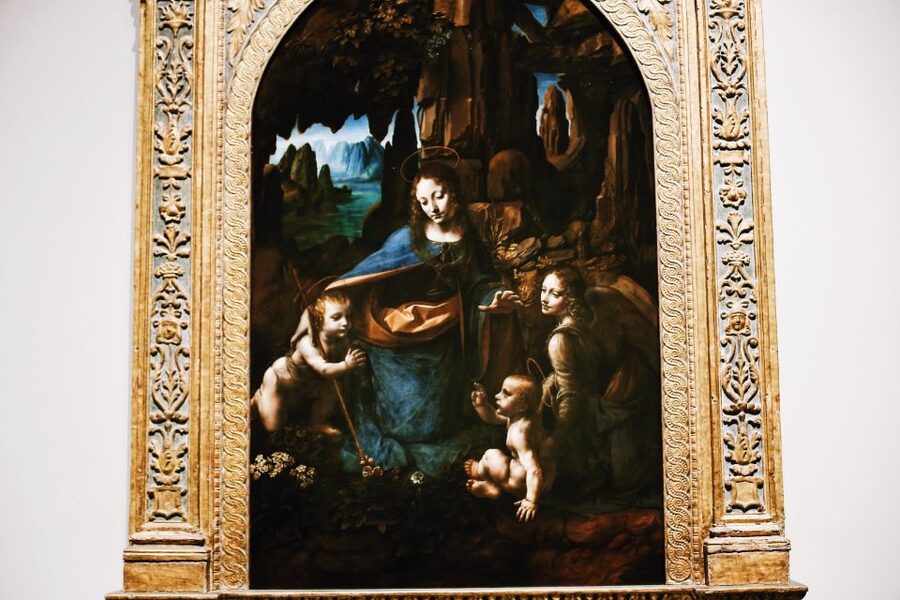
That approach suits you if you want more than a quick photograph. You may know Van Gogh’s name, but the guide helps place Sunflowers within the wider story of the artist and his era. You may recognize da Vinci, but seeing The Virgin of the Rocks becomes more meaningful when someone points out what makes its composition and handling of figures distinctive.
The National Gallery portion is not meant to cover every room. It is a lesson in how to look. The guide selects major works and gives you enough context to understand what you are seeing without turning the visit into a long academic lecture.
More British Museum visits:
- London: British Museum Guided Tour
★ 4.3 · 1,182 reviews - British Museum London Guided Tour Semi-Private 8ppl Max
★ 5.0 · 984 reviews - London: Tour of the British Museum
★ 4.1 · 678 reviews
The paintings that anchor the first half
The specific works available can change if a painting is on loan or being restored. Still, the planned selection gives you a good idea of the tour’s range.
You might see A Young Woman Standing at a Virginal, a work connected with the Dutch tradition of intimate domestic scenes. The Toilet of Venus, also known as The Rokeby Venus, offers a chance to discuss the tradition of the reclining nude and the way artists handled beauty, mythology, and the human form.
The Ambassadors and The Arnolfini Portrait bring you into the world of Northern European painting. These works reward close attention to objects, clothing, gestures, and small details. They are not simply portraits to glance at and pass. A guide can help you notice how the artists used everyday items to suggest status, learning, marriage, or religious ideas.
The Madonna of the Pinks gives you a look at Renaissance devotion and the importance of small devotional paintings. Venus and Mars offers a different mood, linking classical mythology with the concerns of Renaissance patrons.
At the other end of the timeline, you may see Seurat’s Bathers at Asnières. The jump from Renaissance painting to Seurat’s carefully divided color is one of the most useful parts of the visit. You can see how painting changes over centuries, rather than treating each famous picture as an isolated masterpiece.
That broad sweep is the National Gallery’s great strength. In one visit, you move through several hundred years of European art. The guide’s job is to make those changes easy to follow.
What the National Gallery visit feels like in practice
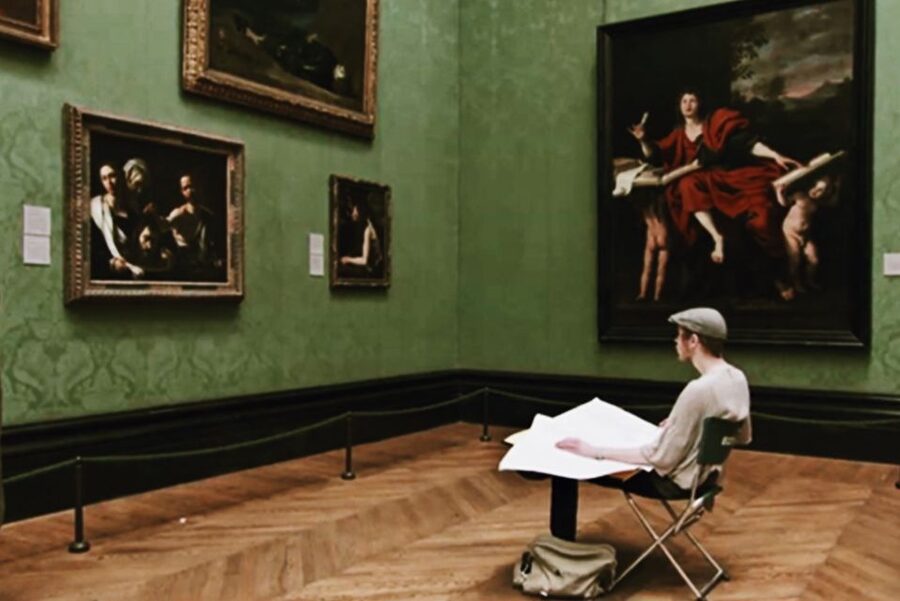
Plan for a fair amount of walking and standing. The museum is large, and even a focused route requires moving between galleries. Comfortable shoes matter more here than formal clothes.
The guide’s live commentary is the main reason to choose this tour instead of simply entering on your own. A good explanation can turn a crowded room into a manageable set of choices. You will not need to read every label, and you will have someone to ask when a painting puzzles you.
This format is particularly helpful if your group includes people with different levels of interest in art. One person may already know the major painters, while another may feel lost in a room full of old portraits. The guide can provide a common starting point.
Be realistic about the pace. You will see important works, but you will not have unlimited time to sit with each one. If you want a slow, highly detailed study of a single artist, a tour devoted only to the National Gallery would suit you better.
A lunch break before the British Museum

The tour includes a lunch break between the two museums, but you pay for your own food and drinks. That pause matters. After several hours of looking at art and walking through galleries, you will want time to rest before starting the second museum.
The meeting point may vary according to the option you book, so check the exact instructions before setting out. Hotel pickup and drop-off are not included. You should also allow enough time to move between the museums, although the supplied details do not specify the transport arrangement or the exact lunch location.
The break is also a useful chance to decide how much energy you have left. The British Museum is vast, and the second half is not a short add-on. The overall schedule works best when you arrive ready for a full museum day split into two parts.
More National Gallery visits:
- London: National Gallery Guided Tour with Art Expert Guide
★ 4.7 · 440 reviews - National Gallery of London Museum Tour Semi-Private 8ppl Max
★ 5.0 · 178 reviews - British Museum & National Gallery of London Semi-Private 8ppl Max
★ 5.0 · 168 reviews - Official National Gallery Highlights Guided Tour
★ 4.5 · 149 reviews
Six thousand years inside the British Museum
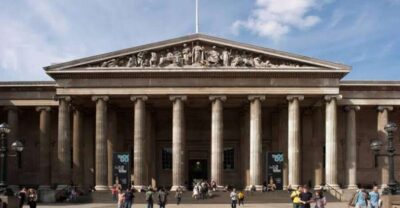
The British Museum changes the subject completely. Instead of concentrating mainly on European paintings, the tour moves through objects from cultures and civilizations spanning roughly 6,000 years.
The guide leads you through sculptures, jewelry, armor, reliefs, games, and funerary objects. The point is not to race through every gallery. It is to use a selection of objects to show how people lived, worshipped, fought, traded, and recorded their ideas.
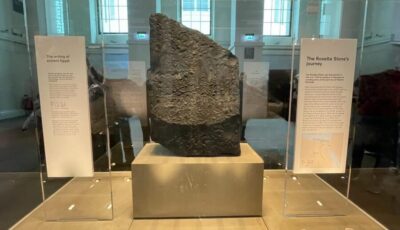
The Rosetta Stone is the obvious starting point for many visitors. It is famous because the inscriptions helped scholars read Egyptian hieroglyphs, and seeing the actual stone gives the story a physical anchor. The guide can explain its role without leaving you to piece together the significance from a crowded display case.
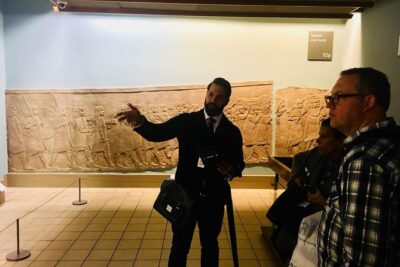
The Assyrian lion hunt reliefs offer a very different experience. These carved scenes show royal power, hunting, and the visual language of an ancient empire. Their detail makes them easy to study, while the guide supplies the political and cultural setting needed to understand why such scenes were made.
The Parthenon sculptures raise questions about ancient Greek art, ownership, and the movement of cultural objects. The tour gives you a chance to see these major works while placing them among the museum’s wider collections.
Objects that make the second half memorable
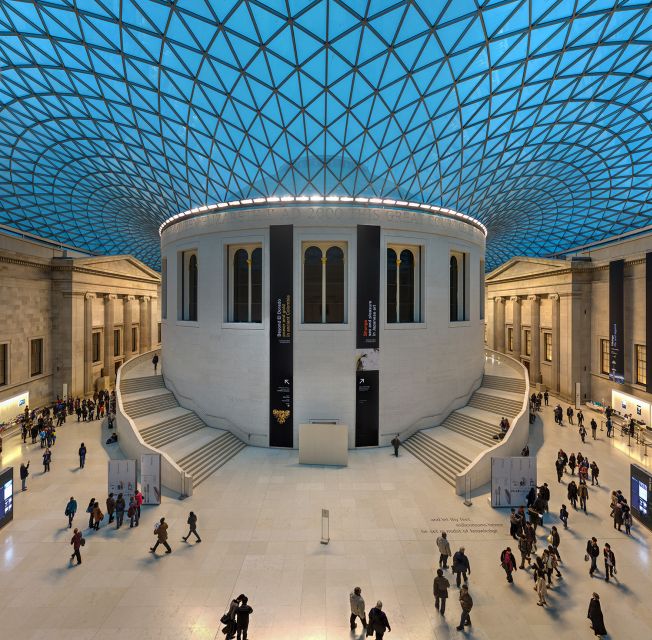
The British Museum portion is at its best when the objects are small, personal, or surprising. The Lewis Chessmen are a good example. These medieval chess pieces are more than game pieces in a case. Their carved faces and poses make the people who created and used them feel unexpectedly close.
The Oxus Treasure shows the skill and wealth of the ancient Persian world through precious metal objects. The Royal Game of Ur takes you farther back and reminds you that board games, competition, and leisure are not modern inventions.
The Mummy of Katebet brings a personal human story into the museum. It can be easy to view ancient Egypt as a collection of grand temples and rulers. A named individual helps shift the focus toward ordinary concerns about death, family, ritual, and remembrance.
Samurai armor adds another strong change of pace. Its materials and purpose make it immediately understandable, even if you know little about Japanese history. You can look at the construction and decoration while the guide explains the warrior culture behind it.
These objects are valuable because they keep the tour from becoming a parade of famous names. You get major sights, but you also see evidence of daily life, play, belief, technology, and power.
Guide quality matters more than usual here
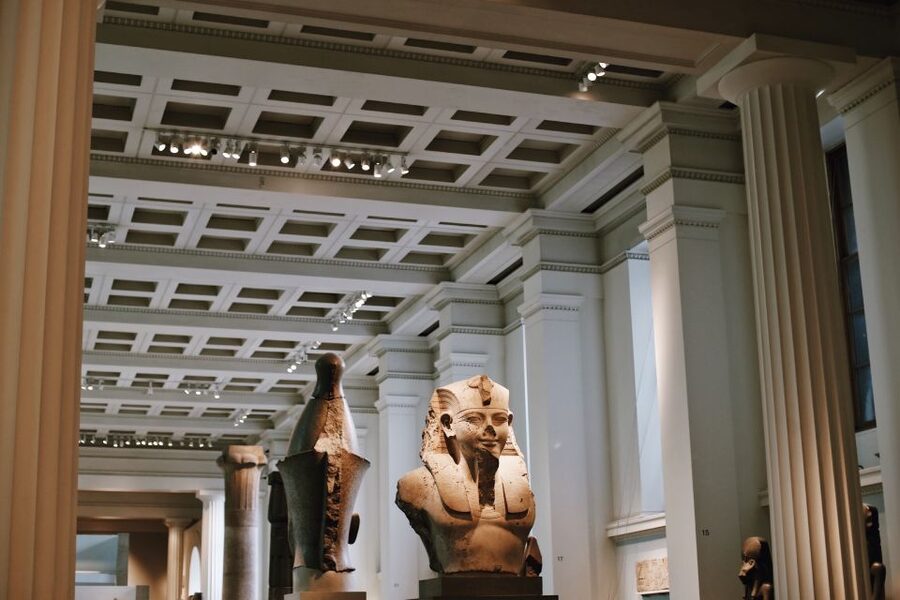
This experience depends heavily on the person leading it. The museums provide the material, but the guide decides how clearly the stories connect.
Becky earned especially strong praise for being lively, witty, and full of information. Matilda was also singled out as an excellent choice, with direct advice to request her. You cannot assume that either guide will be assigned to your date, but their feedback shows the level of personal engagement that can make this format work well.
A strong guide should help you move through both museums without feeling rushed or lost. They should also know when to keep an explanation short. Five and a half hours of nonstop facts would be tiring. The best moments are likely to come when the guide links a detail in a painting or artifact to a larger human story.
The semi-private size helps. With no more than eight people, you can hear the commentary more easily and ask questions without stopping a large crowd. A private booking gives you more control over the pace and focus, but the price may be higher than the listed $206 per person.
Is $206 a fair price?
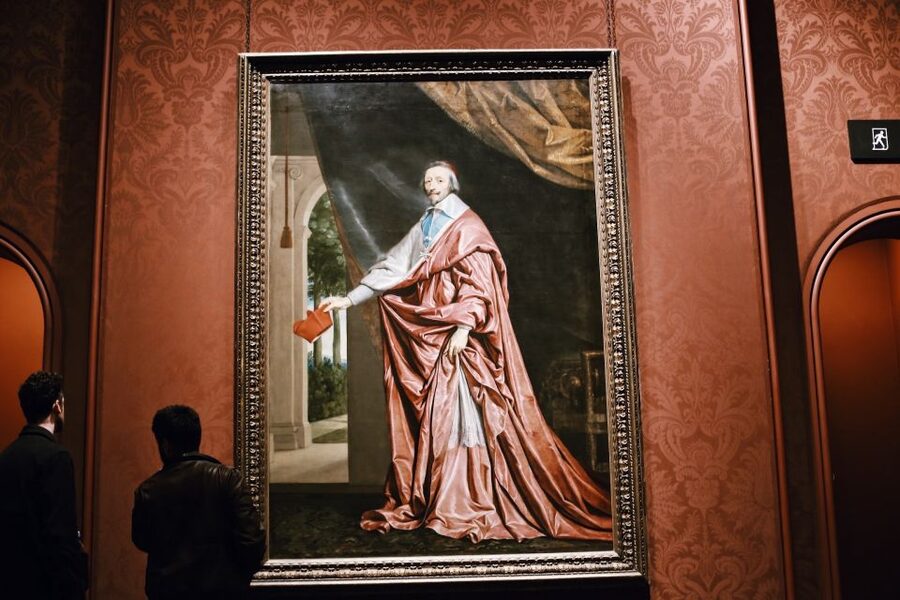
At $206 per person, this is not a budget museum visit. Entry to many of London’s permanent museum collections is free, so the price mainly pays for the guide, organization, and time saved.
The value is strongest if you have limited time in London and want a useful introduction to both museums. You are paying to avoid aimless wandering, find important works, and get a connected explanation from an English-speaking local guide. The small group also offers a more personal format than a large public tour.
The value is weaker if you already know both museums well, prefer to explore alone, or want to spend an entire afternoon with one collection. You would be paying for guidance you may not need.
Temporary exhibitions are not included, and the lunch cost is extra. Keep those expenses in your day’s budget. The tour is available daily, but starting times depend on availability.
Timing, walking, bags, and access
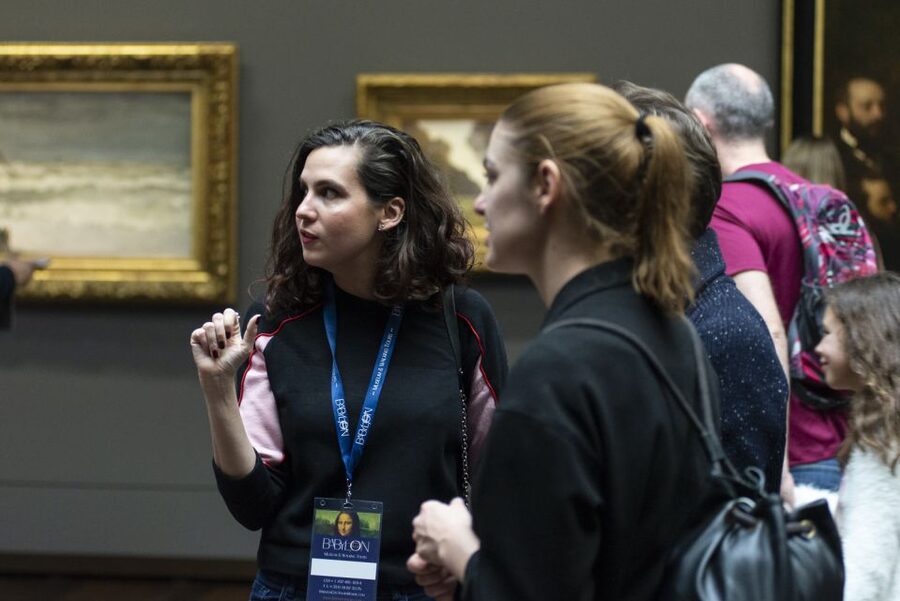
The advertised duration is 5.5 hours. The practical information also mentions a duration of 2 to 2.5 hours, which conflicts with the full itinerary. Since the experience includes both museums and a lunch break, confirm the exact schedule and starting time when booking.
A moderate amount of walking is involved. Large bags and luggage are not allowed, so bring only what you need. You should carry a passport or ID card, as identification is required.
The accessibility information is not fully consistent. Tours may be available for wheelchair users on request, but the experience is also marked as not suitable for wheelchair users. If you need step-free access or other support, contact the provider before paying and get clear confirmation for your date.
A minimum of two adults is required per booking. Private and semi-private options are available, with the semi-private group limited to eight people.
Who should choose this museum tour?
I would recommend it to a first-time London visitor who wants the main sights but does not want to study museum maps in advance. It also suits couples, families with older children, and small groups who enjoy asking questions.
Art beginners may get the most from the National Gallery section. The guide gives you a way into works that can otherwise feel distant or difficult. History fans may prefer the British Museum half, especially the Rosetta Stone, Assyrian reliefs, ancient games, and samurai armor.
This is less suitable for you if you dislike a fixed route or need long periods of quiet viewing. It is also a demanding choice if you are already tired from several days of sightseeing. Two major museums in one day is rewarding, but it is still a lot.
Should you book it?
Book this tour if you want structure, context, and a small group rather than a self-guided museum visit. The strongest reasons are the focused selection of major works, the chance to see both institutions in one day, and the possibility of a memorable guide such as Becky or Matilda.
Think twice if the $206 price feels high for museums with free permanent collections, or if you prefer to set your own pace. Before booking, confirm the meeting point, exact duration, guide availability, and accessibility arrangements. If those details suit your plans, this is a practical way to make sense of two huge London museums without spending your whole visit wandering in circles.
FAQ
How long does the tour last?
The advertised duration is 5.5 hours, including visits to both museums and a lunch break. The practical information also lists 2 to 2.5 hours, so confirm the exact schedule when booking.
Which museums are included?
The tour visits the National Gallery and the British Museum in London.
What famous works and objects might I see?
Possible highlights include Sunflowers, The Virgin of the Rocks, The Ambassadors, The Arnolfini Portrait, The Rokeby Venus, the Rosetta Stone, Assyrian lion hunt reliefs, Parthenon sculptures, the Lewis Chessmen, the Oxus Treasure, the Royal Game of Ur, the Mummy of Katebet, and samurai armor.
Is lunch included?
No. There is a lunch break between the museum visits, but food and drinks are at your own expense.
How large is the group?
The semi-private tour has a maximum of eight people. Private tour options are also available.
What should I bring?
Bring a passport or ID card. Do not bring luggage or large bags.
Is the tour wheelchair accessible?
Wheelchair access may be available on request, but the experience is also marked as not suitable for wheelchair users. Contact the provider before booking to confirm what can be arranged for your date.
More London museums to visit
- Tower of London and Crown Jewels Exhibition Ticket
★ 4.5 · 6,677 reviews - London: Chelsea Football Club Stadium and Museum Tour
★ 4.8 · 4,576 reviews - Chelsea FC Stadium Tours and Museum
★ 5.0 · 1,908 reviews - London Transport Museum Entrance Ticket
★ 4.5 · 1,323 reviews
Latest arrivals on the London list
- Easy Access Tower of London Royal Secrets & Scandals Tour★ 5.0 · 3 reviews
- Stonehenge Special Access Guided Morning Tour from London★ 4.5 · 3 reviews
- Shoreditch & East London Walking Tour with a Local, Custom & Private★ 5.0 · 3 reviews
- Madame Tussauds London Fast Track and Champagne Experience★ 3.5 · 3 reviews
- London Private Brixton Tour with a Local – Culture & Stories★ 4.9 · 3 reviews
- Private Full Day Tour – Fast Track Tower of London and Lunch★ 4.6 · 3 reviews
- Private transfer from London Heathrow Airport to Southampton★ 5.0 · 3 reviews
- The women of London★ 4.5 · 3 reviews
British Museum Tours, compared.
British Museum London Guided Tour Semi-Private 8ppl Max
Read our review →
British Museum Audio Tour & Priority Entrance Ticket
Read our review →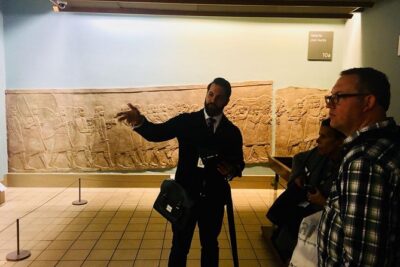
The British Museum London – Exclusive Guided Museum Tour
Read our review →
Browse the lists this tour appears in