
Reviewed · MUSEUMS
Secrets of Underground Walking Tour with London Transport Museum
London’s Underground is more than a way to get across town. It is a layered record of Victorian engineering, wartime London, grand station design, and changing city life. This tour follows that story from Baker Street to Westminster, using live commentary and short rides between key stations.
I like the mix of working stations and forgotten corners, especially Down Street, a former Piccadilly line stop near Green Park. I also like that entry to the London Transport Museum is included, giving you a second, self-guided look at buses, trains, maps, and the people who kept London moving.
The main caution is that you do not enter sealed ghost stations. You view some disused stations from outside, so anyone expecting a true behind-the-scenes station tour should adjust expectations. The museum ticket and admission process has also caused confusion for some customers, so confirm exactly how your ticket will be honored before you go.
In This Review
- Key points to know before booking
- Baker Street begins the Underground story
- Oxford Circus shows how the network keeps changing
- Down Street reveals the limits of an old station
- Piccadilly Circus connects design with daily travel
- Victoria Embankment places the railway beside the Thames
- Westminster shows the Underground’s earliest public face
- The London Transport Museum adds a second, self-guided half
- Is $32 good value for this London tour?
- What physical effort should you expect?
- Who will get the most from this experience?
- Should you book the Secrets of Underground Walking Tour?
- FAQ
- Where does the tour start?
- Where does the walking tour end?
- Is the London Transport Museum included?
- Where is the London Transport Museum?
- Is travel to the museum included?
- Do I need an Oyster card or Travelcard?
- Can I enter disused or ghost stations?
- Are audio headsets provided?
- Is lunch included?
- What is the cancellation policy?
Key points to know before booking
- Start at the Sherlock Holmes statue: Meet outside Baker Street Underground Station at 1:00 pm.
- Follow the Underground’s earliest chapters: Baker Street began with the Metropolitan Railway, the world’s first underground railway.
- See disused stations from street level: Down Street is discussed, but sealed platforms are not open for entry.
- Use an audio headset: The personal headset helps you follow the guide in busy stations.
- Allow extra time for the museum: The walking portion ends at Westminster around 3:30 pm, then you make your own way to Covent Garden.
- Bring a Zone 1 payment method: An Oyster card, Travelcard, or contactless card is required and is not included.
Baker Street begins the Underground story
The tour starts outside Baker Street station at 1:00 pm, by the Sherlock Holmes statue. This is a useful meeting point, but give yourself time to find the right entrance and statue. Baker Street is large, busy, and served by several Underground lines.
The station is important because it was one of the original stops on the Metropolitan Railway. Opened in 1863, that railway created the first underground railway in the world. The early trains were steam-operated, a detail that helps you picture how different underground travel once was.
Your guide sets the tone here with stories about the station, the railway, and the way London’s first underground lines shaped the city. The tour is not simply a ride from one sight to another. You move through working stations while learning to notice old platforms, altered entrances, unusual connections, and traces of earlier designs.
A personal audio headset is provided for the Underground portion. That matters in echoing stations, where a guide’s voice can easily disappear under the noise of trains and announcements. The group can include up to 25 people, so the headset should make the commentary easier to follow.
You need your own Zone 1 fare for the day. A contactless payment card, Oyster card, or Travelcard will work, but the tour price does not cover it. This is a small extra cost, yet it is important to settle it before meeting the group.
More London museums to visit:
- Tower of London and Crown Jewels Exhibition Ticket
★ 4.5 · 6,677 reviews - London: Chelsea Football Club Stadium and Museum Tour
★ 4.8 · 4,576 reviews - Chelsea FC Stadium Tours and Museum
★ 5.0 · 1,908 reviews
Oxford Circus shows how the network keeps changing
Oxford Circus is a good place to understand that the Underground is not a finished Victorian relic. The station has been altered and expanded as new lines were added and the city’s transport needs changed.
Construction on the first Walthamstow to Victoria section of the Victoria line began in 1962. Cross-platform interchange was planned at Oxford Circus, and the Victoria line platforms opened on March 7, 1969, as part of the extension from Warren Street to Victoria.
For you, the interest lies in how one station can hold several generations of railway planning. Early lines were built for one purpose, then adapted as passenger numbers grew and new routes were added. Your guide explains these changes while you move through the station, turning a familiar interchange into a lesson in urban engineering.
This stop also shows the practical side of the tour. You are walking through active Underground stations, not visiting a quiet museum set. Expect stairs, corridors, platforms, and changes of pace. The operator recommends a moderate level of physical fitness, and comfortable shoes are sensible.
Down Street reveals the limits of an old station
Near Green Park, the tour focuses on Down Street, a former Piccadilly line station. It opened in 1907 under the Great Northern, Piccadilly and Brompton Railway and later served the Piccadilly line.
Down Street sat between Dover Street, now Green Park, and Hyde Park Corner. It closed in 1932 because it had little use and was too close to other stations. That simple explanation says much about London’s Underground. A station could be well placed on a map yet fail if nearby stops offered easier access.
The station is one of the tour’s most appealing subjects, but be clear about what you will see. You do not enter Down Street or walk along its abandoned platforms. The tour discusses and views former stations from outside, which makes the experience more about stories, clues, and urban archaeology than restricted access.
That distinction matters. The description uses terms such as ghost platforms and disused stations, which can suggest a visit inside sealed tunnels. The actual experience is more modest. You see the locations and learn what happened to them, but the closed areas remain closed.
Piccadilly Circus connects design with daily travel
Piccadilly Circus is one of London’s most recognizable public spaces, and its Underground station has an equally useful place in the story. The Bakerloo line platforms opened on March 10, 1906, under the Baker Street and Waterloo Railway. The Piccadilly line platforms followed on December 15, 1906, under the Great Northern, Piccadilly and Brompton Railway.
Those dates show how quickly London’s early Underground system expanded. Separate companies built separate lines, and passengers eventually needed connections between them. Piccadilly Circus helps explain how those lines became part of one broader network.
You will also see why interchange stations can feel complicated. Different lines, different construction periods, and constant passenger movement create a maze that your guide helps decode. The headset is useful here, especially if the group is spread out or the station is noisy.
This is not a station tour focused only on architecture. It is also about how people use the Underground. The best moments come when the guide links a platform or passageway to a practical problem, such as moving passengers efficiently through a crowded central station.
More London walking tours:
- Magical London: Harry Potter Guided Walking Tour
★ 4.7 · 22,044 reviews - London: The Original Jack the Ripper Walking Tour
★ 4.7 · 7,833 reviews - Tour for Muggles The Ultimate Harry Potter Walking Tour in London
★ 5.0 · 4,684 reviews - London Jack The Ripper Guided Walking Tour
★ 5.0 · 3,131 reviews
Victoria Embankment places the railway beside the Thames
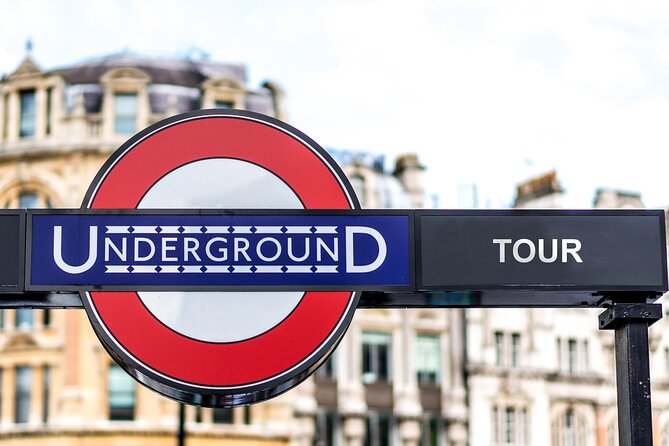
The route then reaches the Embankment area. Victoria Embankment runs along the north bank of the Thames, from the City of Westminster toward the City of London. It was developed in the 19th century on reclaimed land beside the river.
The Underground story here connects transport with the reshaping of London itself. Railways, roads, sewers, public spaces, and river engineering all changed the central city during the Victorian period. The stop gives the tour a brief change of scene, with the river and above-ground city providing context for the tunnels below.
You are still on a guided walking route, not a river tour, so the focus remains on transport history. Still, this section helps you see that the Underground did not develop in isolation. It was part of a larger effort to make a crowded industrial capital easier to move through.
Westminster shows the Underground’s earliest public face
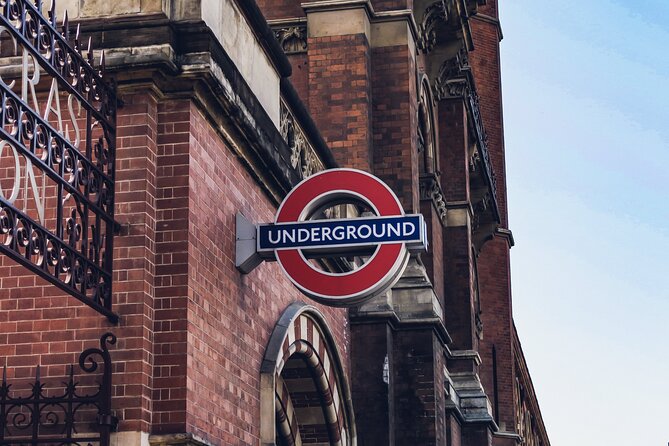
The tour ends at Westminster station, roughly 3:30 pm. The station opened as Westminster Bridge on December 24, 1868, when the steam-operated District Railway began service from South Kensington.
The first access was through a passage from Bridge Street and a pedestrian subway under the road. That detail gives you a sense of the early railway’s close relationship with the streets above it. The Underground was not built in an empty place. It had to fit beneath roads, buildings, utilities, and the daily life of the capital.
Westminster is a fitting end because it links railway history with some of London’s most important civic spaces. It is also a practical end point. From here, you are responsible for continuing to the London Transport Museum, eating lunch, or returning to your hotel.
The walking tour takes about two and a half hours, from 1:00 pm to approximately 3:30 pm. The full experience is listed as about five and a half hours because the museum visit adds around 90 minutes. In practice, the museum portion is independent, so your day may last longer if you spend more time there or stop for food.
The London Transport Museum adds a second, self-guided half
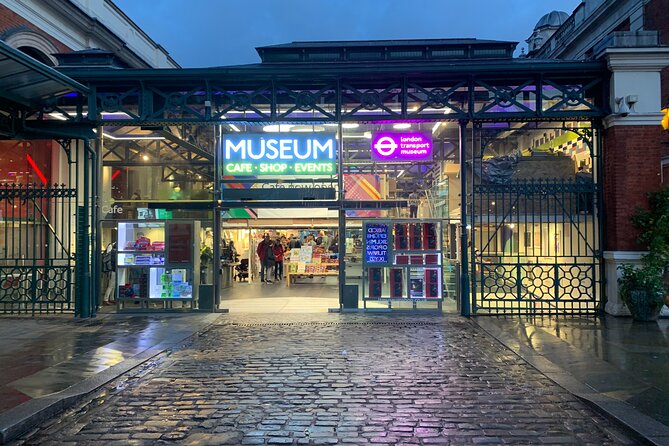
Museum entry is included, but there is no guide for this part. You make your own way from Westminster to the museum in Covent Garden, and the transport cost is not included.
The museum address is Covent Garden Piazza, London WC2E 7BB. Covent Garden is the nearest Underground station, and Leicester Square, Holborn, Charing Cross, and Embankment are also within roughly a 4 to 10 minute walk according to the supplied directions.
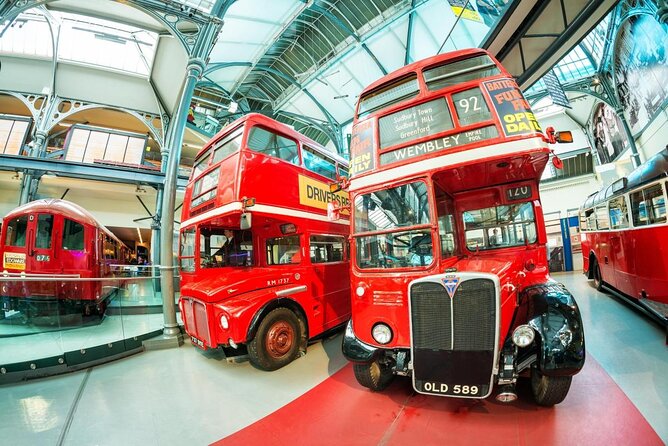
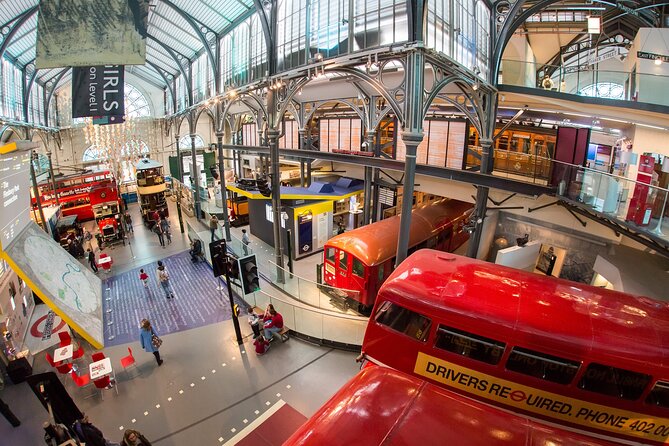
The museum covers London transport over the past 200 years. You can explore the development of the Underground, buses, vehicles, maps, and the people who traveled and worked across the city. It also looks ahead at how future technology may affect London’s transport system.
I like this pairing because the walking tour gives you stories in the stations, while the museum gives you time to look at objects and displays at your own speed. The drawback is the break in structure. You finish with the guide at Westminster, then need to navigate independently and deal with the museum entrance yourself.
Admission problems have been reported, including requests for additional payment and confusion over whether a supplied ticket was accepted. The operator has asked people with ticket issues to contact its reservations team. To avoid an unpleasant surprise, check the redemption instructions before the tour and keep your booking confirmation available.
Is $32 good value for this London tour?
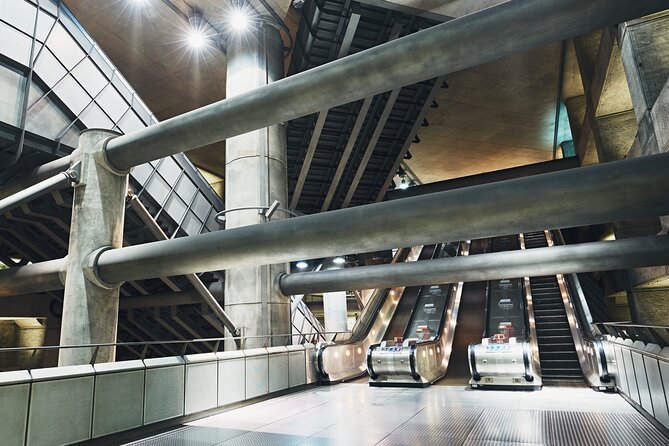
At $32, the price is reasonable if you want a guided introduction to Underground history and plan to use the museum entry. The value comes from the guide’s explanations, the headset, and the convenience of linking several central stations in one route.
The price does not include Underground fares, lunch, hotel pickup, or travel from Westminster to Covent Garden. Those extras are easy to overlook. You also need to remember that the museum visit is not guided, so part of the advertised duration is simply independent museum time.
If you already know London’s transport system well, you may find the guided portion less useful unless you enjoy railway history and station design. If you are new to London, the tour can help you read the network with more confidence and notice details you would likely pass without a second thought.
The group limit is 25 people. That is not a private tour, but it is small enough for a guide to keep the group moving through stations. The headset is especially valuable when the group spreads out.
What physical effort should you expect?
This is an active half-day with repeated walking through Underground stations and central London streets. A moderate level of fitness is advised. The supplied information does not promise step-free access or list detailed accessibility arrangements, so contact the operator before booking if stairs, long walks, or station changes are a concern.
Wear comfortable shoes and carry only what you need. You will be moving through public stations, not sitting in one place for the entire tour. There is no lunch included, so eat beforehand or plan food after the Westminster finish.
The afternoon start is useful if you want a relaxed morning elsewhere in London. It also means the museum visit comes later, after the guided route. You can treat the museum as a flexible final stop rather than rushing through it with the group.
Who will get the most from this experience?
I would recommend this tour to you if you enjoy city infrastructure, railway history, architecture, or the stories behind ordinary public places. It is also a good choice if you want a structured introduction to the Underground before exploring London on your own.
Families can enjoy the subject because trains, tunnels, old stations, and secretive closures offer an easy starting point for questions. The walking distance and station movement still make moderate fitness important for everyone in the group.
This tour is less suitable if you expect access to sealed platforms, abandoned tunnels, or restricted station interiors. It is also not ideal if you want a fully guided museum visit or a tour that includes every transport cost from start to finish.
The guide can make a major difference. John is specifically associated with several highly positive experiences of the route, and his style is described as entertaining and informative. Guides can vary, but the format gives a strong guide plenty of room to bring the Underground’s odd details to life.
Should you book the Secrets of Underground Walking Tour?
Book it if you want a clear, affordable introduction to London’s Underground and like the idea of pairing a guided station walk with an independent museum visit. The best parts are Baker Street’s pioneering role, the story of Down Street, and the chance to understand why stations such as Oxford Circus and Piccadilly Circus work as they do.
Go in with accurate expectations. You will not enter ghost stations, the museum comes without a guide, and you must pay for Zone 1 transport separately. Confirm the museum ticket procedure before setting out.
For a first visit to London, this is a useful choice for curious, active sightseers. For a true underground access experience, choose something that explicitly promises entry into closed stations and tunnels.
FAQ
Where does the tour start?
It starts at 1:00 pm at Baker Street Underground Station, by the Sherlock Holmes statue outside the station.
Where does the walking tour end?
The guided Underground tour ends at Westminster Underground Station at approximately 3:30 pm.
Is the London Transport Museum included?
Yes. Entry to the London Transport Museum is included, but you visit it independently without a guide.
Where is the London Transport Museum?
It is at Covent Garden Piazza, London, WC2E 7BB. Covent Garden is the nearest Underground station.
Is travel to the museum included?
No. After the walking tour ends at Westminster, you must make your own way to Covent Garden. That transport is not included.
Do I need an Oyster card or Travelcard?
Yes. You need an Oyster card, Travelcard, or contactless payment card for Zone 1. The fare is not included in the tour price.
Can I enter disused or ghost stations?
No. The route does not provide access to sealed ghost stations. You view some disused stations from outside and hear their stories from the guide.
Are audio headsets provided?
Yes. A personal audio headset is provided during the guided Underground portion of the tour.
Is lunch included?
No. Lunch is not included, so plan to eat before the tour or after it ends at Westminster.
What is the cancellation policy?
You can cancel at least 24 hours before the local start time for a full refund. Cancellations or changes made within 24 hours are not refunded or accepted.
Latest arrivals on the London list
- Easy Access Tower of London Royal Secrets & Scandals Tour★ 5.0 · 3 reviews
- Stonehenge Special Access Guided Morning Tour from London★ 4.5 · 3 reviews
- Shoreditch & East London Walking Tour with a Local, Custom & Private★ 5.0 · 3 reviews
- Madame Tussauds London Fast Track and Champagne Experience★ 3.5 · 3 reviews
- London Private Brixton Tour with a Local – Culture & Stories★ 4.9 · 3 reviews
- Private Full Day Tour – Fast Track Tower of London and Lunch★ 4.6 · 3 reviews
- Private transfer from London Heathrow Airport to Southampton★ 5.0 · 3 reviews
- London Soho District – Guided Walking Tour 12 guests 2,5h★ 4.8 · 3 reviews
Museums, compared.

Tower of London and Crown Jewels Exhibition Ticket
Read our review →
Chelsea Football Club Stadium and Museum Tour
Read our review →

Official tickets: Moco Modern & Contemporary Art Museum
Read our review →
British Museum London Guided Tour Semi-Private 8ppl Max
Read our review →
Browse the lists this tour appears in